
VAPE FAQs
Why Is My Vape Making My Throat Hurt?
Oct
Experiencing a sharp, scratchy, or persistently sore throat after using a personal electronic device is frustrating and, frankly, it can undermine your entire routine. You might find yourself reaching for water constantly, adjusting your technique, or even questioning whether you made a poor choice of device or liquid. In most cases, the discomfort isn’t random; it’s a symptom with a root cause that can be traced back to a handful of engineering variables, usage patterns, or supply-chain realities that many users never have explained to them.
This article unpacks the most common reasons behind that unwelcome throat irritation. By examining what is happening inside your device, what you’re asking it to do, and the often-overlooked role of product integrity, you’ll be able to diagnose the problem and make an informed decision about how to move forward. As a team, OZVAPE Shop{target=”_blank”} has observed that when adults understand the relationship between hardware design, liquid chemistry, and their own habits, the mystery of throat discomfort tends to resolve fast.
Understanding What Matters: The Engineering at the Back of Your Throat
Throat sensation isn’t just about what’s in the liquid. The way a device delivers energy, manages airflow, and handles heat directly affects whether the output feels smooth or punishing. Let’s break it down into the factors that genuinely matter.
Power Delivery and Temperature Stability
Every time you activate a device, a heating element reaches a target temperature. When that temperature is stable and properly calibrated, the liquid in contact with the element vaporises cleanly. When it’s too high — even slightly — chemical changes in the liquid occur that produce harsh-tasting, throat-irritating by-products. A sudden spike in power due to a poorly regulated circuit board or a battery struggling under load can singe the wick and release acrid compounds into the vapour.
If your device doesn’t have consistent output regulation, you might notice the hits get rougher as the battery depletes. That’s not your technique. That’s an engineering limitation. Well-designed devices incorporate thermal management and predictable power curves specifically to avoid these peaks.
Coil Material, Wick Condition, and the Dry Hit
The coil is the interface between electricity and liquid. Mass-produced coils that use low-grade wire or poorly compressed cotton wicking material often develop hotspots. These uneven heating points can burn the liquid locally, even when the overall temperature reading seems normal. Once cotton is scorched, that burnt taste — and the accompanying throat scratch — becomes a permanent feature of the coil.
Mesh coils, which distribute heat over a larger, more even surface area, tend to be less prone to localised burning. But even mesh fails when it’s pushed past its design limits. A coil that’s been asked to vaporise liquid far thicker than it can absorb will run dry for fractions of a second, repeatedly. Those micro‑dry‑hits accumulate into throat soreness by the end of a session. And here’s an uncomfortable truth: if you acquired your device through a channel that doesn’t verify authenticity, the coil inside may not be the one the engineers specified. That alone can account for an otherwise inexplicable harshness.
Airflow Design: Cooling, Dilution, and Delivery
Think of airflow as the cooling system. An atomiser that channels air efficiently past the coil delivers vapour that has already shed some of its peak heat. A tight, restrictive draw not only raises the perceived temperature but also concentrates the vapour, exposing your throat to a denser, hotter aerosol.
If you’ve ever used a device with an adjustable airflow and noticed that opening it up significantly reduces irritation, you’ve experienced this principle firsthand. The problem emerges when a device’s fixed airflow doesn’t match the heating element’s output characteristics. Some compact, sealed devices are intentionally designed for mouth-to-lung draws with specific nicotine strengths; use them with the wrong liquid or an overly aggressive inhale, and the mismatch lands squarely on your throat.
Liquid Composition and the Nicotine Variable
Two molecules carry most of the blame here: propylene glycol (PG) and freebase nicotine. PG delivers what many describe as “throat hit”, and in high concentrations it can feel like sandpaper if your throat isn’t accustomed to it. Freebase nicotine amplifies that sensation dramatically because its pH level is inherently more alkaline, which triggers a noticeable sting on contact with the mucosa.
By contrast, nicotine salts are formulated at a lower pH and generally produce a much smoother sensation, even at higher concentrations. The trouble arises when users inadvertently pair a device optimised for nicotine salt with a high‑PG, high‑freebase liquid. The hardware doesn’t know the difference, but your throat will let you know within the first few puffs. Additives like citric acid or certain flavour concentrates can also be individual irritants, even in otherwise well-formulated blends.
Applying These Principles to Real‑World Devices
Not all devices are equally vulnerable to causing throat discomfort. The starkest differences emerge when you compare thoughtfully engineered systems with generic alternatives that cut corners on power management and coil consistency.
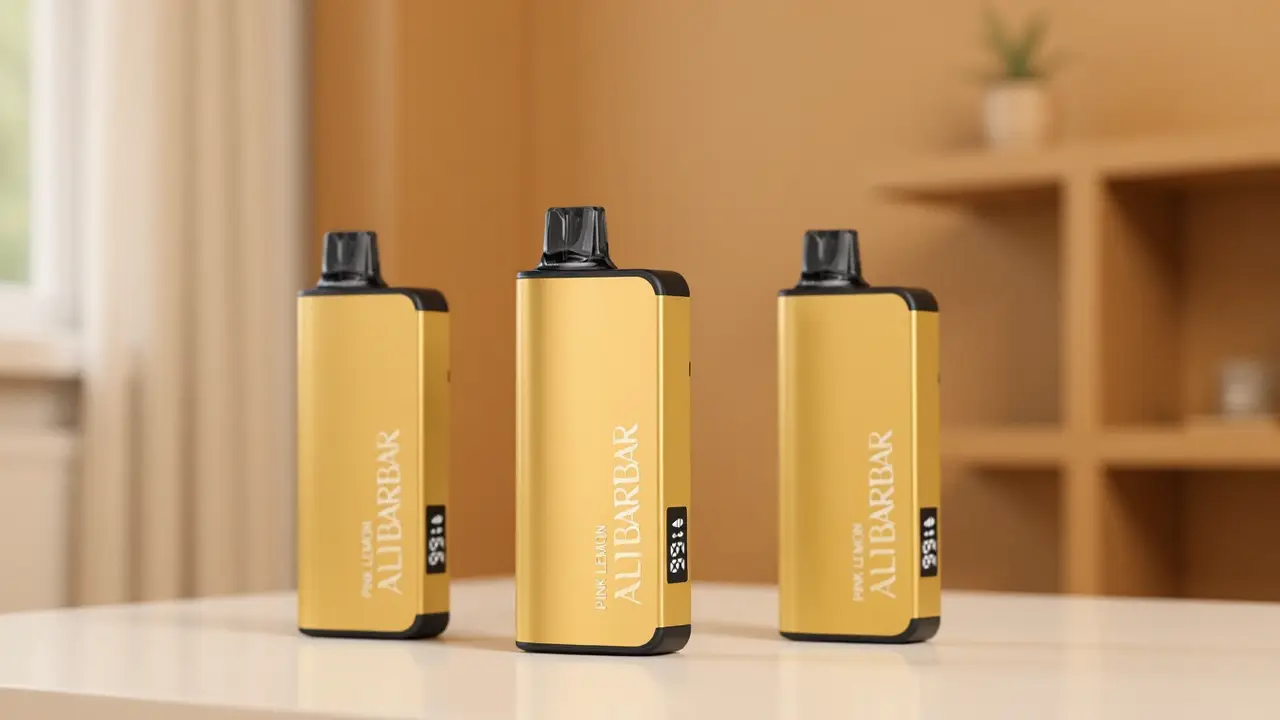
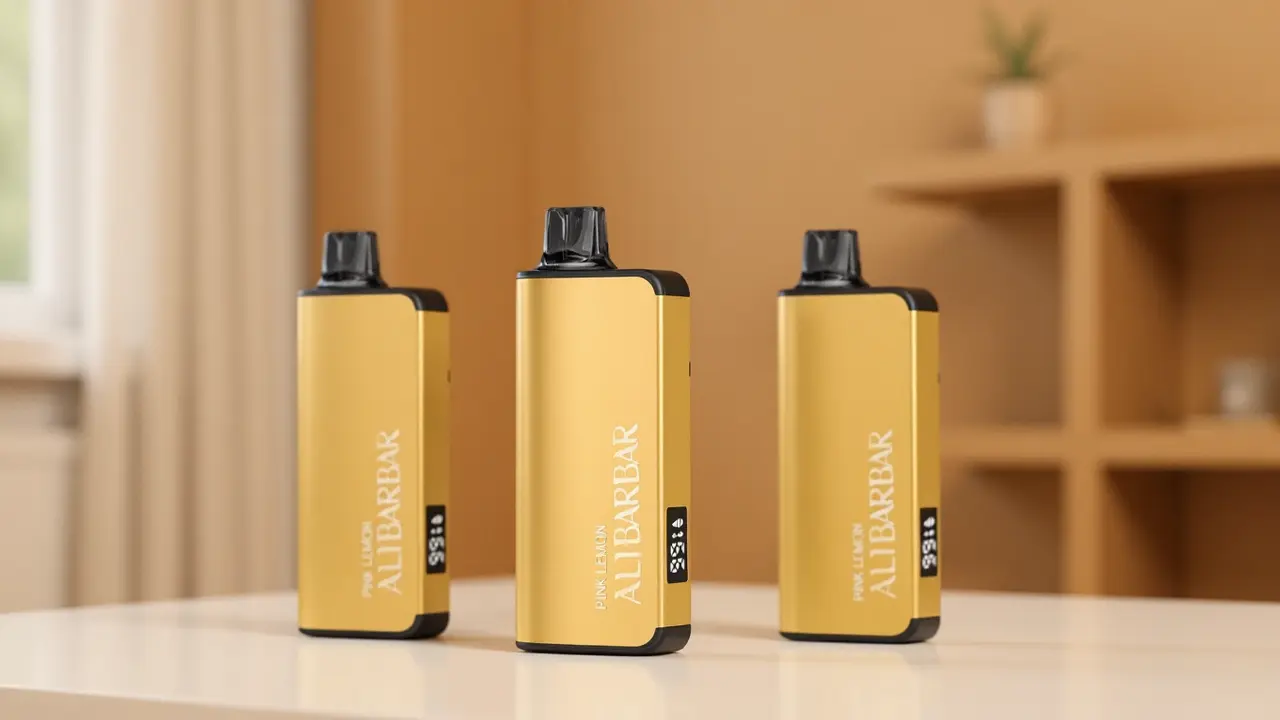
Take the ALIBARBAR INGOT series, for example. These devices use a mesh coil architecture paired with a chipset that maintains stable output through the battery’s entire discharge curve. The result is a vapour stream that doesn’t get gradually hotter or harsher as the day wears on. The fixed airflow is calibrated to match the heating element’s output, so the cooling profile isn’t left to chance. For users who have experienced throat irritation from devices that start smooth and degrade within hours, that difference is immediately noticeable.
On the other end of the market, you’ll find unregulated devices that lack any form of output stabilisation. They might deliver the same nominal wattage on a full charge, but as voltage sags, the controller (if there is one) often compensates by drawing more current, stressing the coil unevenly. It’s an almost guaranteed recipe for throat fatigue by late afternoon. The industry has a quiet problem with counterfeit coils that use inferior cotton and thinner wire gauges, creating hotspots even in a device that originally passed engineering validation. This explains why buying from a source that verifies chain of custody isn’t just about warranty — it’s a direct defence against unexplained throat pain.
A Practical Framework for Self‑Diagnosis
Instead of guessing, run through these questions in order. They’ll isolate the most likely cause without requiring any special equipment:
Has the coil been in service beyond its expected life? If you notice a drop in vapour production alongside the scratchiness, the wick is likely degraded. Replace it and see if the irritation ceases immediately.
Does the device provide clear, real‑time status feedback? Without battery level or output indication, you can’t tell if the power is fading or spiking. Devices that leave you blind tend to make you puff harder to compensate, which overheats the coil.
Are you using a liquid with a PG ratio over 50% or freebase nicotine above 12mg/mL? If yes, and your device was marketed as “smooth” or salt‑nicotine compatible, you’ve found your culprit.
Does the airflow feel tighter than expected for the volume of vapour you’re producing? Try a slower, gentler draw that gives the coil’s cooling system time to do its work. If the irritation drops, the issue is heat concentration, not the liquid itself.
Can you trace your device’s provenance? If it was purchased from an anonymous marketplace or a channel that doesn’t publish sourcing information, the coil inside might not be genuine. Non‑genuine coils are disproportionately associated with throat irritation complaints in our support logs.
This framework doesn’t require you to be an engineer. It just requires you to stop assuming the problem is some inherent flaw in the whole category. Usually, it’s a mismatch.
Common Selection Errors and What They Reveal About the Industry
Understanding how people inadvertently set themselves up for throat discomfort tells you a great deal about where the market is failing ordinary users.
Error one: Chasing maximum puff counts while ignoring coil longevity. Pre‑filled devices with exceptionally high stated lifetimes often achieve those numbers by pushing the coil past its comfort zone. The heating element hasn’t changed; it’s just being asked to keep running while its wicking efficiency steadily declines. The second half of that device’s life will almost certainly deliver harsher vapour than the first half, but no marketing sheet will mention it.
Error two: Equating visual design with internal engineering. Two devices that look similar on a shelf can be radically different underneath. One might use a precision‑stamped mesh coil with medical‑grade cotton; the other might use a round‑wire coil hand‑wrapped with inconsistent tension. The marketplace is full of lookalikes because industrial design is easier to copy than process control. If your throat hurts and you can’t figure out why, a visual inspection of the device tells you nothing.
Error three: Underestimating the cost of counterfeits. The global trade in non‑genuine coils and pods is massive because it’s lucrative. A retailer that sources through unauthorised channels will often pass these units off as original, and the end user pays the price in performance and physical irritation. This isn’t a niche concern; it’s a structural feature of the current supply landscape. That’s why a retailer’s willingness to publicly describe its sourcing standards — factory certification, batch traceability, and refusal to deal in grey‑market stock — is more than a trust signal. It’s the difference between a device that performs as designed and one that becomes a throat‑burning mystery.
Error four: Confusing “strong hit” with “throat hit”. Some users actively seek the sensation of a pronounced inhale. But there is a gap — sometimes a very wide one — between the satisfying feedback of a well‑tuned device and the stinging irritation of a coil that’s overheating your liquid. If you’re wincing, that’s not throat hit. That’s a warning.
Frequently Asked Questions
Q: Why does my throat hurt only first thing in the morning?
A: Overnight, the wicking material can lose saturation unevenly. The first few activations in the morning hit a partially dry coil, producing a momentary burst of overheated vapour before fresh liquid reaches the heating element. Taking a short, gentle priming puff (without inhaling deeply) can resaturate the cotton and prevent that initial scratch.
Q: Can a damaged coil release anything that specifically targets the throat?
A: Yes. When cotton scorches, it releases acetaldehyde and other aldehydes from the breakdown of sugars and cotton fibres. These compounds are known respiratory irritants, and even tiny concentrations can trigger a sore‑throat reflex.
Q: I switched to a different liquid brand and immediately noticed throat pain. Is that the flavour or the base?
A: It could be either. Some flavouring compounds—citrus, cinnamon, and certain berry esters—are known mucosal irritants. But also, a liquid that uses higher‑PG base or freebase instead of salt nicotine will produce a much sharper throat sensation at the same nicotine concentration.
Q: Does the device’s battery level affect throat feel?
A: In poorly regulated devices, yes. As voltage drops, a basic control circuit may attempt to maintain power by increasing current draw, which can overshoot the coil’s thermal ceiling. In regulated devices with constant‑wattage or constant‑temperature modes, this effect is negligible.
Q: How do I confirm that my device and coil are authentic?
A: Authentic products carry serialised verification codes that can be checked through the manufacturer’s official channel. Reputable retailers, including OZVAPE Shop, source exclusively through authorised distribution and make that verification straightforward. If a seller can’t or won’t explain their chain of custody, treat the product as suspect.
Q: Will lowering the nicotine level always reduce throat irritation?
A: If the irritation is from freebase nicotine’s alkalinity, yes. But if it’s from a burnt coil or high PG, lowering nicotine won’t help. You need to identify the actual source first.
Q: Can I use a device with higher‑VG liquid to smooth things out?
A: Only if the device’s wicking system can handle the thicker liquid. If the cotton can’t absorb it quickly enough, you’ll create dry hits, which cause their own form of throat pain. Check the device manufacturer’s recommended liquid viscosity range.
Q: My device has adjustable airflow. What setting is least likely to cause irritation?
A: Generally, a more open airflow setting reduces throat impact by cooling the vapour and diluting it with air. However, if you then compensate by taking longer, harder draws, you might overheat the coil. Find the balance where you can inhale comfortably without straining.
Q: I used a device for two days without issue, then throat pain started. What changed?
A: The most common explanation is coil degradation. If the wick accumulated residue from sweetened liquid, its ability to transfer heat efficiently diminished, leading to localised burning. Alternatively, if you switched power sources (e.g., from a regulated charger to a different USB port), you may have introduced a voltage fluctuation that stressed the coil.
Q: Is throat pain ever a sign of a systemic reaction rather than a hardware issue?
A: Rarely, but yes. Some individuals are sensitive to propylene glycol or specific flavouring agents, and repeated exposure triggers an inflammatory response. If the pain persists even with a brand‑new coil and a liquid you’ve verified is high‑VG and low‑freebase, consider an allergy or sensitivity. Discontinue use and consult a healthcare professional.
Where the Responsibility Lies
Most sore throats from personal electronic devices are not a failing of the user; they are a failure of information or a failure of product integrity. When a device is engineered with stable power delivery, a quality coil, and appropriate airflow, and when the liquid is compatible with the hardware, the result is predictable and comfortable. The breakdown occurs when the supply chain introduces counterfeits, when specifications are vague, or when users are left to interpret marketing copy as technical guidance.
We have spent years observing these patterns from a position that straddles both retail and the realities of manufacturing. Time and again, an individual who arrives frustrated and in discomfort finds that the problem vanishes once they’re equipped with a device whose output characteristics are transparently documented and whose provenance is certain. That’s not magic; it’s just standard engineering applied properly.
For adult users who want to spend less energy troubleshooting and more energy on the things that actually matter to them, the path forward involves choosing devices from channels that don’t make you guess. OZVAPE Shop{target=”_blank”} is built around exactly that premise: every unit in the catalogue comes with a published specification sheet, a verified supply chain, and a support team that won’t deflect when you ask a difficult question. Your throat doesn’t have to be a testbed for manufacturing shortcuts. When you understand what’s happening inside your device and you hold a standard of quality that starts at sourcing, the irritation stops being a mystery and starts being a solved problem.