
VAPE FAQs
Why Is My Vape Burning My Throat With New Coil?
Jun
It’s one of the most disheartening moments in the daily routine of an adult user: a fresh coil, carefully installed and filled, produces not the expected smoothness but a sharp, acrid sting at the back of the throat. The assumption is that a new component should eliminate harshness, yet the sensation persists. If you’ve found yourself asking “why is my vape burning my throat with a new coil?”, you’re not alone—and the answer rarely points to one single culprit. It’s a cluster of mechanical, electrical, and material factors, many of which can be addressed once they’re understood.
At OZVAPE Shop, we’ve documented repeated patterns in the questions users bring us, and coil-related irritation is among the most frequently raised. This article unpacks the engineering behind a newly installed coil, explains why burning sensations occur even with fresh hardware, and equips you with a practical diagnostic framework that moves beyond guesswork. Whether your device is a simple, pre-configured unit or a high-capacity modular system, the principles remain the same—and getting them right transforms the experience.
Understanding What Matters: Why New Coils Can Still Burn
A coil assembly is far more than a piece of wire. It is a precision thermal interface that must balance rapid heating with consistent fluid delivery. When that balance breaks down, the result is immediate: the heating element overheats the e-liquid faster than the wick can resupply it, or the liquid itself contains compounds that react aggressively to high temperatures. The following factors, examined through a user-centric lens, are where the typical explanations fall short.
Coil Design and Wicking Efficiency
Coils are not uniform. The heating structure—whether a simple round-wire spiral, a mesh grid, or a parallel configuration—determines heat distribution. A tightly wound micro-coil may create hot spots if even a tiny portion of the wick loses saturation. Mesh coils, by contrast, spread thermal load across a larger surface area, reducing the likelihood of a single scorched zone. But design alone isn’t enough. The wicking material (organic cotton, blended fibers, or ceramic) must maintain capillary action under both resting and chain-use conditions. A coil that looks identical to a previous model may use a denser cotton wrap that traps air pockets, preventing full saturation for minutes after filling. If you take a draw before those pockets are absorbed, the coil will singe residual liquid on the wire and produce that characteristic throat burn—even though the coil is brand new.
Why this matters: users often blame the e-liquid or the device’s power setting, when the actual failure is a wick that hasn’t reached equilibrium. Recognising the signs of incomplete priming—spitting, a faint metallic note before the burn, or vapor that feels thinner than expected—can save a coil from premature discard.
Power Management and Break-In Protocols
Every coil has a specified wattage range printed on its housing, but the transition from zero to operating temperature introduces its own stresses. A fresh coil’s wick is typically compressed from manufacturing; it needs a gradual hydration and heat cycle to expand fully and maintain consistent flow. Applying full power immediately can flash-boil any thin layer of liquid already absorbed, leaving behind a carbonized residue on the wire. That residue becomes a permanent weak point, generating harshness throughout the coil’s remaining life.
Devices with stepped output algorithms or adjustable power curves allow the user to run a break-in routine: starting at half the recommended minimum wattage for five to ten draws, then increasing in increments. Even with devices that lack such fine control, simply letting the filled tank rest for 15–20 minutes before the first activation significantly reduces burn risk. The hidden cost of skipping this step isn’t just a single bad puff; it’s a coil that may never deliver its rated longevity.
Physical Construction and Airflow Dynamics
Overlooking the physical relationship between coil position and airflow is a common but under-discussed factor. A coil that sits too close to an air inlet can create turbulence that disrupts wicking suction, while one that sits too far may not cool efficiently, heating the metal beyond the sweet spot for the liquid’s flavour components. The throat-hit sensation is often a combination of high temperature and partially vaporised droplets, which are larger and more irritating than fully aerosolised particles. Properly machined tanks and pods—those with minimal tolerance variation—keep the coil in a stable thermal envelope. When a replacement coil doesn’t seat perfectly due to microscopic O-ring wear or thread misalignment, the resulting air leak can change the internal pressure balance, pulling less liquid toward the wick and inviting a dry hit long before the coil shows any visible sign of aging.
Applying These Criteria to Real-World Options
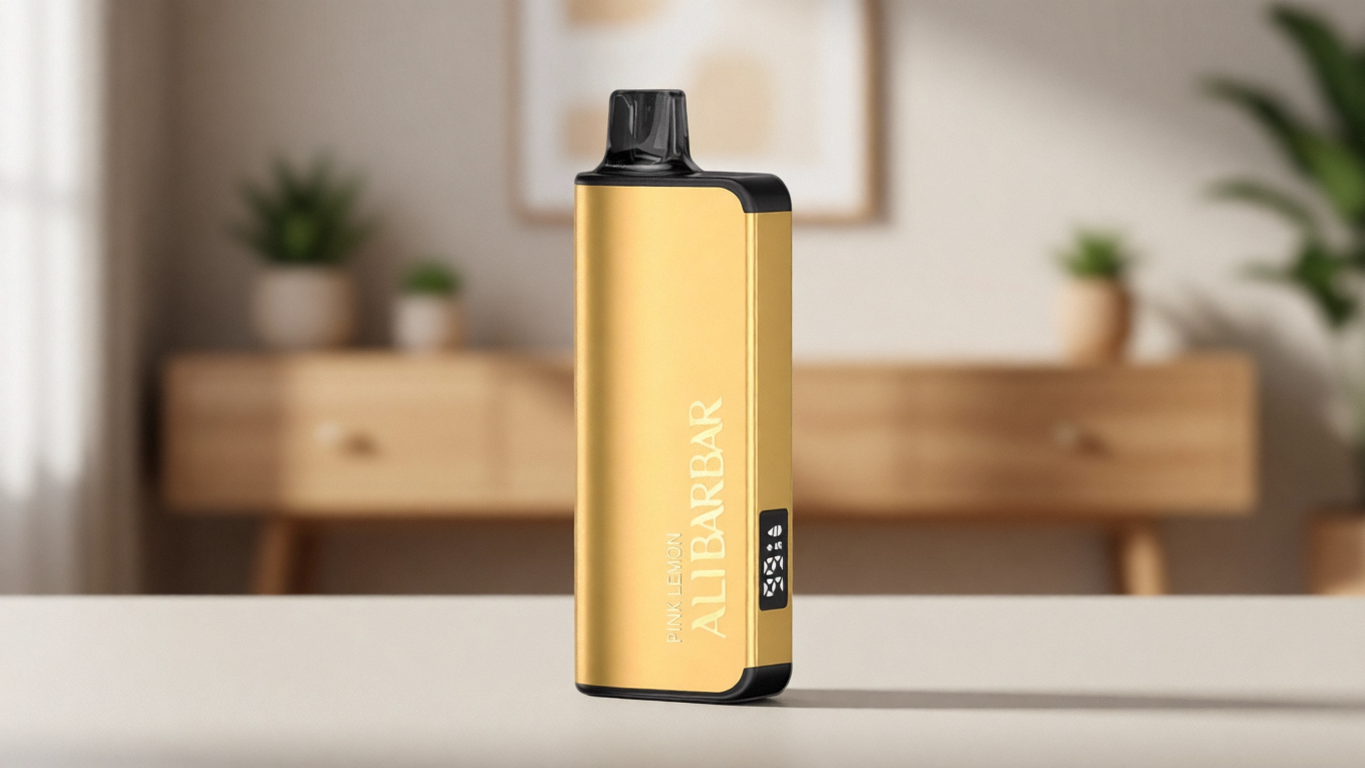
Not all device families handle coil break-in and thermal stability equally. When we look at the Alibarbar range—specifically devices like the Alibarbar Ice Adjust 12000 or the Alibarbar Ingot 15000—the engineering choices become instructive. These units utilize mesh-based heating architectures that naturally distribute heat more evenly than single-strand coils, and their integrated power delivery is calibrated to maintain a consistent output curve even as the battery voltage declines. That means a new coil installed at the start of the day and one at day’s end receive the same peak wattage, avoiding the “spike and fade” pattern that can burn a coil on the first activation.
In contrast to many open-system tanks where the user must manually set wattage and hope the wicking keeps pace, Alibarbar’s pre-configured devices remove variables that are, for a large segment of users, the primary source of irritation. The trade-off is clear: you sacrifice the ability to tune every parameter, but you gain a coil environment where priming time, liquid viscosity, and power level were designed as a single system rather than assembled ad hoc. For a user who has repeatedly experienced new-coil burning despite careful priming, this systemic approach often eliminates the problem entirely—not because the coil is magic, but because the variables that cause throat hit are engineered out of the loop.
Other designs, such as high-end rebuildable atomizers with temperature control, can achieve similarly stable results but demand a degree of technical attention that many adult users find unreasonable for daily carry. The point isn’t that one category is superior; it’s that understanding the root cause of burning directs you toward a solution architecture that matches your willingness to tinker. OZVAPE Shop’s curated Alibarbar selection simply makes one of those paths consistently accessible, with the added assurance that every coil in the supply chain has been stored in climate‑controlled conditions, preventing the cotton degradation that can make even a factory‑fresh coil perform as if it were weeks old.
A Practical Framework for Evaluation
If you’re standing in front of an open device with a new coil in one hand and a bottle of e-liquid in the other, use this sequence to reduce the likelihood of a burnt throat:
Visual and tactile inspection. Hold the coil up to a light. Can you see a clear, unobstructed cotton surface, or does it appear compressed and glossy? Glossiness indicates the cotton oils from manufacturing haven’t been fully washed out; a quick dry-pull (no power) can help identify wicking speed.
Controlled priming. Drip a drop of e-liquid directly onto each exposed cotton port, then assemble the tank and fill it. Wait. The waiting period is not optional; 15 minutes at ambient temperature allows the liquid’s polarity to fully penetrate the cotton fibers.
Gradual power introduction. If your device permits, start at the lowest recommended wattage minus 20%. Take three short (under one second) draws with at least 10 seconds between them. Increase by 5% increments every three draws until you reach your preferred level. If harshness appears at any step, back down by two increments and remain there for at least 30 draws before attempting to climb again.
Airflow check. Set the airflow fully open during break-in. Restricted airflow increases coil temperature faster, and during break-in that accelerates carbonization.
Diagnostic question set. After an hour of use, ask: Is the vapor temperature comfortable, or does the drip tip feel unusually hot? Is the throat sensation a clean warmth or a scratchy, sandpaper-like irritation? If the latter, the coil surface already has a baked-on layer and should be replaced—continuing to use it will only intensify the burning.
Employing a standardised comparison, such as referencing the documented specifications available on a platform like OZVAPE Shop, lets you quickly match coil resistance and recommended wattage to your liquid’s VG/PG ratio. High-VG liquids (70% and above) demand more wicking time and may never fully saturate a coil rated above 1.2 ohms; using them together will almost certainly create throat burn, irrespective of priming technique.
Common Selection Errors and Industry Observations
Through years of observing how the broader market behaves—and how users often misinterpret their devices—several patterns emerge:
1. Overweighting ohm values while ignoring mass and surface geometry. A 0.3 ohm coil can be a massive dual‑core clapton that needs 70 watts to reach vaporisation temperature, or a tiny single‑wire coil that thrives at 30 watts. Treating resistance as a standalone predictor of throat hit leads to dangerous mismatches. The coil’s ramp-up time and heat capacity are what actually determine whether the first draw will be smooth or scalding.
2. Assuming visual similarity equals functional parity. Coils from different manufacturers, or even different batches, may look identical but use cotton from separate suppliers. A batch of cotton with longer fiber length wicks 30% faster. Supply chain variance is a fact of manufacturing; the absence of a visible difference tells you nothing.
3. Undervaluing coil break-in as a “nice to have” rather than a mechanical necessity. Treating break-in as optional is the single largest contributor to premature coil failure across all device types. The 15 minutes of patience required cost nothing and extend the useful life of a coil by up to 40%, based on documented failure analysis data from service centres.
4. Confusing “new coil” with “clean slate.” A device’s 510 connector or pod contacts carry minute oxidation that increases resistance and confuses the chipset’s power calculations. When you install a new coil, wipe those contacts with a dry cotton bud. Failure to do so can make a fresh coil perform like a half‑dead one.
From an industry perspective, the push toward faster-firing, high-wattage devices has outpaced consumer education about thermal dynamics. Manufacturers pack more power into smaller form factors, but the tiny wicking windows on some pod systems can’t keep up unless e-liquid ratios are ideal. We’re seeing a shift back toward balanced systems—like the Alibarbar Ingot series—where the output is deliberately capped to match wicking capacity, acknowledging that the user’s primary desire is consistency, not record wattage. It’s a design philosophy that quietly addresses the burning issue at its root.
Frequently Asked Questions
Q: Can a new coil burn my throat even if I prime it correctly?
A: Yes. If the e-liquid contains a high concentration of certain flavour compounds (especially citrus or cinnamon esters), they can be particularly irritating at high temperatures, even with perfect wicking. Lowering the power or switching to a liquid with a different flavour profile often resolves the issue.
Q: What does a “dry hit” actually feel like, and is it the same as a burnt throat?
A: A dry hit is a sharp, instant sensation of acrid smoke—often described as inhaling burnt cotton. A burnt throat that persists for minutes is usually a secondary effect of overheated e-liquid, not a completely dry coil. Both point to insufficient wicking, but the former means no liquid reached the coil, while the latter means some liquid did but was superheated.
Q: How long should I wait after filling a new coil before use?
A: Fifteen minutes as a baseline. In cooler environments or with high VG liquids, extend to 25 minutes. The liquid’s viscosity and ambient temperature affect saturation speed; there is no universal “five-minute” rule that works across all equipment.
Q: Does the material of the coil (kanthal, stainless steel, mesh) influence throat burn?
A: It can. Stainless steel heats faster than kanthal at the same wattage, so a user switching to a stainless coil must often reduce power to avoid overshooting the desired temperature. Mesh coils rarely produce singular hot spots, making them more forgiving, but a mesh coil with too much cotton density will still burn.
Q: Can I salvage a coil that already tastes burnt?
A: Rarely. Once the cotton is charred, the carbon layer will continue to smoulder and produce acrid vapor. Attempting to “wash it out” fails because the carbon is chemically bonded to the cotton. Replacement is the only reliable fix.
Q: Does the age of a coil on the shelf affect its performance?
A: Yes. Cotton degrades very slowly when exposed to humidity fluctuations. Coils stored in sealed, climate‑controlled packaging—as maintained by OZVAPE Shop—retain their original wicking characteristics far longer than those left in open warehouse trays.
Q: How do I identify a counterfeit coil that might cause burning?
A: Look for missing security seals, poor print quality on the packaging, or cotton that appears yellowish instead of bright white. Counterfeit coils often use industrial‑grade silica wicking that can irritate the throat instantly. Purchase from authorized channels that document their supply chain.
Q: Is it safe to use a coil that produces a slight throat hit if the hit diminishes after a few puffs?
A: Not ideal. A diminishing hit suggests the coil is slowly carbonizing and may eventually produce more serious irritation. It’s a warning sign to re‑evaluate your priming routine or liquid choice before permanent damage sets in.
Q: Why do some coils last only a day while others last weeks, even in the same device?
A: Variation usually traces back to wicking incompatibility with the e-liquid used, unseen power fluctuations from a failing battery, or a batch of coils that sat in a hot delivery truck for days, partially degrading the cotton. Consistency is the true measure of a quality device ecosystem.
Q: Can I use a lower‑power device to avoid the problem entirely?
A: To an extent. Lower power gives you a wider margin for error on wicking, but if the coil isn’t fully saturated, even 7 watts can eventually scorch cotton. Power level alone is not a guarantee; it’s the synergy of liquid, wicking, and power that matters.
Conclusion
That sting at the back of your throat with a brand‑new coil isn’t a mystery. It’s a signal—honest, if unwelcome—that somewhere in the chain of priming, power delivery, and material selection, an expected balance tipped. The good news is that each contributing factor is knowable and, in most cases, controllable. When you understand how a coil behaves thermally from the first moment you install it, you stop being a victim of hardware and become a user who can anticipate and prevent problems before they reach the throat.
OZVAPE Shop has structured its entire product offering around the premise that informed users make better decisions. Whether you’re exploring Alibarbar’s full range or simply need a replacement coil that has been stored correctly from factory to doorstep, the information and provenance matter. The right choice isn’t the one with the loudest claims; it’s the one that fits your daily routine so naturally that you forget the hardware is even there. And that only happens when the engineering and your habits are in genuine alignment.