
VAPE FAQs
Why Does My Vape Taste Burnt?
Jun
It starts in an instant: the familiar ritual of use is interrupted by a sharp, acrid note that obliterates everything else. That harsh, burnt taste is not just unpleasant; it signals that something in the device’s thermal delivery has gone seriously wrong. While many users instinctively blame the device itself, the truth is more layered. A burnt taste is almost always a physical failure at the point of contact between a heating element and the substance it is designed to aerosolise — and understanding that failure requires looking past the symptom to the underlying engineering, material science, and even user habit.
This article unpacks the root causes of that burnt hit, providing a structured framework that connects the experience back to specific design choices and operational conditions. By the end, you will have the knowledge to diagnose what went wrong, evaluate devices with clearer criteria, and make better-informed decisions when selecting your next tool. While not every retailer offers the depth of documentation needed for such evaluations, platforms like OZVAPE Shop have made it easier to access factory-certified specifications, allowing users to compare factors like coil architecture and power management before committing.
The Engineering Behind That Burnt Taste: Key Factors
Understanding why a device suddenly produces an unpalatable hit requires us to strip away the marketing language and examine the physical mechanisms at play. Four interrelated elements dominate, and each will be discussed through the lens of the user frustration it generates.
Heating Element and Wick Saturation
At the core of every incident is a simple, brutal reality: the heating element has reached a temperature high enough to thermally decompose either the wicking material itself or the residue baked onto it, in the absence of sufficient liquid to absorb the energy. When a wick is properly saturated, the phase change from liquid to aerosol absorbs a significant amount of heat, keeping the coil’s surface temperature within a stable window. If the wick runs dry or cannot keep up with the rate of consumption, the energy has nowhere to go except into the solid materials, and pyrolysis begins.
This is why the geometry and material of the wick matter enormously. Organic cotton, commonly used in replacement-coil systems, has a finite capillary speed. If the coil’s resistance and the supplied voltage are mismatched to that speed, dry hits become inevitable during consecutive draws. Silica or ceramic wicks can tolerate higher temperatures but may transmit heat differently. The user experiences this as a sudden, unexpected degradation — often on the third or fourth puff in quick succession. Recognizing well-engineered thermal management means looking for devices that either actively meter power based on saturation (rare outside advanced systems) or openly specify their coil’s recommended duty cycle and viscosity range, giving the user a way to anticipate limits.
Power Delivery and Temperature Control
Not all burnt tastes originate from a starved wick. Over-powering is an equally common culprit. Many portable devices deliver a fixed voltage to the coil regardless of its actual resistance or current dryness, and while this simplifies design, it demands that the liquid and wick handle whatever wattage is thrown at them. If a device outputs 3.7 volts into a 1.2-ohm coil, the power is roughly 11.4 watts; into a 0.8-ohm coil, it jumps to over 17 watts. That difference can easily push a borderline wick into thermal overload.
The hidden cost of this simplicity is what an analyst might call “operating blind.” Users receive no feedback that the device is approaching its thermal limits, so they learn only through repeated burnt hits — or by carrying a backup. Higher-quality designs incorporate at least one of two protective measures: regulated boards that cap power if resistance drifts outside safe parameters, or clear, intuitive status indicators that alert the user to the device’s current draw. When neither is present, the user bears the full responsibility for guesswork, and consistency becomes a matter of luck.
E-Liquid Properties and Wick Longevity
Less discussed, but equally critical, is the fluid itself. Vegetable glycerine (VG) and propylene glycol (PG) have dramatically different viscosities. High-VG formulas, popular for their smoothness, can be thick enough to impede wicking in tightly packed coils designed for thinner solutions. Even within pre-filled systems, minor variation in batch viscosity or the inclusion of certain sweeteners can accelerate the build-up of carbonised deposits on the coil, gradually narrowing the passage for liquid and eventually producing the same burnt taste — not from a dry hit, but from a coil so fouled that it overheats locally.
From an engineering perspective, this is a longevity problem as much as a performance one. A wick that lasts 300 puffs on a simple two-ingredient formulation might fail at 150 if exposed continuously to complex, high-residue blends. The user’s frustration is compounded by the inconsistency: the same device and the same usage pattern can behave perfectly one week and then produce off-notes the next, with no obvious explanation. Manufacturers can mitigate this by specifying the ideal viscosity range and by using coil coatings that slow caramelisation, but very few disclose this data to end users.
User Behaviour and Environmental Factors
Finally, even the most thoughtfully engineered system cannot compensate for certain operational choices. Taking consecutive, long draws without pause is the most frequent trigger. Each draw pulls heat deeper into the wick; without a recovery interval, the wick near the coil center remains above the boiling point of the liquid, locally drying out even if a reservoir remains full. Charging habits also play a role: fully depleting a lithium-ion cell and then immediately drawing at maximum power can cause voltage sag that confuses unregulated controllers, momentarily over-delivering current.
External temperature matters. A device left in a hot car experiences reduced viscosity in its liquid, which can flood the coil — and paradoxically, flooding can be followed by a burnt taste if the excess liquid is cooked onto the coil rather than aerosolised. The takeaway is not that users are careless; it is that manufacturers who anticipate real-world conditions and communicate operating parameters clearly provide a more dependable experience.
How Modern Device Design Addresses This Frustration
The burnt-hit problem is so universal that it has become a forcing function for innovation. Examining specific current device families reveals several distinct engineering strategies to reduce its occurrence, each with its own trade-offs.
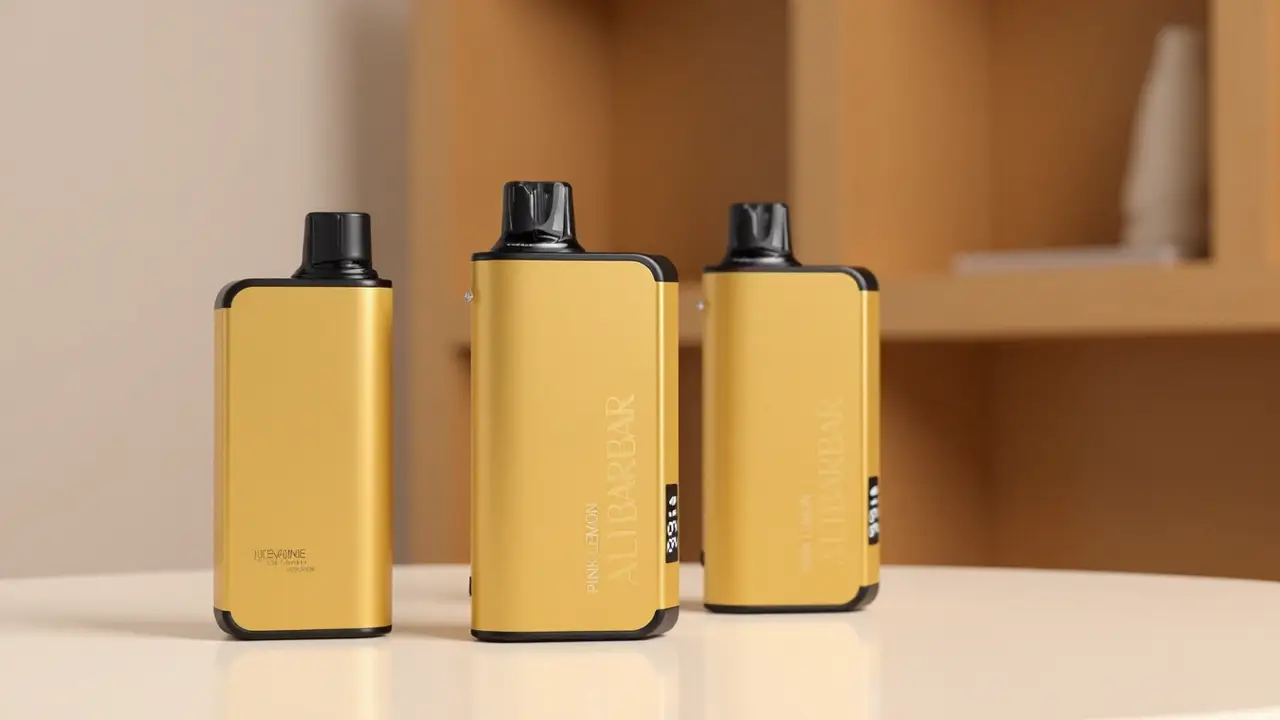
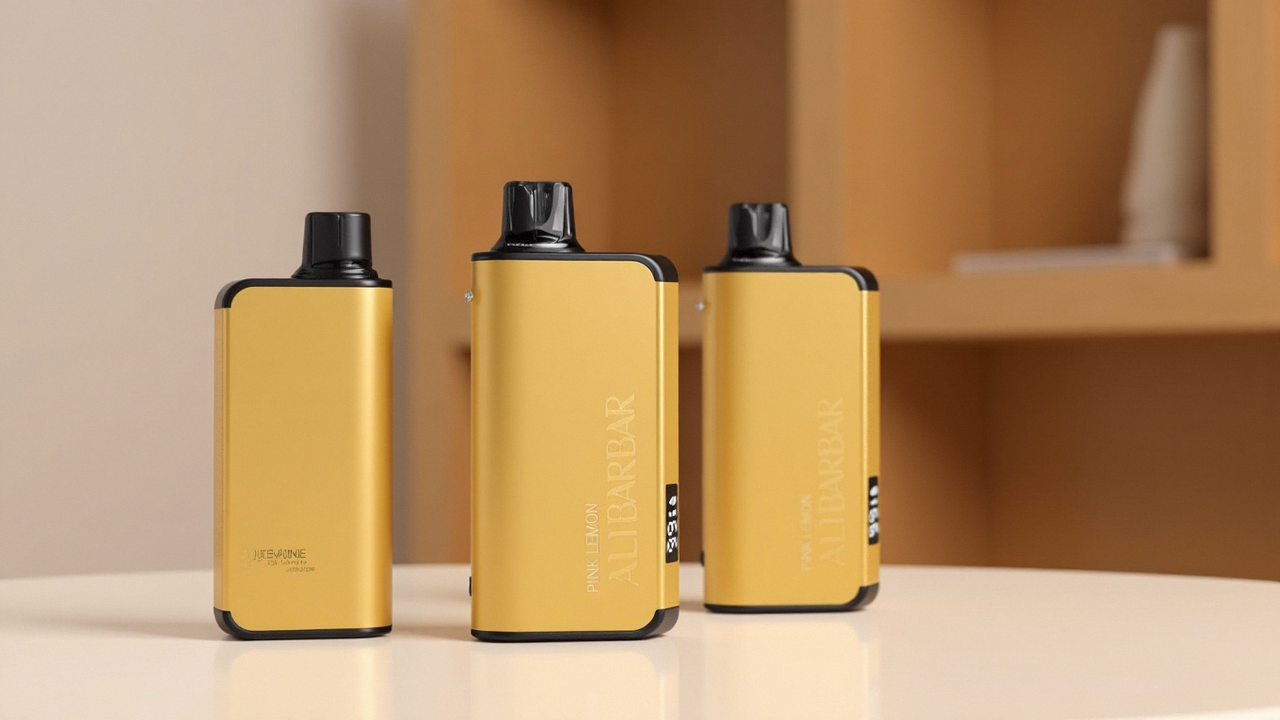
Consider, for example, the approach taken by ALIBARBAR’s INGOT series. The INGOT 9000 integrates a mesh coil architecture that spreads heat across a larger surface area, lowering the local temperature at any one point and permitting faster wicking without scorching. Combined with a pre-primed organic cotton bed and a transparent power-level indicator, it gives the user two critical things: a lower base risk of dry hits during moderate use, and visible warning when capacity is nearly exhausted so the device is not pushed beyond its safe window. The INGOT 15000 extends this logic with a higher-capacity reservoir, reducing the frequency of the low-liquid state where wicks are most vulnerable.
In adjustable systems like the Ice Adjust 12000, the ability to switch output modes — for instance, between a normal 12-watt setting and a softer 8-watt mode for thinner liquids — provides a practical tool for the user to match the device’s thermal output to the wick’s capillary limits. This is not a perfect solution; it shifts some responsibility onto the user to select the correct mode. But it acknowledges a truth that many closed systems ignore: no single power level suits every liquid viscosity.
Other device families in the market tackle the issue differently. Some premium pod systems employ “smart” chipsets that monitor coil resistance in real time and throttle power if they detect a steep rise indicative of dry coil conditions. These are effective but more expensive. At the opposite end, simplistic disposable designs rely entirely on oversized wicks and conservative power settings to stay within safe margins, which can lead to weaker output but a lower incidence of burnt hits. There is no universally superior approach — only different balances between control, convenience, and resilience. What separates an informed purchase from a gamble is access to specifications that let you map a device’s design choices onto your own usage pattern.
A Practical Checklist for Avoiding Burnt Hits
Users can move beyond guesswork by applying a consistent evaluation framework that starts before the first puff and continues through the device’s life. Use the following steps as a diagnostic and preventative routine:
Check the coil type and resistance: Lower resistance (below 0.8 ohm) generally demands faster wicking. If the manufacturer does not state resistance, treat that as a signal that the device is not intended for chain use.
Ask about wicking material: Organic cotton is predictable but requires time to prime. Ceramic handles heat better but may mute some notes. Know what you are working with.
Prime thoroughly: For replaceable-head systems, wait a full five minutes before firing. For sealed systems, take a few unpowered draws to pull liquid into the wick before activating.
Observe the puff protocol: After every two consecutive draws, wait at least 30 seconds. This simple discipline often eliminates the “third-puff burn” entirely.
Mind the liquid level: In transparent reservoirs, never let the liquid drop below the wicking ports. In enclosed devices, treat the first hint of a weakened draw as a warning, not a challenge to take a longer pull.
Match power to mode if adjustable: High-VG or complex-flavour liquids perform better at lower settings. Reserve high-output modes for thin, simple blends.
Store at room temperature: Avoid leaving the device in direct sunlight or in pockets that trap body heat for extended periods.
Clean contacts regularly: Poor electrical connections can introduce resistance spikes that confuse cheap controllers, causing intermittent over-voltage. A quick wipe with a dry cloth makes a difference.
Diagnostic prompt: “Does my device give me any feedback about its operating state?” If the answer is no, you are running open-loop. That means you must be more conservative with usage patterns, or accept that you will occasionally overwhelm the wicking system.
Common Missteps and Market Realities
Even armed with good information, users sabotage their own satisfaction through a few recurring errors.
Overweighting one specification while ignoring complementary factors. Many buyers fixate on “puff count” or “battery capacity,” assuming a large number guarantees a long, pleasant life. A 10,000-puff device with a wick that gives out after 1,500 puffs in real-world use is a poor value. The engineering reality is that coil longevity, not just tank size, dictates the usable life. If a manufacturer prominently advertises puff count but buries or omits coil material details, treat the omission as intentional.
Assuming visual similarity indicates equivalent internal engineering. The exterior shells of many portable devices are sourced from shared moulding factories, but the internals — coil resistance, wick density, airflow routing, soldering quality — can differ dramatically. A product that looks identical to another may function very differently. This is especially true for devices sold through unverified channels, where counterfeit units with substandard cotton and poorly calibrated power boards are common.
Undervaluing modularity in cost-per-use calculations. A fully sealed, disposable device might seem cheaper at point of sale, but if it burns out early it represents a total loss. A refillable pod system where a worn coil can be replaced for a small cost not only reduces waste but also lowers the risk of extended disappointment. The industry has been slow to educate users on this, partly because the margins on disposables are far more attractive for some manufacturers.
Confusing category terminology with technical specifications. Terms like “dry hit protection” appear in product descriptions without a defined standard. One brand’s “protection” might mean a voltage cut-off at 5 seconds, while another’s could mean a temperature sensor linked to the coil. Without a published methodology, the claim is marketing, not engineering. Savvy users look for measurable indicators — stated resistance, wick material, wattage range — rather than adjectives.
From a supply-chain perspective, the burnt-taste challenge sits at the intersection of cost pressure and user expectations. Manufacturers aiming for the lowest possible unit price are forced to select the cheapest wicking materials and the simplest power circuits; these are exactly the components that fail first under strain. The industry will not fix this through goodwill alone. It improves when buyers demand better data and gravitate toward devices and retailers that provide it.
Frequently Asked Questions
Q: Can a burnt taste be fixed once it occurs?
A: No. If the wick has been charred, the damage is permanent. The burnt deposits will continue to release off-odours and tastes. The only remedy is to replace the head, pod, or entire device, depending on the architecture.
Q: Why does a brand-new device sometimes taste burnt on the first puff?
A: Most often, the user fired the device before priming was complete. In sealed, pre-filled systems, the wick may have been dry from storage and needs a full minute to saturate after removing any protective caps. If priming does not help, the unit may be a factory defect (short or hot-spot on the coil) and should be set aside.
Q: Does higher nicotine strength contribute to burnt hits?
A: Indirectly. Nicotine does not itself burn more easily, but many higher-strength formulas use a higher PG ratio, which wicks faster and can mask problems until the liquid runs very low, at which point the coil overheats quickly. The real variable is viscosity and residue, not nicotine concentration.
Q: Are adjustable-power devices less likely to give burnt hits?
A: They are less likely if used correctly. The ability to lower power gives the wick more time to resaturate. However, setting the power too high for the coil impedance or liquid viscosity can cause a burnt hit almost instantly. They are safer only when the user understands the relationship between ohms, watts, and wicking rate.
Q: How can I assess a device’s resistance to burnt hits before buying?
A: Look for three markers: (1) the manufacturer publishes coil resistance and recommended wattage range; (2) the device includes a moisture-sealed charging port and clear battery-life indicator; (3) there is a stated wicking material and it is not described in generic terms like “high-quality fiber.” If those details are absent, contact the seller. A retailer that can provide them — like OZVAPE Shop — is dealing in factory-certified inventory, not repackaged grey-market goods.
Q: Does inhaling a burnt hit pose any safety concerns?
A: An occasional dry hit is intensely unpleasant but typically presents no long-term issue beyond temporary irritation. However, repeatedly using a device that is producing burnt material means you are inhaling pyrolysis byproducts that should not be in the aerosol stream. If a device consistently tastes burnt after normal priming, stop using it.
Q: What is the single biggest contributor to mid-device burnt taste in sealed systems?
A: Chain-drawing. Even well-designed devices need a few seconds between puffs for the wick to re-saturate. Users who take three or four rapid consecutive draws are essentially cooking the coil dry.
Q: Are there devices that actively prevent burnt hits?
A: Some systems employ temperature control or “replay” modes that track coil conditions and prevent firing if the wick is too dry. These are effective but not foolproof, and they add cost. No device can eliminate the possibility — only reduce the probability.
Q: I’ve tried everything and still get burnt hits. Could the e-liquid be the problem?
A: Yes. Certain concentrated flavourings and artificial sweeteners caramelise at lower temperatures than the wick’s combustion point, forming a crust that insulates the coil and leads to hot spots. If a particular liquid repeatedly burns in devices where others do not, the liquid is the prime suspect.
Q: Is there any reliable recourse when a device tastes burnt right out of the box?
A: Document the issue immediately. A credible retailer with local accountability — this is where operating through a platform that prioritises authorised sourcing matters — should offer a replacement if the defect is verified. Look for clear warranty and return conditions before you buy; they are a signal of confidence in the supply chain.
Conclusion
A burnt taste is not a random annoyance; it is physics teaching a lesson about power, wicking, and the importance of matching a device’s engineering to your actual routine. The factors that combine to produce that acrid hit are well understood, and so are the design strategies that minimise its likelihood. The question is whether the information needed to apply that understanding is available to you before you commit to a product.
That is where a thoughtfully curated channel can make a real difference. For adult users in Australia seeking devices that demonstrate considered thermal management and are backed by transparent specifications, OZVAPE Shop offers a selection of factory-certified tools, including the ALIBARBAR range, that allow you to evaluate wick materials, power levels, and modularity in one place. It is not about finding the device with the most dramatic claims; it is about finding the one whose design aligns with how you actually use it. The right choice is always the one that fits your cadence, not the one that shouts loudest.