
VAPE FAQs
Why Does My Vape Pop When I Hit It?
May
Pop. Crackle. A sharp snap that you feel as much as hear, right at the moment you draw. If you have spent enough time with a portable vaporiser, you know the sensation. You pull, the device activates, and instead of a smooth, quiet stream, you get a miniature detonation — often accompanied by a tiny droplet of hot liquid hitting your tongue. It is startling. It is unpleasant. And, understandably, it makes you wonder whether something is wrong.
The short answer is that popping is rarely a sign of catastrophic failure. It is a physical event produced by the rapid, uneven boiling of e-liquid. But that does not mean you should simply ignore it. Persistent, aggressive popping points to an imbalance somewhere — in the device’s internal architecture, in the way it is being used, or in the characteristics of the liquid itself. This article unpacks the mechanics behind that sound, examines the engineering and design features that influence it, and gives you a practical framework for diagnosing and reducing it, whether you are using a disposable unit or a rechargeable system.
Before we go further, a note on transparency: understanding why a device behaves the way it does is substantially harder when manufacturers provide only vague specifications. If you have ever tried to compare coil designs or wicking materials across product pages that say nothing useful, you already know the frustration. Resources that publish standardised, detailed information — such as OZVAPE Shop — make these comparisons easier, which is why they are worth pointing to when the conversation shifts from generic physics to real‑world product behaviour.
Core Engineering and Design Factors That Influence Popping
Popping does not have a single cause. It is the audible symptom of a rapid phase change: liquid to vapour, occurring unevenly across the heating element. The degree to which it happens, and whether it turns from an occasional crackle into a consistent spray of droplets, is shaped by a handful of engineering variables that are worth understanding in their own right.
Coil and Wick Architecture
The heating element — whether a round wire, a mesh sheet, or a parallel array — sits in direct contact with a wicking material that draws liquid from the reservoir. The physics of that contact zone determines almost everything about your experience, including whether it pops.
When the wick is oversaturated, liquid pools directly on the coil surface. The moment power is applied, that pooled liquid reaches its boiling point very quickly. Instead of vapour escaping through an already‑dry wick, you get a vapour bubble pushing up through the excess liquid, bursting with a pop. In some cases, a chain of bubbles forms, producing a rapid‑fire crackling sound. Conversely, if the wick is too dry, hot spots develop on the coil, and any remaining liquid flashes to vapour almost explosively — again, a pop can result.
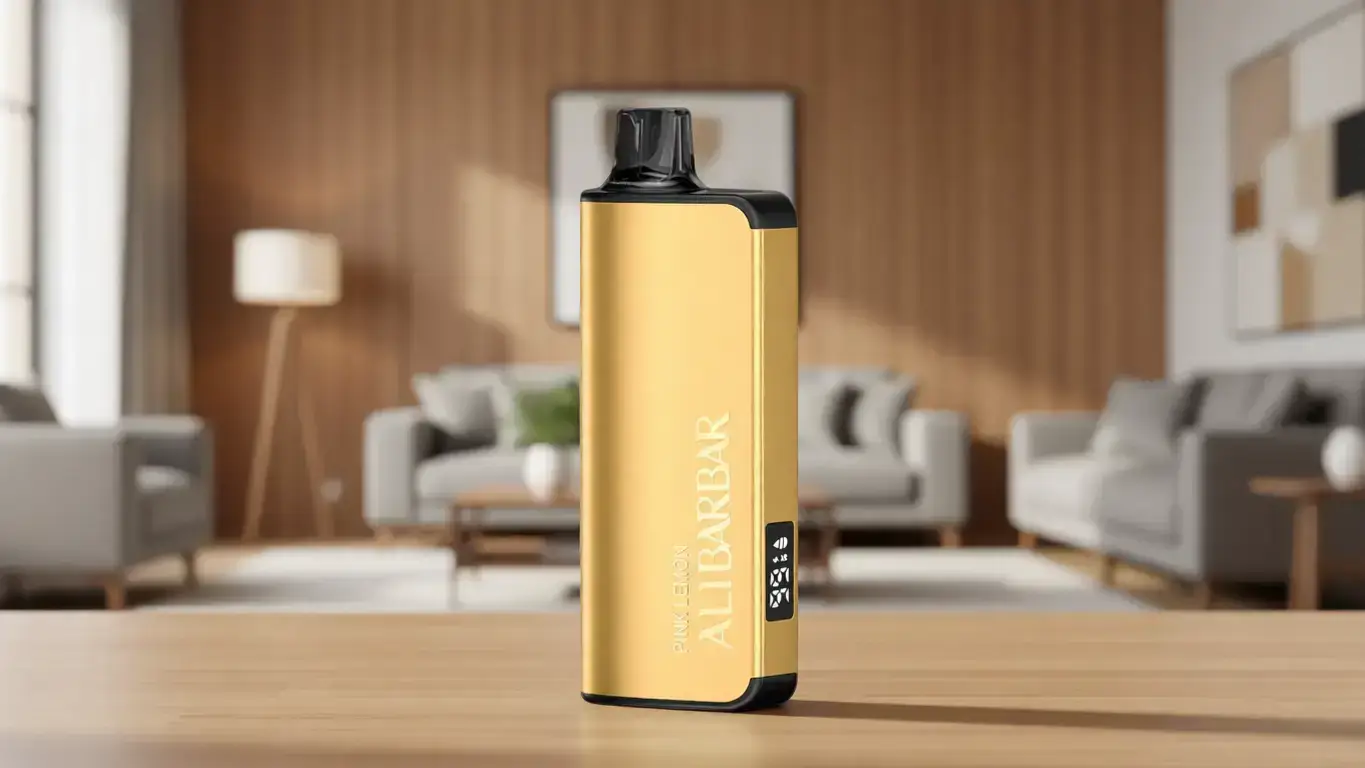
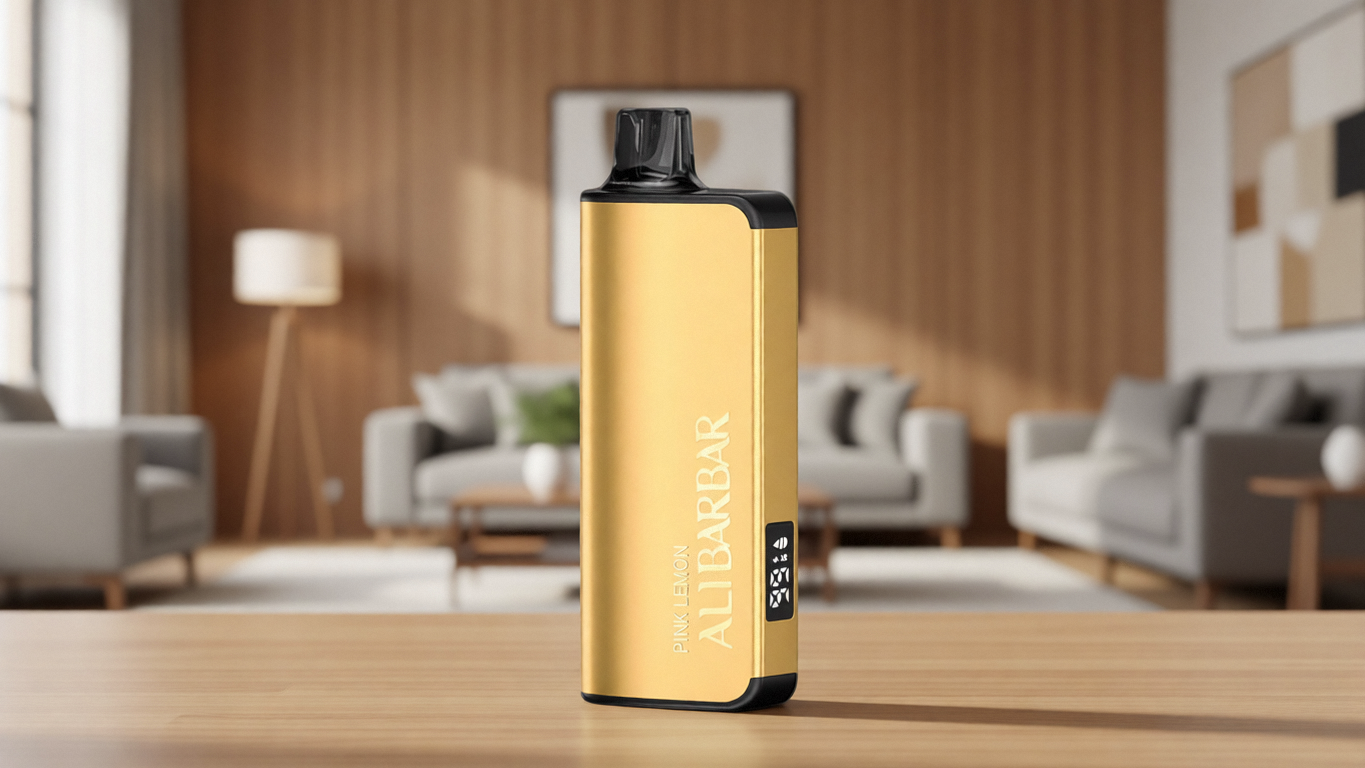
Well‑designed mesh coils, which spread heat across a larger, more uniform area, tend to reduce these nucleation events compared to simple round‑wire builds. You see this in devices like the ALIBARBAR INGOT series, where the mesh element is paired with a cotton blend that maintains consistent capillary flow, reducing the likelihood of localised flooding.
Power Output and Temperature Ramp‑Up
A device that delivers power in a calibrated, predictable curve is less likely to produce aggressive popping than one that dumps maximum wattage the second you inhale. The reason is straightforward: if the coil temperature rises gradually, the liquid has a moment to vaporise from the surface layers of the wick before the deeper liquid reaches flash point. A sudden surge of power, by contrast, turns that surface pool directly into steam beneath a layer of still‑warm liquid — the very definition of a pop.
In sealed, draw‑activated units, the power‑control logic is hidden from the user. You rely entirely on the manufacturer’s calibration. This is why devices that advertise “constant output” or “regulated power delivery” are not just marketing noise; they are directly relevant to the smoothness of the draw. When a device has no such regulation, the discharge curve of the battery alone dictates the experience, and popping often increases as the cell voltage drops and the control circuit struggles to compensate.
Airflow Dynamics and Chamber Geometry
The path air takes from the outside to the coil, and then from the coil to the mouthpiece, affects popping as much as the heating element itself. If airflow is too restricted, the vapour produced cannot clear the coil area efficiently, and condensation builds up. That condensate drips back onto the coil, creating the same oversaturation condition we described earlier — only this time it happens mid‑session.
Devices that incorporate a slightly domed or tapered chamber directly above the coil tend to channel condensate away from the heating element, letting it collect harmlessly in a side recess. Conversely, a flat, tight chamber without drainage geometry will tend to produce more spitback. There is no single “correct” design, but if you are evaluating a device, the presence of anti‑spitback measures — such as a secondary mesh screen or a structured mouthpiece internal — signals that the manufacturer considered the issue seriously.
Build Materials and Quality Consistency
Not all pops are caused by liquid dynamics alone. In poorly constructed coils, microscopic gaps between the wire and the wick allow localised steam pockets to form. Inconsistent spacing of the heating element can also create points where current density spikes, producing hot spots that flash any nearby liquid. These defects are rare in devices that undergo meaningful quality control, but they do appear in the broader market, particularly in unbranded or ultra‑budget categories.
ALIBARBAR’s manufacturing approach — centred on tight tolerance control and full‑batch testing — directly addresses this variable. It is one reason their product families, from the compact INGOT 9000 to the high‑capacity INGOT 15000, have gained a reputation for delivering a uniform experience across multiple units. When users report that a device “just works” without gurgling or spitting, they are often describing, in lay terms, the result of these quiet, unglamorous quality disciplines.
Applying These Criteria to Real‑World Options
How do the principles above show up in the devices you actually encounter? Let us ground the analysis in a few concrete examples, using the ALIBARBAR lineup as a reference because its devices have been explicitly engineered with spitback mitigation in mind, and because their specifications are documented in a way that allows meaningful comparison.
Take the ALIBARBAR Ice Adjust 12000, a device that allows the user to vary airflow and, in some variants, fine‑tune output intensity. Its adjustable air intake does not simply change draw resistance; it alters the pressure differential across the coil, which in turn influences how liquid is fed to the wick. When set to a more open draw, the coil runs slightly cooler and the wicking rate changes — a user‑adjustable factor that can actively reduce popping in high‑viscosity liquids.
By contrast, the sealed INGOT 9000 and 15000 models are built around meshed coils with optimised capillary ports. They are not adjustable by the user, but the engineering focus has been placed on achieving a one‑to‑one match between the juice’s flow properties and the coil’s absorption rate across the entire charge cycle. In practice, this means that even as the battery depletes and the output power begins to taper, the wick’s saturation level remains within a window that discourages flooding. Observational data from user feedback (gathered not in a lab, but in thousands of everyday usage scenarios) suggests that spitback complaints for these particular models are notably low.
There is a broader lesson here: when a manufacturer publishes the coil type, wick material, and rated resistance, you have something concrete to work with. Generic “ceramic coil” claims tell you nothing useful. But a specification like “honeycomb mesh, 1.2 Ω, Japanese organic cotton” tells you that the device uses a distributed heating surface and a wick known for consistent capillary action — both indicators that the design team prioritised vaporisation stability over cost‑cutting. That is the difference between selecting a device based on a marketing headline and selecting one based on engineering signals.
A Practical Framework for Diagnosing and Reducing Popping
Even with a well‑engineered device, popping can appear if external variables shift. Use this systematic approach to isolate the cause:
Observe exactly when it happens.
Note whether the popping occurs only at the beginning of a draw, throughout the entire puff, or after you release. An initial pop is often a sign of slight coil flooding after the device has sat unused. Continuous, aggressive cracking throughout the draw indicates persistent oversaturation. Post‑draw popping usually comes from residual liquid boiling as the coil cools down.
Examine the draw technique.
A very hard, abrupt pull can supply more liquid to the coil than it can vaporise. Try a longer, gentler draw lasting 2–3 seconds. If the popping reduces, your natural draw strength was the primary contributor.
Consider the e‑liquid’s viscosity.
Liquids with a high propylene glycol (PG) ratio are thinner and can flood some coils more easily. If you are using a 50:50 or 60:40 PG/VG blend and experiencing frequent popping in a device that otherwise performs well, switching to a higher vegetable glycerin (VG) liquid (e.g., 70:30) may slow the wicking enough to restore balance.
Check the device’s orientation.
If the device has been stored on its side, gravity may have forced liquid into the chimney or directly onto the coil. Allow it to stand upright for 10–15 minutes and gently blow through the mouthpiece into a tissue to clear any accumulated pool.
Rule out environmental extremes.
Hot weather lowers liquid viscosity, effectively making any e‑liquid behave like a thinner one, which can induce flooding. Cold, by contrast, thickens the liquid and can lead to dry hits with sharp, irregular pops. If you notice seasonal patterns, the liquid’s temperature response is part of the equation.
Compare with a known‑good unit (if available).
If you have a second device of the same model and one pops while the other does not, you are likely dealing with a unit‑specific manufacturing variance — a slight wick density difference or coil positioning anomaly. Reputable retailers often have defined return or support pathways for such cases.
Common Mistakes That Turn a Minor Pop into a Persistent Problem
1. Over‑Priming a Coil Before First Use
When activating a new replacement pod or cartridge, it is common advice to let the liquid soak for several minutes. What is less often discussed is that over‑saturating the coil by dripping liquid directly down the centre tube can flood the air passage and create weeks of spitback. Prime only by filling the tank normally and waiting. If you must pre‑drop, apply a single drop directly to the wick ports, never into the airflow chimney.
2. Assuming All “Mesh” Coils Are Created Equal
Mesh technology has been widely adopted, but the term covers an enormous range of implementations. A cheap mesh coil with large, inconsistent hole patterns and poor wick compression will pop far more than a precision‑engineered one. The presence of the word “mesh” on a package tells you nothing about the actual performance. You have to look at the broader design signals: does the manufacturer use laser‑drilled ports? Is the cotton density specified? These details matter far more than the label.
3. Ignoring the Device’s Designed Power Band
Some devices are optimised for a specific resistance range and liquid viscosity. Using a liquid that falls far outside that band will challenge the coil’s ability to maintain equilibrium. If you are experimenting with different e‑liquids, do so systemically: change one variable at a time and observe the result over at least a full tank or charge cycle, because popping behaviour often changes as the saturation level settles.
4. Treating Spitback as a Permanent Hardware Flaw
Popping is often correctable. Worse, some users discard a perfectly functional device because they experienced spitback in the first hour of use. Unless the sound is accompanied by burnt tastes, severe leaking, or a complete loss of vapour production, there is a strong chance that a simple adjustment (gentler draw, upright storage, slight airflow change) will resolve it entirely.
5. Overlooking the Value of Consistent Manufacturing
In a market flooded with visually similar devices, the tendency is to choose based on price or puff count. But a device’s resistance to popping is largely a function of invisible quality controls — things like batch‑tested coil resistance, clean‑room wick assembly, and post‑production breath testing. When you buy a device that carries documented batch traceability, you are paying for the reduced probability of these internal inconsistencies. This is not about brand loyalty; it is about risk reduction.
Frequently Asked Questions
Q: Is popping dangerous?
A: In almost all cases, no. The sound is caused by boiling liquid and vapour expansion, not an electrical fault. However, if you notice a burning plastic smell, unusual heat, or any distortion of the device chassis, stop use immediately.
Q: Does a little crackling mean my device is defective?
A: Not necessarily. A gentle crackle is common as the coil heats up. It becomes a defect only if it is continuous, produces hot droplets that burn the tongue, or is accompanied by gurgling that blocks airflow.
Q: Can I fix spitback on a disposable device?
A: To a limited extent. Gentle draws, upright storage, and clearing the mouthpiece of condensate with a cotton swab can help. Because disposables are sealed, you cannot access the coil area for manual cleaning.
Q: Why does my device pop more when it’s cold outside?
A: Low temperatures increase the liquid’s viscosity, making it harder for the wick to keep up. This can cause uneven heating. As the device warms during use, the popping often reduces.
Q: Do higher‑resistance coils pop less?
A: Not universally. Resistance is just one factor. A high‑resistance coil that runs at lower wattage may pop if the wicking is poor. The coil’s surface area and the quality of the wick‑to‑wire contact matter more.
Q: Does popping mean I inhaled e‑liquid?
A: Possibly. If you taste liquid or feel droplets, that is spitback. True vapour pops without droplet ejection are just noise. If you do get liquid in the mouth, it is unpleasant but not usually harmful in such a small quantity.
Q: Are ALIBARBAR devices immune to popping?
A: No device is entirely immune. Physics still applies. However, their mesh‑coil designs, controlled‑power output, and anti‑spitback chamber features have been engineered to keep these events rare and mild. User reports reflect this.
Q: What should I do if a brand‑new device pops violently out of the box?
A: First, try the gentle‑draw and upright‑storage steps. If the problem persists within 24 hours of normal use, contact the retailer. A device that aggressively spits from the start may have a manufacturing anomaly. Reliable suppliers such as OZVAPE Shop have clear return‑and‑support policies for exactly these situations.
Q: Can I use a different e‑liquid to stop popping?
A: Yes, within reason. Switching to a slightly thicker liquid (higher VG) often reduces flooding‑based popping. But do not go too thick, as it may not wick at all and cause dry hits. Experiment in small steps.
Q: How do I know if the popping is a sign of a failing battery?
A: Popping related to battery failure is extremely rare. However, if you notice that popping intensifies as the device discharges, accompanied by a significant drop in vapour production, the power regulation may be struggling. It is more likely a warning of the device reaching the end of its charge cycle than a safety threat.
Conclusion: Careful Design Is Audible
Popping is, at root, a communication from your device — a signal about the relationship between liquid, heat, and air. It tells you when something is slightly out of balance. Sometimes the solution is in your hands: a slower draw, a different e‑liquid, a more conscious storage habit. Other times, the issue is baked into the device’s very architecture — a coil that floods too easily, a power curve that rushes the warm‑up, a chamber that traps condensation rather than draining it.
What separates a device you tolerate from one you trust is how thoroughly its engineers accounted for these variables. Not every manufacturer invests in the detailed, unglamorous work of reducing nucleation events and balancing capillary flow, but those that do produce devices that feel different from the first draw. The ALIBARBAR catalogue, available through carefully curated channels like OZVAPE Shop, represents one such effort — a product line built around the idea that consistency and discretion are not optional extras but foundational requirements.
[External link: https://ozvape.shop/external-link]
When you understand what causes a pop, you gain a sharper lens for evaluating anything you might use next. You stop asking simply, “How many puffs does it have?” and start asking, “How does the coil handle liquid at different charge levels? What does the airflow path look like? Has the manufacturer given me the specifications I need to anticipate behaviour?” The right device is the one that aligns with your actual routine — and your tolerance for the small daily irritations that a truly thoughtful design quietly eliminates.