
VAPE FAQs
Why Does My Vape Keep Hissing?

Aug
If you have spent any time around portable electronic vaporisers, you have almost certainly encountered the quiet, persistent sizzle that seems to emanate from the device long after you stop drawing on it, or the sharper, intermittent hiss that accompanies every activation. The sound can range from a barely audible whisper to something that feels loud enough to draw attention in a quiet room. The immediate question is always the same: is this normal, or is something wrong?
For many adult users, the answer remains frustratingly vague. Online forums offer contradictory advice, and the documentation packed with the device rarely acknowledges the issue at all. What is missing is a structured understanding of why a vaporiser produces sound in the first place — and how device engineering either minimises or amplifies those sounds depending on a handful of specific design choices.
At OZVAPE Shop, we handle a broad range of factory‑certified devices, and the “hissing” question is one of the most consistent themes in post‑purchase conversations. This article draws on extended observation of product behaviour, manufacturer specifications, and the real‑world experiences of adult users. It explains the physics behind the sound, the engineering factors that control it, and how to evaluate any device before the noise ever becomes a distraction.
Understanding What Matters: Core Engineering and Design Factors
The sound a vaporiser produces is never random. It is the audible signature of a series of physical processes — liquid being drawn through a wicking material, heated to its boiling point, and converted into an inhalable aerosol. The way a device manages those processes determines whether the experience is quiet and consistent, or characterised by the pops, crackles, and hisses that users learn to dread. Four engineering layers are especially relevant.
Internal Architecture and Output Consistency
At the heart of every device is a heating element — typically a wire coil or a mesh substrate — wrapped around or pressed against a porous wicking material. When current passes through the element, it generates heat. The e‑liquid, held by the wick, reaches a temperature at which it vaporises. That is, fundamentally, a miniature boiling event. Boiling is rarely silent. As liquid turns to gas, bubbles form and collapse, generating pressure waves that our ears interpret as sizzling or hissing.
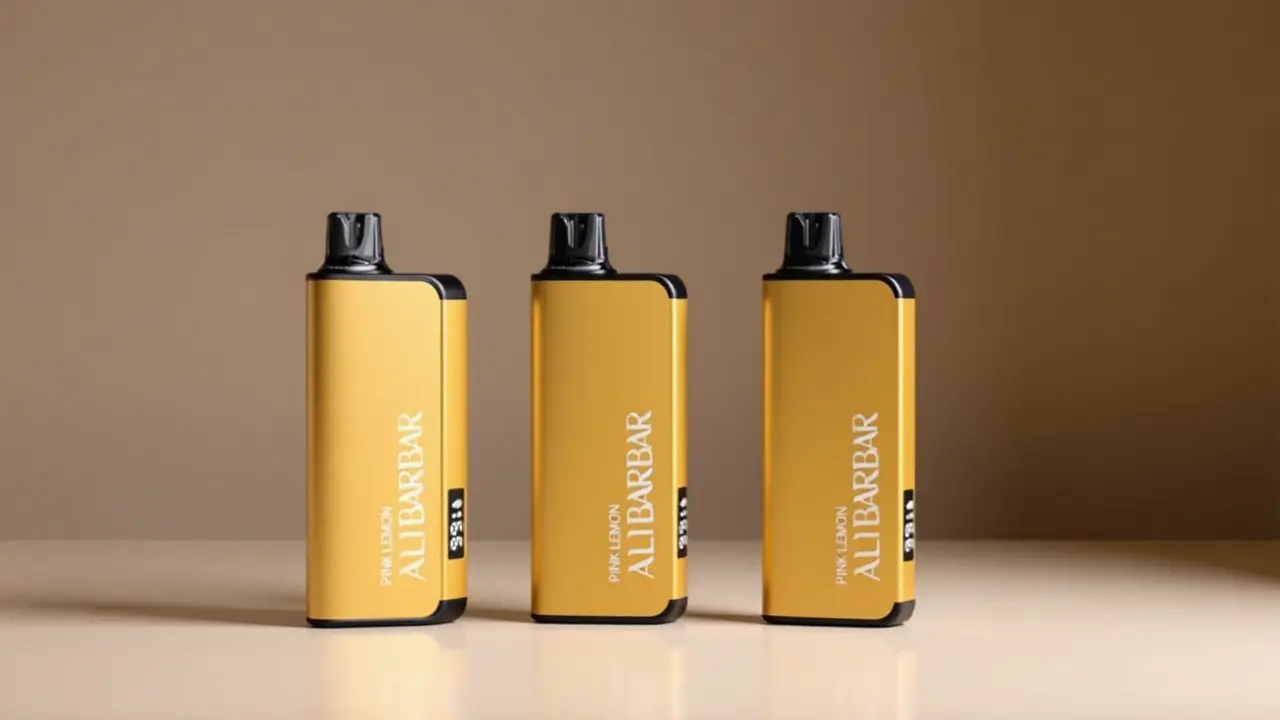
The difference between a quiet device and a noisy one often comes down to how uniformly the heating surface distributes thermal energy. A mesh coil architecture, found across the ALIBARBAR INGOT series, spreads current across a broad, flat surface rather than concentrating it along a thin wire. The result is a gentler, more even boil — no hot spots that flash‑vaporise liquid in sudden bursts. The sound signature becomes a low‑level, steady exhalation rather than a staccato crackle.
Cheaper, poorly spaced wire coils introduce inconsistencies. A section of the coil may run slightly hotter, causing localised, explosive boiling. The hiss becomes sharper and more unpredictable. Users often report that a device starts quiet and grows noisy as the coil ages, which aligns with the gradual deformation of the heating element under repeated thermal cycling. The engineering takeaway is straightforward: a device that cannot maintain consistent output temperature across its heating surface cannot deliver a quiet experience over its full intended life.
Power Management and Status Transparency
The relationship between power delivery and audible output is less obvious but equally important. A heating element relies on a stable voltage to maintain its target temperature. If the power source sags under load, or if the device’s regulation circuitry is too crude to compensate, the coil temperature will oscillate. These oscillations produce changes in the boiling intensity, and that translates directly into variable noise.
Many mass‑market devices lack any form of real‑time power monitoring. The user receives no feedback about battery condition until the device simply stops working. That is a problem not just for convenience but for acoustic behaviour. As the battery depletes, the voltage may drop enough to reduce the coil temperature to the point where boiling becomes incomplete — more splutter than steady vaporisation. The characteristic wet hiss that users sometimes notice toward the end of a device’s charge cycle is often precisely this: insufficient power to sustain a clean phase change.
Devices that incorporate clear status indicators — such as the battery level displays found on the ALIBARBAR INGOT 15000 — give the user an opportunity to anticipate and manage this behaviour. If you can see that the charge is low, you understand the hiss for what it is: a predictable artefact of power depletion, not a developing fault. The hidden cost of ambiguous status feedback is that it forces users to treat every unexpected sound as a potential malfunction, eroding confidence in the device unnecessarily.
Physical Design and Material Durability
The pathway that air follows through a device is another critical noise source. Air moving past sharp edges, through sudden constrictions, or across poorly finished surfaces generates turbulence, and turbulence generates sound. A high‑pitched hiss during a draw is often aerodynamic in origin, not thermal. It originates in the intake tract or the mouthpiece rather than at the coil.
Precision‑moulded components with smooth internal transitions make a measurable difference. The mouthpiece shape, the angle of the airflow channel, and the way air enters the chamber all shape the acoustic signature. The ALIBARBAR Ice Adjust 12000, for instance, uses a vented mouthpiece design that avoids abrupt changes in diameter along the air path, reducing both draw noise and the likelihood of condensation pockets that create their own subtle gurgle.
Material choice matters in another way: surface durability. A device carried daily in a pocket or bag accumulates microscopic abrasion. Over time, small burrs or irregularities on the exterior of the mouthpiece or near the air inlet can generate a faint whistle that has nothing to do with the heating element. Hard‑anodised finishes and scratch‑resistant polymers, such as those employed across the ALIBARBAR range, preserve the original aerodynamic profile far longer than soft‑touch coatings that degrade within weeks.
Modularity and Lifecycle Flexibility
A design that allows the user to replace a worn component does more than extend total device life; it gives direct control over noise‑related degradation. In fixed‑architecture, sealed units, the entire device is a single consumable. When the coil begins to produce excess hiss — whether from accumulated residue, wick collapse, or general wear — there is no intervention short of replacing the whole unit.
Modular designs, including the replaceable cartridge systems found on the ALIBARBAR Ingot series, change the equation. If a coil develops an irritating noise signature after several hundred activation cycles, swapping the pod restores factory‑quiet operation instantly. The user gains the ability to maintain not only output quality but acoustic comfort as a separate, manageable variable. That distinction may seem subtle, but it holds considerable weight for anyone who uses a device throughout a full working day and cannot afford to tolerate a noisy, attention‑drawing unit.
This factor intersects with cost‑per‑use calculations in ways that are frequently overlooked. A slightly higher initial outlay for a device that allows component‑level refresh cycles can avoid the cumulative expense of discarding whole units prematurely — and it addresses the frustration of living with a failing device longer than necessary because the replacement cost feels too high.
Applying These Criteria to Real-World Options
The four engineering layers described above provide a lens for evaluating actual devices without relying on marketing language or superficial aesthetics. Consider a user who values a quiet, consistent draw above all else. That user needs a mesh‑based heating element to minimise thermal noise, stable power regulation with visible charge status to prevent low‑voltage splutter, a carefully shaped airflow path to reduce turbulence, and, if usage is heavy, a cartridge‑replacement architecture to maintain performance over time.
Few devices in the current market satisfy all four conditions simultaneously. Many compact, sealed‑unit designs prioritise size and simplicity, omitting battery indicators and settling for wire‑coil assemblies that are adequate but acoustically imperfect. Some high‑capacity units offer mesh coils and status displays, yet employ plastic mouthpieces that introduce subtle whistling as they wear. The challenge for the informed buyer is to recognise where a particular device lies on this spectrum and to decide which compromises are tolerable.
The ALIBARBAR INGOT 15000 illustrates how these priorities can be balanced. The mesh coil architecture — described in manufacturer documentation as a lattice‑type heating surface — provides the thermal consistency that keeps vaporisation noise low and even. A prominent battery status indicator eliminates uncertainty about whether a change in sound is a genuine issue or a predictable low‑power condition. The mouthpiece and chassis materials, chosen for hardness and dimensional stability, maintain their acoustic characteristics even after extended daily carry. And the replaceable pod system allows the user to reset the acoustic baseline whenever the original cartridge reaches the end of its service life.
For a different use case — someone who prefers a smaller, ultra‑portable device — the trade‑offs shift. Compact designs often integrate the mouthpiece into the main body, limiting airflow refinement. Users who value discretion above all may accept a slightly noisier draw in exchange for a device that disappears into a shirt pocket. The point is not that one product is universally superior, but that the selection process becomes clear once the criteria are explicit.
A Practical Framework for Evaluation
Most users do not have the opportunity to disassemble a device and examine its internal architecture. But you can assess its likely behaviour through a series of simple, repeatable observations. Before you commit to a purchase — or when you suspect a device in hand is underperforming — apply the following diagnostic sequence:
At‑rest observation: Listen carefully to the device when it is idle. A faint, irregular crackle that continues long after the last draw suggests residual liquid boiling on an overheated coil, a sign of poor thermal regulation or a coil already beginning to fail.
Low‑power draw: Activate the device and inhale as gently as possible. Is the sound a steady, soft exhale, or does it sputter? A clean vaporisation event should be nearly silent at minimal airflow. Sputtering at low draw rates often indicates a flooded coil or a heating element that cannot reach temperature quickly enough.
Full draw profile: Inhale at a normal, consistent rate. Note any change in sound character as the draw continues. A device that starts quiet and becomes noisier mid‑draw may have an airflow channel that feeds liquid inconsistently to the coil, causing the saturation level to change rapidly.
Battery correlation: Compare the device’s sound signature when fully charged and when the battery is low. If the hiss intensifies or becomes wet‑sounding as the charge depletes, you are observing a voltage‑driven inconsistency. This is manageable if the device provides clear charge status; it is deeply frustrating if it does not.
Long‑term listening: Pay attention over the first few days of use. A device that grows audibly louder after only moderate use is revealing something about coil degradation rate or wick material quality. Use this as a data point for future buying decisions.
Pair this observational discipline with a careful look at the published specifications. Where a manufacturer lists mesh coil construction, anti‑leak architecture, and a visible battery display, the device is engineered with noise control in mind — even if the marketing materials never mention sound directly. Where those specifications are absent, the acoustic experience is likely to be less considered.
Common Selection Errors and Industry Observations
Having spoken with thousands of adult users and observed buying patterns across the Australian market, OZVAPE Shop can identify several systematic errors that lead people toward devices that will inevitably hiss more than they should. These are not isolated mistakes; they are recurring patterns that reflect a gap between how devices are marketed and how they are actually used.
1. Overweighting puff count while ignoring thermal architecture.
A common buying heuristic is to compare claimed puff counts. A higher number feels like more value. But a device offering 9,000 activation cycles means nothing if the coil becomes acoustically irritating after 2,000 because it was never designed to handle that duty cycle gracefully. The real comparison should be between the coil’s rated durability and its actual failure mode — something almost never disclosed. Mesh‑based systems, like those in the ALIBARBAR INGOT lineup, tend to degrade more gracefully, maintaining a consistent noise floor until the very end of the coil’s life, while wire‑coil systems often become problematic much earlier.
2. Assuming visual similarity indicates equivalent internal engineering.
The external shells of many devices look nearly identical. The same injection‑moulded form factor, the same rounded edges, the same colour palette. Inside, however, the differences are stark. A device from a factory that invests in tightly controlled resistance welding and automated wick insertion will produce a heating element that is dimensionally stable from unit to unit. A visually identical unit from a lower‑cost supply chain may exhibit coil‑to‑coil variation that directly impacts audible output. There is no way to detect this from a photograph, which is why sourcing from a retailer that maintains documented, factory‑direct supply lines — rather than aggregated grey‑market channels — becomes a practical form of quality assurance.
3. Undervaluing modularity in long‑term noise management.
A sealed device that hisses quietly when new will eventually become louder. That is a physical certainty: coil residue builds, wicking fibre compacts, airflow paths accumulate condensation deposits. When the entire unit is disposable, the user must either live with the noise or discard the device. Small additional investment in a modular system pays for itself the first time you swap a cartridge and restore a near‑silent draw, rather than tolerating months of audible irritation.
4. Confusing category terminology with technical specifications.
Terms like “adjustable airflow” are thrown around liberally. In some devices, this means a precision slider that gives genuinely variable, repeatable settings across a wide range. In others, it means a small plastic tab that opens or closes a single bypass hole, offering two rough positions with little refinement. The acoustic difference between a carefully managed air path and a crude one is substantial. Do not take the label at face value; watch independent reviews that focus on draw sound and consistency.
Frequently Asked Questions
Q: Is a slight hissing sound during normal use a sign of a defect?
A: Not necessarily. A gentle, steady hiss during the draw is typically the sound of e‑liquid boiling evenly on the heating element. It becomes a concern only when it is excessively loud, intermittent, or accompanied by a crackling or popping that feels irregular.
Q: What does a popping or crackling sound indicate?
A: Popping often results from liquid pooling on the coil and being flash‑vaporised in bursts rather than steadily. It can be caused by over‑saturation of the wick, a coil that runs too hot relative to the liquid, or a power surge from poor regulation. Occasional pops are common; sustained crackling that persists after the draw suggests a flooded coil.
Q: Can a device hiss even when it is not being used?
A: Yes, though it should be minimal. Residual heat after a draw can continue to vaporise a tiny amount of liquid for a few seconds. If the hissing continues significantly longer, it may indicate that the coil is retaining heat abnormally, possibly due to residue accumulation or a damaged heating element.
Q: How can I reduce or stop a persistent hiss?
A: For sealed units, there is limited recourse — ensure the device is stored upright, avoid over‑priming, and allow adequate time between draws. For modular systems, replacing the cartridge or pod is often the simplest and most effective solution. If the issue is present from the first use on a new device, it is likely a design characteristic rather than a fault.
Q: Does hissing indicate a safety issue?
A: In the vast majority of cases, no. Hissing is an acoustic byproduct of vaporisation, not a sign of electrical danger. However, if a device becomes audibly hotter than normal, emits a burning odour, or produces a sharp, high‑pitched electronic whine distinct from boiling, discontinue use and contact the supplier.
Q: Are certain device types more prone to hissing than others?
A: Devices with simple wire coils and minimal airflow refinement tend to produce more variable sound. Mesh coil systems and devices with carefully designed air intake paths are generally quieter. In modular systems, the ability to replace a worn coil before it becomes noisy gives the user a control that sealed units do not offer.
Q: Can a low battery cause increased hissing?
A: Indirectly, yes. A battery unable to sustain the required voltage may lead to cooler coil temperatures and incomplete vaporisation, which produces a wetter, more noticeable sizzle. A device with a clear battery level display lets you distinguish this from a true malfunction.
Q: Should I return a device that hisses loudly from the first activation?
A: If the noise is dramatically out of character compared to other units of the same model, it is reasonable to seek a replacement. At OZVAPE Shop, we treat this as a potential quality variance and handle it through our standard support process, requesting a brief description or recording to diagnose the issue.
Q: What maintenance steps help keep a device quiet over time?
A: Keep the device clean, especially around the mouthpiece and air inlets. Store it upright to prevent liquid from migrating into the air channel. For modular systems, wipe the contacts between the battery and pod occasionally to ensure stable power transfer. Replace pods or cartridges promptly when the sound signature changes, rather than waiting until output quality drops.
Q: How does OZVAPE Shop handle a unit that develops an abnormal hiss?
A: We assess each case individually, guided by the principle that a device should operate as described for its reasonable expected life. If a fault is confirmed, we arrange replacement or credit in accordance with Australian consumer law. That process relies on a clear supply chain that allows us to trace each unit back to its authorised origin, which in turn gives us the confidence to act quickly.
Conclusion
A hissing vaporiser is not a mystery. It is a physical signal — an audible report on the condition of a heating element, the stability of a power supply, and the quality of an airflow system. Users who learn to interpret that signal gain an immediate advantage: they stop guessing whether a device is “normal” and start understanding what the sound reveals about engineering standards.
The most important decision, however, happens before the first draw. Choosing a device with a mesh‑based coil, reliable power management, precision‑moulded airway components, and the option to refresh worn cartridges is effectively choosing a device engineered for quiet, predictable operation. These are not luxury features; they are the practical differences between a unit that stays unobtrusive for months and one that becomes an irritation after weeks.
When you source that device through a retailer that prioritises factory‑certified inventory and transparent accountability — like OZVAPE Shop — you add a layer of insurance that the product in your hand matches the documented specifications. That matters because even the best‑engineered device cannot deliver on its design intent if it has been mishandled somewhere in an opaque supply chain.
The right device for you is the one that aligns with your daily routine: how long you use it, how discreet you need it to be, and whether you are willing to maintain it or prefer to replace it outright. The hiss, ultimately, is a detail. But it is the kind of detail that reveals whether a product was designed by people who use it themselves and who understand that quiet competence means more than any claim on a package. Listen carefully, and the device will tell you everything you need to know.