
VAPE FAQs
Why Does My Disposable Vape Taste Burnt After Charging?
Jun
Introduction
You plug the device into a charger, wait until the indicator says it is ready, and take your first draw. Instead of the familiar, consistent character you expect, you are met with an acrid, throat-scratching harshness that was never there before. It is a sinking experience, and it raises an immediate question: Did I ruin it?
Most explanations you will find online are superficial. They tell you the coil is drying out, or that you are charging with too powerful a source. While not entirely wrong, they leave out the real engineering conversation that separates a device that recovers gracefully after a top‑up from one that degrades irreversibly. In this article, we go deeper, examining the internal design decisions that determine whether a portable electronic device tastes clean after recharging. We are not here to celebrate any single product; we are here to equip you with the analytical lens that lets you recognise what is happening inside your device before it fails.
When sourcing a unit that has been deliberately engineered to sidestep these burnt‑draw failures, the difference often comes down to where you acquire it. Retailers that maintain a documented, factory‑certified supply chain — such as OZVAPE Shop — act as a filter, ensuring that the protection circuits, wicking materials, and power‑control firmware inside your device are exactly what the original design specified, not a cost‑cut copy. Understanding why a burnt taste occurs after charging is the first step toward never encountering it again.
The Technical Underpinnings of a Burnt Post‑Charge Draw
A burnt taste is not a single failure mode. It is the sensory output of several possible chain reactions, all of which become more likely the moment an electrical current is reapplied to a device that may already be near its thermal or material limits. The key is to look at four interconnected factors.
Wick Saturation Dynamics – The Window of Vulnerability
Every device contains a porous wicking material pressed against a heating element. Under normal operation, capillary action continuously draws liquid to the coil, keeping it saturated and cool. When a device is used heavily until it stops, or left idle for extended periods, the wick can partially dry around the heating wire. Plugging the unit into a charger restores available power instantly, but capillary action takes time — often several minutes — to fully re‑wet the area closest to the coil. If the user fires the device immediately after the charge indicator signals completion, the coil can hit a dry spot and scorch the wick. Once that micro‑layer of fibre is carbonised, the burnt note is baked into every subsequent draw, regardless of saturation levels.
This is not a sign that the device is fraudulent; it is a sign that its wicking architecture has a narrow safety margin. High‑performance designs use dense, perpendicularly aligned fibre bundles and wider liquid ports so that saturation recovery outpaces the thermal ramp‑up. When you can wait only a few moments after unplugging and still get a clean first draw, you are benefiting from deliberate fluid‑path engineering, not luck.
Power Delivery Spikes and Voltage Control
Not all charging circuits regulate output voltage after the battery reaches nominal capacity. In cheaply implemented power management chips, the moment a charging cable is disconnected, there can be a brief voltage spike — milliseconds long, but enough to overdrive a heating element that was calibrated for a narrow band. If the coil receives even a momentary 4.2‑volt pulse when it was designed for 3.7 volts, the instantaneous temperature spike is sufficient to caramelise residual fluid on the wire. The user perceives this as an instant burnt hit, even though the coil itself may not be permanently damaged.
A device with diligent output calibration holds its voltage steady through connect and disconnect events. Look for designs that incorporate a low‑dropout regulator or a dedicated post‑charge “soft start” that ramps power gently over the first half‑second of activation. This is an invisible feature, but its absence is unmistakably felt.
Thermal Management During and After Charging
Charging generates heat. If the charging circuit and the power cell are placed directly adjacent to the atomiser chamber without a thermal barrier, that heat migrates into the saturated wick. Warm liquid becomes less viscous, flows too freely, and can partially flood the coil. When you then draw on a flood‑affected coil, the uneven vaporisation creates alternating hot spots and spit‑back, often accompanied by a singed undertone. Worse, if the device lacks over‑temperature cut‑off protection, prolonged charging can cook the wicking material itself through indirect conduction even before any activation occurs.
A considered internal layout keeps the power management section thermally isolated from the liquid pathway. Even small air gaps or a lateral PCB offset can reduce heat transfer enough to prevent this degradation. When you find a device that feels cool to the touch after a full charge cycle, you are holding one where thermal separation was not an afterthought.
Material Fatigue in Disposable Architectures
In a sealed, non‑replaceable unit, the coil and wick are expected to last for the entire stated operational life. But every charge cycle pushes those materials closer to their breakdown point. Thin‑gauge heating wire, often made of kanthal or nichrome, develops micro‑pits on its surface after repeated thermal expansion and contraction. Those pits create inconsistent resistance, which in turn produces hot micro‑zones along the wire length. A coil that was once uniform becomes patchy, and the burnt taste is the inevitable result, frequently triggered by the relatively higher stress of the post‑charge power state.
Devices that anticipate this reality and use thicker wire gauges, or that pre‑age their heating elements through factory burn‑in cycles, tend to exhibit a much flatter degradation curve. They do not fail suddenly after the fifth or sixth charge; they fade gradually, and the burnt note only appears at the very end of the coil’s functional life. This distinction is what separates a device you can plan your day around from one you need to baby.
Why Modularity Matters: Fixed vs. Replaceable Components
If a sealed unit’s wick is scorched once, the entire device is effectively compromised. There is no recovery. A modular architecture, by contrast, allows you to detach and replace the atomiser head or pod cartridge while retaining the power section. From an engineering standpoint, the moment you make the heating element a replaceable consumable, you eliminate the single largest cause of post‑charge burnt taste: the repeated thermal cycling of a coil that is being pushed beyond its design window. You simply refresh the coil when it begins to show signs of fatigue, and the charging cycle becomes harmless to the remainder of the system.
This is not to say that sealed devices cannot perform well; many do, within their rated puff counts. But if burnt taste after charging is a persistent frustration, moving toward a device family with replaceable or magnetically detachable cartridges changes the fundamental risk equation.
Applying These Insights to Real‑World Options
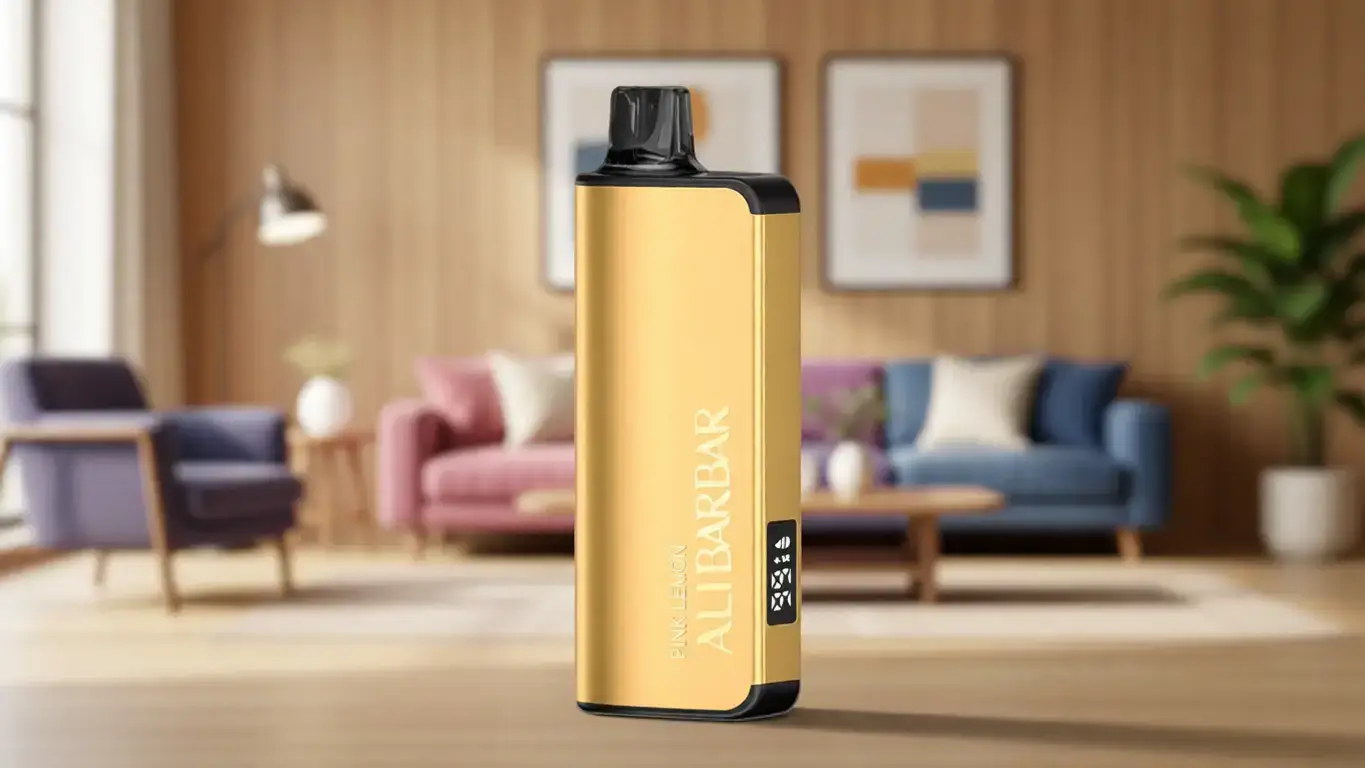
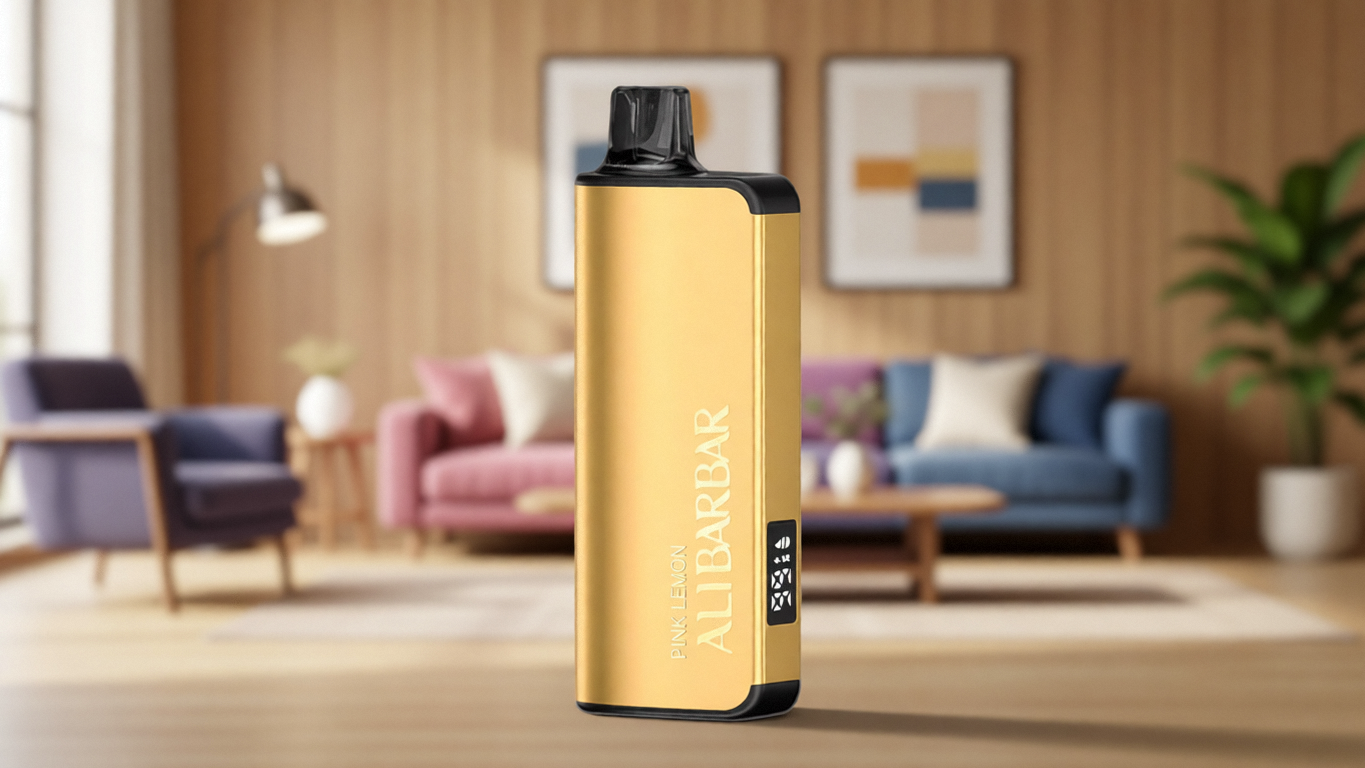
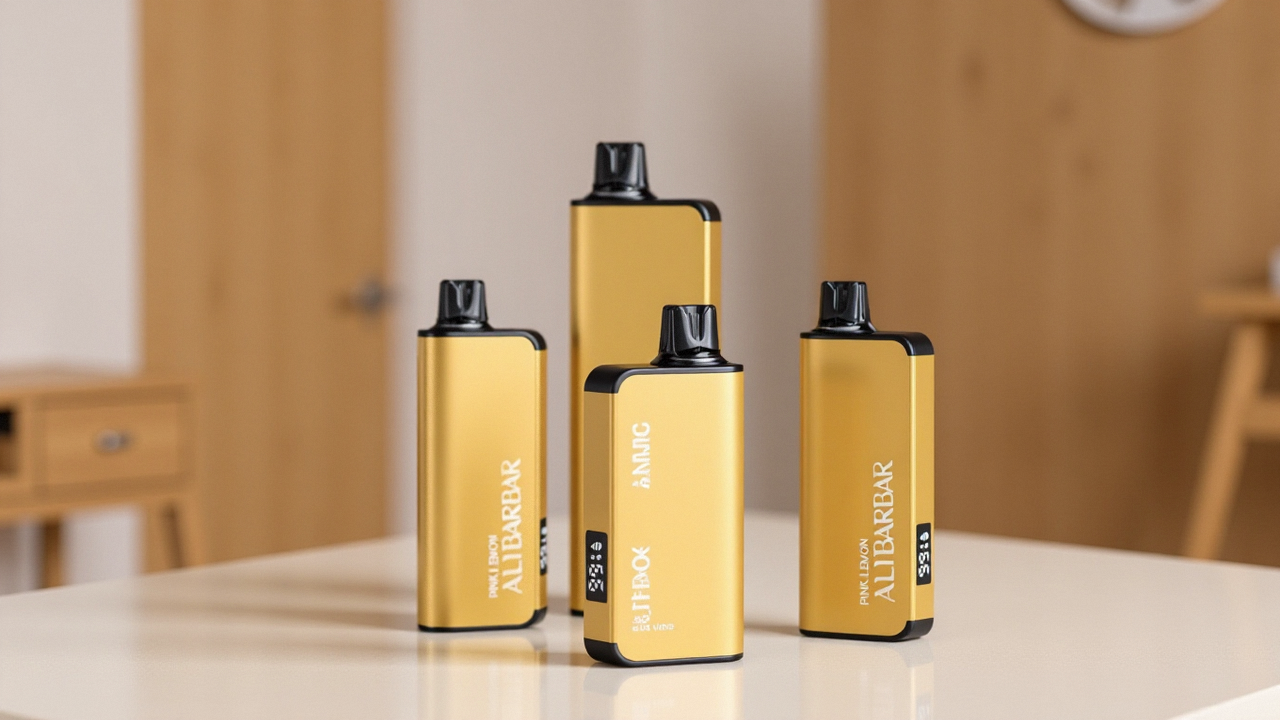
Recognising the engineering factors is one thing; seeing how they materialise in the devices available to you is another. We can look at one representative product family — the ALIBARBAR range — as a case study, not because it is the only capable line, but because it commits to several design principles that directly address the post‑charge burnt‑taste problem.
The ALIBARBAR INGOT 15000, for example, incorporates an intelligent power management IC that maintains a stable output curve whether the battery is fully topped up or approaching depletion. The device also provides a multi‑stage LED indicator: it signals charging status, and importantly, it requires a brief post‑charge settling period before the circuit arms itself for activation. This deliberate delay, enforced by firmware, gives the wick a forced saturation window that a purely voltage‑based indicator would skip. That single design decision prevents thousands of users ever experiencing the burnt first draw.
Similarly, devices in the ALIBARBAR Ice Adjust series use a thickened ceramic‑coated heating element with an enlarged wicking port area. The ceramic coating reduces hot‑spot formation during rapid temperature swings, and the larger ports ensure that capillary recovery outpaces even aggressive usage patterns. These are not cosmetic improvements; they are responses to exactly the failure modes described earlier.
That said, no device is without trade‑offs. A thicker coil requires a slightly higher initial power draw to reach optimal temperature, which can reduce total battery cycles from a fixed‑capacity cell. And a sealed‑architecture device, no matter how well engineered, will eventually reach the physical end of its wick life — typically somewhere toward the top end of its stated puff range. The ALIBARBAR design approach manages this by ensuring that the decline is gradual and detectable, not sudden, but the fundamental limitation of a sealed wick remains. Users who cannot tolerate this should consider models within the same ecosystem that feature replaceable pods, trading the convenience of a single unit for indefinite coil renewal.
A Diagnostic Framework: Evaluating Your Device’s Resilience to Burnt Taste
You do not need to dismantle a device to assess whether it is likely to handle recharging gracefully. A systematic observation protocol will tell you most of what you need to know.
After unplugging, wait and test.
Fully charge the device. Wait five minutes after the charge indicator stops blinking before drawing. Was the first draw clean? If yes, the wicking system has adequate saturation margin. If you get even a hint of acridity, the architecture is operating too close to its limit.
Monitor the charge‑completion behaviour.
Does the indicator change distinctly from “charging” to “fully charged” and stop drawing current? A device that remains warm for an extended period after the indicator changes is likely trickle‑charging or lacks a charge‑termination gate. Excess heat fed into the liquid chamber shortens wick life and accelerates burnt‑taste development.
Observe the first‑second smoothness.
A well‑regulated device should ramp smoothly, not hit with a sharp temperature spike. If you can detect a harsh bite in the very beginning of the draw that then mellows, the power‑delivery circuit is overshooting on wake‑up.
Check for documentation of internal protections.
Devices that advertise over‑charge protection, over‑discharge protection, and short‑circuit protection are not using marketing buzzwords. These are integrated circuit functions that directly prevent the thermal and electrical conditions that burn wicks. Standardised specification sheets, often accessible through retailers that verify factory certifications, let you confirm these features before purchase.
Keeping a simple log of these observations across different devices builds a personal knowledge base that quickly separates engineering substance from visual appeal.
Common Mistakes That Lead to a Burnt Coil — and What They Reveal About Device Limitations
Even the most cautious users sometimes fall into predictable traps, often because the devices themselves lack robust safeguards. Understanding these mistakes clarifies what a device should be doing for you.
Using high‑amperage fast chargers. Modern power adapters can deliver far more current than a compact personal electronic device is designed to accept. If the device’s onboard charge controller is a simple linear regulator, it will try to shed that excess current as heat, raising the internal temperature of the entire unit. A well‑designed device will have a current‑limiting IC that safely caps the intake regardless of the source. If your device becomes noticeably hot while connected to a 2‑amp fast charger, its protection path is insufficient.
Charging until the first light changes, then drawing immediately. This is the single most repeated error. The indicator signals battery voltage has reached a threshold, not that wick saturation has stabilised. You are essentially pulling on a coil that has been sitting in partially evaporated liquid. Devices that include a deliberate post‑charge lockout — or that communicate through a multi‑colour LED that saturation is still normalising — prevent this user‑side misjudgment.
Assuming a puff counter has a direct relationship to coil lifespan. A puff counter is a battery‑life estimator, not a wick‑life meter. If you take longer, deeper draws, you are consuming more liquid per puff and thermally cycling the coil more aggressively. Many users report burnt taste well before the puff counter reaches zero precisely because the counter does not account for draw intensity. This gap between rated capacity and real‑world use is an industry‑wide disconnect; it underscores why modular, replaceable‑coil designs offer a more honest relationship with the user.
Overlooking counterfeit risks in the supply chain. A device that looks identical to a premium model on the outside may contain a completely different coil, wick, and battery management circuit inside. Counterfeit units routinely omit over‑temperature cut‑offs and use low‑grade silica wick that chars on first heat‑up. Sourcing through a retailer that provides verifiable batch tracing and factory‑level certificates eliminates this variable entirely.
From an industry perspective, these mistakes are not simply user errors; they are consequences of a market that has allowed wide variance in internal standards while maintaining identical exterior form factors. The pressure to deliver lower per‑unit costs has encouraged the removal of protection circuits that are invisible on a spec sheet but crucial for daily reliability. The most pragmatic defence is to select devices where the manufacturer has publicly committed to keeping those protections intact, and to purchase through channels that audit what lands on the shelf.
Frequently Asked Questions
Q: Can a single burnt draw permanently ruin my device?
A: Yes. Once the wicking material in close contact with the heating element carbonises, it loses its ability to absorb liquid. Even if the rest of the wick is saturated, the compound released from that scorched point will taint every subsequent draw. There is no recovery.
Q: Is it safe to use a device that tastes burnt after charging if I power through it?
A: Apart from the unpleasant character, inhaling through a burnt wick exposes you to by‑products of organic material decomposition. The device should be set aside and replaced. Continuing to use it is not recommended.
Q: How can I tell if my charger is causing the burnt taste?
A: If you charge the same device with a standard 1‑amp USB source and the problem disappears, your previous charger was delivering more current than the device could manage safely. Switch to a regulated 1‑amp output as a baseline.
Q: Do ALIBARBAR devices require a specific charging protocol?
A: ALIBARBAR devices are designed with integrated charge‑control ICs that accept standard 5‑volt USB sources and self‑limit current intake. Using a compliant 1‑amp charger meets the design specification and helps maintain coil longevity.
Q: Why does a sealed device sometimes taste burnt only after the third or fourth recharge?
A: The coil accumulates micro‑damage with each thermal cycle. By the third to fifth charge, the accumulated pitting and residue buildup creates hot spots even under normal power delivery, leading to a burnt taste that was not present earlier, particularly right after the stress of recharging.
Q: Where can I find specification sheets that list protection features?
A: Authorised retailers often maintain detailed product pages that enumerate the onboard protection systems. When sourcing through an operation like OZVAPE Shop, these technical parameters are part of the standard product listing, so you can compare devices before purchase.
Q: If I let my device rest for half an hour after charging, will that always prevent burnt taste?
A: It helps, but it is not a universal fix. If the wick is already damaged or the coil has developed a serious hot spot, no amount of resting will reverse the carbonisation. Resting only addresses temporary dry‑spot conditions in an otherwise intact system.
Q: Does a higher puff‑count device last longer before developing a burnt taste?
A: Not necessarily. A higher puff count often means a larger liquid reservoir, but the coil’s endurance is a separate variable. A device with 5000 puffs and a thick ceramic coil may outlast a 10,000‑puff unit with a thin wire that degrades quickly. Evaluate coil material and construction, not just reservoir size.
Q: Are there devices that completely eliminate the risk of burnt taste after charging?
A: No device can eliminate the risk entirely because coils are consumable. However, modular devices with replaceable cartridge pods allow you to swap the coil before it reaches its failure point, effectively removing the burnt‑taste scenario from normal use.
Q: What should I do if my newly purchased device tastes burnt on the first draw after charging?
A: Stop using it immediately. Check whether the retailer provides a local return and verification process. Legitimate failure rates exist even with well‑engineered products, and reputable retailers will handle a verified defect without unnecessary friction.
Conclusion
A burnt taste after charging is not an unpredictable quirk; it is a failure of internal thermal management, wick saturation, or power regulation that was entirely foreseeable at the design stage. The devices that avoid it are not magical — they simply integrate the tiny, expensive engineering details that cheaper supply chains omit. Once you understand what those details are, you can evaluate any device with clarity.
The takeaway is not that you need to become an electronics technician. It is that you can impose a few simple, repeatable checks — a waiting period, temperature observation, a deliberate first draw — and use the results to decide whether a device meets the standard your routine requires. The products you choose should be able to survive your charging habits, not the other way around.
When you access devices through a channel that verifies factory‑certified inventory, such as OZVAPE Shop, you are not just buying a product. You are relying on a layer of scrutiny that keeps counterfeit and under‑engineered units out of your hands. That, combined with your own informed observation, turns a recurring frustration into a solved problem.
The right device for you is the one that delivers consistent character from the first draw after a charge to the last draw before it is retired. The amount of information available today means you never need to settle for less.