
VAPE FAQs
Why Are My Vape Coils Burning So Fast?
Aug
It happens with frustrating regularity: a fresh coil installed with care, a brief window of clean, satisfying performance, and then—often within a day or two—that unmistakable acrid note that signals burnt wicking material. For anyone who relies on a refillable pod system or a modular tank, accelerated coil death isn’t just an annoyance. It is a recurring cost, a source of inconsistent output, and a barrier to the straightforward experience most adult users want. Understanding why coils fail prematurely, and what can be done about it, separates an informed user from one who simply absorbs the expense.
The causes are rarely mysterious once you examine the engineering and chemical interactions at play. What follows is a structured guide to coil longevity, built from the ground up to explain how materials, power management, and daily habits intersect. Where relevant, we’ll reference design choices observed in current-generation devices available through channels like OZVAPE Shop — not as a pitch, but because a transparent, documented supply chain makes it easier to trace exactly what you’re getting and whether it aligns with the principles discussed here.
Understanding What Matters: The Engineering Behind Coil Longevity
A coil assembly is deceptively simple to look at: a resistive wire wrapped around a wicking medium, enclosed in a metal housing. Its failure modes, however, reflect a chain of interdependent factors that are often invisible at the point of purchase. Each of the following factors is presented through the user frustration it addresses, so you can learn to recognise design strengths without relying on marketing language.
Wick Material and Saturation Dynamics
The wick’s job is to transport e-liquid to the heating element at exactly the rate it is consumed. When that balance breaks, the wire contacts dry material and the temperature spikes instantly—charring the wick and permanently altering the taste. Organic cotton remains the most common wicking medium because of its absorbency, but the fibre density, strand alignment, and number of juice ports all determine how quickly it saturates. Poorly designed wicking channels starve the coil during chain use; overly compressed cotton chokes the flow entirely.
What to look for: a coil architecture that uses multiple, adequately sized intake ports and a cotton blend that shows visible expansion during priming. Devices that incorporate mesh-style heating elements spread heat across a broader surface, reducing hot-spot formation. The engineering choice between round-wire and mesh is not trivial—mesh coils routinely demonstrate longer operational life in controlled testing because they vaporise liquid more evenly, reducing the probability of localised scorching.
Power Regulation and Thermal Stability
Even the most absorbent wick cannot survive a power surge. When a device delivers more wattage than the coil rating anticipates, or fails to regulate its output as the battery drains, the resulting dry hit is often the beginning of irreversible degradation. The coil’s resistance also drifts with heat; without a stable power management chipset that can sense and compensate, users experience a performance curve that decays over a single session.
The practical value of clear power readouts and temperature control modes is enormous. A device that displays real-time resistance and applies consistent output pacing effectively prevents the user from inadvertently cooking the coil. Conversely, entry-level kits that omit a digital screen leave the user blind to whether the battery is pushing a weakened signal, creating conditions where the coil operates just below the burn threshold until it eventually tips over.
E-liquid Viscosity and Residue Buildup
The chemical profile of the liquid you choose is as decisive as the hardware. High-VG (vegetable glycerine) blends produce dense vapour but have a higher viscosity, meaning they wick more slowly. If a coil was engineered for thinner, high-PG liquids, a thick liquid will repeatedly dry out the cotton, causing a burn that accumulates with each draw. Even more insidious is the effect of certain sweetener compounds like sucralose, which do not fully vaporise at typical operating temperatures. Instead, they caramelise on the wire, forming a black, insulating crust that forces the coil to work harder to reach target temperature—a feedback loop that accelerates burnout.
Users who report coil deaths within 48 hours are often unknowingly pairing a delicate coil build with a heavily sweetened, high-VG formula. Understanding the interaction between liquid composition and coil design is essential to making an informed purchase, and it’s why a retailer that offers consistent product specifications becomes valuable: you can cross-reference coil guidelines against the liquid’s stated PG/VG ratio before ever committing.
Coil Architecture and Airflow Integration
Airflow isn’t just about draw resistance; it’s a cooling mechanism. Coils that sit in a poorly ventilated chamber, or that receive airflow only from a single narrow inlet, run hotter for longer. Over time, this sustained heat exposure degrades both the wick and the wire’s oxidation layer, subtly altering resistance and promoting hotspot formation. The physical placement of the coil relative to the airflow path—whether it’s bottom-fed, top-fed, or side-fed—determines whether the cooling is uniform or patchy.
Recognising sound airflow design involves looking at the number of intakes, the ability to adjust them, and whether the coil itself is positioned to receive direct airstream contact across its entire surface. When a device shows no provision for airflow adjustment, it essentially locks you into a single thermal profile that may not match your usage patterns, making the difference between a coil that lasts a week and one that barely survives a commute.
Applying These Principles: How Different Device Families Handle the Burnout Problem
The wild variability in coil lifespan across the market isn’t accidental. It’s the direct consequence of engineering choices that reflect different priorities—some manufacturers invest in power regulation and wicking design, while others optimise for initial purchase price or puff count regardless of how the device behaves in its final third of life.
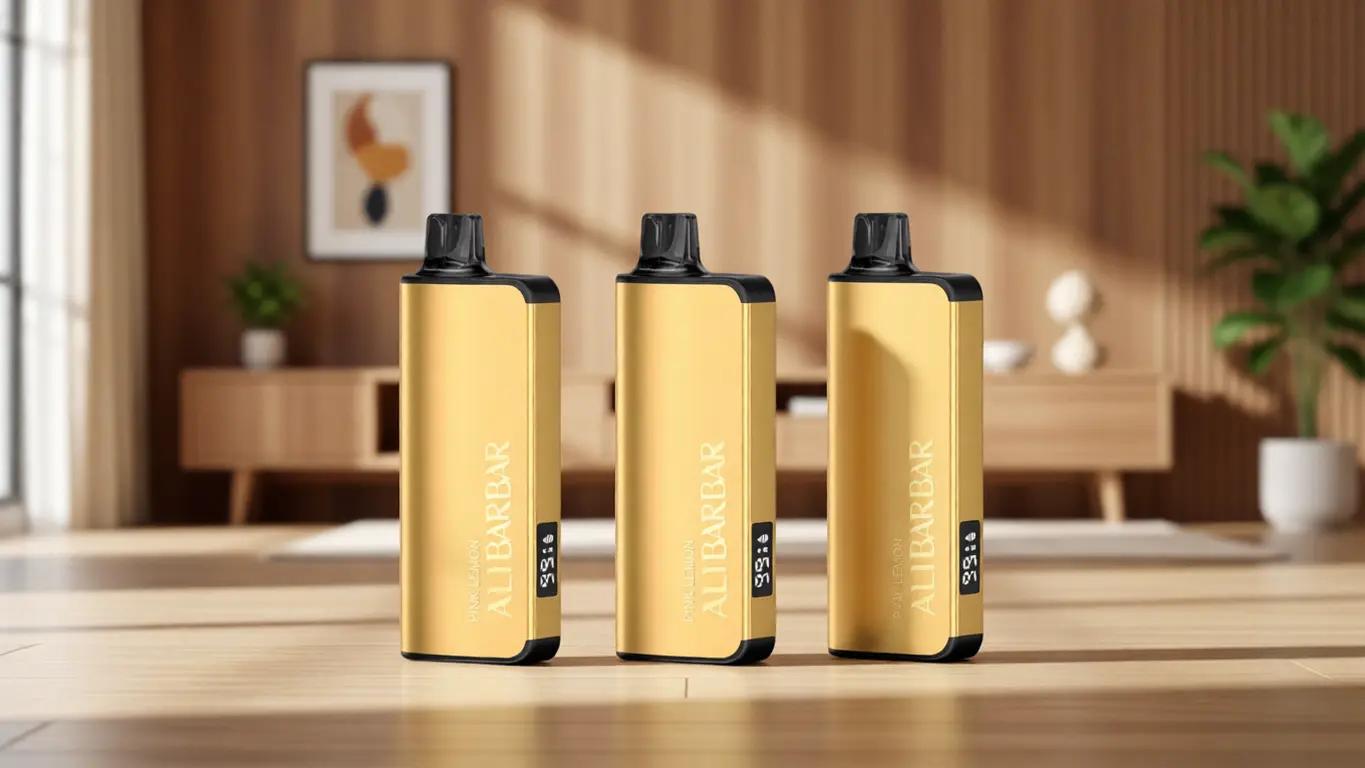
Consider the disposable segment. Many single-use devices use a simple constant-voltage output that has no ability to adjust for coil resistance drift or battery sag. Midway through its life, the user often detects a thinning of flavour and a rising dryness. By the time the device blinks its empty signal, the last several dozen draws may have been lightly singed—an experience so common it’s become silently accepted. By contrast, a device family like the ALIBARBAR range, available through OZVAPE Shop, was designed from the ground up to maintain consistent output across its entire rated capacity. The engineering literature for models like the INGOT 15000 specifies an integrated power management chip that monitors real-time battery condition and adjusts voltage to hold the heating element within a stable thermal band, which directly minimises the low-voltage tail that causes slow-burn degradation in less sophisticated units.
In the refillable pod space, the divide is between devices that offer user-adjustable power and those that rely on a single fixed wattage. Fixed-wattage pods simplify operation but demand that the coil be impeccably matched to the resistance and airflow characteristics; if the manufacturer cuts corners on wicking, no amount of user care will prevent the occasional dry hit. More advanced pod mods incorporate temperature sensing and allow the user to set a ceiling, an approach that dramatically extends coil life by capping peak heat exposure. This is an industry-wide trend, not a single-brand feature—major manufacturers like Vaporesso and Uwell have both invested in temperature-control pod architectures. The common thread is that informed selection matters more than brand loyalty.
Even at the enthusiast-mod level, with rebuildable atomisers, the same fundamentals apply. A builder working with high-grade Japanese organic cotton and precision-machined airflow knows that coil longevity is a balance of wick density, juice flow, and thermal mass. The underlying principles are universal. What changes is how much control the user is given—and how transparent the manufacturer is about the specifications. When you cannot find the coil’s recommended wattage range, or the wicking material is undisclosed, you’re navigating blind. That absence of data is a signal in itself.
A Practical Framework for Evaluating Coil Longevity Before You Buy
Rather than relying on reviews or isolated star ratings, a methodical evaluation can pre-empt the majority of premature burnout problems. Use this framework when comparing devices or placing a new coil in a familiar system.
Wattage range transparency: Does the coil packaging state both a minimum and maximum wattage? If only a single number is printed, that’s a red flag. A proper range tells you the manufacturer has tested thermal headroom.
Wick material disclosure: Check whether the coil description names the cotton type or blend. Vague terms like “natural fibre” provide no actionable information about absorbency or heat resistance.
Juice port count and placement: Visually inspect the coil head. Multiple large ports positioned at the bottom of the tank generally indicate better saturation during chain use than a single narrow slit.
Airflow adjustability: Devices with a physical slider or rotating ring let you tune cooling to your draw length. If airflow is fixed, the coil’s life becomes heavily dependent on how long your average draw is—something the factory cannot calibrate for.
Resistance stability monitoring: On displays that show resistance in real time, note whether the reading drifts more than 0.02 ohms during a session. A shifting resistance indicates the coil is already degrading or the connection is poor.
Coil break-in protocol: Before rushing to the full rated wattage, saturate the wick manually, install the coil, fill the tank, and let it sit for at least ten minutes. Then take several unpowered draws to pull liquid into the centre of the cotton. Begin at the lowest recommended wattage and increase in 2-watt increments every few puffs. Skipping these steps is the single most common cause of a burnt coil on day one.
This framework provides a systematic way to assess any coil, whether it comes from a disposable unit where you have no adjustment, a pod system with a prescribed wattage, or a fully configurable box mod. The goal is to make your selection deterministic rather than hopeful.
Common Missteps That Accelerate Coil Burnout
Even with well-engineered hardware, certain usage patterns reliably shorten coil life. These errors are so widespread that they shape the industry’s return-rate data, yet they are rarely explained with enough specificity to help users self-correct.
1. Confusing cloud production with sustainable heat output. A coil can produce dense vapour while operating at a temperature that slowly carbonises sweetener. Users may equate big clouds with good performance and keep the wattage pinned at the top of the range, effectively trading a few days of coil life for a marginally thicker draw. Recognising that a slightly lower setting often preserves flavour clarity and longevity reframes the choice.
2. Neglecting the viscosity warning signs. When a liquid’s VG content exceeds 70%, the wick’s saturation rate may fall behind the vape frequency. If you notice the flavour muting slightly after three successive draws and returning only after a pause, the coil is already starting to starve. Continuing to pull through that muted phase is the equivalent of dry-firing cotton.
3. Assuming all coils within a brand are equivalent. Many manufacturers release multiple coil variants for the same tank—a mesh coil, a round-wire coil, a high-resistance MTL coil, a low-resistance DL coil. Each variant has a distinct power band and wicking design. Swapping from one variant to another without adjusting your wattage or liquid choice frequently leads to an immediate burnout.
4. Ignoring the cumulative effect of battery sag. On unregulated or semi-regulated mods, as the battery voltage drops, the coil receives less power, causing the user to draw longer in search of the same vapour production. Those extended draws overheat the coil without a corresponding power increase, baking residue into the wire. A device that regulates output to maintain a flat voltage curve—a feature identified in the power management section—breaks this cycle entirely.
These missteps are not failures of user intelligence; they are the natural result of a market that often prizes aesthetics and puff-count claims over the educational detail that would prevent them. A transparent retail relationship, where specifications are standardised and accessible, removes much of the guesswork.
Frequently Asked Questions
Q: How long should a typical stock coil last before the flavour degrades noticeably?
A: A well-matched coil used within its rated wattage and fed with a liquid containing moderate sweetener can deliver between five and fourteen days of consistent flavour. The wide range reflects differences in daily draw count, liquid composition, and coil architecture. Mesh coils paired with unsweetened, 50/50 liquids tend to sit at the upper end.
Q: Can a burnt coil be recovered?
A: Once the cotton is charred, the burnt taste is permanent. Cleaning methods—soaking in vodka, rinsing, dry-burning—may remove some surface residue but cannot restore the integrity of the wicking fibres. Replacing the coil or, in the case of rebuildables, rewicking, is the only reliable fix.
Q: Does sweetener really destroy coils that quickly?
A: Yes. Sucralose and similar compounds caramelise at temperatures well below typical coil operating ranges. Even a lightly sweetened liquid can accumulate a dark, insulating layer on the wire within a few tanks. If you want to maximise coil life, choose liquids labelled as unsweetened or with minimal added sweetener, and inspect the coil after 10ml of consumption to gauge buildup rate.
Q: Is it safe to vape a coil that tastes slightly burnt if I can tolerate the flavour?
A: No. Once the wick is compromised, the coil delivers incomplete vaporisation, which may generate undesirable by-products. The primary risk is regularly inhaling degraded material. The immediate signal—the unpleasant taste—is the device’s way of telling you something has failed.
Q: How does the ALIBARBAR INGOT series avoid the classic burnt-taste problem common in disposables?
A: The INGOT series uses a combination of mesh heating geometry and a power-management chip that compensates for battery voltage drop. This maintains a more consistent thermal output throughout the device’s life, which prevents the low-voltage, slow-burn degradation that causes burnt notes in poorly regulated disposables.
Q: What should I do if I buy a device from OZVAPE Shop and the coil burns within the first day?
A: Record the device model, coil resistance, wattage setting, and liquid used, then contact the support team. OZVAPE Shop maintains a documented process for assessing whether the failure stems from a manufacturing defect or a usage mismatch. Their team can cross-reference your setup against the product specifications and provide guidance or replacement where applicable.
Q: Are there any devices that completely eliminate coil burnout?
A: No device eliminates it entirely, because the cotton is a consumable material that degrades over time and use. However, systems with accurate temperature control, mesh coils, and transparent power settings come closest to making burnout a rare event rather than a predictable occurrence.
Q: Does chain vaping significantly shorten coil life?
A: Yes. Repeated draws without adequate pause prevent the wick from resaturating between puffs, causing cumulative heat buildup. A 30-second interval between draws is a practical minimum to allow capillary action to replenish the juice at the coil centre.
Q: Can I use a high-VG liquid in a pod system without burning the coil?
A: It depends on the coil design. Some modern pod coils are engineered with larger wicking ports and thinner cotton blends specifically to handle 70/30 VG/PG liquids. Check the manufacturer’s recommendations; if no guidance is provided, start with a 50/50 blend and only move to higher VG after confirming the coil can keep pace.
Q: What’s the single most impactful action I can take to extend coil life today?
A: Invest three minutes in a thorough priming routine: manually saturate the exposed cotton ports before installation, let the filled tank sit for ten minutes, and then gradually increase the wattage from the low end of the recommended range over the first twenty puffs. This alone can double the functional life of many stock coils.
What the Evidence Points To
Coil longevity is a system parameter, not a standalone product feature. It emerges from the intersection of wick engineering, power regulation, liquid chemistry, and the user’s draw behaviour. When any one of these pillars is weak—an opaque tank that hides remaining juice level, a chipset that cannot hold a flat voltage curve, a liquid loaded with unvaporisable sweetener—the coil becomes the sacrificial element that flags the problem. Recognizing that reality reshapes the purchasing decision from a speculative one into an informed evaluation.
Access to reliable, factory-certified devices, supported by clear documentation and a responsive local team, removes the variables that sit outside the user’s control. OZVAPE Shop provides a dedicated platform for the ALIBARBAR product line, where power management design and wicking architecture are treated as core engineering considerations rather than afterthoughts. When the device you buy was built with an understanding of thermal stability and wick saturation, the gap between the theoretical ideal of coil longevity and your daily experience narrows.
The right device isn’t the one with the most prominent marketing claim. It’s the one that matches the way you actually use it—your draw length, your liquid preference, your tolerance for maintenance—with enough engineering headroom to forgive the occasional rushed draw. Armed with a clear set of criteria, you can make that match consistently, and leave the cycle of burnt coils behind.