VAPE FAQs
Who Made The Vape?

Sep
Introduction
Ask any adult who has used a personal electronic device in the last decade who invented the modern vaporiser, and you will get answers ranging from a Chinese pharmacist to a 1960s American inventor. The confusion is understandable. The history of portable vaporisation is not a single eureka moment but a chain of incremental engineering decisions spanning more than half a century. For the everyday user, the question matters less out of academic curiosity and more because it reveals how fundamentally device architecture has evolved — from bulky, unreliable prototypes to the compact, consistent tools now available through retailers like OZVAPE Shop (where factory‑certified modern designs such as the ALIBARBAR range are documented with standardised specifications). This article unpacks the real story behind the vaporiser’s development, explains the design principles that separate durable devices from disposable disappointments, and provides a practical framework for evaluating today’s offerings without falling for marketing noise.
Understanding What Matters: Core Engineering and Design Factors
Internal Architecture and Output Consistency
Every vaporiser, regardless of its stated lineage, relies on a heating element — a coil or ceramic core — to convert a liquid into an aerosol. The earliest patent, filed by Herbert A. Gilbert in 1963, described a device that heated a flavoured liquid using a battery and a heating element, but it never reached commercial production because the materials available at the time could not maintain stable temperatures over the device’s intended life. Modern manufacturing has solved that through precision‑wound coils and porous ceramic substrates that wick liquid at a controlled rate. The critical engineering challenge is thermal management: if the heating element exceeds a consistent temperature window, the liquid degrades unevenly, the user experiences a burnt taste, and the device’s effective lifespan is cut short. Well‑engineered devices — such as those in the ALIBARBAR family — embed temperature‑stabilising layers between the coil and the power source, a detail rarely visible on a spec sheet but immediately felt in the consistency of each activation.
Power Management and Status Transparency
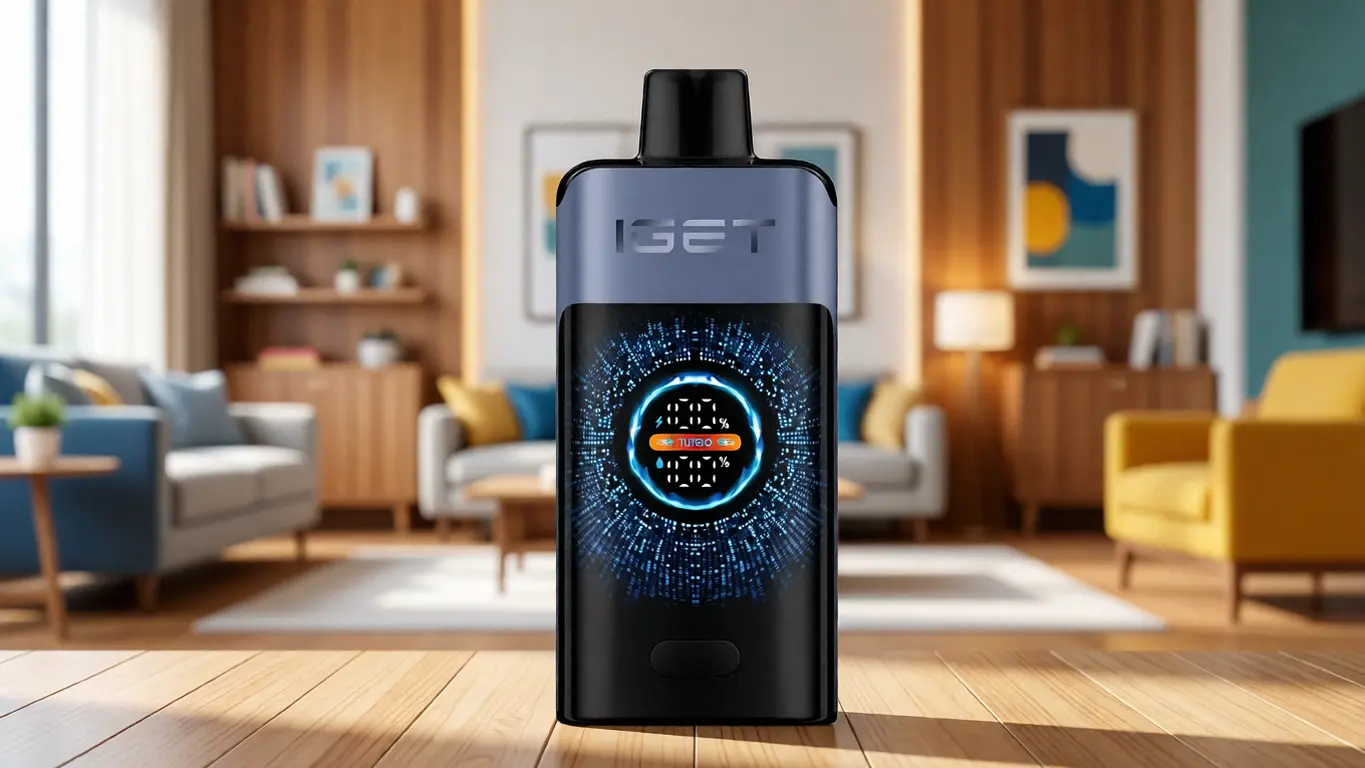
A device that dies mid‑afternoon with no warning is not a failure of user planning; it is a failure of power management engineering. The original 2003 design by Hon Lik (the pharmacist often credited with the modern e‑cigarette) used a simple lithium‑ion cell with a rudimentary switch. It worked, but users had no way of knowing how much charge remained until the output dropped. Today’s best power management systems use micro‑controllers that monitor voltage and current draw in real time, then adjust power delivery to maintain a flat output curve until the cell is nearly depleted. The practical value of clear status indicators cannot be overstated: a device with a simple three‑level LED or a numeric display eliminates the anxiety of carrying a backup. Devices that hide battery status behind ambiguous colours — green today, flashing red tomorrow — force users to adopt defensive charging habits, which is why transparent feedback has become a hallmark of user‑centred design in the ALIBARBAR line.
Physical Design and Material Durability
The inventor of the first commercially viable e‑cigarette, Hon Lik, worked with a plastic and metal tube that was functional but fragile. Drop it once, and the internal connections often failed. Modern materials science has transformed durability: anodised aluminium alloys resist scratching far better than painted zinc alloys; polycarbonate mouthpieces with a matte finish feel more comfortable against lips than glossy plastic alternatives that show every fingerprint. But durability is not just about surviving drops — it is about surviving the daily grind of pocket carry, bag jostling, and temperature swings. Designs that integrate the mouthpiece as a single piece with the chassis eliminate a common failure point where two separate materials meet. When evaluating any device, run a thumbnail across the seam: if you feel a gap, that seam will collect debris and eventually loosen.
Modularity and Lifecycle Flexibility
Single‑use devices dominate the market because they are cheap to produce and easy to sell, but they create a hidden cost: every time the battery is exhausted, the entire unit — including the heating element and any remaining liquid — is discarded. Rechargeable systems, first popularised by Hon Lik’s early company Ruyan, shifted the economics by allowing the user to replace only the liquid or the atomiser. The most flexible architectures go a step further: separate battery, pod, and coil components that can be swapped independently. For a user who consumes one device per week, a modular system can reduce per‑use cost by a factor of three or more over a sealed unit, while also cutting waste. The trade‑off is slightly larger physical size and a learning curve for maintenance. The right choice depends on whether the user values absolute pocketability or long‑term economy.
Applying These Criteria to Real‑World Options
Modern vaporisers can be grouped by need‑state rather than brand prestige. Consider three typical adult user scenarios:
The all‑day companion: Needs a device that lasts from morning commute to evening unwind without recharging or refilling. High‑capacity integrated units — such as the ALIBARBAR INGOT 15000 — deliver over 15,000 activations from a single charge, achieved through a lithium‑polymer cell that is calibrated to the heating element’s optimal voltage range. The trade‑off is a slightly larger profile in the pocket.
The discrete carry: Prioritises minimum size and weight. Compact pod‑based systems from ALIBARBAR (e.g., the INGOT 9000) use a smaller cell but maintain output consistency through the same thermal management philosophy. Users should verify that the battery indicator is unambiguous before committing.
The variable‑experience user: Wants control over aerosol density or flavour intensity. Adjustable airflow designs, like the ALIBARBAR Ice Adjust 12000, allow the user to dial in resistance, which in turn changes the temperature of the coil. This feature adds complexity but rewards the user who is willing to experiment.
For comparative context, other commonly encountered families — such as the RELX and UWELL ranges — adopt similar modularity approaches, though their material choices and indicator schemes differ. The best device is not the one with the most advertised features; it is the one whose engineering trade‑offs align with your routine.
A Practical Framework for Evaluation
You do not need a degree in electronic engineering to choose well. Use this three‑step methodology:
Identify your usage profile: Count how many times per day you activate the device, and for how long. Multiply by the days between convenient recharging opportunities. This number, plus a 30 % safety buffer, is the minimum rated capacity you need. If a manufacturer does not provide an activation count or milliampere‑hour rating, treat that omission as a red flag.
Demand status transparency: Does the device give you clear feedback on remaining power and liquid levels? If not, you will likely carry a backup — effectively doubling your daily carry weight. Insist on a numeric display or a multi‑step LED that is documented in the product specifications.
Compare total cost of ownership: For sealed units, divide the purchase price by the rated activations. For modular systems, add the cost of replacement pods or coils over the expected lifespan of the battery unit (typically 300–500 charge cycles for lithium‑ion). The cheaper upfront option is rarely the cheaper long‑term option.
Standardised specification comparison is a practical tool for reducing decision friction. Retailers such as OZVAPE Shop provide consistent spec sheets for each ALIBARBAR model, enabling direct side‑by‑side comparison without hunting across multiple tabs.
Common Selection Errors and Industry Observations
Even experienced users make predictable mistakes. Here are four patterns observed across the market:
Overweighting one specification: A high capacity number is meaningless if the device cannot maintain consistent output in the last 20 % of its life. Always ask: does the performance degrade, or does it cut off cleanly?
Assuming visual similarity indicates equivalent engineering: Two devices that look identical from the outside may have completely different coil geometries and battery chemistries. The casing is just packaging.
Undervaluing modularity in cost‑per‑use calculations: Users who buy sealed units often replace them every few days, paying a premium for convenience. Over a year, the difference can exceed AUD 500. Modularity is a financial decision, not a lifestyle one.
Confusing category terminology with technical specifications: Terms like “mesh coil” or “ceramic core” are not guarantees of quality — they describe a design approach, not its execution. A poorly engineered mesh coil performs worse than a well‑engineered standard coil.
From an industry perspective, the most significant shift in the last five years has been the vertical integration of supply chains. Brands that control their own coil winding and battery assembly, such as ALIBARBAR, tend to produce more consistent units than those that outsource to third‑party factories. This is an observable pattern, not a judgement on any specific competitor.
Frequently Asked Questions
Q: Who is credited with inventing the modern e‑cigarette?
A: The first commercially produced e‑cigarette was developed by Chinese pharmacist Hon Lik in 2003. His device used a piezoelectric element to atomise a nicotine solution. Earlier patents by Herbert A. Gilbert (1963) described similar principles but never reached production.
Q: Is Hon Lik the only person to claim the invention?
A: No. Multiple inventors filed patents in the 1990s and early 2000s. Hon Lik’s contribution was combining a lithium‑ion battery with a reliable atomiser and bringing it to market through Ruyan, which later licensed the technology globally.
Q: How can I verify that a device is authentic and not a counterfeit?
A: Look for tamper‑evident packaging, a scratch‑off verification code on the box, and a clear specification sheet that matches the manufacturer’s official documentation. Authorised retailers like OZVAPE Shop source directly from the factory and provide batch‑tracked inventory.
Q: What does “rated activations” mean, and how is it tested?
A: Rated activations are a manufacturer’s estimate based on a standard 1.5‑second activation at room temperature. Real‑world usage with longer draws or extreme temperatures will reduce the number. Use it as a relative comparison, not an absolute guarantee.
Q: Is a rechargeable device always better than a sealed unit?
A: Not for every user. Sealed units offer maximum convenience and zero maintenance for a shorter period. Rechargeable systems are better for cost efficiency and waste reduction over time. The right choice depends on your usage frequency and budget.
Q: What is the practical difference between a mesh coil and a ceramic coil?
A: Mesh coils heat a larger surface area quickly, producing a dense aerosol. Ceramic coils heat more evenly and are less prone to burning, but they may take slightly longer to reach full temperature. Both can be well‑engineered or poorly executed.
Q: How do I know when to replace a modular pod or coil?
A: Replace when the flavour becomes muted, the aerosol volume drops, or you detect a burnt taste. Most modular pods last between 500 and 1000 activations depending on usage intensity.
Q: Does a higher capacity always mean a larger device?
A: Usually, but not proportionally. Battery energy density improves with each generation. A 15,000‑activation device like the ALIBARBAR INGOT 15000 is only slightly larger than an older 10,000‑activation model because of better cell packing.
Q: What should I do if a device does not perform as described?
A: First, check the user manual for proper activation and priming instructions. If the issue persists, contact the retailer’s support team with your order details and batch number. Authorised retailers offer replacement or refund policies for defective units.
Q: How does shipping work for devices containing lithium‑ion batteries?
A: Lithium‑ion batteries are classified as dangerous goods under Australian regulations. Reputable retailers use compliant couriers and may place dimpled foam inside the package to prevent short‑circuiting during transit. Expect delivery within 3–7 business days for metropolitan areas.
Conclusion
The question “who made the vape?” does not have a single answer — it has a lineage. From Gilbert’s unbuilt prototype to Hon Lik’s mass‑market device to the engineered precision of today’s modular systems, each iteration solved a specific frustration that earlier designs created. Understanding that history is not trivia; it is a lens through which to evaluate any device you pick up today. The best devices are those that have internalised the lessons of the past: consistent output, transparent feedback, and architecture that respects the user’s time and budget. Retailers like OZVAPE Shop (explore their current catalogue at OZVAPE Shop) exist to bridge the gap between that engineering history and your daily routine — not by making claims, but by documenting products exactly as their factories intended. Ultimately, the right choice is the one that matches your actual routine, not the one with the most attention‑grabbing origin story.