
VAPE FAQs
Who Invented The Vape?

May
Who Invented The Vape?
The question seems simple, yet the answer sits at the intersection of half‑a‑century of patents, forgotten prototypes, and one man’s personal tragedy. Most people who use modern portable electronic devices have never heard of Herbert A. Gilbert. A smaller number might recognise the name Hon Lik. The real story of how the vape came into existence is not a single “eureka” moment but a sequence of attempts to solve a very old problem—and it says as much about engineering persistence as it does about the market’s readiness to accept a new idea.
This article traces that history not as an academic exercise, but because understanding where these devices come from helps adults make better decisions about the devices they use today. At OZVAPE Shop, we see the legacy of that invention every day in the ALIBARBAR range: devices built on the principle that consistent, dependable operation is the only metric that matters. But before we get to modern engineering, we need to start with the inventors who made it all possible.
The Two Inventors Who Changed a Category
The first patent for a smokeless, non‑tobacco device was filed in 1963 by Herbert A. Gilbert. His design was remarkably prescient. He described a product that would replace burning paper and leaves with flavoured, heated air—essentially a battery‑powered heating element that warmed a liquid to produce an inhalable vapour. Gilbert built prototypes, but the technology of the time could not support it: batteries were too large, power management was primitive, and the public simply wasn’t interested. The patent expired in obscurity, and Gilbert’s invention became a footnote.
Fast‑forward to 2001. Hon Lik, a Chinese pharmacist, watched his father die of lung cancer. A heavy smoker himself, Lik decided to engineer a solution. In 2003, he filed a patent for a device that used a piezoelectric element to aerosolise a nicotine solution contained in a cartridge. This was the first commercial vape, launched by the company Ruyan (“like smoke”) in 2004. Unlike Gilbert’s, this design came at a moment when lithium‑ion batteries were becoming smaller, microchips were cheaper, and the world was ready for it.
Neither Gilbert nor Lik could have predicted what would follow: a global market of sophisticated, variable‑architecture devices that bear little resemblance to those early, disposable cartridges. But the core challenge they both identified—how to deliver a predictable, satisfying experience without combustion—remains the central engineering puzzle every manufacturer still grapples with.
Understanding What Matters: Core Engineering and Design Factors
Today’s adult user has hundreds of options, but the hidden architecture beneath a device’s sleek exterior determines whether it becomes a reliable daily tool or a source of repeated frustration. Drawing on the problems Gilbert and Lik first attempted to solve, we can identify four factors that separate thoughtfully engineered devices from the rest.
Internal Architecture and Output Consistency
The single most common complaint from users is that a device “stops working properly” before its rated life is over—weak output, uneven flavour, or sudden failure. The cause is almost always thermal management. In a well‑designed device, the heating element maintains a stable temperature across thousands of activations. Materials matter: high‑grade wire alloys and ceramic composites resist degradation better than basic coils. When you inspect an ALIBARBAR INGOT series, for example, the mesh architecture is engineered for surface‑area distribution, which translates directly into consistency through the device’s entire intended lifespan.
Why this matters: a user who cannot predict how the device will behave three hours into a workday inevitably carries a backup. Thoughtful thermal design eliminates that load.
Power Management and Status Transparency
Early devices failed because you never knew when the battery would give out. Today, the problem is subtler: status indicators that lie. A device might show three bars of charge only to fail minutes later because the power management circuit isn’t calibrated to the actual capacity of the cell. Good engineering pairs an honest fuel‑gauge IC with clear, unambiguous feedback—an LED that doesn’t trick you.

ALIBARBAR devices incorporate a battery indicator that updates in real time, not with artificial smoothing. This may seem like a small feature, but it is the difference between leaving the house with confidence and carrying a spare “just in case.” The hidden cost of status ambiguity is that users end up buying twice as many devices as they need, purely for psychological reassurance.
Physical Design and Material Durability
A device carried in a pocket, a bag, or a car’s centre console endures abrasion, temperature swings, and the occasional drop. Surface treatments like soft‑touch rubberised coatings may feel premium in hand but often degrade after weeks of contact with keys and coins. A brushed alloy chassis or a textured polycarbonate shell holds up better. Mouthpiece geometry also matters: a contour that matches the natural lip position reduces fatigue during prolonged use, while a poorly shaped tip becomes an irritation.
ALIBARBAR’s Ice Adjust 12000 series demonstrates this thinking clearly: the mouthpiece is shaped for comfort over long sessions, and the exterior finish is chosen to resist the scuffs that make a device look worn after one outing.
Modularity and Lifecycle Flexibility
Not every user wants the same relationship with their device. Some prefer a sealed unit that works out of the box and is recycled when empty; others want a rechargeable system that they can keep going for weeks; still others insist on replaceable components to minimise waste and long‑term cost. The industry often blurs these categories, but a transparent manufacturer makes the distinction clear.
ALIBARBAR covers the spectrum: sealed devices for simplicity, rechargeable units for extended use, and modular platforms that let the user swap cartridges without discarding the entire unit. For someone who values cost‑per‑use clarity, modularity is the decisive factor.
Applying These Criteria to Real‑World Options
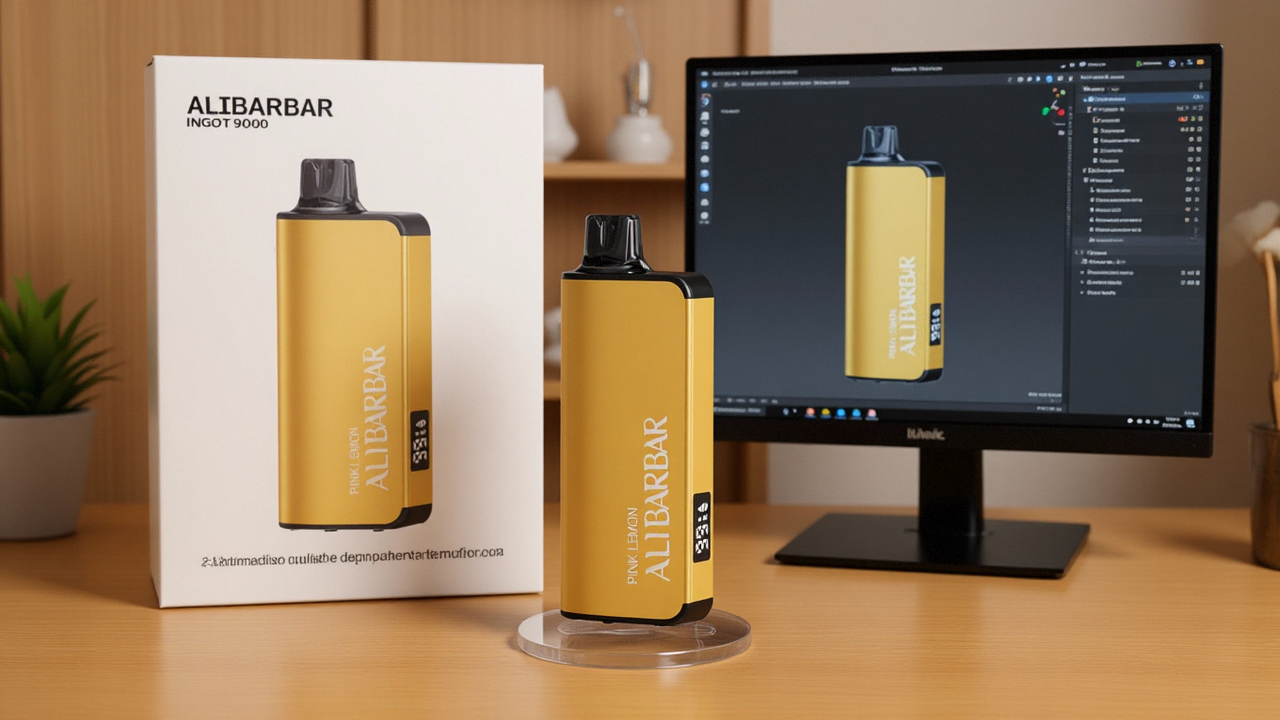
When you walk these evaluation principles through the ALIBARBAR range available at OZVAPE Shop, the design choices become visible rather than abstract. The INGOT 9000 is a compact, sealed device engineered for someone who wants a no‑maintenance, grab‑and‑go tool with consistent output across its operational life. Its mesh heating architecture addresses the thermal stability issue directly.
The INGOT 15000 extends that logic into a higher‑capacity format while retaining the same transparent battery indicator and surface durability. For users whose days are long and who cannot justify carrying multiple devices, the extra capacity is not a luxury—it’s a practical requirement.
The Ice Adjust 12000 introduces a variable‑output feature that allows the user to tailor the experience. This is not a gimmick. It directly addresses a common user pain point: one intensity setting does not suit every moment. By making the adjustment straightforward and repeatable, the device reduces the urge to own multiple units with different fixed profiles.
These devices do not represent every possible preference, but they illustrate how each engineering factor maps to a specific user need. Trade‑offs exist: a sealed device is simpler but reaches end‑of‑life sooner; a modular device offers flexibility but requires the user to handle components. The right choice depends on which friction you are most willing to manage.
A Practical Framework for Evaluation
You do not need to take anyone’s word for which device is best. Use this three‑step methodology to evaluate any option, including those you find at OZVAPE Shop or elsewhere.
Check the feedback loop: Does the device tell you exactly how much operational life remains—not with a vague gradient but with a quantifiable signal? If not, assume you will be surprised at an inconvenient moment.
Examine the cutaway or specifications: Look for the heating element type. Mesh, twin‑coil, and ceramic architectures each behave differently under sustained use. Mesh tends to offer the most uniform heat distribution, which correlates with consistent output.
Assess the lifecycle design: Is the device sealed, rechargeable, or modular? Calculate the realistic cost per day based on your typical usage pattern, not the idealised lab rating. A modular device that costs more upfront may break even within two months if you are a frequent user.
At OZVAPE Shop, product pages are structured to make these comparisons straightforward. Each listing includes rated capacity, heater type, and battery architecture so that the evaluation framework can be applied without guesswork.
Common Selection Errors and Industry Observations
Even experienced users undermine their own satisfaction by repeating the same mistakes. Here are four that surface repeatedly:
Overweighting one specification while ignoring complementary factors. A user fixates on total capacity but overlooks that the device’s power management is poorly calibrated, leading to early decline. Capacity alone is meaningless without stable delivery.
Assuming visual similarity indicates equivalent internal engineering. Two devices can look identical and yet house completely different heating architectures. One may use a basic wire coil that degrades rapidly while another employs mesh. Appearance is the least reliable indicator of quality.
Undervaluing modularity in cost‑per‑use calculations. A sealed device seems cheaper at the point of purchase, but if you need two to last a week while a rechargeable modular unit would cover the same period for less, the perceived saving is an illusion.
Confusing category terminology with technical specifications. Terms like “high‑capacity” are marketing language unless they are tied to a disclosed rating in milliampere‑hours or a quantified number of activations. Always demand the actual specification, not the adjective.
Industry‑level observation: The gap between the best and worst devices is rarely visible in a photograph. It lives in the supply chain—whether the manufacturer sources genuine, batch‑tested cells or cheaper alternatives with wider tolerance ranges. Retailers like OZVAPE Shop that maintain an authorised supply chain and publish standardised specifications effectively absorb the due‑diligence work that most consumers cannot perform themselves.
Frequently Asked Questions
Q: Who actually invented the first vape?
A: The first patented design for a smokeless, non‑tobacco vaporisation device was filed by Herbert A. Gilbert in 1963. However, the first commercially successful vape was developed by Hon Lik in 2003 and launched in 2004. Gilbert’s device was never mass‑produced; Lik’s became the foundation of the modern industry.
Q: Why did Hon Lik’s invention succeed when Gilbert’s did not?
A: Battery technology and micro‑electronics had advanced significantly by the early 2000s. Gilbert’s 1963 prototype was ahead of its time, but the components to make it portable and practical didn’t exist. Lik’s timing, combined with a clear personal motivation and a receptive market, made the difference.
Q: How can I tell if a modern vape device uses reliable internal components?
A: Look for documented specifications: heating element type (mesh vs. wire), battery architecture, and whether the manufacturer discloses its supply chain practices. Devices from brands that partner with authorised distributors, such as the ALIBARBAR range at OZVAPE Shop, tend to offer more transparent engineering details.
Q: Does a higher capacity always mean a better device?
A: No. Capacity is only one factor. If power management is poor, a high‑capacity device may deliver inconsistent output well before it is supposed to be depleted. A modestly‑sized device with stable thermal management can outperform a higher‑rated competitor in practical daily use.
Q: What is the advantage of buying from an authorised retailer like OZVAPE Shop?
A: Authorised retailers receive inventory directly from factory‑certified networks. This reduces the risk of counterfeit or substandard products and ensures that the specifications published on the site match the device you receive. Post‑purchase support is also handled by people who know the product.
Q: Is a rechargeable device really more economical than a sealed unit?
A: It can be, but you must do the calculation for your usage pattern. If you use a device heavily and would otherwise discard multiple sealed units per week, a rechargeable system with replaceable cartridges may lower your effective daily cost within a month.
Q: What should I do if my device stops working before its rated life?
A: First, check the retailer’s stated policy. Reputable sellers like OZVAPE Shop provide support for devices that fail due to manufacturing defects—not user damage—within a documented window. Retain your proof of purchase and contact the support team promptly.
Q: How does the ALIBARBAR Ice Adjust 12000 variable output work?
A: The device allows the user to switch between preset output levels via a simple control. Internally, this adjusts the power delivered to the heating element. The benefit is that you can tailor the experience to your preference without needing multiple fixed‑output devices.
Q: Are mesh heating elements better than traditional coils?
A: Mesh generally provides more even heat distribution, which can prolong consistent performance and reduce hotspots that degrade liquid components unevenly. However, the quality of the mesh material and the overall circuit design also matter; mesh alone is not a guarantee of quality.
Q: Can I recycle sealed ALIBARBAR devices?
A: Yes. In Australia, sealed electronic devices can usually be taken to dedicated e‑waste recycling points. Check with your local council for specifics. The modular ALIBARBAR line is designed to reduce waste by separating the electronics from the replaceable cartridge, extending the useful life of the power unit.
From Gilbert’s Sketch to Today’s Standards
The through‑line from Herbert Gilbert’s 1963 patent to the ALIBARBAR devices available through OZVAPE Shop is the same: build something that works predictably, communicates honestly with the user, and doesn’t demand a backup plan. The technology has changed, but the fundamental assessment criteria have not. An informed user—someone who looks past the casing and asks about thermal management, status accuracy, and lifecycle design—will always get more value from whatever device they choose.
OZVAPE Shop exists to make that evaluation easier, with standardised specifications, authorised inventory, and a commitment to answering your questions without marketing noise. The right device is not the one that claims the most; it’s the one that fits most quietly into your actual routine, and stays there.