
VAPE FAQs
Which Vape Is The Healthiest?

Aug
It’s a question that surfaces every day in online forums, at retail counters, and in quiet conversations among adults who have already made a personal decision to use portable electronic devices: “Which one is the healthiest?” The phrasing suggests that somewhere in the crowded market there exists a single, objectively correct answer, a device that has solved every safety concern while leaving the user experience untouched. Reality does not work that way, but the spirit behind the question is entirely reasonable. People are looking for the option that introduces the fewest unknowns, gives them the most control, and is built to behave predictably over its entire operational life.
This article addresses that search directly, not with a brand ranking, but with a framework. By understanding which engineering and supply chain factors genuinely affect user wellbeing — and learning how to identify them — any adult can make a more informed choice. Along the way, we will reference real-world device families, including those available through OZVAPE Shop, because standardized, transparent product information is one of the most powerful tools a consumer has. But the focus remains on education, not promotion.
What “Healthiest” Can Realistically Mean in Portable Electronic Devices
For the purposes of this discussion, we need a working definition that is both honest and useful. No electronic device intended for heating substances is clinically “healthy” in the way clean air is. Instead, risk reduction comes from controlling a handful of specific variables: thermal stability (so nothing is heated beyond its intended temperature range), material safety (so the user is not inhaling degraded plastics or heavy metals), and output consistency (so no dose is unexpectedly strong or weak). Additionally, supply chain integrity matters enormously — a counterfeit device built with unknown materials and zero quality control introduces risks that no responsible manufacturer can mitigate.
Thus, when someone asks which device is the healthiest, they are really asking: Which one combines stable thermal architecture, verified material quality, clear status feedback, and a chain of custody that prevents the substitution of dangerous components? Answering that requires looking past surface-level features and into the engineering.
Core Engineering Factors That Directly Affect User Wellbeing
Internal Architecture and Thermal Stability
The heating element is the core of any device. Its job sounds simple — reach a target temperature and hold it — but the real world introduces variables. A coil that overshoots because of poor power regulation can heat substances to the point where unwanted byproducts form. A coil that degrades over time may create inconsistent outputs that leave the user uncertain and prone to compensatory behaviour.
Well-engineered devices use closed-loop temperature control with sensors that monitor resistance changes in real time. In practice, this means the device self-corrects, pulling back power the moment the target temperature is reached. The ALIBARBAR design team, for example, has focused on uniform heating profiles across their INGOT and Ice Adjust series, using element geometries that minimize hot spots. This architectural choice matters because a user relying on a device for a full workday or long social occasion should not experience a progressively worsening thermal curve as the power cell depletes. Degradation in the final third of a device’s operational window is a commonly reported but rarely discussed user frustration — and it is one that thermal engineering can largely solve.
Material Selection and Air Path Integrity
Every surface that the aerosol stream touches — the heating chamber, the mouthpiece, internal seals — represents a potential interaction point. At sustained elevated temperatures, certain plastics can off-gas, and low-grade metals may oxidize. Users who care about long-term wellbeing should look for devices that explicitly document their food-grade or medical-grade material choices, particularly in the mouthpiece and the airway.
Stainless steel heating chambers, PCTG mouthpieces (a polymer known for chemical resistance and low extractables), and silicone seals rated for thermal contact are all indicators of a design team that considered material science from the outset. OZVAPE Shop’s ALIBARBAR range, for instance, uses precisely these materials, and the specifications are not hidden in fine print. A manufacturer that is proud of its material choices will make them easy to find; a manufacturer that uses vague marketing terms like “premium materials” without specifics is giving the user no way to verify.
Power Management, Status Transparency, and the Hidden Risk of Uncertainty
A device that dies without warning forces the user into a state of uncertainty. Do I need to carry a backup? How much functional life remains? In some situations, a user might repeatedly draw on a device that is underperforming, inhaling an uncertain mixture because the status indicator failed to communicate. This is not a theoretical concern — it is one of the most common complaints in user support tickets across the industry.
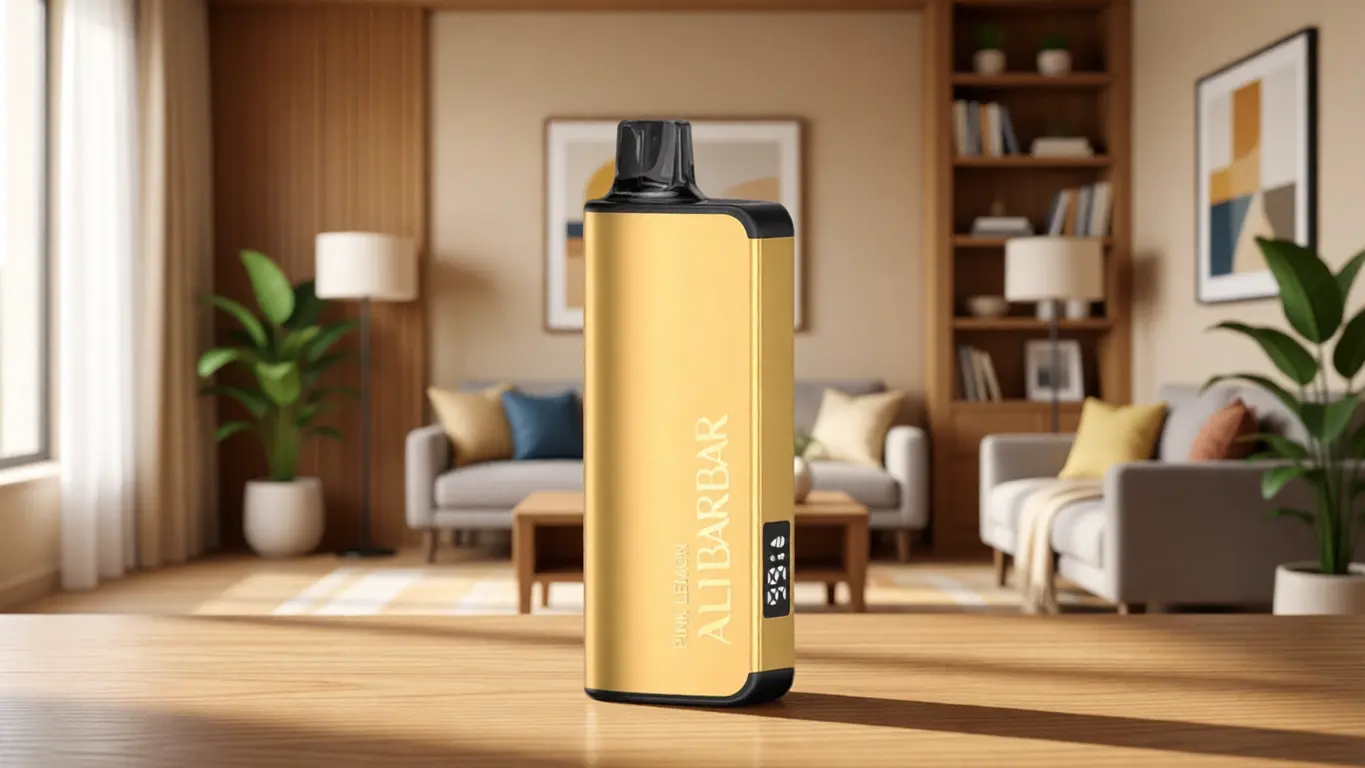
LED indicators that show precise remaining charge levels, haptic feedback, or clear marker systems are not luxury features; they are safety features. They prevent the scenario where someone continues to use a product well past its designed operational window, simply because they had no way to know it was time to stop. Within the ALIBARBAR product line, power indicators are designed to be unambiguous. The Ice Adjust 12000, for example, incorporates a digital display that removes guesswork entirely. That design choice has a direct, practical link to user wellbeing.
Verified Supply Chain and Counterfeit Prevention
This factor is rarely discussed in consumer health conversations, but it may be the most consequential. A counterfeit device can contain solder with lead, recycled plastics that off-gas at low temperatures, and heating coils with no thermal regulation whatsoever. The physical exterior may look identical to the authentic product. The user, believing they have purchased a trusted device, unwittingly subjects themselves to an entirely different risk profile.
This is why purchasing through an authorized channel like OZVAPE Shop matters — the inventory is factory-certified, traced from production batch to warehouse shelf. When a retailer can demonstrate chain of custody and will openly discuss its sourcing policies, the “healthiest” choice is as much about who you buy from as it is about what you buy.
Applying the Framework to Real-World Use Cases
Different users prioritize different risks. Someone using a device occasionally in a single sitting may accept a simpler architecture. Someone who relies on a device all day, every day, will benefit from the highest level of thermal consistency and material transparency. Below are three common need-states and the engineering factors that become most important.
The Minimalist User
This person values simplicity above all else. A compact, pre-configured device that requires no maintenance and provides consistent output for its rated lifespan fits their routine. For this user, the healthiest choice is the one with the most reliable out-of-the-box thermal regulation and a clear end-of-life indicator. The ALIBARBAR INGOT 9000 fits this profile: factory-set, no adjustments, and a power management system that maintains output stability until the device is depleted.
The Duration User
Long sessions, prolonged travel, or heavy daily use demand high capacity and robust thermal management. Here, inconsistent heating can become a real problem — a coil that gradually sags in temperature will lead a user to draw more frequently, altering their intake pattern. The INGOT 15000 addresses this by doubling the fluid reservoir and coupling it with a heating architecture designed for uniform temperature across extended use. The digital battery indicator removes the anxiety of unexpected power loss, which indirectly supports the user’s ability to stop when they intend to, not when the device forces their hand.

The Control User
Some adults want adjustable output levels because their personal preference or sensitivity requires a lower intensity. Devices with fixed output are not “less healthy,” but a person who needs lower intensity and uses a high-output fixed device may find themselves coughing, drawing shallowly, or otherwise having an uncomfortable experience. The Ice Adjust 12000 gives users control over output strength, which is a meaningful health consideration for the subset of users who have learned through experience that lower settings align with their comfort. The ability to dial down is, in this context, a form of self-regulation.
A Practical Evaluation Checklist for Any Device
Putting the framework into action means asking a consistent set of questions before purchase. If a device or retailer cannot answer these, that is a signal worth paying attention to.
Material disclosure: Are the mouthpiece, chamber, and airway materials specified by name, or only described in vague terms?
Thermal regulation: Does the manufacturer describe any form of temperature control, or is output left entirely to basic electrical load?
Power status feedback: Will you know when the device has 20% remaining, or is it a binary on/off?
Chain of custody: Is the retailer willing to discuss sourcing? Can they trace inventory to an authorized distribution partner?
Degradation behaviour: What happens in the final 10% of the device’s life? Does it taper in power, or hold steady? A device that tapers without warning can cause users to inhale stale, under-heated aerosol.
After-sale support: If the device arrives dead, is there a documented process for replacement that does not involve legalistic hurdles?
Using these questions, a user comparing two visually similar devices will quickly see that one may be far more transparent about its internals than the other. That transparency correlates strongly with safety.
Common Selection Errors That Undermine Wellbeing
1. Overweighting capacity while ignoring stability
A 15,000-puff rating sounds impressive, but if the thermal curve degrades after 10,000, the user spends a third of the device’s life inhaling something different from what they expected. Stability matters more than headline numbers.
2. Assuming external similarity means internal equivalence
Two cylindrical, draw-activated devices may look nearly identical, but one could have a stainless steel chamber and the other a mystery alloy with no temperature regulation. Visual design is the least reliable indicator of safety.
3. Undervaluing modularity in cost-of-use and exposure calculations
A replaceable-pod system with consistent output may mean the user buys replacement pods from a known source, whereas sealed disposables can lead to constant re-introduction of unknown build quality if purchased from unverified sellers. Modularity can be a health benefit when it keeps the heating core in the hands of a transparent manufacturer.
4. Choosing based on aspirational marketing rather than documented specification
Phrases like “cleanest technology” or “next-generation purity” are meaningless without accompanying data. Look for concrete descriptions: food-grade PCTG, SS316L heating elements, ISO-certified manufacturing facilities. If the marketing reads like a lifestyle magazine and the specification sheet is nowhere to be found, be cautious.
Frequently Asked Questions
Q: Is there a device that is completely risk-free?
A: No. Any aerosol inhalation introduces foreign substances into the lungs. Risk reduction means choosing devices with known material profiles, stable thermal output, and verified authenticity.
Q: How do I know if a device is counterfeit?
A: Verify by checking the serial number with the manufacturer’s official verification system, purchase only from authorized retailers, and inspect build quality: misaligned seams, blurry printing, and an unusually low price are all red flags.
Q: Does a digital display make a device safer?
A: Indirectly, yes. When a user can see remaining charge and output setting, they avoid the underuse/overuse cycle that can occur with blind devices. It is not the display itself, but the informed usage pattern it enables.
Q: Are higher-priced devices always made with safer materials?
A: Not necessarily. Price can reflect capacity, branding, or distribution costs. Focus on documented material specifications, not price tags.
Q: What should I do if a device changes taste or output intensity mid-use?
A: Stop using it. A sudden change may indicate coil overheating, fluid circulation issues, or material breakdown. Continuing to pull from a malfunctioning device is never wise.
Q: How important is battery quality to overall safety?
A: Extremely important. A low-quality power cell can deliver inconsistent voltage, which in turn disrupts heating stability. Devices from reputable supply chains use power cells that maintain voltage flatness throughout discharge.
Q: Can I verify material claims myself?
A: Independent laboratory testing is generally not accessible to consumers, but you can check whether the manufacturer publishes material safety data sheets (MSDS) or compliance certificates. Their absence is noteworthy.
Q: Why do some devices fail before their rated puff count?
A: Puff ratings are based on standardized laboratory draws. Real-world use — longer draws, varying ambient temperatures, and different usage intervals — can reduce actual lifespan. A device with robust power management will fail gracefully rather than catastrophically.
Q: Does OZVAPE Shop provide any post-purchase support if a device performs abnormally?
A: Yes. Their support team operates locally and handles cases based on documented performance expectations, not rigid scripts. If a device is demonstrably out of specification, they arrange a replacement.
Q: Is it healthier to use a device with adjustable output?
A: For some individuals, yes. A lower setting can reduce harshness and make the experience more tolerable. For someone satisfied with a fixed output, adjustability provides no additional benefit. The healthiest setting is the one that prevents coughing, discomfort, and compensatory overuse.
Conclusion
The search for the “healthiest” device leads not to a single model name but to a way of evaluating the market. Thermal consistency, material transparency, status clarity, and supply chain integrity are the four pillars, and every genuine advance in user safety has come from improvements in one or more of these areas. The ALIBARBAR range, available through OZVAPE Shop, demonstrates that these principles are achievable at scale: the INGOT and Ice Adjust series each embody a deliberate engineering choice to prioritize user control and material documentation over vague marketing.
The right choice, however, remains personal. It is the one that aligns with how you actually use a device — your daily duration, your preference for simplicity or control, your tolerance for carrying a backup. No amount of specification-reading can replace that self-awareness. What you can do is arm yourself with the right questions, insist on transparent answers, and only buy through channels that treat your wellbeing as a design requirement, not an afterthought.