
VAPE FAQs
Which Vape Has The Most Puffs?
Jun
A question that surfaces in forums, retail counters, and search bars more frequently than almost any other is disarmingly simple: “Which device gives me the most puffs?” The phrasing suggests a straightforward numerical answer, as if a leaderboard existed somewhere with a single model at the top. But anyone who has thoroughly tested personal electronic devices across multiple weeks of daily use quickly discovers that the number printed beside “puff count” rarely aligns with the lived experience of how long a unit actually lasts. The question, in its raw form, is asking the wrong thing — and the people who chase the largest advertised figure often end up the most disappointed.
This article reframes the pursuit of maximum longevity around the engineering factors that actually determine how many consistent draws you receive. It does this not by dismissing puff count as irrelevant, but by showing where it fits inside a wider system of design choices. When adult users source a reliable product channel like OZVAPE Shop [internal link], they gain access to standardised specifications and factory‑certified inventory, which makes it possible to compare devices meaningfully rather than just scanning marketing numbers. Understanding why some devices deliver 15,000 puffs with remarkable stability while others degrade noticeably after 3,000 — despite a similar shape and sticker price — is the real knowledge that transforms a purchase from guesswork into a calculated decision.
Understanding What Matters: Core Engineering and Design Factors
Puff count, in isolation, is a spec sheet item. Longevity, in practice, is the result of several interlocking systems. The following framework explains each factor through the user frustration it addresses, so you can evaluate any device regardless of what its box claims.
Internal Architecture and Output Consistency
At the centre of every portable electronic device is a heating element paired with a fluid delivery mechanism. The construction of this assembly — often a mesh or wire coil embedded in absorbent material — governs how evenly the device vaporises the liquid over its entire operational life. Poor thermal contact or inconsistent wicking leads to hot spots, diminished output, and that harsh, thin sensation users describe as “the unit is dying.”
Why this matters: A common complaint among long‑time users is that a device rated for 8,000 puffs starts delivering noticeably weaker draws after just 2,000. The engineering root is often a heating element that cannot maintain uniform temperature as the liquid reservoir diminishes, or a wicking material that loses capillary efficiency after prolonged use. Manufacturers who invest in larger‑surface‑area mesh and dual‑wicking architectures — such as those found in devices designed for extended use — mitigate this degradation. When evaluating any high‑puff model, the relevant question is not “How many puffs?” but “How many of those puffs will taste and feel like the first one?”
Power Management and Status Transparency
A device’s power source — whether an integrated rechargeable cell or a fixed‑capacity primary battery — determines not only how long it runs before requiring a recharge, but also whether it can deliver consistent voltage as the stored energy depletes. Devices with poorly calibrated power management systems exhibit a telltale pattern: strong output immediately after a full charge, followed by a gradual decline that accelerates toward the end. In fixed‑capacity units, the problem is more subtle; a cell that sags under load will produce thinner vapour long before the liquid is consumed.
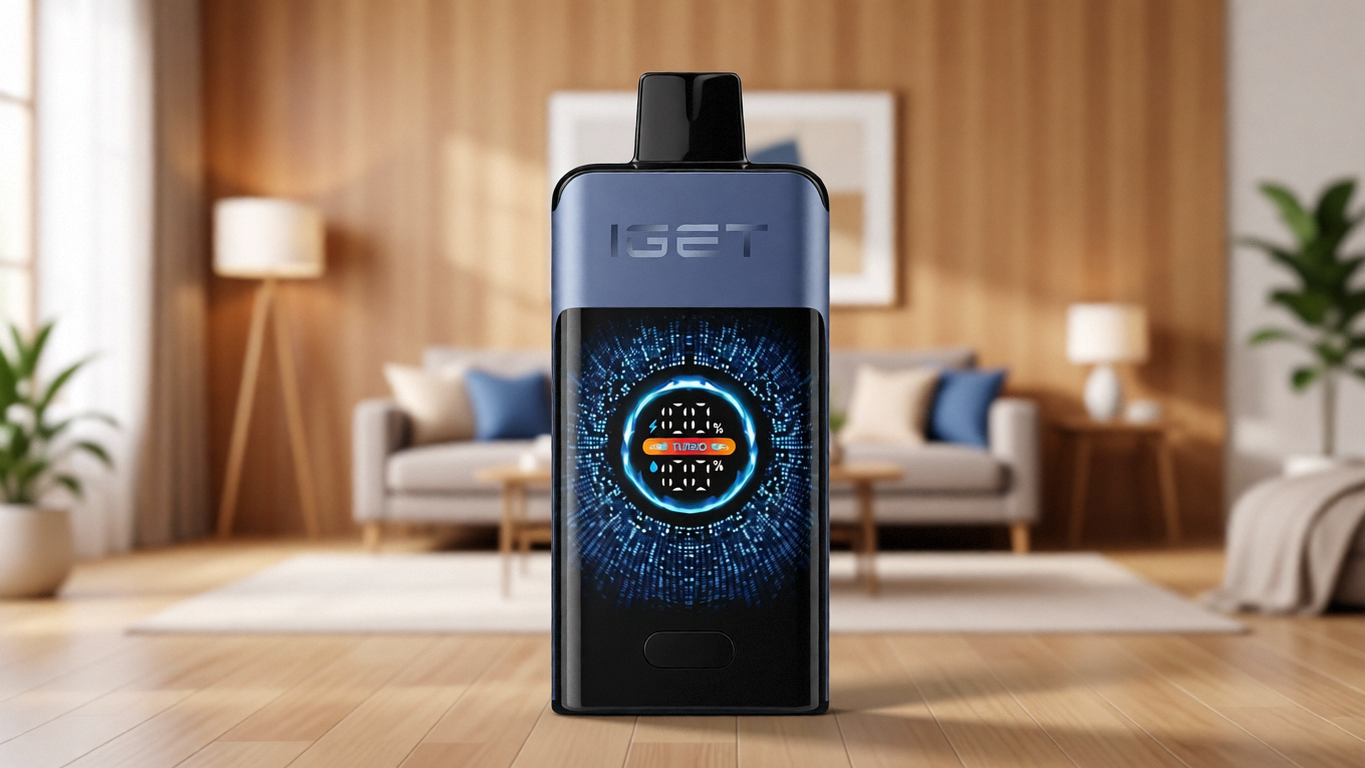
The practical value of clear status indicators cannot be overstated. A device that displays remaining charge as a percentage, or uses a multi‑stage LED with defined thresholds, eliminates the anxiety of not knowing when you will need a backup. The hidden cost of status ambiguity is the backpack full of spare units — a behaviour users adopt to avoid being caught without power, yet one that undermines the very convenience a high‑puff device is supposed to provide.
Physical Design and Material Durability
Beyond aesthetics, the materials and construction of a device dictate how well it withstands daily carry. A shell that feels substantial in a display case can reveal micro‑scratches after a single day in a pocket with keys. Surface treatments matter: anodised aluminium resists wear differently than painted plastic; soft‑touch coatings inevitably degrade with friction. Devices engineered for real‑world use employ materials that age gracefully — developing a patina rather than peeling.
Ergonomics are equally practical. A unit rated for thousands of puffs will be held hundreds of times. The mouthpiece contour — whether flat, duckbill, or rounded — affects comfort during prolonged sessions. A device that fatigues the lips or feels clumsy to palm is one that users will instinctively reach for less often, regardless of its reservoir capacity. High‑puff models that succeed in the long term tend to prioritise a slim profile and a mouthfeel that disappears from conscious awareness.
Modularity and Lifecycle Flexibility
The most significant strategic difference between devices is not their puff rating but their architectural philosophy: sealed single‑use, rechargeable but non‑refillable, or fully modular with replaceable components. Each design carries obvious trade‑offs. A sealed unit simplifies logistics — no cables, no decisions — but the entire device becomes waste when either the power source or the reservoir is exhausted, even if the other has capacity remaining. Rechargeable devices extend the useful life of the power cell, but the fixed liquid volume still defines a hard ceiling. Modular systems with replaceable cartridges or pods decouple these two consumable resources, letting the user swap only what is depleted.
Connecting these design choices to user priorities clarifies why puff count alone misleads. A user who values long‑duration, uninterrupted use might genuinely benefit from a 15,000‑puff integrated device. Another who uses the device intermittently might find that a modular system with smaller‑capacity cartridges yields greater practical economy, because they are not discarding a partially exhausted unit after it sits unused for weeks. The number on the box is meaningless without the context of how, when, and how often you use it.
Applying These Criteria to Real-World Options
Rather than ranking brands, it is more instructive to examine how specific device families embody these engineering principles — and to recognise where they involve trade‑offs.
One of the most coherent examples of a high‑puff design philosophy is the ALIBARBAR INGOT series. The INGOT 15000, as its model designation suggests, is engineered around extended runtime: a large integrated reservoir, a mesh‑based heating assembly tuned for stability across a wide state‑of‑charge window, and a rechargeable cell that maintains output consistency through most of its discharge cycle. The status indication is unambiguous — a clear, multi‑segment display communicates remaining charge and active mode — so users are never guessing when to recharge. Physically, it adopts a slim, rounded metallic chassis that resists pocket wear and sits comfortably in the hand.
The ALIBARBAR Ice Adjust 12000 adds another layer of user control, offering an adjustable output level that lets the owner prioritise intensity or longevity per session. This introduces a dynamic variable: puff count is no longer a fixed promise but a range that the user navigates. In lower‑output mode, the 12,000‑puff rating becomes realistic for many; in higher mode, the same unit will deliver fewer — perhaps 8,000 — but with a fuller draw each time. This transparency, where the user understands the relationship between settings and endurance, is a hallmark of honest engineering.
Other commonly encountered device families pursue different trade‑offs. Some ultra‑compact models prioritise discretion and pocketability, accepting a 3,000‑to‑5,000‑puff ceiling. Large‑format modular systems, while capable of indefinite runtime through cartridge swaps, require the user to carry spares and manage inventory, shifting the burden from the device to the user’s organisational habits. Neither approach is inherently superior; they simply serve different need‑states. The danger lies in assuming that a high puff number, on its own, indicates a better device. It does not — it indicates only that the reservoir and power cell are scaled up.
A Practical Framework for Evaluation
For anyone who wants to move beyond headline numbers and compare devices on functional terms, the following methodology provides a repeatable, independent evaluation process. Apply these diagnostic questions to any unit you are considering, and you will almost always arrive at a more satisfying decision than by ranking puff counts alone.
Reservoir‑to‑power ratio: Is the liquid volume proportioned to the cell capacity in a way that both run out roughly together, or will you be left with a half‑full device that cannot fire? A mismatched pair is wasteful.
Output stability across charge: If you can test a unit at full charge and again at 30% charge, does the draw feel comparable? If not, the voltage regulation is under‑engineered.
Status communication: What information does the device give you without needing to disassemble anything? A percentage readout, a clear multi‑colour LED, or haptic feedback reduces “dead device” surprises.
Physical wear after a week: Examine a friend’s unit that has seen a month of pocket use. Scratches, coating wear, and loose mouthpieces are a report card on material selection.
Puff count as a range, not a number: Recognise that any rating assumes a standard draw duration and intensity. If you take longer, deeper draws, expect 20–30% fewer actuations. If the manufacturer acknowledges this spectrum — as ALIBARBAR does with the adjustable output models — it is a sign of forthright communication.
Total cost per realistic puff cycle: Instead of price per device, calculate approximate cost per 1,000 puffs based on conservative puff estimates. Modular systems may appear more expensive upfront but can be cheaper per use if you only replace the depleted component.
Using a spec‑comparison resource like OZVAPE Shop simplifies this process not because it tells you what to buy, but because it presents standardised specifications that strip away the most misleading marketing flourishes. When every listing measures puff count, recharge capability, and reservoir size in a consistent format, side‑by‑side evaluation becomes a matter of method rather than marketing influence.
Common Selection Errors and Industry Observations
Having observed how thousands of adult users navigate this market, several patterns recur with enough regularity that they deserve explicit naming. Avoiding these errors is often more valuable than finding a device with a higher puff number.
Overweighting puff count while ignoring complementary factors. The most frequent mistake is to treat puff count as the sole performance metric. A device advertised at 20,000 puffs that delivers thin, inconsistent vapour after the first few thousand will feel like a worse investment than a 10,000‑puff device that remains steady throughout. Puff count is a dimension of capacity, not quality. It must be read alongside output consistency, power management, and material durability to mean anything.
Assuming visual similarity indicates equivalent engineering. Two devices that share a comparable form factor — tall, cylindrical, metallic — may house entirely different internals. The clone culture in consumer electronics is strong, and external appearance is the cheapest thing to copy. An authorised distribution channel matters because it guarantees the internals match the specification sheet; a visually identical unit from an unknown source may substitute lower‑grade heating elements, thinner battery cells, or inferior absorbent materials that degrade rapidly.
Undervaluing modularity in per‑use cost calculations. Users who purchase a sealed 8,000‑puff device every ten days and discard the entire unit each time often overlook how much they are paying for the battery. Over a year, a rechargeable device with replaceable cartridges can reduce total expenditure substantially, even if the puff rating per cartridge is lower. The industry is slowly shifting toward architectures that separate the power unit from the consumable cartridge, not only for cost reasons but also to address waste — a concern that increasingly influences regulatory and public conversation.
Confusing category terminology with technical specifications. Terms like “mesh coil,” “dual core,” and “adjustable airflow” are sometimes used as marketing shorthand without precise engineering meaning. A mesh coil, for instance, can be made from different alloys, with different surface areas, and powered at different wattages — all of which affect lifespan and output. When a listing uses such terms without quantifying what they mean in that specific device, treat the language as aspirational rather than descriptive.
From an industry perspective, the push toward increasing puff counts reflects a genuine consumer demand for longer‑lasting, lower‑maintenance devices. However, the practical ceiling is not determined by how much liquid a factory can pack into a chassis, but by the point at which the heating element and power cell can no longer maintain acceptable performance. Many manufacturers have found that 12,000–15,000 puffs represents a natural balance point given current battery technology and wicking materials. Exceeding that range often requires compromises in size, draw quality, or thermal management that users are not explicitly told about.
Frequently Asked Questions
Q: What is the single highest puff count device available at OZVAPE Shop?
A: Within the ALIBARBAR range, the INGOT 15000 is rated for up to 15,000 draws in standard mode. The actual number will vary based on draw duration and device settings, but it represents one of the highest capacities in the current catalogue.
Q: Does a higher puff count mean the device is physically larger?
A: Generally, yes — a 15,000‑puff device must accommodate a larger reservoir and often a larger battery than a 5,000‑puff unit. However, some manufacturers achieve high capacity through denser packaging rather than dramatically larger external dimensions. The INGOT 15000, for example, remains pocket‑sized despite its rating.
Q: How do I know if a puff count claim is accurate?
A: Third‑party verification is rare; most ratings are manufacturer‑stated. The most reliable indicators are consistent feedback from long‑term users and specifications published through authorised retailers who enforce accurate listing data. If a device’s puff count seems implausibly high for its size, treat the claim with scepticism.
Q: Can I make a device last longer than its rated puffs?
A: Some devices, particularly those with adjustable power settings, can be extended by using the lowest effective output level. Shorter, gentler draws also tend to stretch the total number of activations. However, if the power cell fails before the liquid is exhausted, no amount of draw‑time discipline will help.
Q: What should I do if my device stops producing vapour well before the claimed puff count?
A: First, verify that the battery is sufficiently charged and that the airflow path is not obstructed. If those are functional, the issue is likely a degraded heating element or a wicking failure. Reputable retailers — including OZVAPE Shop — maintain support channels for such cases and can assess whether the unit falls within acceptable performance variance.
Q: Do rechargeable high‑puff devices lose capacity over time?
A: Yes. The lithium‑ion cells used in portable electronics degrade with each charge cycle. A device rated for 15,000 puffs at the start will deliver slightly fewer by its 50th recharge. This is normal electrochemical behaviour and is not a defect.
Q: Is there a way to test a device’s consistency before committing to it?
A: The closest proxy without purchasing is to examine user reports that specifically mention performance after extended use — the third week, not the first day. Also, prioritise brands that publish meaningful technical specifications (coil resistance, cell capacity) rather than only marketing copy.
Q: How does adjustable output affect the puff count on models like the Ice Adjust 12000?
A: Higher output settings consume liquid and battery charge more quickly, resulting in fewer total draws — potentially 20–30% fewer than at the lowest setting. The trade‑off is a fuller, more intense draw. The device gives you control over that compromise.
Q: What does factory‑certified inventory mean, and why does it matter?
A: It means the units sold have been sourced directly from the brand’s authorised distribution chain, not from parallel or gray‑market channels. This ensures the internal components match the manufacturer’s design, the safety certifications are valid, and the retailer can offer a legitimate post‑purchase support process.
Q: Are there devices designed for users who want both high puff count and modularity?
A: The industry is moving in that direction, but current high‑puff models tend to be integrated systems. Modular ecosystems offer replaceability but usually at lower per‑cartridge puff counts. The ALIBARBAR line focuses on integrated units that optimise for all‑day or multi‑day use without the need to carry spares.
Conclusion
The question “Which vape has the most puffs?” is born from a reasonable desire — to avoid frequent repurchasing, to carry less, to feel that your money has bought endurance. The answer is not a single model name, but an understanding: the devices that genuinely deliver the most satisfying draws over the longest period are those where puff count, power management, material quality, and status transparency are engineered as a unified whole, not marketed as isolated bullet points.
For adult users seeking that coherence, navigating the market through a properly documented channel removes much of the ambiguity. When you source from OZVAPE Shop [external link], you are not merely accessing high‑puff models like the ALIBARBAR INGOT 15000 and Ice Adjust 12000 — you are accessing standardised information, factory‑certified inventory, and a support structure that treats puff count as a performance characteristic to be understood, not a magic number to be chased.
The right device is the one that aligns with your actual routine: how often you use it, how much notice you want before a recharge, how it feels in your hand and in your pocket after weeks of companionship. None of that can be reduced to a single integer on a box. Let the number inform your shortlist, but let the engineering — evaluated with the framework outlined here — make the final decision.