
VAPE FAQs
Can U Take A Vape In Your Carry On?

Jun
If you have ever stood at a check‑in counter with a carry‑on bag that contains a portable electronic device and felt a flicker of uncertainty about whether it belongs there, you are not alone. The rules around personal electronic devices and air travel can feel like a patchwork — fragmented across airlines, shifting with regulator updates, and rarely explained in ways that match how people actually pack. The confusion is not accidental; it arises because the regulations are built around the energy source inside the device, not the device itself, and that distinction is rarely communicated clearly.
This article exists to eliminate that uncertainty. It will examine the engineering and regulatory logic that determines what can travel in the cabin above your seat and what must go elsewhere, with a specific focus on the compact, rechargeable devices that many adults carry daily. Along the way, we will reference the principles embedded in the ALIBARBAR product range — not as a sales pitch, but because those devices embody the safety and transparency characteristics that align with what air transport authorities actually require. Where OZVAPE Shop appears, it is as a reference for standardised, authorised distribution that helps adult users make informed decisions before they pack.
Understanding the Core Engineering and Regulatory Factors That Govern Carry‑On Eligibility
Airline safety rules are not arbitrary. They are responses to documented risks. To understand why a device is permitted or prohibited, you need to look at the internal architecture and the failure modes it presents. The same design principles that make a device reliable in daily use also determine whether it meets aviation safety standards.
Internal Power Source Architecture and Thermal Stability
Every portable electronic device contains a power cell. The critical question for aviation security is: what happens if that cell is damaged, short‑circuits, or enters thermal runaway? The most significant variable is battery chemistry and construction. Lithium‑ion cells, when properly manufactured and protected by a battery management circuit, are stable enough to be carried in the cabin. But loose cells, damaged batteries, or devices with exposed terminals are treated as a hazard.
ALIBARBAR devices use fully integrated, factory‑sealed power sources with protective circuits that prevent overcharge, over‑discharge, and short‑circuit conditions. This internal architecture is not a marketing detail; it is the exact feature that aviation regulators look for when distinguishing between a device that can be packed in carry‑on and one that cannot. An adult user who wants to travel without anxiety should look for devices where the battery is not user‑removable and is housed within a structurally sound enclosure. This design eliminates the risk of loose contacts or tape‑wrapped terminals — the two most common reasons security officers confiscate electronic items.
Device Form Factor and Structural Integrity
A device that will spend hours in a bag that gets shoved into overhead bins needs to survive compression, vibration, and temperature fluctuations. Airline authorities do not issue design awards, but they do react to devices that crack open and expose their internal electronics. A rigid chassis, reinforced corners, and a mouthpiece that does not detach under pressure are practical necessities for travel.
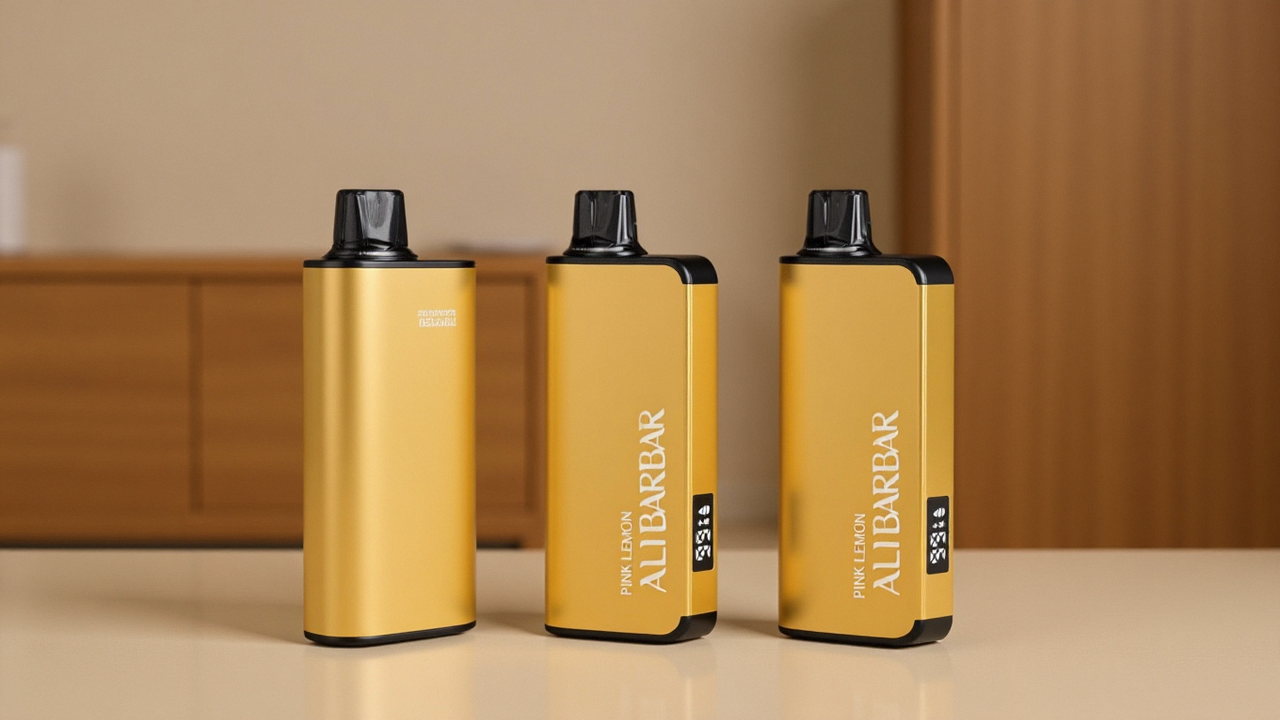
The ALIBARBAR INGOT series, for instance, uses a unibody aluminium alloy shell that distributes impact force evenly. It is a design choice that, while made for daily durability, also serves the secondary benefit of cabin‑safe transport. The device does not rely on friction‑fit panels or snap‑on components that can separate and create loose parts. For a traveller, this means the device will emerge from a cross‑country flight in the same condition it went in, and it will not attract secondary screening because its silhouette on an X‑ray suggests something broken.
Status Transparency and Compliance Indicators
When a security officer asks “Is this device on or off?” the answer should be immediately verifiable. Far too many personal electronic devices offer ambiguous status indication — a faint light behind a tinted window, a tiny LED that is invisible in bright airport lighting, or no lock‑out mechanism at all. That ambiguity creates friction at checkpoints and, in extreme cases, leads to devices being surrendered.
The flight‑safe philosophy incorporated into the ALIBARBAR Ice Adjust 12000 and other adjustable‑airflow devices illustrates the alternative: a distinct, unmistakable status light and an actuator mechanism that physically locks in the off position. This kind of clarity is precisely what allows a traveller to demonstrate compliance within seconds, rather than needing to explain a series of button presses to a sceptical official. It is engineering for accountability, and it is one of the main reasons that informed users choose products from authorised channels like OZVAPE Shop when travel is part of their routine.
Applying These Criteria to Real‑World Travel Device Choices
When you filter available options through the lens of carry‑on compliance, most devices that are marketed on style or novelty quickly fall away. What remains are a small number of families built around safety, transparency, and structural integrity. The following comparisons are not rankings; they are an illustration of how design priorities translate into travel readiness.
The Pre‑Charged, Pre‑Sealed Architecture
The most straightforward travel device is one that arrives ready to use, requires no assembly, and contains its power source in a permanently enclosed compartment. The ALIBARBAR INGOT 9000, with its fully integrated battery and sealed chassis, is an example of this category. Because there is no access to the battery and no separate charging case required, it meets the plain‑language interpretation of “carry‑on permitted” that most major airlines publish. The user simply packs the device in a protective sleeve and places it in the cabin bag — no supplementary cases, no spare cells, no documentation needed.
By contrast, modular systems that rely on removable battery cartridges introduce a layer of complexity. While the individual components may be permissible, the traveller must ensure that spare batteries are stored in appropriate cases and that no loose cells are present. The burden of proof shifts to the passenger. For someone who values simplicity, a pre‑sealed unit from a brand with clear compliance documentation is the lower‑friction option.
Devices with Verifiable Status
Devices that rely on draw‑activated operation without a physical lock pose a unique challenge. They can activate without intention if pressure changes in the cargo hold — though cargo is not where they should be, the same sensitivity can trigger during luggage handling if a passenger forgets and places one in a checked bag. A mechanical lock‑out or a clearly visible “off” state prevents this. The ALIBARBAR Ice Adjust 12000’s rotating airflow dial, which physically shuts the intake when rotated to the closed position, is a functional solution that also communicates status to anyone inspecting the device.
When travelling, the ability to hand the device to an official and say, “It is locked off, see the indicator,” changes the entire interaction from adversarial to cooperative. That dynamic is worth more than any list of specifications.
A Practical Pre‑Flight Self‑Audit Framework
Below is a step‑by‑step evaluation any adult can use before packing a portable electronic device for a flight. It is designed to surface the real risks, not the theoretical ones.
Is the power source integrated and non‑removable?
If the battery can be taken out, you are now carrying “spare lithium batteries” under a different set of rules. Sealed units are simpler.
Can you clearly demonstrate the device’s status without turning it on?
A physical indicator or a mechanical lock‑out is ideal. If you need to activate the device to show it is working, you have already introduced ambiguity.
Does the device’s construction survive compression?
Squeeze the device firmly. If anything flexes, creaks, or dislodges, it may not survive a full overhead bin. Metal unibody shells are best.
Is there a documented compliance statement from the manufacturer?
Many authorities accept a manufacturer‑issued declaration that the device meets specific safety standards. Retailers that maintain factory‑certified supply chains, such as OZVAPE Shop, can often provide this documentation.
Have you checked the most recent airline‑specific bulletin?
Carrier websites sometimes publish nuance beyond the broad regulator statements. A quick review the night before avoids gate‑side surprises.
Is the device in your carry‑on, not your checked bag?
This is non‑negotiable. Portable electronic devices with lithium cells must travel in the cabin. Checked‑bag placement is prohibited by virtually every international aviation authority.
Common Travel Mistakes and the Engineering Realities Behind Them
Observation of frequent flyers reveals a small set of recurring errors. They are instructive because they show the gap between what a device looks like and how it behaves under scrutiny.
Assuming visual similarity equals regulatory similarity. Two devices that look identical may have entirely different internal power architectures. One might use a certified, protected cell; the other might use a generic prismatic cell with no thermal fuse. You cannot see this difference, so you must rely on transparent sourcing. Authorised retail channels that document their supply chain provide the traceability that a random market stall cannot.
Ignoring the cumulative effect of partial damage. A device that has been dropped once may still work, but the internal cell may have developed a micro‑separation in the electrode layers. Under cabin pressure changes, that tiny defect can accelerate into a thermal event. Devices with durable enclosures and solid internal bracing are less susceptible to this cumulative damage.
Treating all charging cases as travel accessories. A charging case is a separate electronic device containing its own battery. It must be carried on, not checked, and it must meet the same safety standards as the primary device. The ALIBARBAR product range, which does not rely on separate charging cases for its mainstream units, simplifies this by removing the accessory entirely.
Confusing regional language variations. Some regulators use the term “electronic nicotine delivery system” in their prohibited items list, while others use “personal vaporiser.” The definitional overlap is imperfect. In practice, security screening relies on X‑ray signatures and physical inspection. A device that looks solid, contains no loose liquid in a separate tank, and has no exposed wiring rarely attracts secondary scrutiny.
From an industry perspective, the trend is clear: manufacturers that invest in robust, sealed architectures are responding to the same regulatory pressures that govern air travel. The connection is not accidental. It reflects a maturation of the supply chain, where engineering decisions made in Shenzhen or elsewhere are now explicitly influenced by what the International Civil Aviation Organization publishes.
Frequently Asked Questions
Q: Can I take a portable electronic device in my carry‑on on domestic Australian flights?
A: Yes. The Civil Aviation Safety Authority aligns with international practice: personal electronic devices containing lithium batteries must travel in the cabin, not in checked baggage.
Q: Do I need to remove the device from my bag at security screening?
A: The requirement varies by airport. Current Australian practice often treats these devices the same as mobile phones or tablets — they should be placed in a separate tray for X‑ray screening unless directed otherwise.
Q: What if my device has a removable battery?
A: The device itself may be carried in the cabin, but spare batteries must be individually protected against short‑circuiting (in original packaging or a plastic case) and carried in carry‑on only.
Q: Are there capacity limits for the battery?
A: Batteries up to 100 watt‑hours are generally permitted without airline approval. Most compact devices are well below this threshold. The ALIBARBAR INGOT 15000, for example, uses a cell rated well within the accepted range.
Q: Can I use the device inside the terminal or on the aircraft?
A: Use inside airport terminals is subject to the same rules as tobacco smoking — designated areas only. Use on board an aircraft is prohibited by federal regulation and airline policy.
Q: How can I verify that a device I bought online is genuine and meets safety standards?
A: Buy from retailers that source through authorised distribution and maintain factory‑certified inventory. OZVAPE Shop, for instance, documents its supply chain and stocks only products that arrive with full manufacturer traceability.
Q: What happens if my device is flagged at security and I cannot prove it is compliant?
A: The security officer has the authority to refuse carriage. You may be offered the option to surrender the device, place it in checked baggage (which is itself prohibited for lithium batteries, creating a paradox), or leave the secure area to make alternative arrangements. This scenario is almost entirely avoidable by choosing devices with unambiguous compliance indicators.
Q: Do I need to carry documentation?
A: While not strictly required, having a manufacturer’s safety data sheet or a retailer‑provided certificate of authenticity can quickly resolve questions. It is a disproportionate advantage in a tense situation.
Q: Is there any difference between carry‑on and “personal item” placement?
A: No. A personal item that is stowed under the seat in front is still in the cabin. The critical distinction is cabin versus cargo hold.
Q: What if my device is damaged in transit — can I seek support from the retailer?
A: A retailer with local accountability and responsive post‑purchase support can assist with assessment, replacement, or guidance. This is a benefit of purchasing through a local channel rather than an overseas marketplace with no Australian presence.
The question “Can you take a vape in your carry on?” is, at its heart, a question about trust — trust in your own understanding of the regulations, trust in the device’s internal engineering, and trust in the supply chain that delivered it to you. When all three are solid, the answer is straightforward and repeatable: yes, placed securely in your cabin baggage, with the device’s status clearly indicated and its power source protected.
OZVAPE Shop exists not to add another layer of persuasion but to remove ambiguity. By offering the ALIBARBAR portfolio through a documented, factory‑certified channel, it allows adult users in Australia to pack with the same confidence they bring to every other aspect of their travel preparation. Visit OZVAPE Shop to see the full range, each unit accompanied by the specifications that matter for informed decision‑making.
The right travel device is not the one with the loudest claims. It is the one that will sit quietly in your bag for the next eight hours, survive the journey without incident, and present a clear and honest status to anyone who asks. Choose with that criterion in mind, and the security checkpoint becomes just another part of the trip, not an obstacle to it.