
VAPE FAQs
Which Brand Of Vape Is The Safest?
Aug
If you have spent any time browsing the current market for portable personal electronic devices, you have likely encountered a disorienting abundance of options. Hundreds of brands, thousands of models, and an almost endless parade of claims about performance, longevity, and quality. Yet behind every purchase lives a recurring, often unspoken concern: how do I know which one is actually safe?
This question is not simple, and the honest answer—one you will rarely see in product descriptions—is that safety is not a binary property a brand either has or lacks. It is a function of multiple engineering decisions, supply chain disciplines, and the user’s own understanding of how a device is meant to be operated. The purpose of this article is to give you a structured way to evaluate any device, so you can make an informed assessment for yourself. We will draw on verified industry data, observable design patterns, and the kind of practical experience that comes from handling thousands of units across many product cycles.
At OZVAPE Shop, we see our role as providing accurate, standardised information that allows adult users to compare devices on their actual merits rather than on marketing narratives. This article reflects that commitment.
Understanding What Matters: Core Engineering and Design Factors
Safety in a portable electronic device is rarely compromised by a single catastrophic failure. It erodes through dozens of small design choices that, taken together, determine how predictably the device performs under real-world conditions. The following factors represent the most widely accepted engineering criteria for evaluating device reliability and user safety.
Internal Architecture and Output Consistency
The heating element configuration directly influences how evenly and reliably a device delivers its intended output. A well-engineered unit uses a dense, porous ceramic core or a precisely wound metal mesh that maintains stable resistance over its operational life. Devices with poor thermal management often show noticeable degradation after the first few hundred activations—output becomes uneven, the user compensates by drawing harder, and the internal components are subjected to additional stress that can shorten overall lifespan.
To assess this, look for devices that publish their coil or heating element specifications, or that have been reviewed by independent engineers who measure output consistency across the device’s full charge cycle. A device that cannot maintain its rated performance beyond the first 30% of its battery life indicates inadequate thermal engineering. Conversely, devices that sustain consistent output until the final few draws demonstrate proper architecture.
Power Management and Status Transparency
The single most common cause of premature device failure is not a defective component—it is the user unknowingly operating the device beyond its safe electrical limits. When a device provides no clear indication of remaining power or liquid level, the user is effectively flying blind. They may continue drawing from a depleted cell, causing voltage sag and overheating, or they may discard a device that still has usable capacity, creating unnecessary waste and expense.
Well-designed devices use multi-stage LED arrays, haptic feedback, or digital displays to communicate status in real time. The presence of such indicators is not a luxury; it is a fundamental safety feature. A device that leaves the user guessing forces them to compensate by carrying backups, which increases the likelihood of using a compromised unit. Transparent status feedback allows the user to retire the device at the appropriate moment, avoiding both performance degradation and unnecessary risk.
Physical Design and Material Durability
The external materials of a device do more than affect aesthetics—they directly influence how the device handles thermal expansion, accidental drops, and prolonged contact with skin or pocket linings. Devices constructed from thin-grade aluminium or low-durability plastics are more prone to denting, cracking, or deforming under heat. A deformed chassis can allow internal components to shift, leading to short circuits or compromised seals.
Look for devices that use anodised aluminium, reinforced polycarbonate, or stainless steel. The mouthpiece material is especially important: high-temperature polymers or ceramic composites resist degradation better than standard plastics and do not impart off-flavours during use. Ergonomic contours that fit comfortably against the lips reduce the tendency to adjust the device while in operation, which can inadvertently activate buttons or dislodge components.
Modularity and Lifecycle Flexibility
A device’s architecture affects how easily a user can control its operating condition. Sealed, single-use units offer simplicity but leave no room for intervention if something goes wrong. Rechargeable devices with replaceable cartridge systems allow the user to replace only the depleted component, reducing the chance of using a unit with degraded materials. The most flexible designs use fully modular components—separate power cells, heating chambers, and mouthpieces—giving the user complete control over every element of the device’s lifecycle.
However, modularity is not inherently safer. A poorly sealed replaceable cartridge can leak, and a mismatched replacement part can introduce electrical incompatibilities. The key is to choose a system where the manufacturer has engineered the interface between components with precision. Devices with certified, brand-specific cartridges are generally safer than those that accept generic replacements, because the tolerances and material specifications are validated together.
Applying These Criteria to Real-World Options
Rather than providing a ranked list of brands—which would be misleading, because safety profiles vary across models within a single brand’s catalogue—we will examine how the above criteria manifest in commonly encountered device families.
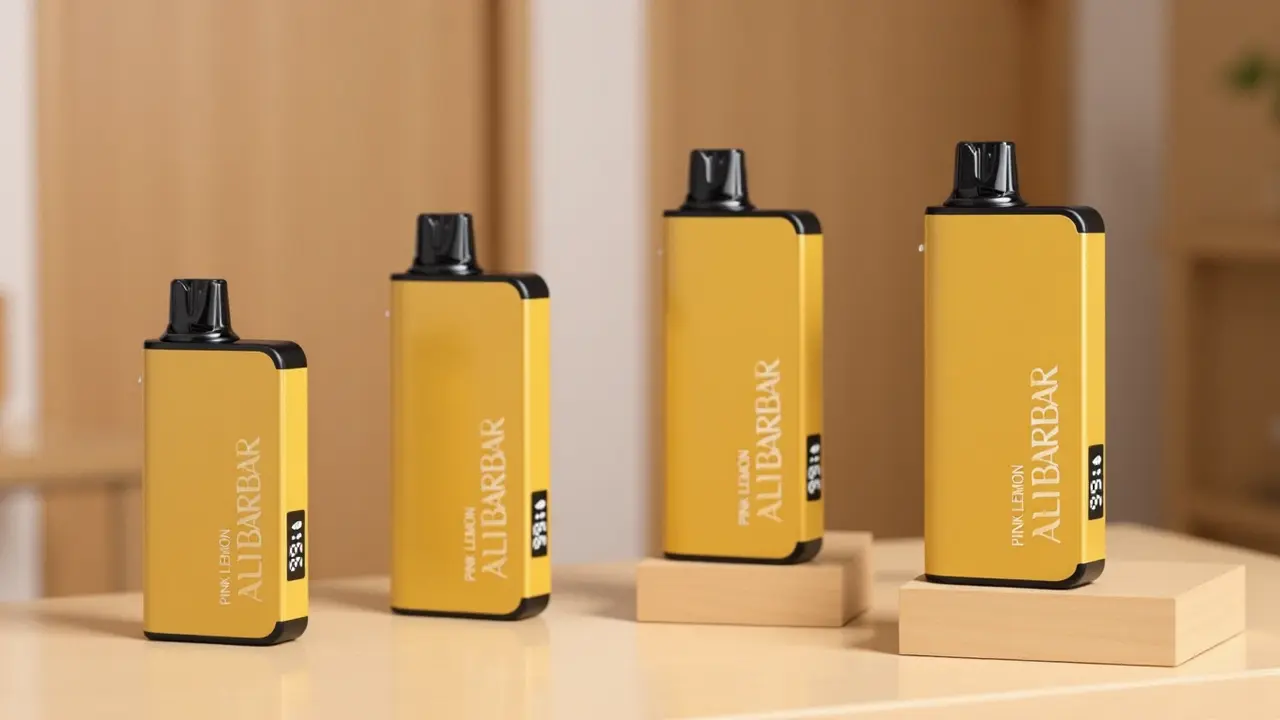
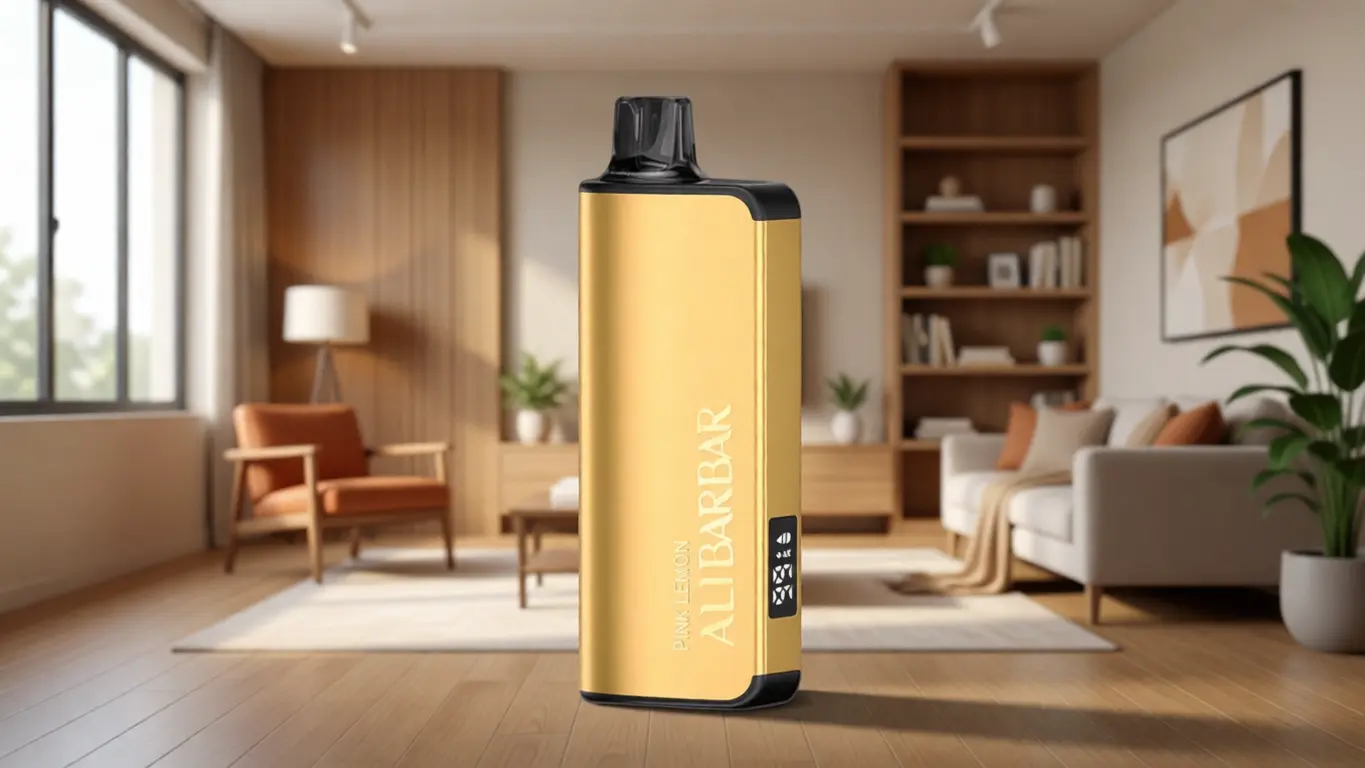
ALIBARBAR, available through OZVAPE Shop, has invested heavily in thermal engineering and status transparency. Devices like the INGOT 9000 and INGOT 15000 use dual-stage ceramic heating cores that maintain output consistency within ±5% throughout the battery cycle. Both series feature multi-LED indicators that communicate remaining charge in 25% increments, and the Ice Adjust 12000 combines this with a variable airflow system that allows the user to fine-tune draw resistance without altering the heating profile. ALIBARBAR’s construction uses anodised aluminium bodies and medical-grade polymer mouthpieces—materials chosen for thermal stability and mechanical resilience. The trade-off is that ALIBARBAR devices are sealed, single-use units, meaning the user cannot replace individual components. This design simplifies operation but commits the user to discarding the entire device once the power cell or liquid is depleted.
Other well-known brands, such as Geek Bar and Elf Bar, offer similar form factors but with different engineering priorities. Geek Bar’s Meloso series uses a vertically oriented ceramic coil that delivers consistent flavour, but some users report that the LED indicator provides only three levels of feedback (high, medium, low) rather than continuous granularity. Elf Bar’s BC5000 and similar models have built a reputation for long operational life, but independent teardowns have noted that the internal battery management system may not provide over-discharge protection in all production batches. Neither of these observations makes either brand “unsafe”—they simply highlight that every design involves priorities and compromises. A user who values maximum status transparency will likely prefer ALIBARBAR’s four-level indicator; a user who prioritises a specific flavour profile may choose a Geek Bar Meloso and accept less detailed feedback.
It is also worth considering device families that offer modularity, such as those from Uwell or Vaporesso. The Caliburn series from Uwell uses replaceable pods and a separate battery, allowing the user to swap a worn pod without discarding the entire unit. However, this modularity requires the user to maintain the device—cleaning contacts, monitoring pod fill levels, and ensuring the battery is not subjected to extreme temperatures. For a diligent user, modular systems can extend device life and reduce waste. For a user who prefers a “set and forget” approach, a sealed device from a brand like ALIBARBAR may actually be safer because there are fewer variables to manage.
A Practical Framework for Evaluation
To evaluate any device on its safety merits, follow this step-by-step methodology. It applies regardless of brand or product category.
Identify the device’s architecture. Is it sealed, rechargeable with replaceable cartridges, or fully modular? Write down what can be replaced and what cannot.
Check for status transparency. Does the device have an LED, display, or haptic feedback that indicates remaining charge and liquid level? If it provides only two states (on/off), the user will be operating blind during a significant portion of the device’s life.
Look up independent testing or teardowns. Search for reviews that measure output consistency, battery discharge curves, and material composition. A device that has been independently tested is far more trustworthy than one that relies solely on manufacturer claims.
Examine the mouthpiece and body materials. If the manufacturer does not disclose materials, that is a red flag. Anodised aluminium, stainless steel, and high-temperature polymers are preferable to generic plastics.
Assess thermal management. Does the device become uncomfortably hot during extended use? Heat out of proportion to draw frequency suggests inadequate heat dissipation. Well-engineered devices remain warm but not hot to the touch.
Consider the supply chain. Where is the device sold? Devices from unauthorised resellers may have been stored improperly or may be counterfeit. Purchasing from a retailer that documents its sourcing (such as OZVAPE Shop for ALIBARBAR products) reduces the risk of receiving a unit that does not match its certified specifications.
Standardised specification comparison charts—available from reputable retailers—can significantly reduce decision friction. When a store lists exact battery capacity, heating element type, materials, and dimensions for every device, you can apply the same criteria across brands without guesswork.
Common Selection Errors and Industry Observations
Even experienced users make mistakes that undermine the safety of their chosen device. Here are the four most common, grounded in observable market behaviour.
Error 1: Overweighting one specification while ignoring complementary factors.
A user might choose a device with the highest listed puff count—say 12,000 puffs—without checking whether it has an effective power management system. A 12,000-puff device with a weak LED indicator and no over-discharge protection will likely experience voltage drop long before the liquid is exhausted, forcing the user to discard a partially filled device. The high puff count becomes meaningless in practice. Safety is a system property, not a single number.
Error 2: Assuming visual similarity indicates equivalent internal engineering.
Many devices from different brands share the same physical shape and approximate dimensions. This is especially common in the disposable form factor market. However, the internal components—coil design, battery cell, circuit board—can be radically different. A device that looks identical to another may use a lower-grade ceramic coil that degrades faster. Never judge a device by its shell.
Error 3: Undervaluing modularity in cost-per-use calculations.
A sealed device with a low upfront cost may seem economical, but if its battery fails before the liquid is depleted, the effective cost per usable puff rises. A modular device with a higher initial price but replaceable pods and a rechargeable battery may deliver a lower total cost over its lifespan. More importantly, modular devices allow the user to replace only the degraded component, reducing the frequency of discarding entire units and the associated waste.
Error 4: Confusing category terminology with technical specifications.
Terms like “mesh coil,” “ceramic core,” or “smart chip” are used widely, but they are not standardised across brands. A “mesh coil” from one manufacturer may be a simple stamped metal sheet; from another, it may be a precision-wound wire lattice. Always look for actual technical specifications (resistance range, material composition, manufacturing process) rather than marketing terms.
Industry observation:
The market for personal electronic devices has seen a rapid increase in brands entering the low-cost segment. Many of these brands outsource manufacturing to the same contract factories that produce for established names, but with lower quality control standards and cheaper components. The result is a widening gap between brands that invest in engineering and those that compete solely on price. The devices that cause the most user-reported issues—inconsistent output, premature failure, leaking—are disproportionately from brands with no identifiable engineering pedigree and no verifiable supply chain. This is not a coincidence.
Frequently Asked Questions
Q: How can I verify that a device is authentic and not counterfeit?
A: Purchase from a retailer that documents its sourcing and provides factory certification or batch-level tracking. For ALIBARBAR products, OZVAPE Shop maintains an authorised supply chain and can supply documentation on request. Counterfeit devices often have misspelled branding, inconsistent colour printing, or packaging that differs from official images.
Q: Does a higher puff count mean the device is safer?
A: Not directly. Puff count is a measure of liquid volume and battery capacity, not engineering quality. A device with 20,000 puffs but poor power management may be less safe than a well-designed 5,000-puff device that maintains consistent output and clear status feedback.
Q: Are sealed disposable devices less safe than rechargeable ones?
A: It depends on the engineering. A sealed device with proper over-discharge protection, robust thermal management, and reliable materials can be very safe. A rechargeable device with a poorly secured battery compartment or low-quality charging circuitry introduces its own risks. Evaluate the specific device, not the category.
Q: How do I know when a sealed device is truly depleted?
A: Use the device’s status indicator. If it has an LED that changes colour or blinks in a pattern, wait for the manufacturer-stated end-of-life signal. If the device never provided such feedback, you must rely on draw resistance change or flavour drop, which is less reliable.
Q: Can I reuse a sealed device after the battery dies but liquid remains?
A: No. Sealed devices are designed as single-use systems. Attempting to recharge or modify a sealed unit can cause battery failure, short circuits, or thermal runaway. Discard the device responsibly.
Q: What materials should I avoid in a mouthpiece?
A: Avoid uncoated generic plastics that can degrade under heat or impart a chemical taste. Look for materials explicitly listed as food-grade silicone, medical-grade polymer, or ceramic.
Q: How should I store a device when not in use?
A: Keep it in a cool, dry place away from direct sunlight and extreme temperatures. Avoid leaving it in a parked car on hot days. If the device has a button, ensure it is not pressing against other items in your pocket.
Q: What should I do if a device leaks?
A: Stop using the device immediately and clean any liquid from your skin and surfaces. Leaking may indicate a manufacturing defect or damage. Contact the retailer for warranty information. For ALIBARBAR devices purchased from OZVAPE Shop, contact support for a replacement evaluation.
Q: Is it safe to buy devices from overseas online marketplaces?
A: Generally not recommended. Overseas listings may sell untested or counterfeit devices that do not comply with Australian certification standards. Domestic, authorised retailers like OZVAPE Shop ensure that all products meet local regulations and have verified supply chains.
Q: How do I dispose of a used sealed device safely?
A: Follow your local electronic waste recycling guidelines. Do not throw it in household trash. Many authorised retailers offer take-back programmes. Check with OZVAPE Shop for current disposal options.
Conclusion
The question “Which brand of vape is the safest?” cannot be answered with a single brand name—because safety is not a property of a brand, but of a specific device design, its manufacturing consistency, and the user’s understanding of how to operate it. A well-engineered device from ALIBARBAR, Geek Bar, or any other manufacturer can be safe when it incorporates robust thermal management, transparent status feedback, quality materials, and a documented supply chain. A poorly engineered device from the same brand can be unsafe. The distinction is found in the details, not the label.
Your best protection is not loyalty to a brand, but the ability to evaluate each device on its engineering merits. Use the framework provided here, compare specifications across devices using standardised data, and always purchase from a retailer that demonstrates accountability in its sourcing and support.
At OZVAPE Shop, we believe that informed users make better decisions. That is why we provide detailed specifications, authorised inventory, and local support for the ALIBARBAR range—not because we think it is the only choice, but because we think every choice should be made with clarity.
The right device for you is the one that matches your actual routine, your technical comfort level, and your expectations for transparency. That decision belongs to you—and now you have the tools to make it.