
VAPE FAQs
What Is A Puff Vape?
Aug
It starts with a simple question, but the answer reveals a gap between what the market promises and what users actually experience. A casual search for “puff vape” might return thousands of products, each emblazoned with a count—1500, 5000, 9000, 12000—yet almost no explanation of what that number physically means, how it is measured, or whether it has any relationship to real-world usage. At OZVAPE Shop, we’ve observed that the single most common source of dissatisfaction among adult buyers is the mismatch between an advertised puff count and the device’s actual longevity in daily life. This article closes that gap. It explains what a puff vape actually is, how the count is established, what engineering factors influence it, and how to use that understanding to make a decision you won’t later regret.
Understanding What Matters: The Engineering That Determines Your Experience
A puff vape is a self-contained, portable electronic device designed to deliver a measured aerosol draw upon inhalation. Most are single-use or limited-reuse systems that integrate a power source, a heating element, and a reservoir of liquid into one compact body. The defining marketing feature is the “puff count”—an estimate of the total number of discrete draws the device can provide before its liquid or battery is exhausted. But that number is not a simple metric. It sits at the intersection of thermal design, power management, reservoir geometry, and user behaviour. To evaluate any puff-rated device meaningfully, you need to understand the engineering factors that determine whether you’ll actually get close to that number in your own routine.
Internal Architecture and Output Consistency
The heating element and wicking system are the core of a puff vape’s performance profile. In a well-designed device, these components work together to maintain a stable temperature across the entire life of the unit. When the architecture is compromised—through a poorly graduated wire gauge, inconsistent wicking material, or a coil that overheats the liquid as the reservoir depletes—the output becomes harsh, thin, or burnt, often well before the puff counter suggests the device is finished. Users commonly report that in cheaper devices, the last third of the puff count is effectively unusable. Recognising a durable thermal design means looking for brands that explicitly discuss their coil materials, wicking structures, and quality-assurance testing rather than only the puff number. ALIBARBAR, for instance, has invested in a vertically oriented mesh architecture across its INGOT series that stabilises the thermal curve even as the liquid level drops. This kind of detail tells you more about the practical capacity of a device than the headline number ever will.
Power Management and Status Transparency
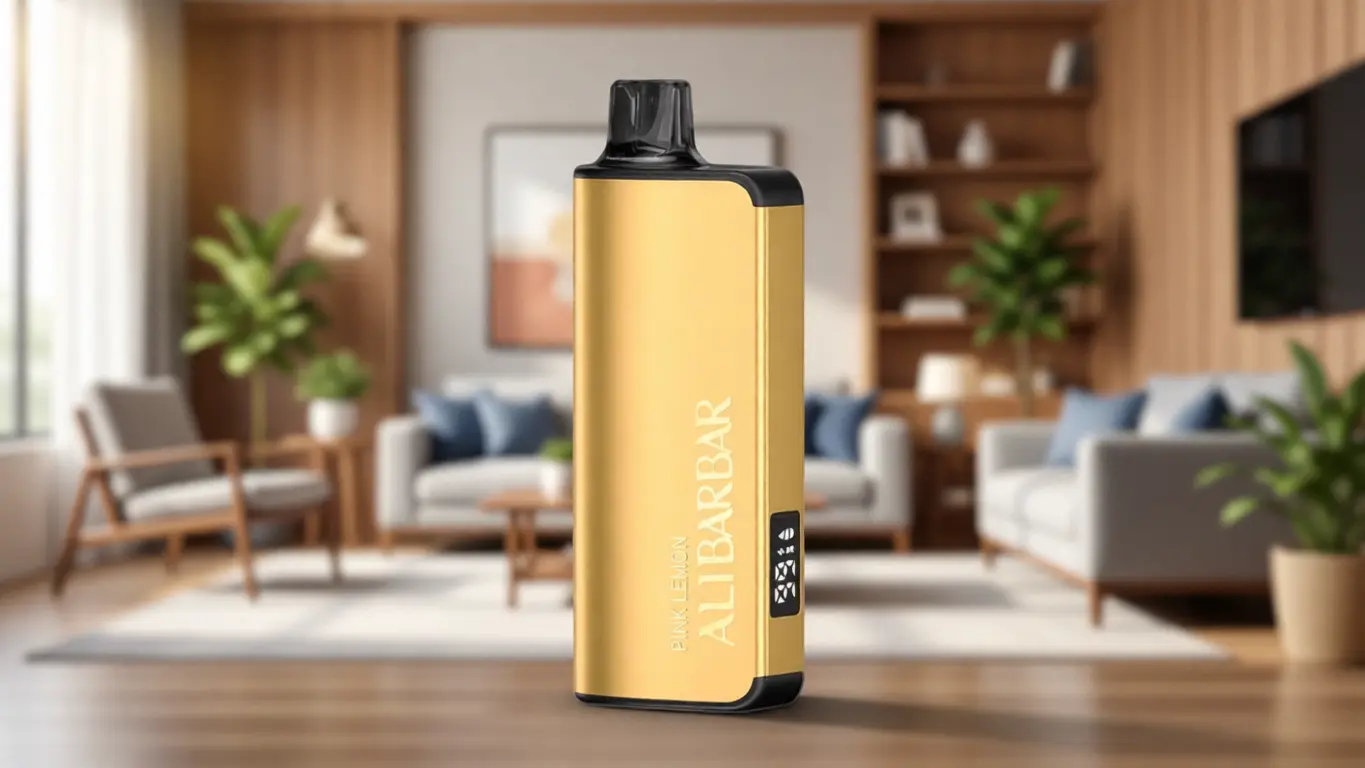
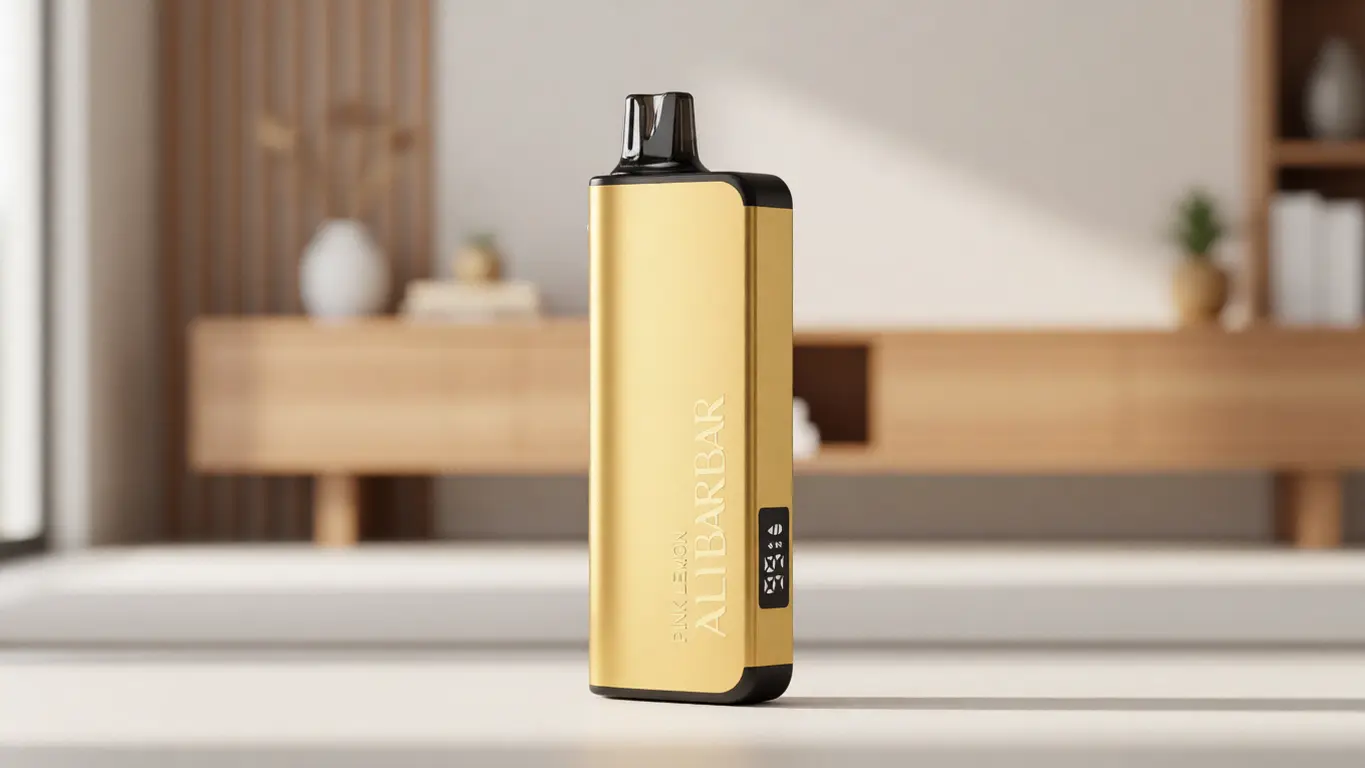
A puff vape’s battery is not just a fuel source; it is also the single point of failure that determines whether the last few hundred draws ever happen. Devices that lack regulated output often start strong and then decline in power as the cell voltage sags, producing progressively thinner draws. Equally frustrating are units that give the user no clear indication of remaining charge or liquid. When status information is absent, the rational user response is to carry a backup device—a hidden cost that the original purchase price ignores. High-integrity puff vapes now incorporate LED or digital displays that communicate battery level and sometimes even e-liquid status. The ALIBARBAR INGOT 15000, for example, includes a sharp digital readout that removes guesswork entirely. This transparency is not a cosmetic feature; it directly reduces waste, anxiety, and the need to over-purchase.
Physical Design and Material Durability
A puff vape lives in pockets, bags, and hands. Its surface finish, mouthpiece shape, and overall ergonomics determine how well it withstands daily carry and how comfortable it is to use over long sessions. Many devices look sleek but begin to show scratches or peeling coatings within days. Materials matter: polycarbonate shells with reinforcement, smooth contours that avoid sharp edges, and mouthpieces designed for prolonged lip contact without irritation. ALIBARBAR uses a combination of aluminium alloy and textured soft-touch coatings on its higher-end units, a choice that resists wear far better than the gloss plastics found on many generic alternatives. The Ice Adjust 12000 model includes an adjustable airflow slider that is recessed to prevent accidental movement, a small but telling sign of user-centred industrial design.
Modularity and Lifecycle Flexibility
The original puff vape category was dominated by completely sealed, disposable units. Today, however, the spectrum extends from fully disposable to rechargeable-with-refillable configurations, and each architecture has distinct cost and convenience implications. A sealed device offers zero maintenance but a fixed lifespan; a rechargeable unit can at least use all the liquid before being discarded, and when combined with replaceable pods or tanks, it can last substantially longer—lowering per-use cost and reducing waste. Understanding this spectrum allows you to align your purchase with your actual usage pattern. Someone who uses a device intermittently throughout a long day may find a rechargeable high-count unit far more practical than two smaller disposables. ALIBARBAR’s range spans multiple points on this spectrum: the INGOT 9000 is a high-capacity sealed option for those who want no interaction, while the Ice Adjust 12000 adds airflow control, and the INGOT 15000 pushes life further with a large cell. No single design is universally better; the right one matches your personal tolerance for maintenance and your daily schedule.
Applying These Criteria to Real-World Options
Once you know what to look for, evaluating actual devices becomes a matter of matching specifications to your needs. The current ALIBARBAR family illustrates how the same engineering principles can be executed across different user profiles.
For someone who values absolute simplicity and a low physical footprint, the INGOT 9000 provides a sealed, draw-activated device with a mesh coil that maintains flavour stability throughout its liquid volume. The puff count is derived from a controlled-duration lab draw, but the device’s thermal management helps extend usable life to the very edge of that rating. You’re accepting a fixed lifespan in exchange for zero attention required.
The INGOT 15000 targets the user who is tired of carrying a spare. It incorporates a battery large enough to outlast the liquid reservoir under typical usage, plus a digital display that shows battery percentage and a handy e-liquid level indicator. This direct status feedback is the feature most users report as transformative—it removes the low-grade anxiety that otherwise nags whenever a device feels lighter. The puff count here is genuinely informative because the power and liquid are managed in lockstep.
The Ice Adjust 12000 adds manual airflow control to the same display-equipped platform. Why does that matter? Because draw resistance is subjective, and a device that forces a draw too tight or too loose for your inhalation style will either under-consume liquid (making the puff count seem unreachable) or over-consume it (making the device expire early). The ability to tune the draw to your own breathing pattern brings the advertised puff count much closer to reality.
Other brands in the broader market certainly offer comparable concepts, but the ALIBARBAR approach stands out for the cohesion of its engineering across the range. Each device shares a common thermal architecture, indicator logic, and build-quality standard, which means the skills you develop evaluating one model transfer to the others. This coherence is not universal; many manufacturers shift internal designs so frequently that the user cannot carry forward any learning.
A Practical Framework for Evaluation
You can use the following method to assess any puff vape, whether you encounter it online or in a physical space. Avoid the trap of starting with the puff count. Instead, work through these questions in order:
Battery architecture – Is the device rechargeable? If not, its puff count assumes you will consume the entire liquid volume before the cell depletes. Asked another way: Does the battery size genuinely support the claimed draw count? A device rated at 5000 puffs with a 400mAh cell is mathematically impossible under realistic power requirements.
Status feedback – Does the device tell you clearly how much power or liquid remains? If not, you will inevitably carry a backup, so factor that into the total cost.
Draw resistance and airflow – Can you adjust it? If the draw is fixed, try to test the resistance before buying; a device that’s too tight for your lungs will deliver fewer satisfying draws, and you’ll discard it before the liquid is gone.
Build materials – Examine the finish under light. Does it feel like it will survive a week in your pocket with keys? If the retailer cannot describe the coating, assume it is vulnerable.
Coil and wicking specification – Look for mesh or cotton references. These indicate a more consistent output profile than basic silica wick systems.
Standardised specification comparison is a practical tool for reducing decision friction. When a retailer like OZVAPE Shop presents device specifications in a uniform format—battery capacity in mAh, liquid volume in mL, coil type, material finishes—it becomes far easier to align these data points with your daily routine. This is the difference between a curated catalogue and an anonymous marketplace listing.
Common Selection Errors and Industry Observations
Users consistently degrade their own satisfaction through a few predictable errors. Recognising these can save you from spending money twice.
Overweighting the puff count while ignoring the battery. The puff count is a derived figure based on uniform lab draws, typically of one-second duration. Real-world draws are longer and more variable. A device with a high puff number but an undersized battery will deliver most of those puffs at declining power, making the latter half unsatisfying. Always check the battery capacity in mAh against the puff claim; as a rough heuristic, a truly capable high-count device should carry at least 800–1000mAh for claims above 5000 puffs.
Assuming visual similarity means identical internals. The vape market has a “clone” problem. Two devices that share the same external casing may house completely different coils, battery management chips, and liquid formulations. A lower price often reflects lower-grade internals, not just a thinner retail margin. Purchasing from an authorised channel that traces inventory to the manufacturer—as OZVAPE Shop does for the ALIBARBAR range—mitigates this risk.
Undervaluing modularity in cost-per-use. A sealed disposable with 5000 puffs might appear cheaper at a glance, but if you discard it after 3500 because the output fades, your effective cost per puff rises. A rechargeable unit with a bigger cell often yields a lower real cost simply because you can extract the full liquid payload. Consider ALIBARBAR’s INGOT 15000: the ability to recharge means every millilitre of liquid is utilised, eliminating the “dead liquid” phenomenon common in disposables.
Confusing category terminology. “Puff vape” is a marketing term, not a technical specification. It loosely groups disposable or semi-disposable devices that are pre-filled and puff-count rated. But within that group, you find vastly different architectures. Treating them as interchangeable leads to apples-to-oranges comparisons and misguided purchase decisions.
From an industry perspective, the puff-vape segment is undergoing a shift toward greater transparency, driven in part by jurisdictions that now require detailed labelling of coil materials and e-liquid volume. Brands that proactively adopt informative status displays and publish their internal testing protocols are positioning themselves for this regulatory environment. ALIBARBAR’s display integration across its newest models is not a random feature; it anticipates a future where ambiguity is no longer commercially viable.
Frequently Asked Questions
Q: What does the puff count actually measure?
A: It is an estimate of how many discrete inhalations a device can produce before its liquid reservoir is depleted or the battery fails to fire the coil effectively. Typically derived from laboratory tests using a fixed draw duration (often 1 second) and consistent airflow, it serves as a relative comparison point, not a personal guarantee.
Q: Why does my device run out before the rated puff count?
A: Real-world draws are generally longer than lab standards, and factors like ambient temperature, storage angle, and individual inhalation force can alter liquid consumption. A device that fails significantly short of its rating may also have a thermal management problem causing premature wicking degeneration.
Q: Can I recharge any puff vape?
A: No. Many early-generation puff vapes are fully sealed and do not include a charging port. If a device does not expressly state it is rechargeable or does not have a USB-C/micro-USB port, it is intended for one-time use. Attempting to force-charge a non-rechargeable device is unsafe.
Q: Is a higher puff count always better?
A: Not necessarily. A higher number may come with a larger physical footprint, a heavier weight, or a battery that cannot sustain performance for the full duration. The important metric is the effective, enjoyable puffs you receive—ideally matching your daily usage pattern without significant decline in quality.
Q: How can I verify that an ALIBARBAR device is authentic?
A: Each ALIBARBAR unit sold through authorised retailers like OZVAPE Shop carries a unique verification code on the packaging, which you can check against the manufacturer’s database. The code confirms that the device was sourced from the official factory network and has not been tampered with.
Q: What is the difference between a puff vape and a refillable pod system?
A: A puff vape is typically pre-filled and either disposable or rechargeable with a fixed-liquid reservoir. A refillable pod system allows you to manually add e-liquid and replace the pod/coil assembly, offering more flexibility and often lower long-term cost. The choice hinges on whether you prefer zero-maintenance convenience or customisable longevity.
Q: Is there a standard draw duration I should use to match the puff rating?
A: Most manufacturers test at around one second. If you naturally take longer draws, the total puffs you get will be proportionally lower. However, a device with stable output will still provide more predictable performance regardless.
Q: How should I store a puff vape to maximise its lifespan?
A: Store upright in a cool, dry environment, away from direct sunlight and extreme temperatures. Pressure changes (like an airplane cabin) can cause minor leakage, so observe the device after travel.
Q: What should I do if my device arrives and doesn’t work?
A: Contact the retailer immediately; authorised sellers maintain return or replacement policies for dead-on-arrival units. OZVAPE Shop handles such cases with a documented process, requiring only a brief description and your order reference.
Q: How does OZVAPE Shop ensure I receive a genuine, well-functioning product?
A: OZVAPE Shop sources ALIBARBAR inventory exclusively through authorised distribution, verifies stock against manufacturer batch records, and provides a direct support email staffed by local personnel who can assist with product concerns or questions.
Conclusion
A puff vape is more than a number on a box. It is a tightly integrated electronic device in which thermal design, power architecture, materials, and status feedback determine whether you finish your purchase feeling satisfied or disappointed. By learning to look beyond the puff count and evaluate the engineering fundamentals—something this article has equipped you to do—you move from guesswork to informed selection. OZVAPE Shop exists to support that shift, offering standardised product information and factory-certified ALIBARBAR devices so that the device you receive performs the way its specifications suggest it should. The right choice is the one that aligns with your actual daily rhythm, not the one with the largest advertised digit. Take the time to evaluate, and you will buy fewer but better devices.