
VAPE FAQs
Where Can I Vape In Japan?
Sep
Where Can I Vape In Japan?
What the regulations actually require—and the equipment choices that make compliance second nature
You are standing on a quiet side street in Shinjuku. A slim device is in your hand, and you glance around for a familiar blue-and-white sign or a cluster of people holding similar hardware. There is no sign. The people are walking past, politely oblivious. You suddenly realise that you do not actually know whether what you are about to do is tolerated, technically legal, or likely to draw a ¥50,000 penalty. This is not a failure of willpower. It is a predictable result of how Japan’s rules are communicated: they are layered beneath decades of cultural habit, municipal by-laws, and a deep-seated concern for collective comfort. The practical question “where can I vape in Japan?” therefore breaks into two halves. The first is about places—specific geographic and architectural categories that determine acceptability. The second is about gear—whether your device broadcasts the kind of visually calm, low-profile presence that keeps you invisible to ordinary enforcement scrutiny. OZVAPE Shop, as a supplier that deals daily with adult users navigating exactly these ambiguities, has gathered a body of practical knowledge that is rarely written down. What follows is a structured attempt to write it down.
Understanding What Matters: Core Legal and Cultural Factors
Japan’s approach is not a blanket ban, nor is it permissive. It is a patchwork shaped by the Pharmaceutical Affairs Law, local nuisance-prevention ordinances, and an unwritten social code that prizes meiwaku (causing bother to others) above abstract rights. Before you check a map, you need to internalise how these forces interact.
Nicotine Classification and the Hardware Implication
The law draws a hard line between nicotine-containing liquids, which are regulated as unlicensed pharmaceutical products unless meeting a specific exemption, and nicotine-free alternatives. A device that visually suggests either category will be treated by the average police officer or station attendant according to how it appears, not according to what it contains. This is the first filter: bulky cloud-producing equipment, regardless of what is inside the reservoir, signals “potential rule-breaker” and draws attention. Compact, closed-system designs that produce minimal visible output tend to pass through public space without incident. The engineering lesson is not about legality—it is about social friction. If the device requires a deep-lung inhale and a visible exhalation that lingers, the number of places you can comfortably use it shrinks to near zero.
Designated Spaces and the Smoking-Room Analogy
Japan’s indoor public spaces are almost entirely smoke-free, with exceptions for dedicated smoking rooms—airtight glass boxes frequently found in major train stations, office buildings, and some restaurants. The question is whether these rooms welcome personal electronic devices. In practice, most do, because the signage specifies “smoking,” and the etiquette inside a smoking room is governed by mutual tolerance. However, hotels, ryokan, and smaller eateries set their own policies. Before you book, look for the phrase zenmen kin’en (completely non-smoking) versus kitsuen-shitsu ari (smoking room available). In a hotel, a room reserved as a “smoking room” almost always permits vaping. If you have booked a non-smoking room, the device is best left in its case until you step outside—not only because of policy but because Japan’s smoke detectors are exceptionally sensitive and hotel staff will bill you for a false alarm.
Outdoor Ambiguity: Wards, Streets, and the “No Smoking While Walking” Culture
Many foreign visitors assume that moving outdoors solves the problem. In Tokyo, Osaka, and Kyoto, the reality is more complex. A growing number of wards enforce outright bans on smoking while walking, often backed by fines, and these ordinances routinely define smoking in a way that captures electronic devices. The key behavioural marker is not vapour but stance: a person standing still by a designated smoking area, using a small device discreetly, is unlikely to be challenged. A person walking while using any device may be stopped by ward patrols, regardless of what the device produces. The capital’s Chiyoda ward, for example, has officers who issue verbal warnings first, but repeated encounters escalate quickly.
Applying These Criteria to Real-World Options
Not all locations in Japan are equally forgiving, and the right behaviour depends on which category of space you are occupying. The following is not a list of guaranteed safe spots—such a list would be reckless—but an observational framework based on how enforcement patterns actually function.
Major Station Smoking Rooms
These are the most reliable bet. JR East, Tokyo Metro, and private railway companies operate dozens of vented smoking rooms. Users of low-output, cigarette-style devices stand alongside traditional smokers without incident. The rule of thumb: if the room is full, wait; if conversation is happening, keep your output minimal. A small, all-in-one device with automatic draw activation will cause fewer double-takes than something with adjustable wattage and a bright OLED screen.
Street-Level Designated Areas
Cities such as Shinjuku and Shibuya maintain outdoor smoking zones marked by signage and often enclosed by waist-high barriers. These zones are a safe harbour if you are stationary. However, they are not a licence to produce large plumes; nearby pedestrians will not check for the zone’s boundary before deciding that the source of visible vapour is their problem. Choose equipment that mimics the exhalation profile of a traditional cigarette: short, dissipating, and unobtrusive.
Hotels and Traditional Inns
The safest path is to book a smoking-permitted room. If that is not possible, large hotels sometimes have a smoking room on the lobby floor or near the restaurant. Otherwise, the forecourt of the building, away from the entrance, is the least objectionable outdoor choice. At a ryokan, the shared bathing area and the dining room are absolute no-go zones regardless of device type; the cultural expectation of pure air in these spaces overrides any technical argument about the absence of combustion.
Parks, Temples, and Public Gardens
Assume prohibition. Even if a park lacks specific signage, Japanese park users will view any visible exhalation as a violation of the calm. At temples and shrines, the grounds are treated as sacred spaces—hands sanitised, mouths rinsed, vapour not welcome. No device feature can render use culturally appropriate in these settings.
A Practical Framework for Evaluation
You can assess any location in Japan within thirty seconds by running through a simple diagnostic sequence. These prompts are designed to reveal not the official rule—often inaccessible—but the likelihood of social challenge:
Is there visible signage with a lit-cigarette pictogram crossed out? If yes, assume your device is included, even if the wording mentions only smoking. The consensus among ward officials is that electronic devices fall under the same nuisance category.
Are locals already smoking or visibly using similar devices here? If you see no one holding anything, do not be the first. The density of pedestrians who react negatively is highest in purely residential streets and shopping arcades.
Is the space enclosed, and are you standing still? If both conditions are true and you are not blocking a thoroughfare, you have dramatically lowered the odds of interference—provided your device does not announce itself with a crackle or a lingering odour.
Does your device require button-press activation and a multi-second draw to achieve satisfaction? If the answer is yes, you are more likely to draw curious looks and should limit use to confirmed smoking rooms. Simpler, auto-draw systems pass the “nothing unusual happening here” test far more reliably.
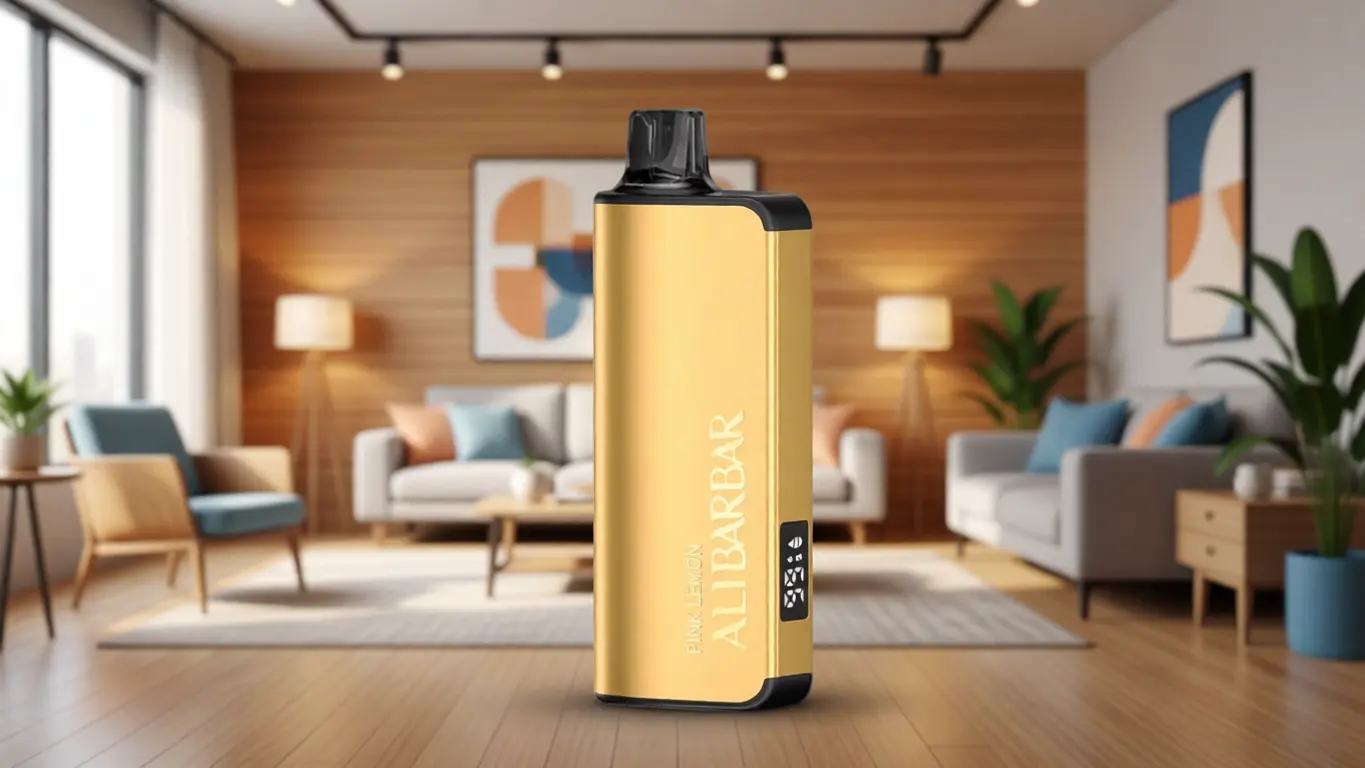
Standardised specification sheets—like those OZVAPE Shop maintains for the ALIBARBAR families—help travellers match a device to this environment in advance, because they make it easy to confirm draw-activation, size, and vapour profile before packing.
Common Missteps and Industry Observations
The gap between a comfortable experience in Japan and an uncomfortable one frequently results from four evaluation errors that the wider market does little to correct.
First, there is the assumption that performance metrics translate across regulatory landscapes. A high-capacity device that is perfectly convenient at home becomes a liability in Tokyo if its size and cloud production constantly mark the user as standing apart. Tourists who haul full-sized modular kits often end up leaving them in the hotel safe after the first day and buying whatever miniature alternative is locally available, simply because the social cost is too high. A moment spent matching device physicality to the setting can save that wasted purchase.
Second, people overweight wattage and liquid capacity while ignoring output visibility. In Japan, a barely visible puff from a low-temperature coil draws zero comment; a dense, lingering cloud attracts security guards in department stores and station concourses even if no rule is being broken. The industry tends to celebrate cloud volume as a positive; in a Japanese street scene, it is purely a risk factor.
Third, the cultural habit of carrying a backup device can backfire if the backup is identical in form to the primary. What looks like a single, near-invisible object in a pocket becomes suspiciously bulky when you are carrying two. Travellers who understand this opt for ultra-compact primary devices and leave the modular backup at the hotel, rather than trying to be prepared for everything at once.
Fourth, too many users treat all of Asia as one regulatory zone. Japan’s rules are markedly different from those in neighbouring countries, and assuming that what was fine in Bangkok will be fine in Kyoto is a shortcut to a fine. The device might be identical, but the enforcement environment is not. The Japanese public’s willingness to report nuisance behaviour to station staff or police kōban is significantly higher than in many other destinations.
From an industry perspective, the manufacturers that serve this segment best are those that design devices that function competently at lower temperature settings, with a tight draw resistance that mimics familiar hand-to-mouth rituals without broadcasting the result. This is not about spinning features; it is a genuine engineering accommodation of a market where the user wants to be left alone.
Frequently Asked Questions
Q: Are vaping devices legal in Japan?
A: Yes, hardware itself is not banned. The legality of the liquid depends on whether it contains nicotine, which is subject to pharmaceutical controls. However, many local ordinances restrict usage in public spaces regardless of liquid content.
Q: Can I use my device in a station smoking room even if the sign says “smoking booth”?
A: Yes, in virtually every case. Train operators do not distinguish between a lit cigarette and a personal electronic device inside a designated smoking enclosure.
Q: What happens if I am caught using a device while walking in a restricted ward?
A: Typically a verbal warning from ward patrol officers first. Repeat offences can result in a fine, which varies by ward, usually ¥2,000–¥5,000. The finer is rarely the issue; the social embarrassment is immediate.
Q: Do hotel smoke detectors react to vapour?
A: Yes, many optical smoke detectors in Japanese hotels are triggered by dense water vapour or aerosol clouds. This is a common cause of room charges and awkward conversations with front-desk staff, so use in smoking-designated rooms only.
Q: Can I bring a large mod device with spare batteries through airport security?
A: Spare lithium batteries must be carried in hand luggage, not checked baggage. Mod devices are permitted in carry-on, but security officers may ask you to demonstrate that the device powers on. Airport policies at Narita, Haneda, and Kansai are well-documented online before you fly.
Q: Is there any way to verify my device’s vapour output before travelling?
A: Yes. Many retailers, including OZVAPE Shop, publish consistent specification sheets that list coil resistance, wattage range, and draw-activation type. Cross-referencing those figures against the visual output you experience at home gives a reliable indicator of how conspicuous the device will be in a quiet Japanese setting.
Q: Are convenience stores or supermarkets a safe place to use a device discreetly?
A: No. Major chains such as FamilyMart, 7-Eleven, and Lawson have store-wide no-smoking policies that include electronic devices. The only exception is if there is a clearly marked outdoor smoking area attached to the store.
Q: If a restaurant has a smoking section, can I use my device there?
A: Most yes, if the section is physically separated and you are seated within it. If the section is merely a few tables near an open window, err on the side of caution and wait until you are outside. Asking the staff, “Kitsuen seki, daijōbu desu ka?” (Is this the smoking seat, is it okay?) usually settles the matter without translation gaps.
Q: Do Japanese authorities confiscate devices at the border?
A: Not for personal-use quantities of hardware. Customs is concerned primarily with liquid containing nicotine, which requires a special permit for import beyond a very small personal allowance. Check the latest Ministry of Health guidelines before packing.
Q: Where can I get a device that is suited specifically to Japan’s public-use constraints?
A: Retailers who understand the Japanese travel scenario can recommend ultra-compact, auto-draw units with minimal vapour production. Looking at specification sheets rather than marketing descriptions is the quickest way to identify suitable hardware ahead of time.
Conclusion
Moving through Japan with a personal electronic device is not about finding hidden loopholes. It is about matching the technology to the social environment as carefully as you might match your choice of shoes to the amount of walking you plan to do. The country’s labyrinth of ward-level ordinances, cultural expectations, and architecture-specific norms rewards the user who arrives with a device that feels small in the hand, activates without a button display, and dissipates quickly. It punishes the user who applies a one-size-fits-all assumption. The right information, supported by transparent product specifications, takes the stress out of the equation long before you pass through passport control. OZVAPE Shop provides standardised, factory-certified hardware documentation that helps adult travellers make exactly that kind of informed decision—not by promising a perfect shortcut, but by refusing to obscure the details that actually matter. Ultimately, the best place to vape in Japan is not a secret corner. It is anywhere you can stand quietly, unobtrusively, without making the person next to you wonder whether they should say something. Choose your spot, and your equipment, accordingly.