
VAPE FAQs
Where Can I Get Thc Vape Near Me?
Sep
The request “where can I get THC vape near me” is one of the most common search queries in the personal electronic device space. It reflects a genuine desire for a specific experience, but it also exposes a serious information gap. The reality is that the answer depends almost entirely on where you live, what the law allows, and whether you have a verified medical need. In countries like Australia, recreational cannabis vapes are illegal, and even medical access is tightly regulated. Yet the search continues because people want clarity, not just a list of local shops.
That is exactly what this article intends to provide. Instead of pointing you to unregulated sources that risk your health and legal standing, we’ll explain the legal framework around cannabis vaping, the engineering factors that separate safe devices from dangerous ones, and how to evaluate any vaping product with confidence. If you are exploring legal alternatives such as CBD or traditional nicotine devices, the principles below apply equally. And if you are simply looking for a reliable retailer, we’ll discuss why OZVAPE Shop approaches product sourcing and device education the way we do.
Understanding What Matters: Core Engineering and Design Factors
When you see a question like “where can I get THC vape near me,” the underlying assumption is that availability matters more than quality. In an unregulated market, that assumption is dangerous. The chemical composition of unverified cartridges, the materials used in heating coils, and the absence of any meaningful quality control can turn a disposable device into a health hazard. So before you ask where, you should ask what. What is inside the device? How is it engineered? These questions matter regardless of whether the substance is nicotine, CBD, or something that remains illegal.
Internal Architecture and Output Consistency
The heating element is the heart of any vaping device. In legitimate products, manufacturers carefully calibrate the coil material, resistance, and wicking structure to deliver a consistent temperature over the lifespan of the device. In poorly made or counterfeit devices, you get dramatic temperature swings. That can burn the active ingredients, produce harmful byproducts, and give you a harsh, unreliable draw.
This is especially important for cannabis extract users. If you are buying a cartridge from a source that cannot provide lab reports or traceability, you have no way of knowing whether the coil contains heavy metals, whether the wick is synthetic and heat-resistant, or whether the extract itself has been cut with vitamin E acetate or other thinning agents. These are not rare occurrences; they are recurring patterns in the black market. A well-engineered thermal management system is not a luxury. It is the difference between a predictable experience and a medical emergency.
Power Management and Status Transparency
Battery technology is another area where cheap devices fail silently. When a device has no clear power management, the battery can overdraw, overheat, or fail to deliver a consistent voltage. Users often report that devices “lose strength” long before the battery is actually empty. The root cause is poor calibration, not user error.
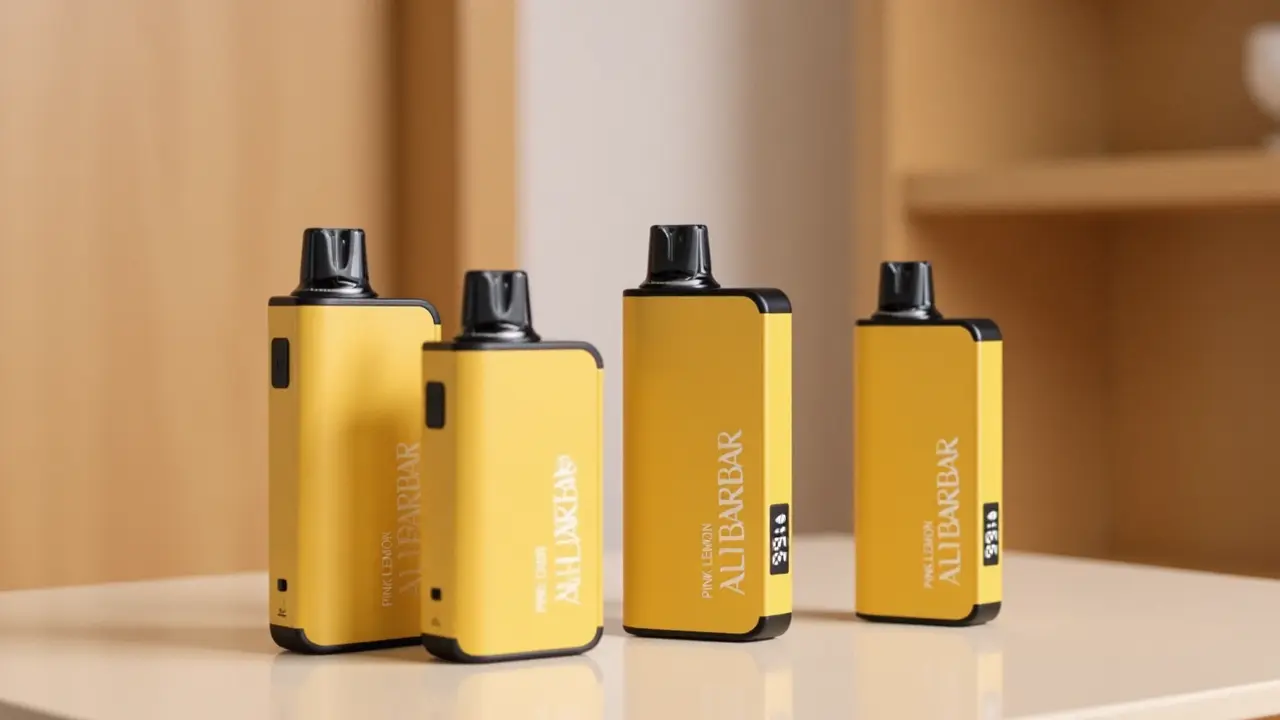
Status transparency matters even more. If a device does not clearly indicate remaining charge or consumption, you cannot know how much is left. That ambiguity forces you to carry a backup, which is inconvenient. But in a legal context, it also means you cannot accurately manage your intake. Regulated devices, including the ALIBARBAR INGOT series available through OZVAPE Shop, include explicit indicator systems that show remaining power and usage cycles. This is not a trivial feature. It is a fundamental safety and usability requirement.
Physical Design and Material Durability
Most people look at a Vape device and see only aesthetics. Engineers see a series of testing decisions. The outer shell must resist heat, impact, and corrosion. The mouthpiece must be contoured for comfortable use over hours, not seconds. The internal seals must prevent leaks without obstructing airflow.
In the unregulated THC market, none of this is guaranteed. Many cartridges use low-grade plastics that degrade when exposed to heat or terpenes. The result is a plastic taste, cracked housings, or worse, inhalation of microplastics. Legitimate manufacturers, by contrast, choose materials based on third-party certification, not cost alone. A durable device is not just about saving money. It is about reducing the risk that your device breaks mid-session and exposes you to internal components designed to stay behind a barrier.
Modularity and Lifecycle Flexibility
Design architecture determines how long a device remains useful. Sealed disposables are simple but wasteful. Rechargeable pod systems offer a middle ground. Fully modular devices allow you to replace individual components as they wear out. Each choice reflects a different user priority.
For someone seeking THC vapes, modularity is rarely available because the cannabis cartridge format is often disposable. But the principle still applies. A device that allows you to change coils, replace batteries, or swap tanks is a device that can be adapted to legal products you trust. When you consider the lifecycle cost, a higher-quality modular device often outperforms cheap disposables on every metric except initial price. The initial price difference dissolves when you factor in durability, performance consistency, and the cost of replacing failed units.
Applying These Criteria to Real-World Options
Now, the practical question: what should you look for if you want a vaping device today? The first step is to acknowledge what is legal. In most Australian states, nicotine vaping products require a prescription. CBD products are available under specific conditions. THC remains a controlled substance. So the “where” is not a list of shops; it is a list of regulatory pathways.
If you have a legitimate medical need for cannabis-based products, your starting point is a healthcare provider. They can guide you through the Therapeutic Goods Administration (TGA) approval process. Only after that approval can you access products through an authorised pharmacy. Any other source is operating outside the law.
If you are looking for a legal vaping device for nicotine or CBD, then the engineering criteria above become your purchasing checklist. For example, the ALIBARBAR range represents a segment of devices that prioritise transparency and consistent performance. Models like the INGOT 9000 and INGOT 15000 are designed for high-capacity use with clear battery status, while the Ice Adjust 12000 offers adjustable output for users who want more control. These are not endorsement claims; they are descriptions of observable design choices. You can apply the same checklist to any other brand you encounter, whether you buy from OZVAPE Shop or elsewhere.
Comparatively, you may see other device families that emphasise compactness or rapid charging. Some brands focus on multi-screen displays or Bluetooth connectivity. These features are not inherently better or worse. They should be evaluated against your routine. If you are away from chargers all day, capacity wins. If you prefer discretion, a smaller profile may matter more. The point is not to rank brands but to match devices to your actual needs.
A Practical Framework for Evaluation
You can evaluate any vaping device — legal or otherwise — using the following steps. They apply equally to a storefront purchase or an online order.
Step 1: Verify legality. Confirm that the substance you intend to use is legal in your jurisdiction and that you have any required prescription or authorisation. If you cannot confirm legality, stop here. No device is worth a criminal record or a product safety hazard.
Step 2: Check the source. Does the retailer publish verifiable information about the manufacturer, supply chain, and product certification? A legitimate retailer will not hide these details. At OZVAPE Shop, for instance, every product listing includes documented specifications and sourcing notes. That is not a marketing claim; it is a practical requirement for informed consent.
Step 3: Inspect the device architecture. Read the specifications. Is the battery capacity stated honestly? Does the device have a visible status indicator? What material is the mouthpiece? Can you replace the coil or cartridge? If the answer to any of these is unclear, consider it a red flag.
Step 4: Compare like with like. Do not compare the initial price of a disposable with a refillable device. Calculate the cost per use over the expected lifespan. Include the cost of spare parts and consumables. This is where modularity shows its value.
Step 5: Review independent testing. For any substance-containing product, look for third-party lab results. The presence of a certificate is not enough; verify the laboratory is accredited. If no lab results exist, the product has not been tested, regardless of what the label implies.
Common Selection Errors and Industry Observations
Most users who end up disappointed with a vaping device did not fail because they chose the wrong brand. They failed because they made one or more of the following mistakes.
Overweighting one specification. A user sees a high milliamp-hour number and assumes the device is excellent. But battery capacity means little if the power management is inefficient or the coil burns through liquid too quickly. Pair capacity with output consistency and status transparency. A device with clear indicators but smaller capacity is often more reliable than a large battery with no feedback.
Assuming visual similarity means equal engineering. The market is full of devices that look similar to leading models. On the outside, they mimic the shape, colour, and even the packaging. Inside, they use inferior coils, unregulated batteries, and non-food-grade plastics. Visual similarity is not a design statement; it is a counterfeit tool. Always inspect the internal specifications, not just the appearance.
Undervaluing modularity. People routinely calculate the “cost per device” without factoring in that a sealed disposable is worthless once its battery dies, even if the cartridge is half full. A modular device lets you separately replace the battery, coil, and tank. This seems like a luxury until you realise that the modular system outlasts three disposables before needing any part replacement. The long-term saving is substantial.
Confusing category terminology with technical specification. Terms like “ultra” or “max” are marketing labels, not technical specs. A device called “Ultra Max” might have a smaller battery than a model without those adjectives. Always read the actual output wattage, coil resistance, and battery capacity. Do not rely on product names to carry meaning.
From an industry perspective, the supply chain for many vape products is opaque. Large-scale manufacturing is concentrated in a few regions, and many brands simply rebadge generic chassis. There is nothing wrong with that approach as long as the retailer is honest about it. What is concerning is the number of retailers who market generic devices as premium with zero documentation of the original manufacturer. When you ask for the precise origin of components, a legitimate retailer provides an answer. The ones who deflect are usually hiding an unstructured supply chain.
Frequently Asked Questions
Q: Is it legal to buy THC vapes in Australia?
A: For recreational use, no. THC is a controlled substance in all Australian states. Medical use is possible through the TGA special access scheme, but requires a prescription and supply through an authorised pharmacy. Any unregulated product sold as a THC vape is illegal and likely unsafe.
Q: How can I tell if a vape product is genuinely lab-tested?
A: Look for a certificate of analysis from a recognised laboratory. Verify the laboratory name and report date. If the product does not include a batch number or the report does not match the product batch, treat it as untested.
Q: Does OZVAPE Shop sell THC products?
A: No. OZVAPE Shop specialises in legal personal electronic devices and nicotine-related products that comply with Australian regulations. We do not sell or support cannabis-based vaping products. Our focus is on device reliability, user education, and transparent product sourcing.
Q: What is the difference between disposable and pod-system devices?
A: Disposable devices are fully sealed and meant to be discarded after the battery or e-liquid is depleted. Pod systems use replaceable pods, which can reduce cost and waste. Modular systems allow separate replacement of battery and tank components. The best choice depends on your usage frequency and willingness to maintain the device.
Q: Why do some vapes taste burnt shortly after first use?
A: This is often caused by a coil that is not properly saturated before firing, or by a coil with inconsistent resistance. It can also indicate that the device is running at too high a power level for the liquid viscosity. Poor wicking material in cheap devices is a common culprit.
Q: What should I do if a vape device leaks?
A: Stop using it immediately. Leaking can indicate a compromised seal or internal damage. Contact the retailer to determine whether the device is covered under warranty. Do not disassemble it yourself, as lithium batteries can be dangerous.
Q: Do higher-priced devices always mean better quality?
A: No. Price is not a reliable indicator of internal quality. Some premium-priced devices use generic components with expensive cases. Conversely, some budget devices outperform their price point. Evaluate specifications and sourcing information, not price alone.
Q: Can I bring a vape device on an airplane?
A: In Australia, lithium battery devices must be carried in hand luggage, not checked baggage. Individual batteries must be protected against short-circuiting. Always check the specific airline and destination country regulations, as they vary significantly internationally.
Q: What is the best way to dispose of a used disposable vape?
A: Disposable vapes should not be placed in regular household recycling. In many states, they are considered electronic waste. Look for local e-waste collection points or return programs offered by retailers. Never incinerate them.
Q: How do I know which nicotine strength to choose?
A: Nicotine strength depends on your previous smoking or vaping habits. Heavier smokers may require higher concentrations, but it is safer to start lower and adjust. This is a medical decision in Australia, so a prescription from a healthcare professional is necessary before purchasing nicotine products.
Conclusion
The question “where can I get THC vape near me” does not have the answer you might hope for, because legality, not convenience, is the controlling factor. If you are legally entitled to cannabis-based products, your pathway goes through a clinician, not through an online store. If you are looking for a vaping device for legal substances, then engineering integrity, transparent sourcing, and honest retailers matter more than any single promotional claim.
An informed user is always better served than one who simply follows a search query. The right choice is not the one with the most impressive marketing page. It is the device that fits your routine, satisfies your requirements, and comes from a source that can document its claims. At OZVAPE Shop, we have structured our catalogue and our information practices around that principle. We encourage you to apply the same level of scrutiny to every product you consider, regardless of where you buy it, because the responsibility ultimately rests with you.