
VAPE FAQs
When Was The First Vape Ever Made?

Jun
It’s a question that surfaces regularly in discussions among adult users who care about the provenance of the tools they rely on — not out of idle curiosity, but because understanding where a technology began often clarifies what to value in its current form. The answer, as with many innovations, is not a single date but a layered timeline of concepts, prototypes, and commercial breakthroughs. The first device that resembles what we today recognise as a vape wasn’t born in a moment of sudden inspiration. It was the product of a specific problem—a pharmacist’s personal loss and daily frustration—combined with decades of earlier speculation that never quite reached the market. This article traces that lineage, identifies the pivotal invention, and connects it to the design priorities that now shape modern device families like ALIBARBAR, which adult users in Australia can access through channels such as OZVAPE Shop, where product authenticity and transparent sourcing are foundational.
The Conceptual Roots: Early Vaporization Ideas
Before the modern vape, there were repeated attempts to create a device that delivered an inhalable aerosol without combustion. Most of these never left the patent office, but they established principles that later engineers would refine.
In 1927, Joseph Robinson filed a U.S. patent for a “Mechanical Butane Ignition Vaporizer.” The drawings depict a handheld unit that looks strikingly contemporary, but there is no evidence it was ever manufactured or tested. Robinson’s invention was conceptual—a paper idea that anticipated the core function of heating a substance to produce vapour without setting it on fire. However, the technology to miniaturise and safely control such a device simply didn’t exist in the 1920s. This is a critical point: a patent is not a product. The gap between an idea and a reliable, reproducible device is what separates historical footnotes from viable innovations.
In the 1960s, Herbert A. Gilbert made a more substantive attempt. His 1965 patent described a “smokeless non-tobacco cigarette” that used a replaceable cartridge of liquid and a heating element. Gilbert’s design was remarkably prescient — it included many elements that would eventually become standard — but again, it never reached commercial production. The materials science of the era couldn’t produce a tiny heating coil that would last more than a few uses, and the broader cultural context (smoking was still widely accepted, and health concerns hadn’t yet driven large-scale demand for alternatives) meant there was no pressing market need. Gilbert’s work is a classic example of an invention arriving too early to be practical.
These early efforts matter because they illustrate a pattern that persists today: the difference between a prototype and a device that performs consistently day after day is immense. A piece of paper can promise vapour; only engineering rigour, material quality, and power management turn that promise into something a user can rely on from morning to night.
The Modern Vape Emerges: Hon Lik’s 2003 Invention
The consensus among historians and industry engineers is that the first functional, commercially produced electronic vape was created in 2003 by Hon Lik, a Chinese pharmacist. His motivation was immediate and personal: his father, a heavy smoker, had died of lung cancer, and Lik himself struggled with the same habit. He wanted a device that would deliver a sensation comparable to smoking but without the combustion products that cause the most severe health consequences.
Lik’s first working prototype used an ultrasonic emitter to turn a liquid solution into a fine mist. This approach proved impractical — the mist was inconsistent, the battery life poor, and the overall experience unfamiliar. Switching to a resistively heated coil changed everything. By running a small current through a nichrome wire around a wick soaked in propylene glycol and glycerine-based liquid, Lik could produce a warm aerosol that mimicked the tactile and visual feedback smokers expected. This is the ancestor of every modern heating element design, from the simplest disposables to the most advanced temperature-controlled modules.
He filed a patent in China in 2003, and in 2004 the device was introduced commercially by the company Ruyan (meaning “like smoke”). It was first marketed in China, then entered European and American markets in the following years. The device looked like a long cigarette, used a small rechargeable battery, and had pre-filled cartridges. By today’s standards it would feel limited: no wattage control, no airflow adjustment, no status display beyond a fading LED. But it proved the concept, and it sparked an entire category.
What’s often overlooked in the history is the importance of the liquid formulation itself. Propylene glycol and vegetable glycerin, both common in food and pharmaceutical applications, became the base carriers because they produce visible vapour at safe temperatures and carry flavour effectively. That formulation was as much a breakthrough as the hardware; without it, the heating element would have nothing consistent to aerosolise.
The Evolution After Hon Lik: From Cigalikes to Intelligent Systems
The years following Lik’s invention saw rapid fragmentation. First-generation devices (cigalikes) mimicked tobacco cigarettes in size and shape but suffered from short battery life, inconsistent vapour production, and limited liquid capacity. Users who wanted reliability often carried multiple units, a workaround that spoke to fundamental engineering gaps.
The second generation introduced larger batteries (eGo-style), refillable clearomisers, and user-replaceable coils. This was the first moment when it became apparent that design choices had real-world cost and convenience implications. A device that let you change a coil instead of discarding an entire tank wasn’t just an upgrade — it was a different economic model for the user. That shift toward modularity and lifecycle thinking is now deeply embedded in the way modern devices are evaluated.
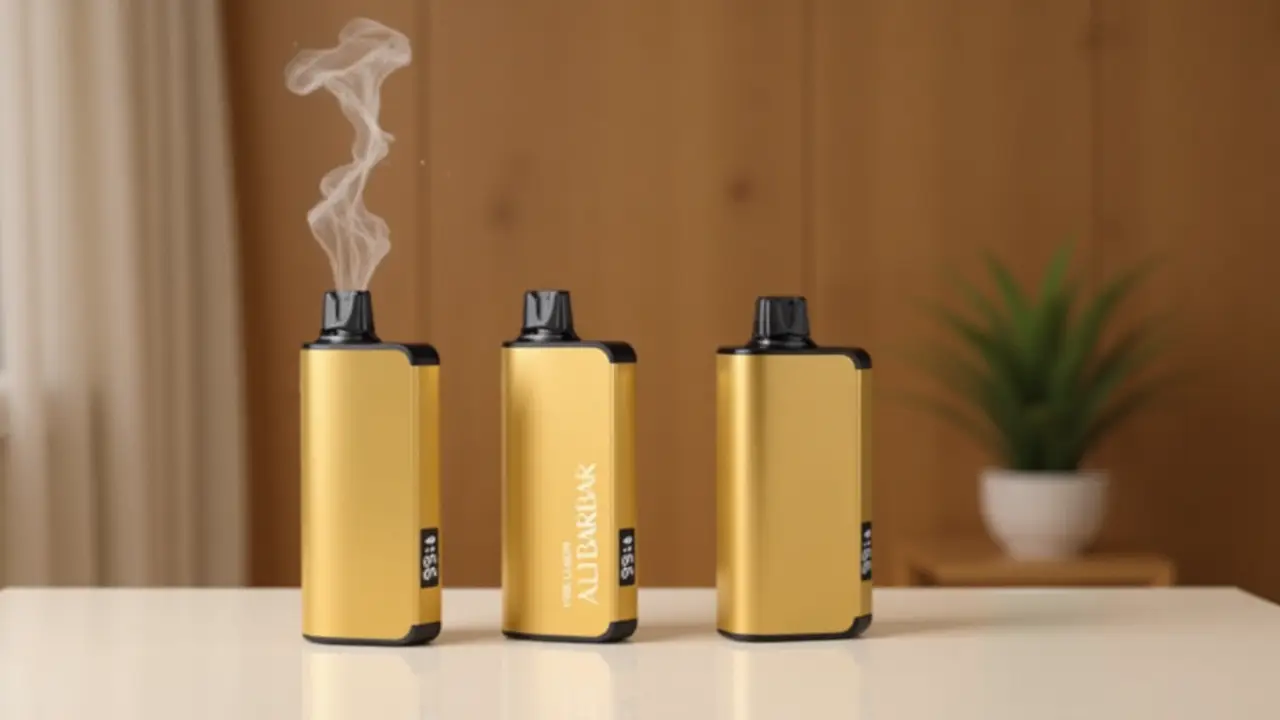
Third-generation devices brought variable voltage and wattage, sub-ohm tanks, and eventually temperature control. These gave users direct control over the output but also introduced complexity that many never fully exploited. The industry’s next major pivot was toward pod-based and integrated systems that balanced control with simplicity, and that’s where the current ALIBARBAR family — including the INGOT 9000, INGOT 15000, and Ice Adjust 12000 — finds its footing. These devices don’t require the user to manage settings; instead, they are engineered to deliver consistent performance across the life of the unit through careful thermal management, calibrated power delivery, and clear status indicators.
Observations from within the supply chain indicate that one of the most common failures in earlier-generation devices was the heating element degrading unevenly due to poor thermal regulation. Modern devices address this through material selection and chipset-controlled ramp-up, which is why an ALIBARBAR INGOT, for example, maintains output consistency until the battery is depleted — a stark contrast to the fading performance typical of first-generation tech. When adult users ask what they should look for, the answer isn’t a brand name; it’s these engineering attributes, which become visible only through sustained use or by referencing trustworthy comparative specifications.
What the First Vape Puts into Perspective Today
Understanding that the first functional vape was a pharmacist’s response to a personal tragedy, and that it took decades of failed attempts before 2003, changes how one evaluates a current device. It’s not about nostalgia; it’s about recognising that every feature we now take for granted — the absence of a leaking cartridge, the ability to see remaining charge at a glance, the mouthfeel of a durable finish — is the result of layered refinement.
For instance, one of the recurring frustrations in the early market was the absence of meaningful status feedback. Hon Lik’s original unit had no way to tell you when the battery was near depletion or when the liquid was low. You operated it until it stopped, often mid-session. Today, devices like the ALIBARBAR Ice Adjust 12000 incorporate clear visual indicators that eliminate that guesswork. This isn’t a luxury; it’s a direct answer to a historically documented user pain point. OZVAPE Shop’s product guides consistently emphasise this because their customer feedback echoes the same pattern: adults who experience unexpected power loss are far more likely to carry a backup, adding cost and clutter. A transparent status interface is, therefore, a practical engineering response, not a marketing embellishment.
Similarly, the evolution of materials matters. Early cigalikes were often made with painted finishes that wore off within a week of pocket carry. The matte, bead-blasted, or soft-touch finishes on current ALIBARBAR products are the result of testing against abrasion, oils, and daily handling. When a retailer like OZVAPE Shop chooses to stock a specific range, it’s these durability factors — documented and verifiable — that support the decision, because they directly affect how long a user can rely on a single device before cosmetic or structural wear becomes an issue.
Common Misconceptions About the First Vape
Even with a clear timeline, myths persist. Addressing them helps sharpen a user’s ability to separate historical fact from superficial claims that sometimes appear in product marketing.
Myth: The first vape was invented by Joseph Robinson in 1927.
Reality: Robinson’s patent was a conceptual drawing, never built or commercialised. A patent without a working prototype doesn’t constitute a product that anyone could use. The functional history starts with Hon Lik.
Myth: Herbert Gilbert’s 1960s device was the first vape, and the industry suppressed it.
Reality: Gilbert’s design was far ahead of its time and deserves recognition, but there is no credible evidence of suppression. It failed to reach market because the supporting technologies (reliable miniature heating elements, appropriate liquid formulations, rechargeable batteries with sufficient energy density) weren’t available at a viable cost. The product simply wasn’t manufacturable at scale in the 1960s.
Myth: The first vape used e-liquid exactly like today’s.
Reality: Lik’s early liquids used propylene glycol as the primary base, but flavour compounds and nicotine extraction methods have evolved significantly since 2003. Early cartridges had a limited flavour range and were prone to variations in quality. Standardisation came later.
Myth: The first commercial vape immediately looked like a modern device.
Reality: It looked like a long cigarette with a blue LED tip, to mimic a tobacco product. The pod and modular designs of today are a later development, driven by a desire for longer battery life and better ergonomics.
A Practical Perspective on Device Heritage for Today’s User
None of this history is academic if you’re simply looking for a device that works. But connecting the past to the present does something useful: it reveals which apparent “improvements” are genuine safety and reliability upgrades, and which are merely cosmetic iterations.
Consider the following filter when evaluating any modern device:
If a device provides no status feedback, you are operating in the same blind condition as a 2004 cigalike user. The practical cost is that you will likely carry a backup.
If a device has a sealed, non-replaceable battery, its entire lifecycle is determined by that cell’s degradation curve — a factor that early adopters learned the hard way when units died after a few months of daily charging.
If a device is visually similar to a premium competitor but has no clear supply chain documentation, it may replicate the form but not the material standards. The difference often shows up in the mouthpiece finish or the consistency of the draw after the first week of use.
OZVAPE Shop’s approach — verifying supply chain, publishing standardised specifications, and handling post‑purchase questions with direct human support — is a response to these exact vulnerabilities. It’s not a claim of superiority; it’s an acknowledgement that a product’s history is useless if the device you receive isn’t the one that was tested and documented.
Frequently Asked Questions
Q: Is 2003 universally accepted as the year of the first vape?
A: 2003 is the year Hon Lik filed his patent and created the first functional prototype. The commercial launch followed in 2004. This is the point at which the concept moved from idea to purchasable product, so it’s the most widely cited benchmark.
Q: What was the first vape called?
A: The device was introduced by Ruyan and commonly referred to as the Ruyan e‑cigarette. Sometimes it was marketed simply as the “Ruyan V8” or similar model designations.
Q: Did the first vape look anything like today’s ALIBARBAR devices?
A: No. The original was a cigarette‑shaped device with a small capacity and no controls. Devices like the ALIBARBAR INGOT or Ice Adjust series represent multiple generations of refinement focused on ergonomics, battery life, and output consistency.
Q: Why did early vaping devices not catch on immediately?
A: Early devices suffered from limited battery life, inconsistent heating, and a lack of standardised manufacturing. The user experience was too unpredictable for mainstream adoption. It took years of incremental improvement to reach the reliability level that adult users now expect.
Q: Is the liquid in a modern device the same as what Hon Lik used?
A: Fundamentally, the base components (propylene glycol and vegetable glycerin) remain the same, but flavour formulations, purity standards, and extraction processes have advanced considerably. Today’s liquids are subject to far more rigorous quality control.
Q: When did vapes first appear in Australia?
A: Vapes became noticeable in Australia in the late 2000s, initially through personal imports and small specialty retailers. Widespread local access through dedicated platforms like OZVAPE Shop came later, focusing on factory‑certified products rather than grey‑market imports.
Q: How important is it to know the history before buying a device?
A: Knowing the history isn’t necessary for operation, but it helps you recognise that features like reliable status indicators, consistent heating, and durable finishes were directly shaped by past failures. This makes you a more critical, less impressionable buyer.
Q: Are modern devices safer than the first vape?
A: The first vape was a proof of concept with no established safety testing framework. Today’s devices benefit from better materials, standardised manufacturing, and regulatory oversight, which together represent a significant advance in user safety.
Q: Why do some devices now look completely different from the first e‑cigarette?
A: Form factor evolved to accommodate larger batteries, better airflow, and easier handling. The shift away from mimicking a cigarette was driven by ergonomics and performance, not by a desire to be inconspicuous.
Q: Where can I find a current device that respects the engineering lessons from this history?
A: Look for retailers that openly share device specifications, provenance, and after‑purchase support details. In Australia, platforms like OZVAPE Shop provide that level of transparency. What matters is not the brand alone but the access to documented, authentic inventory.
Conclusion
The first functional vape was made in 2003 by a pharmacist who refused to accept that combustion was the only way to meet a deeply personal need. Since that moment, successive generations of engineers have addressed the weaknesses inherent in that original design: better power management, transparent status feedback, durable exteriors, and modular structures that respect the user’s budget and routine. These are not abstract virtues; they are the direct legacy of a history that began with one determined inventor and now encompasses device families like ALIBARBAR.
For adult users who want to engage with this category on an informed basis, the most reliable path is through a channel that doesn’t obscure the supply chain behind vague promises. OZVAPE Shop has structured its operations to make that possible — not by intensifying the noise, but by reducing it. The right device is the one that matches your daily reality, not the one that carries the loudest historical claim. And that, more than any anniversary, is what the first vape ultimately taught us.