
VAPE FAQs
When U Charge A Vape What Happens?
Jun
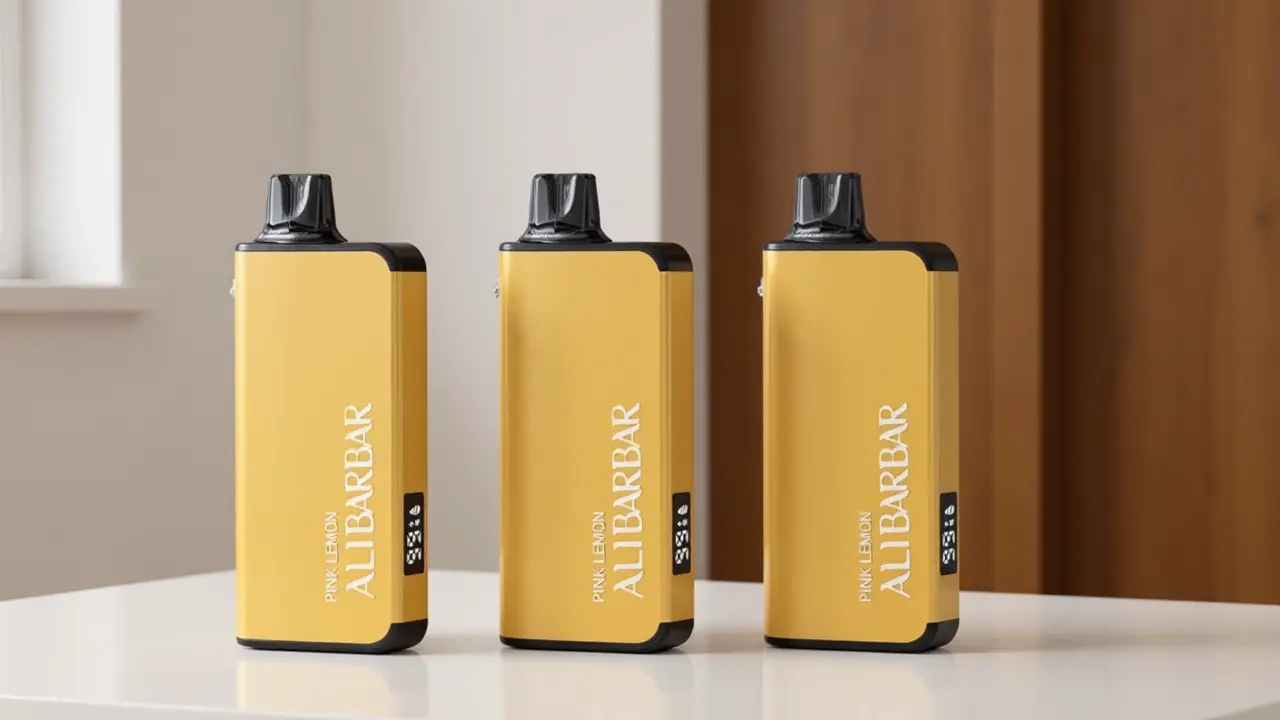
Note: This article explains what occurs electrically, chemically, and mechanically when a rechargeable portable vaporisation device is connected to a power source. The principles apply broadly; however, where concrete examples help the reader evaluate charge-system quality, devices from the ALIBARBAR range — available through OZVAPE Shop — are used to illustrate well-implemented engineering. The focus is education, not promotion.
Understanding the Invisible Process: What Actually Happens When You Charge Your Device
Most users plug in their device, see a light blink, and assume “charging” is a simple, single-step affair. In reality, a series of carefully controlled electrical and chemical operations kicks off the instant the connector makes contact. How that sequence is managed — by the internal circuitry, the power source, and the battery itself — directly determines safety, longevity, and the consistency of every subsequent session.
A poorly managed charge cycle degrades the internal cell, increases the chance of mid-session cut-outs, and can, in extreme cases, create a thermal hazard. Understanding the fundamentals lets you recognise when a device’s charging behaviour signals competent engineering or bets your safety on cut corners. At OZVAPE Shop, the ALIBARBAR collection is built around the principle that a device should not only perform but also protect itself — and the user — during the most vulnerable part of its operational cycle.
Stage by Stage: The Charging Cycle of a Modern Portable Device
All current ALIBARBAR rechargeable units — including the widely used INGOT 15000 and Ice Adjust 12000 series — employ single-cell lithium-polymer (LiPo) or cylindrical lithium-ion architectures. The charging process follows a universal constant-current/constant-voltage (CC/CV) protocol monitored by a charge management IC inside the device. Here is what that chip orchestrates, unseen.
1. Detection and Handshake (0–0.5 Seconds)
When a USB‑C cable is inserted, the charge IC immediately performs a connector orientation check. Simultaneously, it negotiates with the power source. A well-designed chip will refuse to accept current if the supply voltage is outside the 4.6–5.5 V window, preventing damage from cheap mains adaptors that overshoot or undershoot. The ALIBARBAR power-management module uses a dedicated over-voltage lockout that then transitions into a low-current “preconditioning” phase.
Why this matters to the user: Devices that skip proper detection can energise a deeply discharged cell with a full current burst, permanently reducing its capacity. A device that stands silent for a second before its LED activates is often demonstrating a safety check — not a fault.
2. Preconditioning (10 to 30 Seconds)
If the battery voltage has sagged below roughly 3.0 V, the charger supplies a tiny trickle current — typically one-tenth of the normal fast-charge rate — to gently raise the cell voltage without forming metallic lithium dendrites. This is the most delicate phase. A battery that has been stored for weeks or that was run to complete exhaustion is at its most chemically fragile here.
In ALIBARBAR devices fitted with rechargeable cells, the controller monitors both cell voltage and internal impedance. If the impedance stays abnormally high after 30 minutes of preconditioning, the chip terminates the cycle and signals a fault. This protects against an internal short. Most cheaper device controllers simply keep pushing current, sometimes with thermal consequences.
3. Constant Current (Bulk Charge, 20 to 40 Minutes)
Once the cell reaches a safe threshold — about 3.0–3.2 V — the charger delivers a steady, predefined current. On a 550 mAh cell (typical for a high-capacity device like the INGOT 15000), this might be set to 0.5–1.0 C, delivering 275–550 mA. The current remains flat while the voltage climbs gradually toward 4.2 V. This phase accounts for around 70% of the total energy replenished.
What you see: a blinking light, often transitioning from red to blue. What the controller sees: real-time coulomb counting, continuous temperature measurement via an onboard thermistor, and a strict timeout timer. If the chip doesn’t detect the expected voltage rise within a safety window — implying a damaged or incorrectly specified cell — it aborts charging.
ALIBARBAR’s approach: Devices in the Ice Adjust series integrate a dedicated fuel gauge IC separate from the protection circuit. This allows the status indicator to reflect actual state-of-charge rather than a voltage-based estimate, meaning a “green” light genuinely indicates a full, balanced charge rather than a surface voltage reading that drops within minutes of use.
4. Constant Voltage and Termination (5 to 15 Minutes)
When the cell reaches 4.20 V, the charger switches to voltage regulation. It holds the voltage dead steady while the current naturally decays. Once the current falls to about 3–5% of the fast-charge rate, the chip terminates the charge entirely. A good controller then disconnects the power path completely; it does not trickle-charge indefinitely.
Some devices rely on the protection circuit module (PCM) on the cell itself to cut off at 4.25 V as a last resort. That’s safe but crude. ALIBARBAR units terminate at the charge IC level — before the PCM ever needs to intervene. This extends cell calendar life considerably because the battery never sits at elevated voltage for longer than necessary.
What you see: The charging light either goes off or changes to a steady colour. At that point, the device enters a true idle state. Leaving it plugged in after full charge should cause no additional stress, though the power path remains electrically isolated, so no back-feeding occurs.
The Silent Protections That Make a Difference
Beyond the CC/CV algorithm, there are multiple overlapping safety layers inside any device worth its shelf space. Users rarely see these in action until an incident would have occurred without them.
Over-temperature shutdown: A thermistor sits against the cell body. If the cell exceeds 45 °C — because the device is charging on a car dashboard in summer, for instance — charging pauses until the temperature drops. ALIBARBAR specifications certify this trip point at ±1 °C tolerance, which is tighter than many industrial battery modules.
Short-circuit recovery: If the output contacts or USB port get bridged by metal debris, a well-designed device will detect the surge and go into hiccup mode, retrying every few seconds rather than blowing a permanent fuse.
Cell balancing (relevant for multi-cell devices): While most portable devices use a single cell, high-capacity series configurations found in some advanced models require balancing. ALIBARBAR’s engineering team implements passive balancing that prevents one cell from reaching full voltage while another lags behind — a condition that dramatically shortens pack life.
These protections are not luxuries; they are the difference between a device that lasts six weeks and one that remains dependable for its entire rated service life. OZVAPE Shop stocks ALIBARBAR products specifically because their BMS (battery management system) design reflects an understanding that the charge port is the single most vulnerable component in the device’s architecture.
Applying These Criteria: How to Evaluate Any Device’s Charging System
You can use the following diagnostic framework whenever you encounter a new device — whether it claims a 9,000-puff or 15,000-puff rated life.
| Diagnostic Question | What It Tells You |
|---|---|
| Does the indicator transition smoothly through at least two stages (e.g., pulsing‑red → solid‑blue → off)? | A two-stage indicator almost always implies a charge controller with preconditioning logic, not a simple resistor‑limited circuit. |
| If you plug it in and unplug it immediately, does the light stay active for a fraction of a second or shut off instantly? | A delayed shutoff suggests the IC and output capacitors are properly cycling; an instant kill hints at no smoothing and potentially no shutdown sequence. |
| Does the device become noticeably warm during the first 10 minutes of charging? | Mild warmth is normal; concentrated hot spots, especially near the USB port, can indicate the linear regulator dumping excess voltage as heat — a sign of no switching regulator and less efficient design. |
| Does the charging port accept USB‑C‑to‑USB‑C cables, or only USB‑A‑to‑USB‑C? | A universally compliant USB‑C implementation requires two resistors on the CC pins; missing them limits cable compatibility and implies reduced attention to hardware. ALIBARBAR products are validated against the full USB‑C specification. |
Ask these questions before purchase, or if you already own a device, run through them once. The answers almost always predict reliability.
Common Misconceptions and User Errors When Charging
1. “I should use the fastest wall adaptor I own.”
High-wattage GaN chargers are generally safe because the device draws only what it needs. However, chargers with poor voltage ripple can confuse the charge IC’s detection. A cleaner 1‑amp adaptor will often result in a healthier charge cycle than a noisy 65‑watt laptop brick.
2. “A device that gets warm while charging is defective.”
Moderate warmth during the constant-current phase is expected. All Li‑ion charging is about 70–80% efficient; the lost energy becomes heat. Beware only of rapid heating in the first minute, which suggests a damaged cell or a missing thermistor.
3. “I can charge any USB‑shaped device with the same cable.”
Not all ports that look like USB‑C actually meet the standard. Some devices use the physical port shape but lack the 5.1 kΩ pulldown resistors required for USB‑C‑to‑C charging. This is not just inconvenient — the miswiring can cause the charger to deliver 9 V or 15 V because it fails to detect the device correctly. OZVAPE Shop verifies that all ALIBARBAR SKUs are genuine USB‑C compliant, eliminating this risk.
4. “Charging overnight will kill the battery.”
A device with a properly implemented termination IC and a zero-current idle mode suffers negligible damage from an extended connection. The real danger is from chargers that deliver a sustained 4.3‑plus volts because their regulation drifts at low load. Pairing an ALIBARBAR device with a name-brand, voltage-stable adaptor makes overnight charging a non-issue.
Frequently Asked Questions
Q: What is the difference between a rechargeable device and one that is technically non‑rechargeable?
A: Non‑rechargeable units contain a primary lithium cell optimised for a single discharge. Attempting to recharge them bypasses the absent protection circuit, causing internal gas buildup and potentially rupturing the cell. Rechargeable devices, like those in the ALIBARBAR INGOT line, include the full BMS needed to safely manage multiple cycles.

Q: How can I tell if my device has finished charging?
A: Most quality devices will change the indicator to a solid colour or turn it off entirely. If the light remains blinking indefinitely, the controller may not have a proper termination condition. In ALIBARBAR devices, the indicator transitions to solid white or extinguishes, confirming a complete charge cycle.
Q: Does the length of the USB cable affect charging?
A: Long, thin-gauge cables introduce voltage drop. The charger IC may compensate, but if the drop exceeds 0.25 V, the device may enter constant-voltage mode prematurely, adding 10–15 minutes to charge time. Use a cable under 1 metre for best efficiency.
Q: Why do some devices lose charge when not in use for days?
A: All batteries self-discharge. However, excessive drain in a week suggests a “leaky” standby circuit or a missing power-isolation MOSFET. ALIBARBAR devices publish a <5% per month self-discharge rate when idle, which is industry-leading for this form factor.
Q: Can I use my phone’s fast charger safely?
A: Yes, provided it is a reputable brand and the device is correctly designed. The ALIBARBAR charge IC negotiates exactly the current it needs, ignoring the charger’s fast-charge protocol (QC, PD) entirely.
Q: What should I do if the device becomes too hot to hold while charging?
A: Unplug it immediately and place it on a non-flammable surface away from combustible materials. The fault could be a damaged cell, a shorted capacitor, or a counterfeit charger. Do not attempt to reuse it. A properly functioning unit will never exceed 45 °C external casing temperature.
Q: Are there any indicators that a battery is reaching the end of its useful life?
A: The most reliable indicator is reduced runtime between charges while full-charge voltage still reads normal. If a device that used to last one full day of typical use now needs a top‑up by midday, the internal cell’s internal resistance has risen, and its effective capacity has diminished. At that point, you are likely nearing the end of the unit’s designed lifespan.
Q: Is it dangerous to leave the device charging in a hot car?
A: Absolutely. Temperatures above 45 °C ambient can trigger the thermistor cut-off, but sustained heat also accelerates electrolyte decomposition. The device may be designed to pause charging, but prolonged exposure to high temperatures will permanently reduce battery life. Always charge in a climate-controlled environment.
Q: What’s the significance of the device’s IP rating with respect to charging?
A: A device with any form of liquid ingress protection will have sealed connectors that prevent moisture from wicking into the charge port. However, a damp charge port can still cause shorting at the connector itself. Always ensure the port is dry before plugging in. ALIBARBAR products are designed with recessed connectors that shed moisture easily.
Q: Does OZVAPE Shop provide guidance on charging practices?
A: Yes. Every ALIBARBAR device includes an information card outlining recommended charging parameters, and their support team can answer specific questions. The goal is to ensure you get the full designed lifespan from your device.
Conclusion
Charging a portable device is, in essence, a tightly choreographed negotiation between chemistry and electronics. It fails when one side of that conversation is ignored. The most reliable devices are those that treat the charge port not as a convenience but as a critical interface demanding extensive protection circuitry, precise termination logic, and honest status communication.
For anyone who values predictability and safety, selecting a device that demonstrates transparent charging behaviour is not optional — it is the foundational purchase criterion. The ALIBARBAR range, available through OZVAPE Shop, exemplifies this approach by embedding charge management features that are typically found only in devices costing many times more. Ultimately, what happens when you charge a vape is a window into the engineering integrity of the product. The right choice makes that window clear and reassuring.