
VAPE FAQs
When Can You Vape Again After Wisdom Teeth Surgery?
Jul
Disclaimer: This article is for informational purposes only and does not constitute medical advice. Recovery timelines vary, and only your treating oral surgeon or dentist can provide clearance specific to your procedure and healing progress.
You’ve just come through wisdom teeth extraction, the anaesthetic is wearing off, and a familiar question edges into your mind: When can I use my device again without risking a complication?
It’s not simply about impatience. It’s about not wanting to undo days of careful recovery in a single moment. The advice scattered across forums ranges from 48 hours to two weeks, and most of it fails to explain the why behind the number.
We’re not going to hand out a universal standard, because there genuinely isn’t one. What we can do is break down the biological reasoning, the engineering factors that influence risk, and the practical framework you can apply once your clinician gives you the green light. At OZVAPE Shop, we field enough post‑procedure questions to know that the conversation should start with safety, not product recommendations.
Understanding the Risk: Why Timing Matters After Extraction
The danger is not the vapour itself. It’s the negative pressure created in the oral cavity during use, and the possibility of disrupting the blood clot that forms in the socket. When that clot is dislodged prematurely, the underlying bone and nerve endings are exposed — a condition known as dry socket. It’s intensely painful, requires additional treatment, and extends healing by a week or more.
Three variables matter most:
Suction intensity. The force required to draw from a device varies enormously across designs. Devices with tighter airflow paths demand stronger pursed‑lip suction, the kind most likely to dislodge a clot.
Frequency of use. Short, repeated exposure increases the cumulative mechanical stress on the healing site, even if each individual pull seems gentle.
Healing phase. The clot is most vulnerable within the first 48–72 hours. After that, granulation tissue begins to form, but full soft‑tissue closure typically takes 7–10 days for simple extractions, longer for impacted teeth.
Oral surgeons generally advise no use for a minimum of 72 hours, and often extend that to 7 days. Some clinics recommend waiting until the follow‑up appointment confirms adequate healing. These are not arbitrary rules; they are built around the cellular timeline of clot organisation.
What Recovery Guidelines Actually Say — and What They Overlook
Most discharge instructions prohibit “smoking” and “drinking through a straw.” That covers the suction risk, but it also ignores a parallel concern: thermal irritation. Even if you manage to minimise negative pressure, repeated exposure to warm, dry aerosol can impair soft‑tissue healing by desiccating the mucosal surfaces around the wound. It’s rarely discussed in consumer‑facing advice, yet it matters.
What healthcare providers consistently recommend:
No suction‑generating activity for at least 48 hours, ideally 72.
Resume only when you can eat solid foods comfortably. This is a practical proxy: if chewing still hurts, your socket isn’t ready for negative pressure.
Start as lightly as possible. If your device offers adjustable power or airflow, use the most open, low‑resistance settings available.
The ambiguity frustrates people. We understand that. But it reflects an honest biological reality — healing is not a linear process, and the same surgery produces different outcomes in different individuals.
If You’re Cleared: Engineering Factors That Reduce Stress on the Healing Site
Once your surgeon indicates you can return to ordinary activities, the device you pick matters more than it did before surgery. Not every design places equal demand on the oral environment.
Airflow resistance is the single most important variable. Devices built with loose, open draw characteristics require less pressure differential — less risk of dislodging anything. This is an engineering choice, not a qualitative judgment about the device itself. A unit designed for tight, concentrated delivery can be excellent under normal circumstances, but those same attributes become a liability during recovery.
Power calibration and temperature management also play a role. Devices with consistent, regulated output avoid the hot spots that can irritate a healing wound. If your device gives you any temperature unpredictability, this is not the time to use it.
Status transparency — the ability to see exactly when a device is powered, when it’s at temperature, and when it’s idle — prevents the kind of hesitant, stop‑start pattern that leads to excess suction. Clear feedback means you can plan each usage window deliberately, not reactively.
Modularity and lifecycle management are about a different kind of safety: not having to worry that an under‑performing device with irregular output will push you into longer, harder draws just to get a consistent experience. This is where proper engineering discipline shows its value beyond the spec sheet.
At OZVAPE Shop, these are the exact criteria we document for each ALIBARBAR device — because when your mouth is healing, you deserve to know what you’re working with before you draw on anything.
A Practical Framework for Making a Safe Return
Use this sequence once your surgeon clears you. It’s not a medical checklist; it’s a tool for minimising physical stress.
Confirm the timeline with your clinician. No article replaces that conversation. Ask directly: “Based on what you see in my mouth today, am I clear for activities that involve mild oral suction?”
Test with water first. Draw at the pressure you would normally use. If it feels like drinking through a straw, you are not ready.
Choose the most open‑airflow device you own. Among the ALIBARBAR range, options with adjustable airflow control — such as the Ice Adjust 12000 — let you reduce draw resistance substantially. That mechanical lever matters.
Limit initial sessions to the absolute minimum. The goal is to observe how the area feels afterward. Any increase in throbbing, taste change, or persistent sensation around the socket means you need to pause and wait longer.
Hydrate aggressively. Dry mucosal tissue is more susceptible to irritation. Water is a real protective measure here.
Common Selection Errors and Industry Observations
1. Overlooking the Recovery Window When Stocking Up
Many users stock devices before surgery, but fail to account for the fact that certain high‑capacity sealed units might start them off with more intensity than is wise. If you’re planning ahead, include at least one device with adjustable airflow in your post‑recovery kit — even if it’s not your usual preference. The flexibility costs nothing extra and gives you control over the draw resistance when control matters most.
2. Assuming Visual Similarity Equals Internal Engineering Consistency
Two slim, pocketable devices can look nearly identical in a photo, yet one might require noticeably more suction effort due to internal airflow routing. The industry doesn’t standardise draw resistance; it’s a hidden variable. This is the kind of information a well‑documented product range makes clear, but many catalogues omit it entirely.
3. Ignoring the Value of a Predictable Output Curve
After surgery, the last thing you need is a device that fluctuates in power delivery, forcing you to compensate with longer or harder pulls. The consistency of an ALIBARBAR unit — the direct result of its sealed, calibrated architecture — isn’t a marketing point; it’s a functional safety consideration during the recovery phase.
4. Confusing Medical Clearance with Device Compatibility
Being healed enough to use a device doesn’t mean you should use any device. The full‑strength setting on a high‑capacity system might feel harsh even to a healed mouth. Working your way up from minimal‑resistance options is a pattern we see among experienced users who treat recovery as a gradual adaptation, not an on/off switch.
Frequently Asked Questions
Q: Is 48 hours really enough?
A: For simple, uncomplicated extractions where the clot is stable and no sutures are needed, some clinicians allow cautious return after 48–72 hours. For surgical removal of impacted teeth, 7–10 days is far more common. Always confirm with your own provider.
Q: Can I use a device with very loose airflow sooner?
A: The biology doesn’t read airflow specs. Loose airflow reduces risk compared to tight‑draw devices, but it doesn’t eliminate it. The suction reflex is still present, and the clot remains fragile. Adjustment helps only after you are actually cleared.
Q: What signs tell me I returned too early?
A: A dull, throbbing ache that intensifies over hours, a foul taste in the mouth, visible empty socket, or pain radiating toward the ear or jaw on the same side. Any of these warrant immediate contact with your surgeon.
Q: Are certain device architectures safer during early recovery?
A: Devices engineered for consistent, low‑resistance delivery with adjustable airflow and no sudden temperature surges place less cumulative stress on the oral environment. The ALIBARBAR Ice Adjust 12000, for instance, was designed with user‑variable airflow, which makes it mechanically better suited to a controlled, gentle return than a fixed‑resistance sealed unit.
Q: How does OZVAPE Shop support customers during this kind of situation?
A: Our team maintains factual product documentation that includes draw resistance characteristics and power‑output consistency. That becomes genuinely useful when you’re trying to match a device to a temporary physical limitation, not just a lifestyle preference.
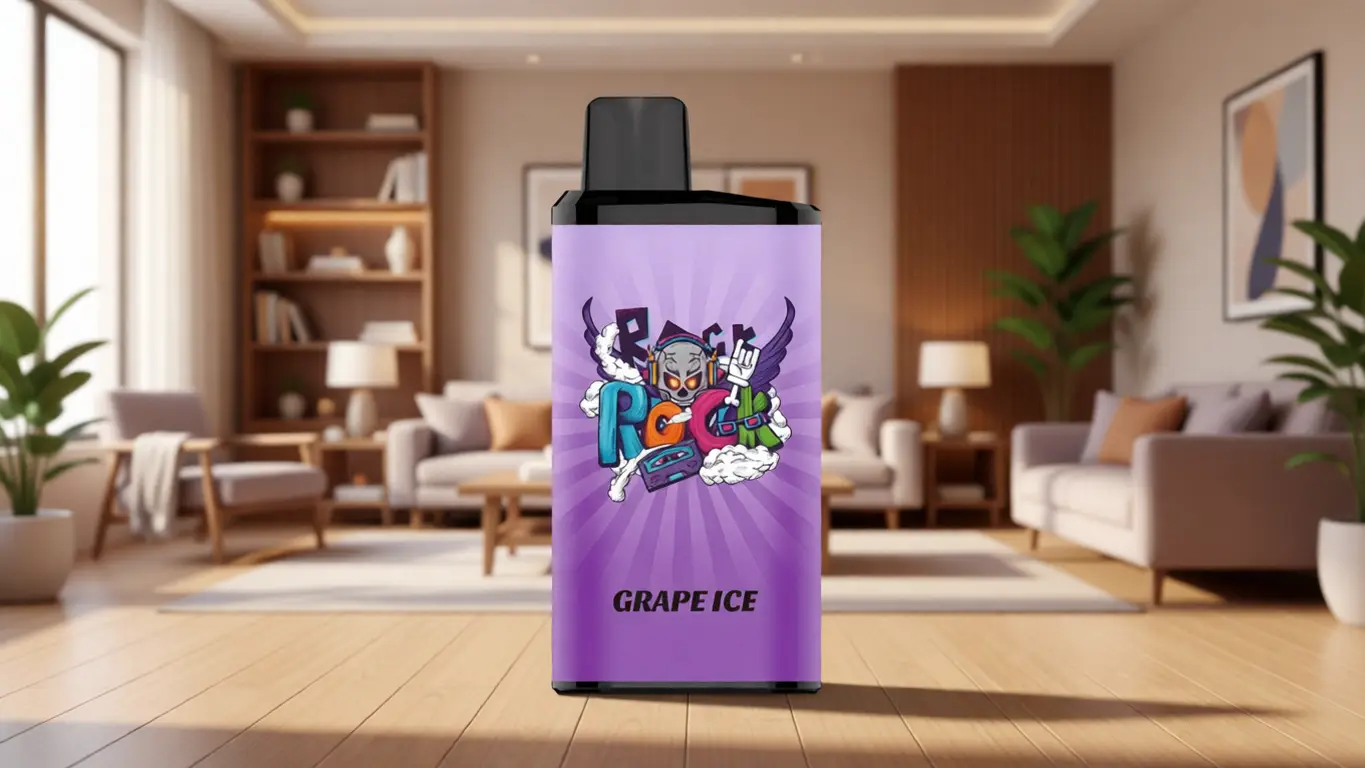
Q: What if I have the ALIBARBAR INGOT 9000 but it feels too tight?
A: The INGOT 9000 series uses a fixed internal airflow structure optimised for output density. It’s engineered to deliver reliably across its rated capacity, but the draw resistance is not adjustable. Many users select an adjustable‑airflow model to pair with it specifically for transitional periods like post‑procedural recovery.
Q: Can I clean my device during the waiting period?
A: Mouthpiece cleaning is always good practice, but if your device is a sealed unit with no user‑serviceable parts, the most you should do is wipe the exterior with a dry cloth. Do not attempt disassembly; you’re more likely to introduce contaminants than improve anything.
Q: Does OZVAPE Shop guarantee products are genuine?
A: Every ALIBARBAR unit we supply comes through an authorised, factory‑certified channel with batch traceability. This is about more than authenticity — it’s about knowing that the airflow path, temperature regulation, and fail‑safes match the engineering file. There are no shortcuts in the supply chain.
Q: How long does shipping take in Australia?
A: Most metro orders are fulfilled within 2–4 business days, although regional deliveries can take slightly longer. Our dispatch doesn’t pause, so you can time your order so that a recovery‑appropriate device arrives when you’re genuinely ready to use it.
Q: What should I do if a device performs inconsistently?
A: Stop using it and contact the retailer. Inconsistent output can be a sign of a compromised internal seal or irregular power delivery, neither of which should occur in a properly manufactured unit. We maintain a returns process that addresses exactly these situations, not to upsell, but to remove defective products from regular use.
The Bottom Line
The safest answer to “when can I vape again after wisdom teeth surgery” is: not until your oral surgeon examines the site and confirms it’s ready. That might be day three, day seven, or day ten. There is no shortcut that doesn’t carry genuine risk of dry socket, and no device engineered well enough to override the biology of wound healing.
What you can do — and this is where informed selection genuinely matters — is prepare. Understand how airflow resistance, temperature stability, and output consistency affect the physical stress you place on your mouth. When the time comes, choose a device that lets you return gently, not abruptly. That’s not brand loyalty speaking; it’s just mechanical reality.
OZVAPE Shop exists to make sure that when you are ready, the device in your hand is exactly what the documentation says it is — with airflow behaviour, thermal characteristics, and lifecycle performance you can count on. The question of when belongs to your clinician. The question of what — that’s where clear, honest product information makes a genuine difference.