
VAPE FAQs
What To Do If My Vape Is Burnt?
Aug
That acrid, metallic sensation — it arrives without warning, transforming a routine moment into something profoundly unpleasant. When the device that was delivering a smooth, predictable experience suddenly tastes scorched, the cause is almost always a communication failure between the heating element, the wicking material, and the liquid that saturates it. A burnt taste is not a mysterious glitch; it is the outcome of a specific, observable chain of events. How you respond, and more importantly, how you have set yourself up to respond long before the moment arrives, determines whether the situation is a minor inconvenience or a full device replacement.
What follows is a detailed examination of the engineering factors that separate designs prone to scorching from those that resist it, together with a practical method for diagnosis and decision-making. Throughout, we draw on the consistent feedback patterns observed at OZVAPE Shop, where a significant portion of support conversations begin with some version of “why does it taste burnt?”. Understanding the mechanics is the first step toward choosing equipment that drastically reduces the frequency of that question.
Understanding What Matters: The Engineering Behind Burnt Tastes and Reliable Prevention
Burnt tastes originate where heat meets insufficient saturation. Improving reliability involves looking beyond a single specification and understanding an interconnected set of design choices. The four factors below form a framework that any user can apply, regardless of whether they are evaluating a compact pre-filled unit or a modular system.
Wicking Architecture and Coil Saturation
The most common root cause of a burnt hit is a wick that cannot keep pace with the rate at which heat is applied. In well-engineered devices, the wicking material — typically a high-grade organic cotton or a carefully chosen silica composite — is selected for capillary action, meaning it draws the liquid solution toward the heating coil rapidly and evenly. Mesh coil configurations matter here: a wide, flat heating surface distributes thermal load across a greater area, lowering the probability of a single hot spot that carbonises the wick.
When saturation fails, even for a fraction of a second, the coil temperature climbs beyond the point at which the wicking material begins to degrade. That degradation is often irreversible; once a section of wick is scorched, it will continue to impart a burnt taste until the coil assembly is replaced. Devices that lack any mechanism to monitor or limit output under low-liquid conditions essentially rely on the user to prevent damage — and users are fallible. The absence of dry-hit protection is not a neutral trait; it is an engineering decision that transfers risk directly to the person holding the device.
Power Delivery and Thermal Management
Not all power sources deliver energy in the same way. A regulated output circuit maintains a consistent wattage to the coil across the full charge cycle of the cell. Without this regulation, a freshly charged power source may deliver a higher-than-intended voltage, pushing the coil temperature beyond its safe operating window and burning the wick within the first few pulls of a session.
Thermal management also extends to airflow design. An efficient airflow path cools the coil and carries heat away from the wicking chamber. When a device is constructed with undersized or poorly positioned air inlets, even a correctly powered coil can overheat because the ambient cooling is insufficient. Users frequently misinterpret an overly warm draw as a sign of intensity, but from an engineering perspective it is often a warning that the thermal equilibrium of the system has been compromised.
Material Integrity and Wick Longevity
The physical construction of the heating chamber directly influences how long a coil head remains free of burnt tastes. Wire composition, wick density, and even the quality of the surrounding insulation matter. Lower-cost coil assemblies may use wicking materials with inconsistent fiber alignment, creating pockets that dry out faster than the surrounding areas. Over multiple heating cycles, residue from the liquid solution accumulates on the coil surface — a process that accelerates when the coil runs too hot. That buildup, sometimes called “caramelisation,” creates an insulating layer that requires even more heat to vaporise the liquid, perpetuating a cycle that ends in scorched material.
Surface treatments on the device body play a secondary but real role. A durable finish that resists scratches and chemical exposure means the device is less likely to be handled roughly or stored in conditions that damage internal seals. A device that looks worn after a week often receives less careful treatment, and careless handling can lead to liquid leakage that starves the wick.
User Control and Device Modularity
Perhaps the most significant factor affecting burnt taste frequency is the degree of control available to the user — and whether that control is a help or a hazard. Sealed, pre-configured units offer a locked set of operating parameters. Because the manufacturer has fixed the coil resistance, airflow, and power output, the device can be optimised for one specific operating point. When that optimisation is done thoughtfully, burnt hits become exceptionally rare. The trade-off is that when something does go wrong, the user cannot adjust anything; the entire unit is typically discarded.
Modular systems that allow the user to replace a coil or pod provide a different kind of resilience. If a burnt taste develops, the problem can be solved for a fraction of the cost of a new device. However, that flexibility is only beneficial if the user understands how to recognise early warning signs — a subtle change in taste, a drop in vapour volume — and takes action before the damage spreads to adjacent components. Devices that incorporate clear liquid-level windows or electronic dose counters reduce the cognitive load substantially, turning prevention into observation rather than guesswork.
Applying These Principles to Real-World Devices
When the engineering factors above are used as a lens, the differences between device families become stark. Consider a unit built with a vertical round-wire coil and minimal airflow — a configuration still common in many basic sealed offerings. The round wire concentrates heat along a narrow line. Without an effective means of cooling, that heat carbonises the wick quickly if the user takes long or frequent draws. Such a device will produce an acceptable experience only under a narrow band of usage patterns, and it offers zero feedback about remaining liquid capacity.
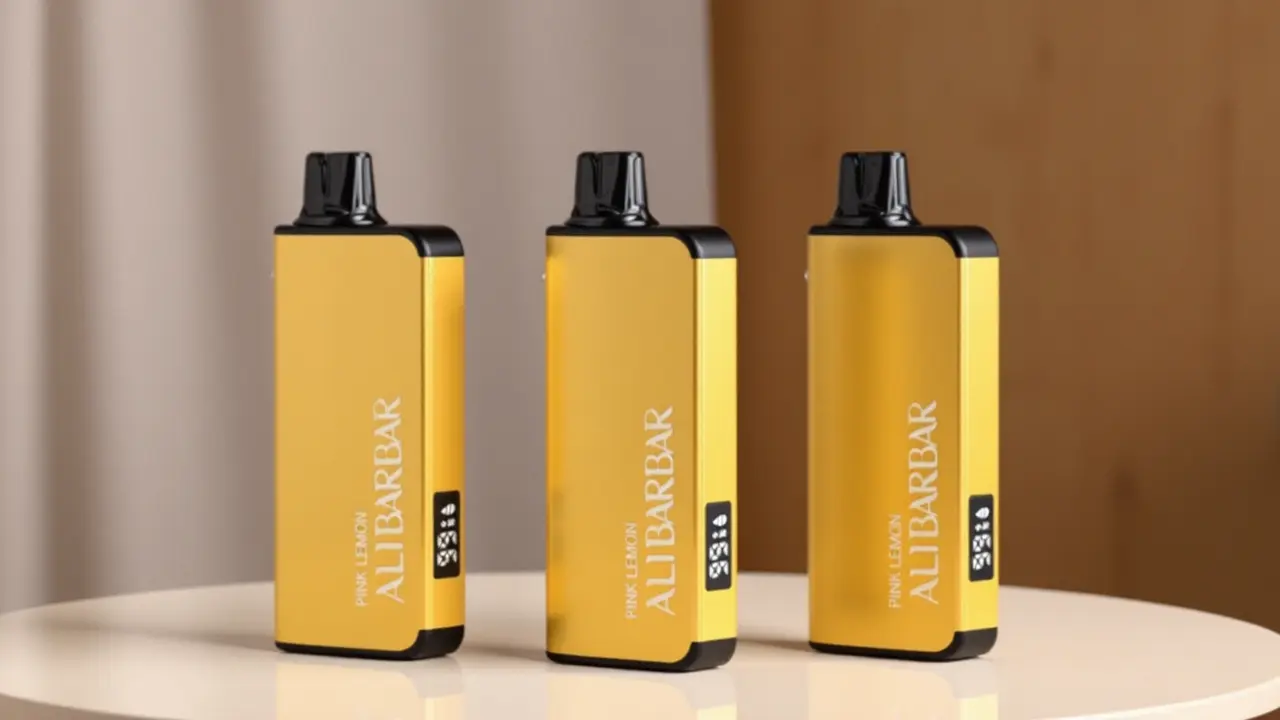
Contrast that with a system that employs a flat mesh coil, a regulated power chip, and a visible e-liquid reservoir. In this architecture, the mesh spreads heat evenly, the regulation prevents voltage spikes, and the reservoir gives the user indisputable notice that a refill or replacement is approaching. The ALIBARBAR INGOT 9000 and INGOT 15000, for instance, incorporate design elements that address all three areas: mesh heating structures, consistent output circuitry, and integrated liquid-level indicators. The Ice Adjust 12000 series adds the ability to fine-tune the draw, which lets users adjust airflow dynamically rather than forcing the coil to compensate for a single, fixed intake resistance. These are not cosmetic differentiators; they are mechanical safeguards that directly reduce the probability of a burnt taste.
That is not to suggest that every burnt hit is eliminated, because no device can protect against extreme user behaviour or manufacturing anomalies. However, when a platform is engineered with output regulation, visible status cues, and materials selected for thermal stability, the failure mode shifts from “surprise ruination” to “gradual, detectable decline,” giving the user time to act. The practical result is that you finish a device on your terms, not because an unnoticed dry pull made it unpalatable.
Other commonly encountered device families prioritize compactness at the expense of these safeguards. A miniaturised unit with no viewing window and a fixed, non-replaceable coil may be extremely convenient for a short period, but it demands that the user trust the manufacturer’s internal calculations entirely. Without external verification, the margin for error is small.
A Framework for Diagnosing and Addressing Burnt Tastes
When a burnt taste appears, the correct response depends on the device architecture. The following series of questions forms a diagnostic sequence that has proven effective across hundreds of user interactions.
Can you see the remaining liquid level?
If yes, and it is critically low, the wick has likely been exposed to air. In a pre-filled sealed unit, the device has reached its end of life. In a refillable pod system, refill promptly and allow several minutes for the wick to resaturate before drawing again.
If you cannot see the liquid level, you are operating blind. In the absence of a clear status indicator, consider carrying a backup unit to avoid pushing a device into a dry state.
Is the airflow path clear?
Check the intake vents for debris or obstruction. Reduced airflow forces the user to draw harder, which can pull more liquid than the wick can vaporise — a different problem but one that sometimes results in localised overheating. Gently clean the visible ports with a dry cloth.
Is the power output adjustable, and is it set appropriately for the coil?
If you have a variable-wattage device, verify that the setting matches the coil’s recommended range. Running a coil below its minimum recommendation can cause liquid to boil rather than vaporise, leading to a stale, off-taste. Running it above the maximum burns the wick. When in doubt, start at the lower end of the range and increase gradually.
Is the coil or pod replaceable?
If you taste burnt notes and the coil has been in use for longer than the typical service interval (this varies by liquid composition but commonly ranges from several days to a week of heavy use), the wick may simply be worn. Replace the coil or pod. If the burnt taste persists after a replacement, inspect the device’s contact points for liquid ingress — a short caused by residue can deliver erratic power.
Has the device been stored in extreme conditions?
High ambient heat or direct sunlight can thin the liquid solution, causing it to flood the coil or degrade prematurely. Cold storage can thicken it, slowing wicking. If a burnt taste appears after exposure, allow the device to return to room temperature and set the coil to soak for at least ten minutes.
When applying this framework, remember that a device that provides unambiguous status feedback — remaining capacity, battery level, operational mode — drastically shortens the diagnostic path. Without that feedback, you are forced to infer the problem, and inference is where burnt units multiply.
Common Selection Mistakes That Lead to Repeated Burnt Hits
Over years of observing purchasing patterns and support cases, several recurring errors stand out. They are rarely discussed directly in buying guides, yet they account for a disproportionate share of dissatisfaction.
Mistake 1: Judging a device solely by its physical dimensions.
A compact form factor can conceal an undersized wicking chamber and a coil that is barely adequate for the intended draw length. Users who select a unit because it fits neatly in a pocket often find that they finish it in half the expected time, because the coil is thermally stressed by their natural inhalation style. Matching a device to your actual usage pattern — rather than to its pocket profile — is the more reliable approach.
Mistake 2: Assuming visual similarity equals functional equivalence.
Two devices that look nearly identical may contain fundamentally different internal architectures. One may use a simple wire coil and silica wick arrangement; the other may employ a mesh coil with organic cotton. The external casing tells you nothing about what happens when power is applied. Relying on product images alone is equivalent to buying a watch based on its strap.
Mistake 3: Undervaluing modularity in cost-per-use calculations.
A sealed unit with a low upfront price can appear economical. But if a single burnt hit renders the entire device useless, the cost per usable session can become extraordinarily high. In contrast, a system that allows coil or pod replacement often reaches a far lower long-term cost, even if the initial hardware investment is larger. Those who factor in the risk of premature failure — a risk that rises sharply in devices without status indicators — make fundamentally different purchasing decisions.
Mistake 4: Confusing category labels with technical specifications.
Terms like “high-capacity” or “long-lasting” are marketing language, not engineering guarantees. A genuinely high-capacity device will specify its liquid volume in millilitres and its nominal coil life in total draw count. Without those reference points, claims are arbitrary. Industry observers have noted that some products labelled as “extra long” actually contain a coil and wicking assembly identical to a standard version, simply housed in a larger container that masks the coil’s true endurance.
Frequently Asked Questions
Q: If I taste something burnt once, is the device permanently ruined?
A: In a sealed unit with a fixed coil, one dry pull is often enough to permanently scorch the wick. Even if the taste lessens as fresh liquid reaches the coil, the chemically altered material will continue to impart an unpleasant note. Replacing the device or the pod is the only reliable remedy. In a modular system, you can swap the coil and salvage the rest.
Q: Can a burnt taste be cleaned away?
A: Mild caramelisation can sometimes be reversed by soaking the coil head in warm water and allowing it to dry completely, but once the wick has actually carbonised, no cleaning method will restore it. The time spent trying to revive a truly burnt coil is rarely justified by the outcome.
Q: Does a higher-wattage device increase the risk of burnt hits?
A: Not if the coil and wick are designed for that wattage. The risk comes from a mismatch: running a coil beyond its rated limit, or using a power source that delivers unregulated voltage. A well-matched system can operate at high power for extended periods without burning, provided the wicking keeps pace.
Q: Why does the burnt taste sometimes appear only after the device has been sitting unused?
A: Oxidation and gravitational settling can alter the distribution of liquid inside the wick overnight. A device that was borderline saturated at the end of the previous day may be partially dry in the morning. Taking an immediate long draw on a cold coil is a common trigger. A short priming puff — activating the device without inhaling deeply — helps redistribute liquid before full use.
Q: How do I know when a pre-filled device is genuinely empty, to avoid dry pulls?
A: The most reliable method is choosing a device with a clearly visible liquid window or an electronic dose indicator. If your device has neither, pay attention to vapour production: a noticeable drop usually indicates low liquid. Stop immediately and replace the unit.
Q: Is a burnt taste harmful?
A: Inhaling vapour from a scorched wick introduces partially decomposed materials into the aerosol stream. While the full toxicological profile of such byproducts depends on the specific materials used, the industry consensus is that a burnt coil should not be used. Replace it.
Q: What role does airflow play in preventing burning?
A: Airflow directly cools the coil. Tighter airflow increases chamber temperature, which can accelerate wick degradation. If you frequently experience burnt tastes and your device has adjustable airflow, opening it up slightly often helps. If it is a fixed-airflow device, your natural draw strength may be mismatched to the coil’s cooling capacity.
Q: Can I store a device in the car without it burning later?
A: Australian summer temperatures can exceed 60°C inside a vehicle. At those levels, the liquid thins dramatically, and seals may weep. Once the liquid escapes, the wick can go dry without any actual usage. Store your device in a cool, shaded location whenever possible.
Q: I bought a device from an unfamiliar source and it burns immediately. Could it be counterfeit?
A: Counterfeit devices frequently use substandard wicking materials and coils with inconsistent resistance. They are a known vector for burnt-taste complaints. Purchasing through factory-certified channels is the only sure way to avoid this variable.
Q: What is the single most effective design feature for preventing burnt tastes?
A: Among engineers, there is strong agreement that regulated output paired with dry-hit protection — a system that monitors coil resistance and pauses power when it detects a rapid temperature spike — yields the greatest reliability improvement. Devices that incorporate visible liquid-level indicators come a close second, because they eliminate the human guessing element.
A burnt taste is never just a taste; it is a signal that a thermal insult has occurred within a finely balanced system. The devices that minimize these signals do so through deliberate, measurable engineering — consistent power delivery, intelligent saturation management, and transparent status communication — not through marketing language. When you evaluate your next device against these concrete criteria rather than appearance or ambiguous promises, the frequency of unwelcome surprises drops sharply. And if you are sourcing through a channel like OZVAPE Shop, where the inventory is factory-certified and the specifications are documented plainly, you remove yet another layer of uncertainty. The right device is the one that aligns with how you actually use it, not the one that looks best on a screen. That alignment, more than any single feature, is what keeps a unit tasting clean from first draw to last.