
VAPE FAQs
What Is The Smoothest Vape?
Aug
Many adult users who adopt portable electronic devices for personal use find themselves pursuing a single, often intangible quality: smoothness. They recall draws that felt unexpectedly scratchy, delivered a brief moment of warmth that escalated into harshness, or fluctuated from one session to the next. Searching for “the smoothest vape” then becomes a cycle of trial and error driven by marketing language rather than technical understanding. Yet smoothness is not a lucky coincidence locked inside a particular brand. It is the sum of deliberate, measurable design choices—the way heat is generated, how power is regulated from the first draw to the last, and how the physical structure of a device manages airflow and thermal transfer. When users lack the vocabulary to evaluate these choices, they rely on guesswork and often end up frustrated. That is where a careful reference can make a genuine difference. Access to standardised specifications and authorised supply channels, such as those maintained by OZVAPE Shop, provides a reliable foundation, but the real advantage comes from knowing precisely what to examine. This article breaks down the engineering principles that produce a noticeably smooth inhale, applies them to real-world device families, and offers a practical framework that puts the evaluation back into the hands of the adult user.
What Creates a Smooth Inhale? A Technical Framework
A satisfyingly smooth experience is not governed by a single component. It emerges from the interaction of several factors, each of which addresses a distinct source of harshness or irritation. Understanding these factors transforms a subjective preference into a checklist anyone can apply, regardless of the device name or price point.
Heating Element Design and Vapor Consistency
The heating element—the core component that transforms power into thermal energy—is the primary determinant of how the inhaled aerosol feels. Smoothness depends heavily on the uniformity of heat across the entire heated surface. Simple wire coils, especially those with uneven spacing, create localised hotspots. When the supplied liquid hits a hotspot, it can fractionate unevenly, producing compounds that irritate the throat. Modern mesh-style elements, by contrast, distribute an electrical current across a fine, grid-like surface, achieving a far more even temperature profile. This reduces the likelihood of sudden temperature spikes and the accompanying harsh sensation. High-quality designs also manage the wicking material to ensure that the element never runs dry mid-draw; a dry hit is the antithesis of smoothness. Devices that integrate temperature-sensing feedback loops or carefully calibrated resistance ranges can further suppress temperature overshoot, keeping every inhale consistent from the moment the device is activated until the end of its operating cycle.
Power Delivery and Draw Stability
Even an excellent heating element will deliver a poor experience if the power source cannot maintain a stable output. When a battery sags under load—a common behaviour in devices with poorly optimised power management—the heating element receives less energy after the first fraction of a second, causing the temperature to drop. Users often compensate by taking longer, more forceful draws, which can introduce excessive air and disrupt the vapour concentration, leading to a sensation that feels thin and unsatisfying, or, in the opposite extreme, a rush of dense aerosol that arrives too abruptly. A well-engineered device incorporates voltage regulation that holds output steady during the entire draw, regardless of the battery’s charge state. Equally important is status transparency: a user who can see a clear, unambiguous indicator of remaining capacity or correct operation is not forced to take precautionary, extra-hard draws out of fear that the device has already degraded. That foresight reduces throat irritation and contributes directly to a perception of smooth control.
Airflow Architecture and Mouthpiece Ergonomics
Smoothness is not only about what happens inside the heating chamber; it also depends on how the resulting aerosol is transported to the user. The internal ducting that shapes the airflow—the diameter and length of the path, the presence of any deliberate restriction—determines the draw resistance and, by extension, how much air mixes with the vapour. A balanced, slightly restrictive draw tends to produce a denser but still easy-to-inhale stream, while an overly open airflow can cool the vapour too much and create a sensation that feels dilute and unsatisfying. The mouthpiece design is equally critical. Materials that conduct heat slowly prevent the lip-contact surface from becoming uncomfortably warm during prolonged use. A gently curved contour that follows the natural shape of the lips reduces the effort required to form a seal, which in turn minimises incidental air leakage and the potential for hot, turbulent eddies. Small manufacturing variances in these components can make two visibly similar devices feel dramatically different in the hand and against the mouth.
Maintenance and Operational Longevity
A device that starts out smooth can degrade if its consumable components—coils, pods, or internal reservoirs—are neglected. Residue build-up on the heating element changes its thermal properties, often causing inconsistent heating and the release of previously trapped compounds that taste stale and feel harsh. Devices that allow easy access for thorough cleaning, or that employ sealed, pre-calibrated pod systems designed to be replaced before performance drops, extend the period during which the user experiences consistent smoothness. Modular designs that make it simple to swap out the heating element or the entire pod let users restore factory-fresh performance without specialist knowledge. Non-modular, sealed units, while convenient, naturally reach a point after which any decline in vapour quality cannot be remedied, and the only option is a new device. Understandably, a user who values peak taste and texture across the device’s full operational lifespan will factor these lifecycle decisions into their evaluation.
How Specific Device Families Address Smoothness
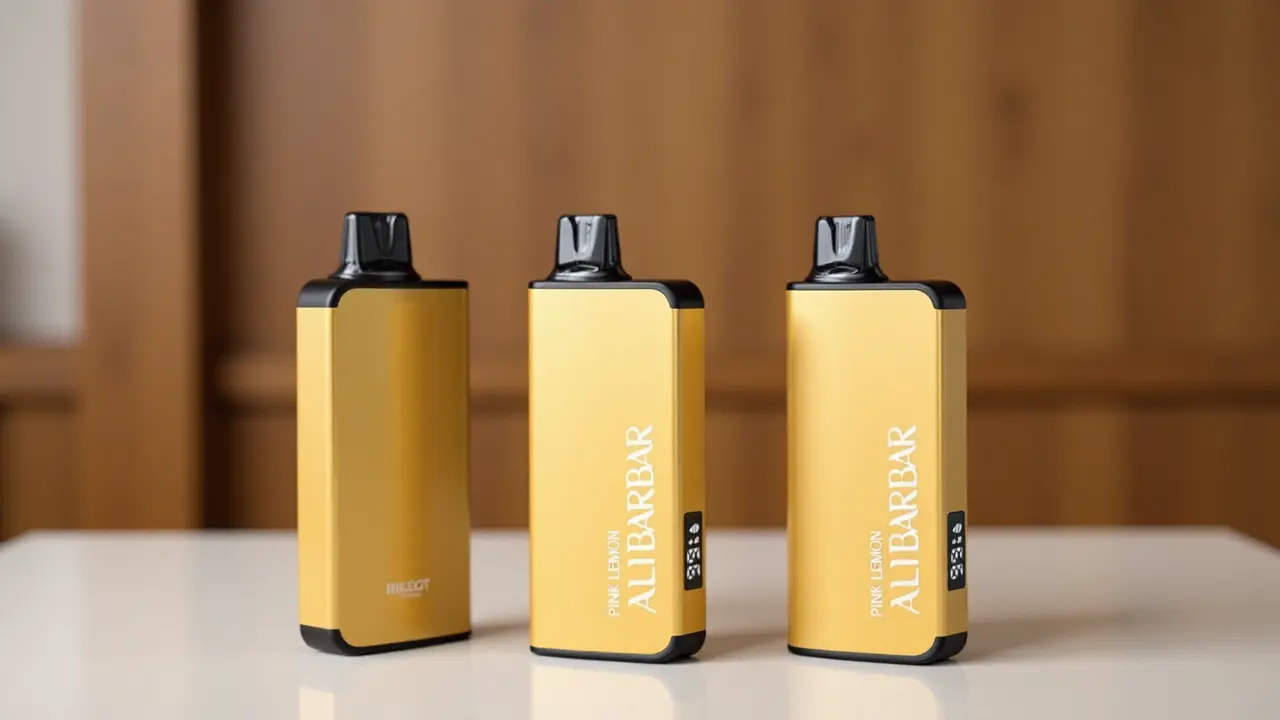
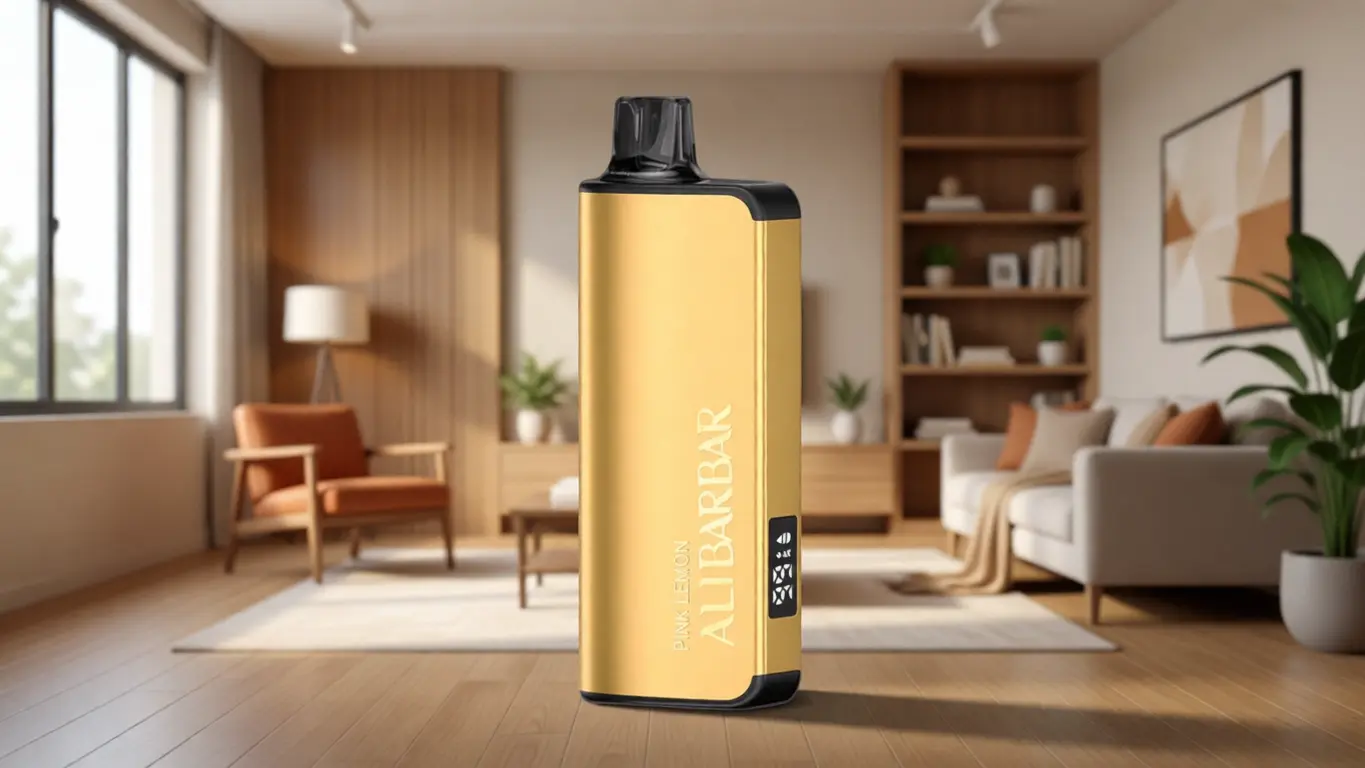
The principles outlined above are not abstract; they are embodied in the design decisions of real products. Examining a specific family of devices—while acknowledging their trade-offs—illustrates how engineering choices translate into the sensory experience. The ALIBARBAR catalogue, distributed through authorised channels, offers several series that each prioritise a particular combination of the factors that govern smoothness.
The INGOT 15000, for example, uses a mesh heating element paired with a precision-calibrated wicking system that has been optimised to prevent dry hits throughout its defined capacity. Its draw-activated firing mechanism removes the need for a button, reducing operational complexity and allowing the user to focus entirely on the inhale rhythm. The built-in power management maintains a consistent heating curve from the first draw to the last, which is why many users report that the final puffs are almost indistinguishable from the first—a clear sign of strong output regulation. However, the sealed design means there is no user-adjustable airflow. A person who prefers a noticeably tighter, more restricted draw may find the standard setting slightly airy, which could alter their subjective evaluation of smoothness. That is not a flaw; it is a deliberate engineering decision that trades flexibility for plug-and-play consistency.
The INGOT 9000 shares a similar thermodynamic architecture but in a smaller form factor. Its reduced capacity means the power source and liquid supply are matched so that the device reaches its predetermined operational end before any perceptible battery sag can intrude. For users who prioritise pocketability and a consistently smooth experience during shorter sessions, this balance works well. The trade-off, naturally, is that a heavy daily user will reach the replacement point sooner than with a higher-capacity sibling.
Where the INGOT series leans on fixed calibration, the Ice Adjust 12000 introduces a degree of user control. It allows incremental adjustment of cooling intensity, which, while not directly altering the heating element, modifies the sensory profile by adding a cooling agent to the draw. The perceived smoothness can shift noticeably with this adjustment: a higher cooling setting can mask minor harshness from a brisk draw, while a lower setting lets the natural warmth come through. This flexibility is valuable, but it also requires the user to understand that the underlying vapour generation remains constant; the cooling overlay does not fix an inconsistent atomizer. The device’s internal battery and liquid level indicators are designed to be unambiguous—a practical feature that reduces the uncertainty many users report when they wonder mid-session whether performance has started to wane.
Other device families on the market adopt different philosophies. Some systems rely on replaceable coil heads housed in refillable tanks, giving the user full control over the heating element’s condition and the liquid composition. Such modularity lets a meticulous user maintain peak smoothness indefinitely, but it also introduces variables—coil priming, power setting matching, liquid viscosity—that can easily be misapplied. ALIBARBAR’s decision to offer mostly pre-filled, pre-optimised systems reflects a recognition that a significant portion of adult users want the assurance of factory-set engineering without the trial and error. Each path has merit, and the right choice depends not on which approach is inherently better but on which one aligns with the user’s willingness to participate in maintenance.
A Practical Evaluation Method for Smoothness
Rather than relying on recommendations alone, a user can evaluate any device against a simple set of diagnostic observations. The following steps form a repeatable framework that works regardless of brand or marketing description.
Step 1: First-Draw Warm-Up
Take a moderate 2–3 second draw from a rested, room-temperature device. Pay close attention to whether the vapour temperature increases progressively or jumps abruptly. A smooth device will show a gentle onset of warmth. If the first moment feels hot or prickly, there may be hotspot-related issues.
Step 2: Draw Resistance and Consistency
With the same draw strength, notice the resistance you feel when inhaling. It should remain steady from the beginning to the end of the puff. If you feel the resistance flutter or if the vapour volume suddenly drops at the 2-second mark, the power delivery or wicking may be unstable. Smoothness requires that the draw feel uniform.
Step 3: Observation of Condensation and Spitting
After a few puffs, inspect the mouthpiece tip and the area just inside it. A small amount of cool condensation is normal and does not affect smoothness. However, if you notice hot liquid droplets (spitback) that sting the tongue or roof of the mouth, the device’s anti-spitback measures—such as chimney baffling or coil positioning—are insufficient. Spitback is a definitive smoothness disruptor.
Step 4: Sustained Session Monitoring
Use the device for five to eight draws in close succession, roughly mimicking a typical break period. Note any shift in temperature, flavour fidelity, or throat sensation. A device that becomes noticeably harsher after three or four draws is likely suffering from wicking fatigue or heat soak in the housing. A thermally stable system should maintain almost the same character throughout this sequence.
Step 5: Late-Life Performance Check
For reusable or high-capacity devices, assess performance when the indicated capacity is nearly depleted. Listen for any change in the sound of the draw (gurgling, a strained hiss) and feel for any loss of vapour density. A design that holds its performance all the way to the cut-off point has excellent power and liquid management. Asking these questions early—perhaps by referencing standardised specification sheets—can save hours of regret.
Common Misjudgments and Market Realities
Even after understanding the technical factors, users regularly misallocate their attention. Four specific errors appear with such frequency that they deserve direct examination.
Equating High Power with Smoothness
A device with a higher wattage rating will produce vapour more quickly, but that does not mean the vapour will feel smooth. If the wicking material cannot supply liquid fast enough to match that high power, the coil partially dries out during the draw, causing a scorched, throat-irritating sensation. Smoothness is a function of power balance, not maximum output.
Ignoring Airflow’s Role Entirely
Many users focus exclusively on the heating element, treating airflow as an afterthought. Yet a device with a perfectly stable heater will still feel harsh if the internal chimney is too narrow, causing turbulent flow and uneven aerosol density. The interplay between air speed, vapour mixing, and cooling is just as influential as the coil material.
Overlooking Maintenance Until Performance Crashes
A common scenario: a user enjoys several weeks of smooth use and then, gradually, the experience turns rough. Instead of recognising the slow build-up of residue on the heating element, the user assumes the device is simply failing. Simple actions—gentle cleaning of accessible components or timely pod replacement when colour or taste changes—extend the smooth window considerably. Devices that make this maintenance easy, with clear indicators or replaceable modules, reduce the risk of that slow-motion disappointment.
Conflating Category Names with Technical Specifications
Terms like “mesh,” “adjustable,” and “high-capacity” are applied loosely across the industry. A device labelled “mesh” may still use a poorly tensioned strip of metal that does not distribute heat evenly. An “adjustable” feature might only adjust a minor sensory overlay rather than core heat output. Reading past the marketing label and into the underlying design—or relying on documented, factory-sourced specifications—prevents the assumption that a familiar word guarantees a smooth result.
From an industry perspective, the trend toward integrated, draw-activated systems with mesh heating elements is a direct response to the widespread complaint of harsh, inconsistent draws. Manufacturing tolerances have narrowed, and more brands now validate their output curves under load before shipping. Yet supply chain pressures still create variance, and devices that reach the market through unauthorised or parallel-import channels may carry older firmware or substandard battery cells that undermine the very smoothness the original design intended. This is why verification of sourcing matters; a smooth device on paper becomes a harsh device in practice if the unit in your hand is not what left the factory.
Frequently Asked Questions
Q: What does “smooth” really mean in the context of these devices?
A: Smoothness describes the absence of sudden sensory shocks during inhalation. It means the vapour temperature does not spike, the throat does not feel scratched or irritated, and the draw resistance remains stable. It is the result of controlled heating, consistent airflow, and adequate liquid supply.
Q: Does a mesh heating element always produce a smoother result than a wire coil?
A: Not always, but it is more capable of doing so. Mesh spreads heat over a larger area, reducing hotspots. However, poor wicking or unstable power delivery can still cause harshness even with a mesh element. The full integration of the element, wick, and power regulation determines the outcome.
Q: Is a higher-wattage device automatically smoother?
A: No. Higher wattage without matched liquid delivery leads to overheating and a burnt sensation. Smoothness comes from the right balance, not from raw output numbers.
Q: How important is the shape of the mouthpiece for smoothness?
A: More than most people realise. A wide, well-contoured mouthpiece that stays cool and seals comfortably reduces the effort needed to maintain a consistent draw, which prevents accidental airflow disruptions that can make the vapour feel turbulent and harsh.
Q: Can battery life affect the smoothness I feel mid-draw?
A: Yes. If the battery voltage sags under load, the heating temperature drops, and the vapour quality can become thin and unsatisfying. A well-regulated power supply keeps the temperature steady from full charge to the last usable puff.
Q: Are the ALIBARBAR INGOT devices designed specifically with smoothness in mind?
A: Their engineering prioritises consistent mesh heating and calibrated wicking, which directly address the root causes of harshness. The draw-activated operation and clear status feedback remove the guesswork that can lead to poor technique. The closed-system design means the user receives a pre-optimised experience that has been validated at the factory.
Q: How can I be confident that a device I purchase will perform as smoothly as the specifications indicate?
A: Source the device through an authorised retailer that maintains a factory-certified inventory. Unauthorised channels may handle, store, or substitute products in ways that compromise the original performance. A transparent supply chain, verified customer support, and documented quality checks reduce this risk.
Q: Does regular cleaning really make a difference to smoothness, or is it just a hygiene habit?
A: Cleaning makes a measurable difference. Accumulated residue on the heating element and inside the airway alters thermal characteristics and airflow, directly harming smoothness. A device that receives periodic, gentle maintenance will maintain its initial performance far longer.
Q: What should I do if a device that was smooth last week suddenly feels harsh?
A: First, examine the pod or coil for signs of discolouration or residue build-up. If the design allows, clean the accessible airway. If the issue persists after a replacement pod is used, suspect battery degradation or a batch variation. At that point, consult the retailer’s support for verification.
Q: Where can I find reliable, up-to-date information and factory-certified ALIBARBAR devices in Australia?
A: Authorised Australian platforms that publicly document their sourcing practices, such as those that maintain direct relationships with the manufacturer’s approved distribution network, offer the most transparent access. Look for a retailer that provides standardised specifications for every listed product and that backs its sales with clear post-purchase support policies.
Conclusion
Smoothness is not a feature that can be captured in a single wattage figure or a flashy package description. It is the sum of careful thermal design, precise power regulation, thoughtful airflow shaping, and the user’s own maintenance discipline. An individual who understands these layers can consistently choose a device that meets their definition of smooth, rather than being swayed by the loudest claims. For those seeking hardware backed by transparent sourcing and documented specifications, OZVAPE Shop provides a structured starting point, but the ultimate decision rests with the user. The correct device is the one that dovetails with your actual routine and physiological preferences—not the one that simply dominates a comparison chart. By applying a rigorous, observation-led evaluation, you reclaim the power to judge smoothness for yourself, and that confidence is the real goal.