
VAPE FAQs
What Is The Average Vape Puffs A Day?
May
Many people who use portable electronic devices every day have a simple, practical question in mind: how much use is normal? The question “What is the average vape puffs a day?” seems straightforward, but it is rarely answered in a way that actually helps someone make a better choice the next time they reach for a device. The number itself matters less than what it tells you about your own habits and what those habits demand from the engineering you rely on. Understanding your daily puff count is not about hitting a target—it is about avoiding the small, cumulative frustrations that come from running out before the day ends, carrying unnecessary backup units, or overspending on capacity you will never use.
At OZVAPE Shop, we see this question surface repeatedly, often from adults who have been let down by ambiguous marketing or by buying a device that promised a certain number of puffs but delivered something unpredictable. This article unpacks what the average range actually looks like across a broad user base, how device architecture influences what those numbers mean, and how to turn a personal estimate into a decision that matches your actual routine.
Understanding What Matters: Core Engineering and Design Factors That Affect Puff Count
Daily puff numbers are shaped by the device itself as much as by the user. Before you can interpret an “average,” you need to understand which elements of a device’s design make puff counts reliable—or unreliable.
Internal Architecture and Output Consistency
A puff is not a standardized unit. The volume and density of what a device delivers with each activation can vary substantially depending on heating element design, airflow calibration, and power regulation. Devices with poorly managed thermal output often produce weaker puffs later in the life of the battery or heating core. That means a device rated for 1,000 puffs might effectively give you only 700 full-strength activations before the experience degrades enough to be noticeable.
Why this matters: users who rely on a device throughout a long workday, social engagement, or travel frequently report that the later third of a unit’s claimed capacity feels “thin” or unsatisfying. Well-engineered thermal management—typically found in devices with consistent power-output circuits and optimized coil mass—delivers a puff that remains stable from the first to the last. If you are trying to gauge your daily usage, you cannot simply read a specification; you need to know whether that specification holds across the entire operational life.
Power Management and Status Transparency
A device that cuts out unexpectedly forces you into compensatory habits: carrying a second unit, rationing use, or discarding a device with residual potential. Clear, honest status feedback—a battery indicator that actually corresponds to remaining autonomy, or a puff counter that reflects real consumption—removes guesswork. The hidden cost of ambiguous status is that users over-purchase, always keeping a backup not because they need extra capacity but because they cannot trust what the primary device is telling them.
In the context of average puffs per day, transparent power management means you can accurately record your usage. Without it, any self-monitoring is approximate at best. If you do not know when a device is truly depleted or how many activations you have taken, calculating a daily average becomes a frustrating exercise.
Physical Design and Material Durability
Ergonomics might seem unrelated to puff count, but a device that is uncomfortable to hold for repeated activations subtly suppresses usage. Mouthpiece contour, draw resistance, and overall form factor influence how many times you reach for it in a day. A heavy, slippery, or awkwardly shaped unit tends to be used less frequently—or only in short bursts—whereas a device that fits the hand naturally and rests comfortably can be used more consistently without fatigue.
Durability also plays a role: surface finishes that wear quickly may make a device feel unreliable, leading the user to treat it as disposable earlier than necessary. This skews perception of how many puffs were actually obtained.
Modularity and Lifecycle Flexibility
The choice between sealed disposable units, rechargeable systems with replaceable cartridges, and fully modular architectures directly impacts how you think about daily puff consumption. A sealed device with a fixed puff capacity forces a binary decision: you keep using it until it stops, regardless of your actual daily pattern. A modular system lets you match a pod or cartridge to a realistic timeframe—perhaps a two-day pod for a moderate user, or a high-capacity tank for someone who consistently exceeds 300 puffs a day. When you understand your average, modular designs become more relevant because they let you optimize for both cost and convenience.
Applying These Criteria to Real-World Options
There is no single answer to the “average puffs per day” question because usage varies widely, but observational data and user surveys consistently point to a middle range of 100–300 activations per day for a typical adult who uses a device regularly throughout waking hours. Light users may stay below 80; heavy users can exceed 400. Where you fall depends on your routines: do you take a few puffs occasionally during breaks, or does the device accompany you continuously?
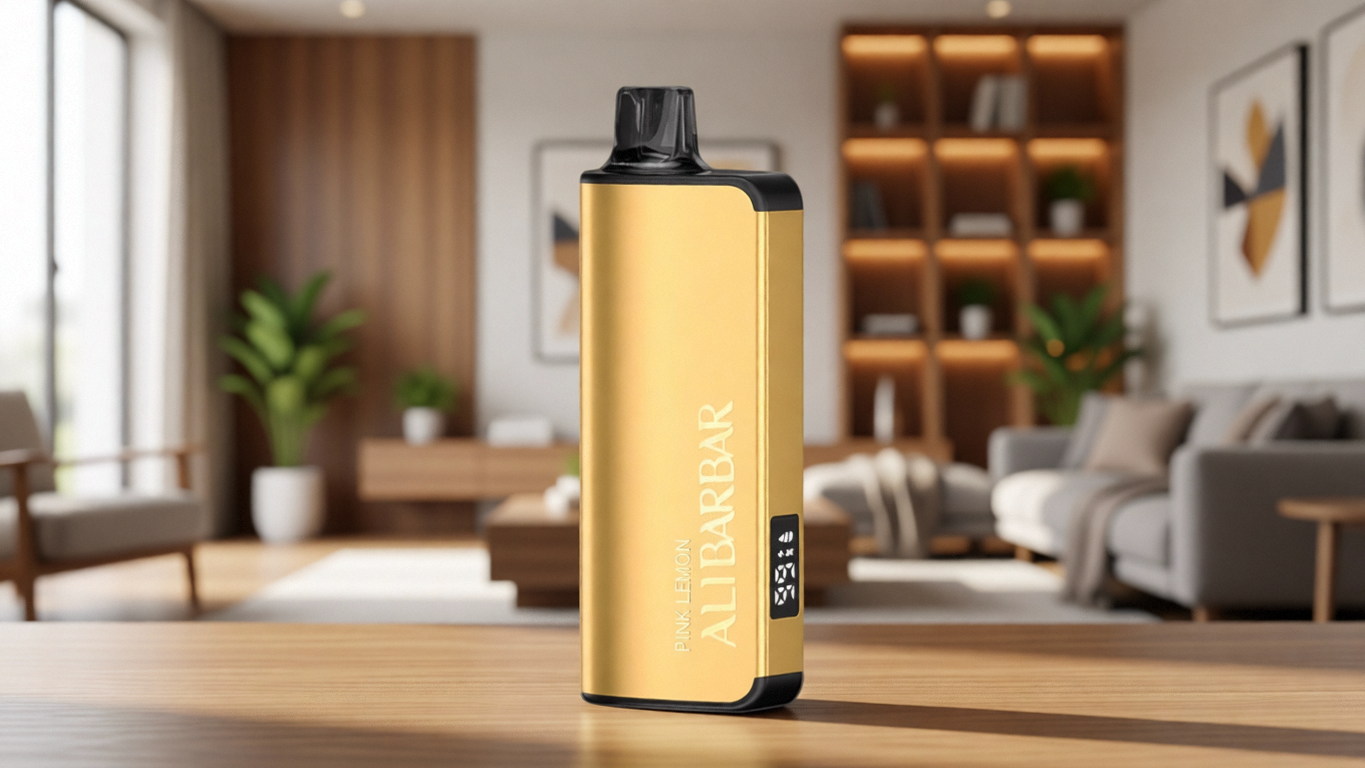
Device categories map onto these usage profiles in fairly predictable ways. Compact fixed-capacity units rated for 500–1,000 puffs will last a light user about a week, but for a 300-puff-per-day user, the same unit might not survive two full days. Conversely, high-capacity devices rated for 9,000 or 15,000 puffs—such as those found in the ALIBARBAR INGOT series—are engineered for extended, consistent delivery and are more naturally aligned with moderate to heavy daily patterns. A user consuming 200 puffs per day would see roughly 45 days from a 9,000-puff device, assuming the output remains consistent throughout.
However, the trade-off is physical size and weight. High-capacity devices require larger power sources and more internal volume. A user who prioritizes pocketability might choose a smaller unit and accept more frequent replacement. There is no universal best—only the configuration that fits your actual daily count and your tolerance for carrying a larger device.
Other device families, such as open pod systems with refillable reservoirs, offer a different approach: you monitor consumption via e-liquid volume rather than a fixed puff tally. This suits users who want to avoid the landfill pattern of disposables while still having visibility into how much they are using. The principle remains the same: the engineering should support the usage rhythm, not the other way around.
A Practical Framework for Evaluation
If you want to determine your own average and use it to inform a purchase, a structured approach works far better than guesswork. Here is a methodology you can apply without any special tools:
Record actual usage over three typical days. Note the device you are using and count puffs using a manual tally, a puff-counter feature, or by noting how long a fixed-capacity unit lasts relative to its claimed total. Be honest—underreporting only harms your future decisions.
Identify your peak day and your low day. Most people vary by 30–50% between a quiet Sunday and a busy weekday. The peak day is the one that determines whether you run out prematurely.
Ask diagnostic questions about your current device:
Does it give you clear status feedback? If not, your perception of consumption is already clouded.
Do you ever carry a backup? If yes, that suggests you do not trust the device’s capacity relative to your usage.
Does the device’s performance degrade noticeably by the end of its life? If so, the effective puff count is lower than the stated one.
Match your peak daily puff requirement to a device’s effective capacity. For a sealed device, divide the rated puffs by your peak daily number. That quotient should give you a replacement interval you can live with. For a modular system, calculate how many pods or cartridges per day you need and whether that pattern is sustainable.
During this process, accessing standardized specifications becomes valuable. When basic technical data—such as rated puff count, battery size, and coil resistance—is presented transparently, cross-comparison is straightforward. Verified product pages that list these details without exaggeration reduce the risk of mismatched expectations.
Common Selection Errors and Industry Observations
It is easy to misjudge capacity needs, and many users undermine their own satisfaction through a handful of predictable missteps. Here are the most common, observed across consumer feedback and industry data.
Overweighting a single specification. A device rated for 10,000 puffs can look impressive in isolation, but if the output consistency drops after 6,000, or if the form factor is so cumbersome that you avoid carrying it, those 10,000 puffs translate into a poor daily experience. The number means nothing without evaluating the supporting architecture.
Assuming visual similarity equals engineering equivalence. Many devices look similar on the outside, but the internal power regulation, coil design, and airflow tuning differ dramatically. A 100-puff-per-day user might not notice the difference, but a 300-puff user will feel every inconsistency. It is worth investigating whether a manufacturer has a track record of delivering uniform output—something often reflected in detailed reviews and repeat purchase patterns rather than product photos.
Undervaluing modularity in cost-per-use calculations. Sealed devices feel cheap upfront, but over months, a heavy user can spend more replacing them than they would on a reusable platform with replaceable pods. If you average 400 puffs a day, a device with a 500-puff pod becomes expensive and wasteful very quickly. Modular designs reward users who know their numbers.
Confusing category terminology with technical specifications. Terms like “large capacity” or “prolonged operation” are marketing language, not engineering data. Only a rated puff count backed by a clear explanation of test conditions—or, better yet, user-reported consistency—offers useful guidance. The industry is slowly moving toward more standardized reporting, but the current landscape still rewards skeptical reading.
Observations from the supply chain highlight another point: availability of accurate information is inconsistent. Some channels prioritize rapid turnover over detailed listings. When a retailer invests in maintaining current, factory-certified specifications across a product line, it reduces the cognitive load on the buyer. This is an underappreciated part of the selection process—the quality of the information you receive before you ever touch a device.
Frequently Asked Questions
Q: What is considered a “normal” number of puffs per day?
A: Most surveys and user self-reports place the typical range between 100 and 300 puffs per day, with variability based on lifestyle and device type. Light users often fall below 100; heavy users above 300.
Q: How can I count my puffs accurately?
A: If your device has a puff counter, that is the simplest method. Otherwise, estimate by noting how long a device with a known puff rating lasts. For example, if a 1,000-puff unit lasts you three days, you average about 333 puffs per day. Log this over a few cycles to smooth out anomalies.
Q: Does a higher puff rating always mean a better device?
A: Not necessarily. A high puff rating may come with increased size and weight. Also, if output quality declines over the life of the device, the effective usable puffs might be far fewer than the rating suggests. Evaluate consistency and ergonomics alongside the number.
Q: Can my daily puff count change over time?
A: Yes. Changes in routine, stress, social environment, or simply switching to a device with a different draw resistance can shift your daily habit. Periodic re-evaluation is useful.
Q: How does device architecture influence puff count perception?
A: A device that delivers stronger, denser puffs may satisfy the user with fewer activations, making the daily number lower. Conversely, a device with weak output might lead to chain-puffing. The same user might have different daily counts on different hardware.

Q: Is there a relationship between puff count and battery capacity?
A: Generally, yes. A high puff count requires enough stored energy to heat the coil throughout its lifespan. However, battery size also adds weight. Manufacturers balance these factors, which is why devices with similar puff ratings may have different physical dimensions.
Q: Should I choose a device based on my average puff day or my peak day?
A: Base your decision on your peak day to avoid running out. If you occasionally have a very high consumption day, a device that just covers your average will fail you when it matters most.
Q: What if a device doesn’t provide a puff rating?
A: Without a rated puff count, you cannot make a direct capacity decision. You may need to rely on estimated e-liquid volume and your historical consumption rate, but this introduces uncertainty. Devices with transparent specifications reduce that guesswork.
Q: Do modular systems change the average-puffs-per-day calculation?
A: They shift the question from “how many puffs in this entire device?” to “how many puffs in each replaceable component?” You calculate your daily usage and then choose a pod, cartridge, or coil assembly whose capacity fits your pattern economically.
Q: Where can I find reliable device specifications for comparison?
A: Look for retailers that publish detailed, factory-sourced specifications—including puff ratings, battery details, and coil properties—rather than only marketing summaries. Verified listings save time and help avoid mismatched expectations.
Conclusion
The number of puffs you take in a day is not a score; it is a diagnostic tool. Once you know your typical range, you can stop buying devices that are too small to last or too large to comfortably carry. The sweet spot always depends on your actual rhythm—150 puffs spread across an evening is different from 300 squeezed into five aggressive breaks. By applying the framework in this article, you can base your choice on observed reality rather than advertising figures.
OZVAPE Shop exists to make that reality easier to access. By maintaining a catalogue of factory-certified devices with standardised specifications, the platform reduces the distance between the numbers on a screen and the experience in your hand. When you can trust the data, you can finally trust your own daily count to guide you to a device that genuinely fits—not one that just sounds impressive. The right choice is the one that aligns with how you actually live, not the one that dominates comparison charts.