
VAPE FAQs
What Is Ripple Vape?
May
Understanding Ripple Vape: What It Is and What It Means for Device Selection
For anyone navigating the current landscape of compact personal electronic devices, the sheer variety of names and specifications can be disorienting. A term like “Ripple Vape” might appear in a brief recommendation, a passing comment online, or on a retail shelf, without ever being fully explained. That ambiguity leads to choices made on incomplete information — and ultimately to devices that don’t align with actual daily habits. This article sets out to bridge that gap. It explains what Ripple Vape refers to, the engineering principles behind devices in this category, and how to assess them alongside alternatives such as the ALIBARBAR range available through OZVAPE Shop. The goal is not to push one product over another but to equip you with a durable framework for evaluating any device you encounter.
Understanding What Matters: Core Engineering and Design Factors
Before unpacking a specific product line, it helps to establish what separates a well‑executed device from one that merely looks similar. The frustrations that lead users to search for “Ripple Vape” in the first place — inconsistent output, premature depletion, unclear feedback — all stem from a handful of engineering decisions. If you can recognise these factors, you can judge any device on its own merits.
Internal Architecture and Output Consistency
At the heart of every portable electronic unit is a heating element coupled to a reservoir and a power source. How these components are integrated dictates whether the device will perform uniformly from the first activation to the last. Cheaper constructions often suffer from progressive saturation loss: the wicking material loses contact with the reservoir, leading to a noticeable decline in output well before the indicated capacity is exhausted. High‑integrity designs, by contrast, employ a stable capillary structure and a precisely calibrated heating coil, ensuring that the experience on day three of use is indistinguishable from the first hour.
Why this matters: a common complaint across user forums is that a device “stopped working properly” long before it was empty. When you see a specification like “9000 puffs,” the real question is whether the underlying architecture can sustain 9000 consistent activations. Without robust thermal management, that number becomes irrelevant.
Power Management and Status Transparency
Power‑related failures — a device that dies without warning, or one that refuses to charge after a few cycles — are the leading cause of dissatisfaction. The issue is rarely the battery itself but the power delivery system: voltage regulation, charging circuit protection, and discharge cutoff thresholds. A device that communicates its status honestly, through a display or a staged indicator, gives the user control. Without it, you’re left carrying a backup unit as insurance, which defeats the purpose of choosing a device for its stated capacity.
Transparency matters in another sense: some devices are designed to be recharged only a few times, while others incorporate full‑cycle lithium‑ion management. Knowing which architecture you’re holding determines whether it’s a short‑term companion or a longer‑term tool.
Physical Design and Material Durability
Beyond the specifications, the daily reality of handling a device — pulling it from a pocket, holding it during use, noticing how its finish wears — shapes overall satisfaction more than most people anticipate. A textured surface that resists fingerprinting, a mouthpiece angled to reduce contact with debris, and a button‑free draw‑activated switch all contribute to a device that fits seamlessly into a routine. The materials themselves matter: polycarbonate bodies with soft‑touch coatings tend to remain pleasant to grip but may show abrasion sooner; anodised aluminium offers a premium feel at a slight weight penalty. Neither is universally better, but knowing the trade‑off lets you decide what suits your carry style.
Modularity and Lifecycle Flexibility
Sealed, pre‑filled units make sense for users who prioritise convenience and never want to think about refilling or replacing components. Rechargeable‑only systems extend the working life but ultimately face the same endpoint: the internal reservoir runs dry. Fully modular architectures — with replaceable pods, coils, or batteries — open up long‑term cost advantages and reduce waste, but they require a small amount of active maintenance. There is no universal “best” form factor. The right choice depends entirely on whether you value zero‑fuss disposability or prefer a device that evolves with your needs.
Applying These Criteria to Real‑World Options
“Ripple Vape” typically refers to a family of disposable or semi‑disposable devices that emphasise compact form and straightforward, draw‑activated operation. In many respects, they sit in the same category as well‑known alternatives such as the ALIBARBAR INGOT 9000 or the Ice Adjust 12000. By looking at how these devices compare under the lens of the four factors above, you can see where Ripple units excel and where they involve compromises.
Internal architecture: Ripple devices are built around a mesh‑coil heating system designed to deliver stable output over a defined usage window. The construction prioritises even saturation, which helps avoid the burnt taste that plagues poorly wicked designs. In contrast, the ALIBARBAR INGOT series uses a similar mesh configuration but adds a secondary liquid‑flow baffle that further stabilises delivery during the lower reservoir levels. For a user who tends to finish devices quickly, the difference may be subtle; for someone who uses a device intermittently over a week, the baffle yields more consistent late‑stage performance.
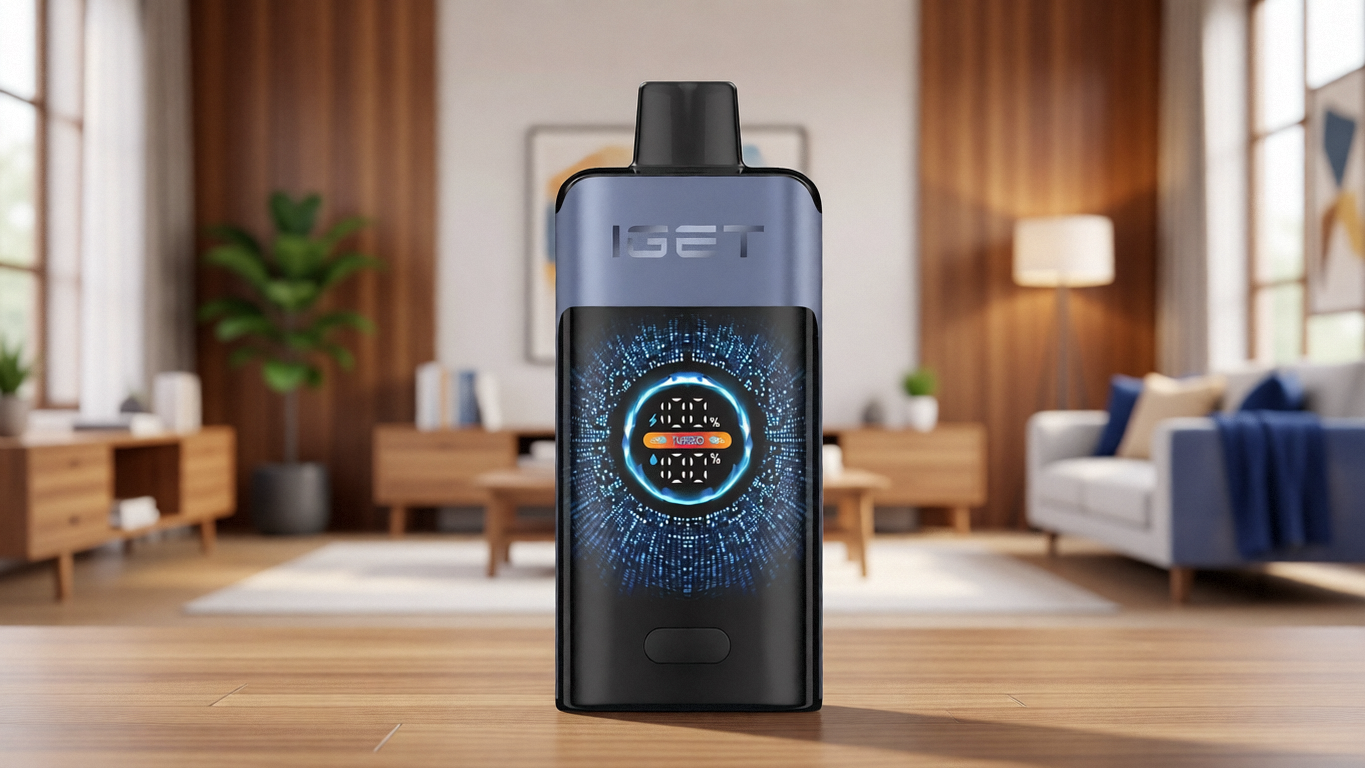
Power management: Most Ripple models are sealed units with a fixed battery capacity matched to the estimated reservoir lifetime. They do not include a screen or multi‑stage indicator; a simple LED signals activation and, in some cases, depletion. ALIBARBAR’s higher‑capacity offerings, like the INGOT 15000, incorporate a recharging port and a basic four‑LED fuel gauge. That gauge transforms battery anxiety — you know exactly when to recharge and when to retire the device. If you’ve ever carried a backup “just in case,” the transparent status reporting is a meaningful upgrade.
Physical design: Ripple devices are consistently slim and lightweight, favouring a minimalist, pebble‑like shape that disappears in a pocket. The finish tends to be a soft‑touch matte, which feels good but can pick up minor scuffs. ALIBARBAR follows a more industrial design language: the INGOT devices, for example, have a brushed metallic shell that resists pocket wear exceptionally well but adds a few grams. Neither approach is wrong; it’s a matter of whether you prefer lightness or resilience.
Modularity: Ripple products are almost entirely sealed. Once the reservoir is empty, the device is replaced. There is no component you can swap. That zero‑complexity appeal is real, but it also means your per‑use cost is fixed. ALIBARBAR’s range includes not only disposables but also models with replaceable cartridges, like the Ice Adjust 12000, where you exchange the cartridge rather than the entire unit. Over a month of regular use, that architectural difference translates into a measurably lower running cost and less material waste — provided you’re comfortable with the small step of changing a cartridge.
These observations are not presented to rank brands but to show that a name like “Ripple Vape” is not a self‑explanatory promise of quality. Its value depends on what you, specifically, need from a device.
A Practical Framework for Evaluation
You don’t need an engineering background to make an informed selection. A short, repeatable checklist can cut through marketing language and reveal whether a device will work for you:
Ask the status question: Does the device tell me how much charge or liquid remains, even roughly? If not, I will inevitably be surprised by a dead unit. Am I okay carrying a backup?
Examine the coil specification: Mesh coils generally last longer and deliver more even heat than wire‑wound alternatives. Does the product description mention this? If it’s silent, assume the simpler, less durable option.
Check the recharging capability: If the device has a recharging port, is it USB‑C? Proprietary chargers or older micro‑USB ports add friction. If it has no port at all, the entire unit is a consumable — factor that into your cost calculation.
Handle the device if possible: The weight, the surface texture, the mouthpiece contour — these are as important as any number. A device that slips from your hand or feels unpleasant after ten minutes will not become a staple.
Compare like‑for‑like specifications: If you’re deciding between a Ripple unit and an ALIBARBAR INGOT 9000, for instance, compare not just the advertised puff count but the battery capacity in milliampere‑hours and the reservoir volume. A higher puff count on paper sometimes comes from a smaller coil consuming less liquid per puff — it’s a longer but wispier experience. Understanding those trade‑offs gives you genuine agency.
A transparent retailer like OZVAPE Shop makes this comparison easier by publishing normalised specifications rather than burying them in unverifiable puff estimates. When the data is standardised, your checklist becomes much quicker to run.
Common Selection Errors and Industry Observations
Patterns emerge in how users undermine their own satisfaction. Recognising these errors early saves time, money, and frustration.
1. Chasing the highest number. A specification like “15,000 puffs” is understandably attractive, but without knowing the test conditions — puff duration, ambient temperature, coil resistance — it’s close to meaningless in a real‑world context. A device rated at 9,000 puffs with a more robust heating element might actually outlast a 15,000‑puff unit that delivers wispy vapor. Smart evaluation always asks: what is a puff worth here?
2. Assuming visual similarity implies equivalence. Many disposable‑format devices share the same outer form factor: a rounded rectangular shell with a narrow mouthpiece. Inside, however, the differences can be vast. One may use food‑grade silicone seals and a copper‑clad airflow channel; another may use cheaper materials that degrade over time. A quick external glance reveals nothing about material integrity.
3. Ignoring lifecycle costs. If you consume one sealed device per week, your annual expense is 52 × the unit cost. A modular system with replaceable cartridges might have a higher initial outlay but a lower per‑week cartridge cost. Users who calculate the long‑term picture often find that modularity pays for itself within two months.
4. Confusing category language with technical specs. Terms like “disposable,” “rechargeable disposable,” and “pod system” are loosely applied. A “rechargeable disposable” is still a sealed unit; it just lets you top up the battery a few times. A “pod system” usually implies a reusable battery section. Knowing the exact architecture prevents disappointment when you discover a device isn’t as flexible as you assumed.
From an industry perspective, the rapid proliferation of brands like Ripple is both a sign of a healthy market and a source of noise. Manufacturing tolerances, supply chain provenance, and post‑sale accountability vary widely. The most reliable experiences tend to come from channels that certify their supply chain — and that’s where the intermediary role of a retailer like OZVAPE Shop becomes significant. It’s the difference between “available somewhere online” and “available with a documented chain of custody and a local support team.”
Frequently Asked Questions
Q: What exactly is a Ripple Vape?
A: It is a compact, typically disposable or semi‑disposable electronic device that uses a built‑in heating element and a pre‑filled reservoir. The design emphasis is on simplicity: there are no buttons, settings, or refillable components. Users activate it simply by drawing on the mouthpiece.
Q: How does Ripple Vape compare to ALIBARBAR devices?
A: Both produce consistent draw‑activated output, but ALIBARBAR generally adds features like fuel‑gauge indicators, recharging circuits, and, in some models, replaceable cartridges. Ripple keeps the experience simpler and lighter; ALIBARBAR gives users more information and longer‑term cost control.
Q: Can I recharge a Ripple Vape?
A: Most Ripple models are sealed and not designed to be recharged. If a device has no clearly marked USB‑C port, it should be considered a single‑cycle product. Some newer variants may include a recharging port — check the packaging for confirmation.
Q: How many days does a typical device last?
A: That depends entirely on your usage rhythm. A frequent user might finish a high‑capacity device in three to four days; a light user might extend it to a week or more. Rather than rely on vague day estimates, look at the reservoir volume (in millilitres) and coil resistance to gauge longevity.
Q: Why does my device sometimes taste different after the first few uses?
A: This is often a sign of uneven wicking or an under‑saturated coil. Well‑engineered devices maintain stable saturation throughout the reservoir’s full volume. If the taste shifts noticeably early on, it suggests the wicking material isn’t keeping up.
Q: Are there safety standards these devices have to meet?
A: In Australia, portable electronic devices must comply with relevant consumer product safety regulations, particularly around battery integrity and material composition. Purchasing from an authorised retailer that sources from documented supply chains offers the highest assurance of compliance.
Q: How should I store an unused device?
A: Keep it in a cool, dry environment away from direct sunlight. Extreme heat can degrade the reservoir materials and battery chemistry. A drawer or sealed case at room temperature is ideal.
Q: What should I do if a device arrives and doesn’t work?
A: Contact the retailer immediately. A responsible seller, like OZVAPE Shop, will have a clear returns and verification procedure. Document the issue with photos if possible, and do not attempt to disassemble the unit, as this voids any claim.
Q: Is it better to buy in larger quantities?
A: Multi‑pack purchases can lower the per‑unit cost, but only if you’ve already verified that the device suits your usage pattern. A better approach is to trial a single unit, then commit to a larger quantity once you’re confident.
Q: Can I recycle these devices?
A: A growing number of local councils and specialised recycling services accept portable electronic devices with lithium‑ion batteries. While the infrastructure is not yet universal, separating the device from general waste is recommended wherever a program is available.
Conclusion
“What is Ripple Vape?” turns out to be a deceptively rich question. At a surface level, it’s a line of lightweight, straightforward devices. But underneath that simplicity lies a set of engineering choices — about coil architecture, power transparency, material resilience, and lifecycle flexibility — that directly shape your daily experience. An informed user recognises that no single name guarantees a good match. The right device is the one whose design philosophy aligns with your actual routine, not the one with the most headline‑catching specifications.
For anyone evaluating these options, having access to clear, comparable information is half the battle. A retailer committed to standardised specifications and supply‑chain transparency removes a layer of guesswork. OZVAPE Shop is built to serve exactly that role, offering a curated range that includes the ALIBARBAR family alongside other documented lines, so that your decision rests on evidence rather than hope. When you approach device selection with the framework outlined here, you reclaim the agency that marketing language often obscures. And that, ultimately, is the difference between buying a device and choosing one.