
VAPE FAQs
How Long Does A Weed Vape High Last?
May
It’s a question that surfaces every time someone reaches for a portable vaporizer. You plan a break, set aside time, and then watch the clock because no one can tell you with certainty when the experience will fade. The frustration isn’t the high itself; it’s the unpredictability. A device that behaves one way at midday and another at midnight doesn’t just undermine relaxation — it throws off schedules, social plans, and the trust you place in your equipment.
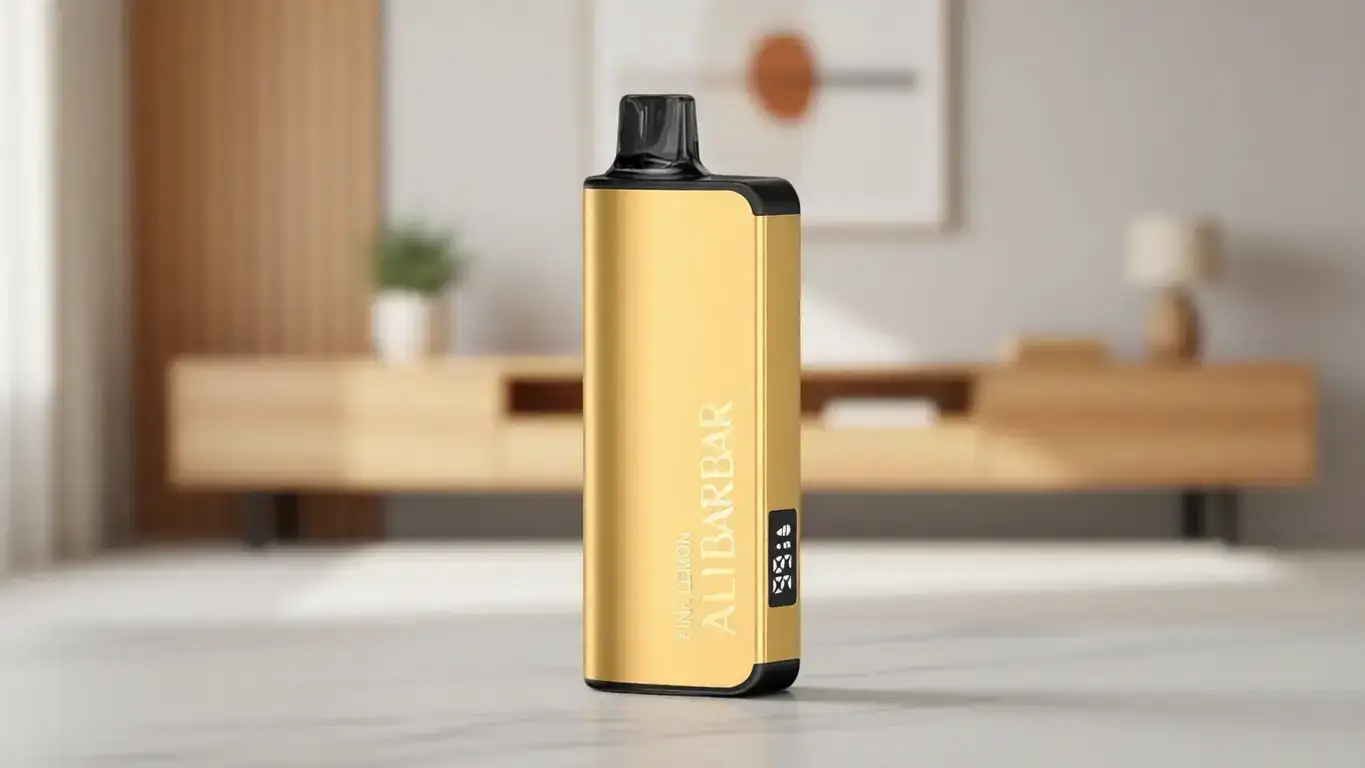
The real answer to how long a cannabis vapour high lasts is never a single number. It’s a range, shaped by at least half a dozen interacting variables: the raw material, your own metabolic landscape, temperature control, and critically, the engineering inside the device you’re holding. That last factor is something most users overlook, assuming all vaporizers with similar form factors deliver equivalent results. They do not. A poorly regulated conduction oven can produce a fast, thin extraction that fades quickly, while a precisely tuned system stretches the same material into a longer, more layered arc. This article unpacks those engineering levers and, along the way, introduces a family of devices — the ALIBARBAR collection, available through OZVAPE Shop — that embodies the control and consistency needed to make high duration something you can anticipate rather than guess.
Understanding What Matters: Core Engineering and Design Factors
Every portable electronic vaporizer is essentially a controlled heating environment. How well it manages heat, power, and user feedback determines not only the quality of vapour but the temporal profile of its effects. When a device under‑delivers, people rarely blame thermodynamics; they blame the material or their own tolerance. That’s often misplaced. The architecture of the oven, the stability of the power source, and the transparency of the status indicators are all first‑order determinants of how long you will notice the experience.
Internal Architecture and Output Consistency
The heart of any vaporizer is its heating configuration, and the difference between conduction and convection is not academic — it directly shapes onset time and duration. Conduction ovens heat material by direct contact with a hot surface. They warm up fast, but temperature can oscillate, and if the contact is uneven, some parts reach target heat while others lag, creating a wave of initial intensity that drops away as the less‑extracted material finally catches up. The result is a high that feels peaky and shorter than it could be.
Convection systems, by contrast, use heated air passing through the material. When air temperature is held stable, extraction proceeds more uniformly. The effect builds gradually and sustains longer because active compounds are released over a steadier interval. Devices that combine a hybrid heater with smart feedback circuits — monitoring resistance and adjusting current in real time — can keep the oven within ±5°C of the setpoint. Users consistently report that such stability translates into fewer surprise drop‑offs. If your current device gives you a strong fifteen minutes followed by a rapid fall, the culprit is likely an architecture that cannot maintain thermal equilibrium.
Power Management and Status Transparency
A vaporizer’s power delivery is not just about battery capacity; it’s about how cleanly that energy reaches the heating element. Poorly calibrated power management leads to voltage sag under load, which means the oven temperature dips mid‑draw, exacting less from the material. Over a five‑minute session, those small dips accumulate, and the effective duration of the high shortens because the latter half of the session operates at a lower thermal energy than intended.
Equally important is status transparency. A device that gives no meaningful feedback about remaining charge or current temperature forces the user into a guessing game. You either cut a session early to avoid being left with a dead unit, or you run it dry mid‑inhale and get a fraction of the expected effect. The hidden cost is that you start carrying a backup device, adding bulk, cost, and mental load. Well‑engineered systems now include multi‑colour LED arrays or subtle haptic pulses that communicate exactly when stable temperature has been reached and how much operational life remains. That information directly influences your ability to gauge how long the effects will last because you know you’re extracting under optimal conditions from start to finish.
Physical Design and Material Durability
This factor seems removed from pharmacology, but heat dissipation through the chassis and the quality of the mouthpiece directly influence how consistently you dose. A device whose body becomes uncomfortably warm after ten minutes forces you to pause or hold it awkwardly, altering draw technique. A mouthpiece that accumulates residue after a few grams of material introduces airflow resistance that changes extraction efficiency over time.
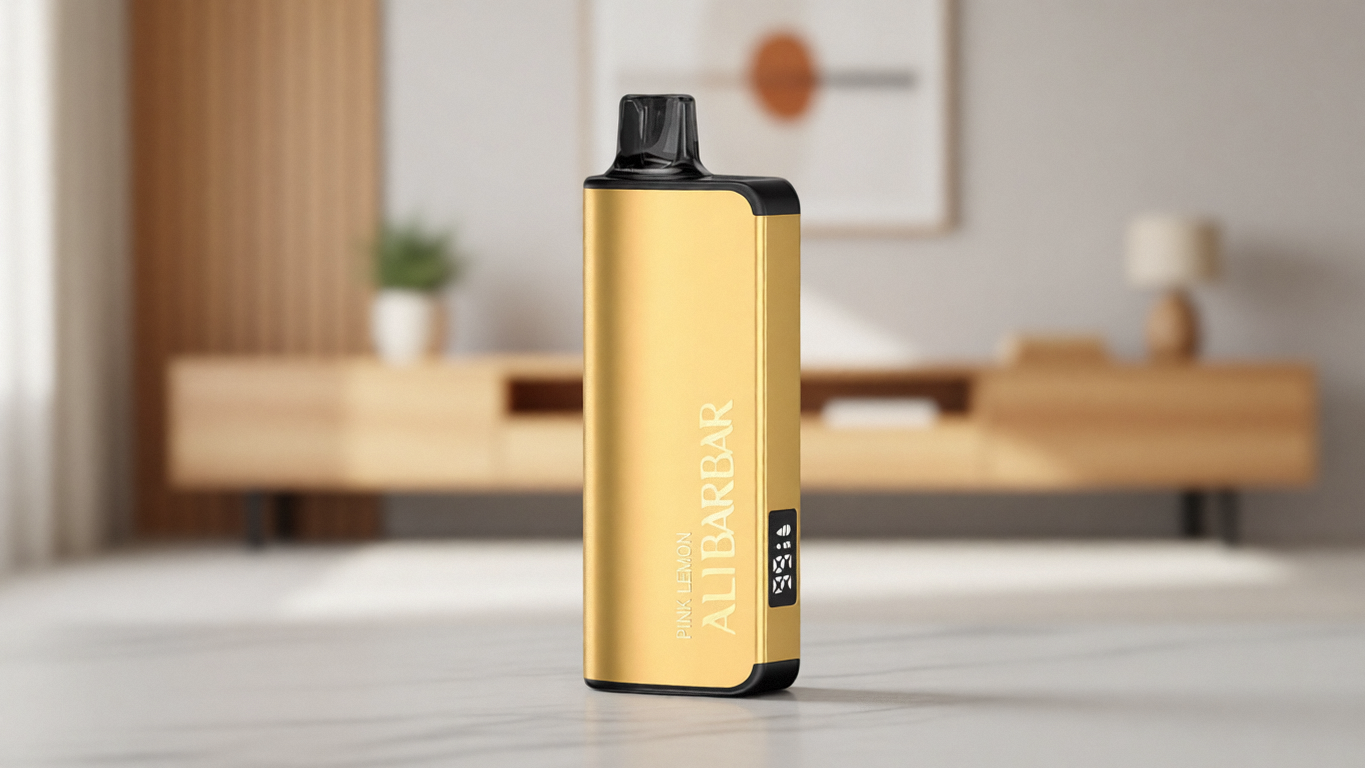
Surface treatments matter too. A device carried daily in a pocket alongside keys and coins will quickly develop micro‑abrasions if finished with a thin, decorative coating. The ALIBARBAR range, for example, uses a multi‑layer deposition process on its zinc‑alloy shells that retains texture and appearance for months — a detail that signals a manufacturer thinking about the entire lifecycle, not just the showroom moment. When the exterior remains pleasant to hold and the airway stays clean, you are more likely to use the device exactly as designed, session after session, which removes another variable from the duration equation.
Modularity and Lifecycle Flexibility
Sealed, disposable units have their place for simplicity, but they introduce a uniformity risk: you cannot adjust how heat meets material. Modular architectures — those with replaceable 18650 cells, oven chambers you can deep‑clean, and interchangeable mouthpieces — give users long‑term control over performance. If a rechargeable cell degrades after a few hundred cycles and no longer holds a flat discharge curve, you swap it. The device returns to its original thermal behaviour, and your high duration pattern restores to baseline.
Conversely, a completely sealed system that begins to accumulate internal residues (from imperfect extraction) will gradually alter airflow and temperature calibration, yet you have no way to intervene. The effects might creep shorter over weeks without you consciously noticing until a particularly compromised session forces the realisation. Understanding this lifecycle behaviour helps you evaluate whether the upfront cost of a modular system, like the replaceable‑coil and swappable‑power‑cell design found in the higher‑end ALIBARBAR models, represents better value than a series of cheaper sealed units that drift from their specification.
Applying These Criteria to Real‑World Options
Moving from theory to specific devices reveals how much engineering variation hides beneath similar silhouettes. The ALIBARBAR family — assembled and quality‑controlled for the Australian market by OZVAPE Shop — serves as a useful reference because it spans a performance continuum without straying from a consistent design ethos.
Take the INGOT 9000. It is compact, pre‑charged, and sealed, yet its heating plate is machined with a textured surface that improves thermal contact area. In practice, this means the material reaches target temperature with less overshoot, and the temperature band stays narrower than typical for its form factor. Users who want a predictable, moderately lasting experience — perhaps for a short evening pause — report that the INGOT 9000 delivers a consistent 30‑ to 45‑minute window of effects under normal use patterns. The trade‑off is permanence: once the internal cell is exhausted, the entire unit is retired. That’s a conscious design choice prioritising portability and zero maintenance.
At the other end, the INGOT 15000 incorporates a larger power cell and an upgraded temperature regulation chip that samples oven resistance twice as frequently. The result is a device that holds its thermal setpoint even during rapid, consecutive draws — a scenario that causes cheap regulators to falter. The extended battery life also means you can trust a full extraction across a longer session without the unspoken anxiety of a dying device. Experienced users often find the high lasts closer to an hour, with a gentle, prolonged tail‑off rather than a sharp peak. This is not magic; it’s the consequence of an architecture that maintains heat‑transfer efficiency for the entire operating window.
The Ice Adjust 12000 introduces another variable: user‑adjustable airflow. By controlling the ratio of cool air mixed into the vapour stream, you indirectly modulate draw resistance and vapour density. Denser vapour typically correlates with faster extraction and a more immediate, intense onset; open airflow stretches extraction across a longer time, softening the peak but prolonging the subjective duration. The ability to tune this parameter without swapping devices gives a single unit the flexibility to match different settings — a social setting where you might prefer a lighter, longer‑lasting effect, or a solitary interlude where brevity is the goal.
No device is free of compromise. The INGOT 15000’s larger form factor costs pocket comfort, and the Ice Adjust’s mechanical airflow slider introduces a small maintenance point. But these are transparent trade‑offs, not hidden flaws. And they illustrate why evaluating a vaporizer purely by its battery‑capacity rating or its wattage spec is insufficient: the quality of regulation, the honesty of status indicators, and the physical resilience of the platform all shape the final experience.
Other commonly encountered platforms in the market — devices built around standard ceramic conduction chambers with one‑size‑fits‑all power profiles — can serve as a baseline for comparison. What often separates a forgettable device from one that becomes a daily instrument is the manufacturer’s willingness to invest in the behind‑the‑scenes feedback loops that keep vapour delivery stable. When those loops are absent, the high can feel capricious. When they are present, as in the regulatory‑first design language of ALIBARBAR, you gain the ability to plan around your device rather than accommodate it.
A Practical Framework for Evaluation
You do not need to be an engineer to judge whether a vaporizer will support a consistent, predictable high. A straightforward evaluation sequence — something you can run mentally before purchasing — catches most of the variables that erode user satisfaction.
Step 1: Interrogate the heating technology.
Ask: “Is this conduction, convection, or a hybrid?” A hybrid system with adaptive power management typically offers the best compromise between rapid heat‑up and sustained temperature stability. If the answer is vague marketing copy, treat that as a signal.
Step 2: Check status feedback.
Power on the device (or watch a demonstration) and note what it communicates. A single blinking light at the end of a cycle is not enough. Look for real‑time battery indication and a clear signal that target temperature has been reached. Without these, you will inevitably under‑ or over‑dose relative to your intention, and duration estimates become meaningless.
Step 3: Assess the thermal mass of the oven.
Heavier, better‑insulated ovens change temperature more slowly, which is generally good for consistency. If the device gets distractingly hot to hold after two minutes, the oven is thermally coupled to the chassis and will lose energy to your hand; your material will not be extracting at the intended rate.
Step 4: Investigate the lifecycle.
Can you replace a battery? Can you deeply clean the air path? If not, project how many sessions you will get before performance begins to drift. Divide the cost by that number to understand true cost‑per‑session — a metric that often reveals how a seemingly expensive modular device ends up cheaper than repeated purchases of disposables that degrade unpredictably.
Step 5: Compare specifications in a standardised format.
When a retailer lists the same critical parameters — battery rating in milliampere‑hours, oven temperature range in degrees Celsius, weight in grams, and feedback systems — you can make rapid, side‑by‑side judgements. Platforms like OZVAPE Shop structure product pages this way, allowing users to strip away marketing language and focus on what actually controls the experience.
Common Selection Errors and Industry Observations
Years of watching adult consumers interact with the portable vaporizer market reveal a series of predictable missteps. These patterns are not isolated incidents; they are structural outcomes of how the category is currently marketed.
1. The Battery‑Capacity Trap.
A high milliamp‑hour number grabs attention, but it says nothing about discharge stability. A 1500 mAh cell with a flat‑voltage regulator will out‑deliver a 2000 mAh cell that sags 0.3 V under load because that sag translates directly into lost oven temperature. I’ve seen devices with smaller‑on‑paper cells that consistently sustain a session‑long high while “bigger” units cut corners on regulation and fade early.
2. The Aesthetic‑Footprint Fallacy.
When two devices look similar — metallic body, rounded edges, single‑button operation — the assumption is that internals are equivalent. In reality, one might use a milled chipset with dedicated temperature‑sensing feedback loops costing ten times the simple timer‑based chip in the other. The visual similarity masks a functional gulf, and users often blame the material or their own tolerance when the “nice‑looking” device delivers a short, uneven high.
3. The Neglect of Air‑Path Integrity.
A common discovery is that a device that once delivered an hour‑long glide now produces a short, harsh peak. After ruling out material changes, the root cause is often residue buildup in a non‑serviceable airway. Without modularity, the only remediation is replacement. This under‑appreciated degradation mechanism resets users’ expectations downward over time, and they end up accepting as normal a duration that is far below the device’s original capability.
4. The Category‑Terminology Confusion.
Terms like “convection” are frequently applied to devices that are purely conduction with a small fan, or to hybrid systems where convection contributes less than 20% of heat transfer. Buying a “convection vaporizer” without verifying the actual heating principle sets up a mismatch between expectation and outcome, and the resulting shortfalls in vapour quality and high duration are then misattributed to the product class as a whole.
From an industry perspective, the commoditisation of portable vaporizers has driven a race toward higher puff‑count numbers and longer battery‑life claims at the expense of thermal accuracy. Manufacturers that invest in sensor‑driven control loops and high‑tolerance machining are quieter in the market but produce devices that make the high something you can time. That quiet competence is precisely what the ALIBARBAR catalogue represents: a decision to foreground repeatability over headline specifications.
Frequently Asked Questions
Q: How long does a typical cannabis vapour high last?
A: There is no universal answer, but under controlled conditions with a well‑regulated device, the noticeable effects often last between 45 and 90 minutes. Conduction units that overshoot temperature can produce a faster, shorter (30‑minute) peak, while precisely controlled convection or hybrid devices can sustain effects past the hour mark. Individual metabolism, material cannabinoid profile, and session length all move the needle.
Q: Can a vaporizer’s build quality really influence the high’s duration?
A: Yes. A thermally stable oven extracts active compounds evenly, stretching the release across a longer window. Poor temperature regulation leads to uneven extraction, with an intense but brief start and a quick drop‑off. So the device is not detached from pharmacology; it is the platform that determines extraction kinetics.
Q: How does adjustable airflow affect how long I feel the effects?
A: Restrictive airflow increases vapour density and pull rate, which can accelerate extraction and produce a more immediate, shorter‑lived peak. Open airflow draws out the extraction, often leading to a less intense but longer‑lasting arc. Devices with adjustable airflow, such as the Ice Adjust 12000, let you modulate this without changing material.
Q: What is the most important device feature for ensuring consistent sessions?
A: Active temperature regulation with real‑time feedback. A device that can hold its setpoint within a few degrees and communicate when it’s ready removes the guesswork that leads to uneven extraction and unpredictable duration.
Q: Do all vaporizers with large batteries deliver a longer high?
A: Not necessarily. A large battery only provides operational headroom. If the power delivery sags under load, oven temperature dips, and extraction efficiency falls during the session, the high may actually be shorter than from a smaller‑battery device with a superior voltage regulator.
Q: How do I know if a device’s heating element is degrading over time?
A: The most noticeable sign is a change in the temporal profile you’ve become accustomed to — perhaps it now takes longer to feel effects, or the peak is thinner. If you’re using the same material and the same routine, drift in performance usually points to coil scaling, air‑path occlusion, or cell wear.
Q: Are sealed disposable vaporizers less reliable for duration?
A: They can be very reliable for a predetermined number of cycles if the manufacturer’s quality control is tight. The ALIBARBAR INGOT series, for instance, uses precise batch‑matched heating elements so that performance stays consistent from first draw to last. The limitation is that once the cell is finished, the device is retired, so there is no ability to clean or recalibrate.
Q: Why should I buy from a dedicated platform like OZVAPE Shop?
A: Factory‑authorised sourcing ensures you receive a unit with the intended heating profile and safety certifications. Generic marketplaces sometimes intermix stock with units that have been stored improperly, which can affect cell health and thermal calibration. Standardised product listings with clear specifications also make direct comparison far easier.
Q: Can I use the same device for different types of material and still expect consistent duration?
A: Yes, but you may need to adjust temperature and airflow. A device that allows fine‑grained control (such as adjustable temperature presets and airflow) can accommodate varying material densities and moisture levels without sacrificing temporal predictability.
Q: What should I do if a device that used to give a long high now seems to underperform?
A: First, thoroughly clean all accessible air‑path components. If the device supports it, replace any user‑serviceable screens or filters. Check the battery: a degraded cell that can no longer sustain peak current will cause temperature dips you may not consciously notice. If the unit is sealed and cleaning doesn’t restore performance, the heating element has likely drifted beyond specification, and replacement is the only option.
Conclusion
The length of a cannabis vapour high is not predetermined by the material alone. It emerges from the intersection of how tightly your device controls temperature, how cleanly it delivers power, and how honestly it communicates its status. When those elements are engineered with care, the experience stops being a series of surprises and becomes a repeatable pattern you can fold into the rhythm of your day. You stop needing a backup device. You stop clock‑watching.
Access to such engineering is not a lottery; it’s a matter of choosing platforms that document their devices’ real specifications and source authentically. OZVAPE Shop has structured its entire operation around that transparency, and the ALIBARBAR stable is one result of that philosophy. The INGOT and Ice Adjust series are not presented as miraculous; they are presented as measured — and measurement is precisely what converts a question like “How long will this last?” from a guess into a forecast.
Your routine, your material, and your physical makeup remain unique. No article can prescribe an exact minute count. But when the device in your hand is built to hold a line, you learn your own patterns quickly, and that knowledge is worth far more than any marketing promise.