
VAPE FAQs
What Is Pg Vape?
Sep
If you have spent even a short time exploring the world of personal electronic vapor devices, you will have encountered the term “PG” with near‑certainty. It appears on product pages, in specification sheets, and in discussions among experienced users. Yet for someone new to the category, the acronym can feel like an impediment to understanding rather than a useful point of information. This article explains what PG is, why it matters in the context of electronic devices designed for vapor production, and what a user should actually do with that knowledge.
At OZVAPE Shop, where we focus on the ALIBARBAR range and associated accessories, we regularly receive questions about the composition of the liquids used with these devices. This primer is our response — a straightforward, technically grounded explanation.
Understanding Propylene Glycol: Composition and Function
PG, or propylene glycol, is a synthetic organic compound with the chemical formula C₃H₈O₂. It is a clear, odourless liquid with a slightly sweet taste and a viscosity notably lower than water. In industrial and consumer contexts, PG functions as a humectant, solvent, and carrier agent — meaning it holds moisture, dissolves other substances, and transports them efficiently. It is approved for use in food products, pharmaceuticals, and cosmetic formulations, and its safety profile is well‑documented across a range of regulatory bodies.
In the context of personal vapor devices, PG serves a specific purpose. When heated to a controlled temperature inside a device’s atomiser assembly, PG transitions from liquid to vapour — a process that does not involve combustion. The generated vapour then acts as a carrier for any flavouring compounds and, where applicable, active ingredients that have been dissolved into the liquid formulation.
The key characteristic that makes PG suitable for this application is its ability to produce a distinct sensation in the throat and upper respiratory tract. This sensation, often referred to as “throat hit,” is one of the primary reasons users choose liquid compositions with a higher PG content. It provides a familiar, tangible feedback that many find satisfying.
The Role of PG in Device Performance and User Experience
Understanding PG’s function is essential for making informed decisions about device configuration. The proportion of PG in a liquid formulation directly influences several aspects of the user experience.
Vapour Consistency and Temperature
Because PG has a lower boiling point than its common counterpart, vegetable glycerin (VG), it vaporises at a lower temperature. This means that a device filled with a high‑PG liquid will produce vapour more rapidly and at a lower power output. For the user, this translates to a cooler vapour stream and a faster recovery time between activations. If a device provides limited power adjustment, a high‑PG liquid can still deliver a consistent experience.
Flavour Fidelity
PG is an efficient solvent for many flavouring compounds. It holds flavour molecules in suspension reliably and releases them into the vapour stream with minimal distortion. Experienced users often note that high‑PG liquids produce a cleaner, more defined flavour profile compared to high‑VG alternatives, where the thicker liquid can mute subtle notes.
Device Interaction
The lower viscosity of PG means it flows more easily through the wicking materials used in atomiser assemblies. This reduces the likelihood of dry wick events — where the heating element fires without sufficient liquid — which can degrade the device’s performance and generate an unpleasant experience. Devices designed for higher‑viscosity liquids may still function adequately with high‑PG formulations, but the reverse is not always true: a device optimised for thin liquids may struggle with thick, high‑VG compositions.
Throat Sensation
As noted, PG is primarily responsible for the throat hit. In a practical sense, a higher PG ratio produces a more pronounced sensation, which some users find reassuringly familiar. This is a matter of personal preference, and there is no objectively correct level.
Comparing PG and VG: A Practical Distinction
To fully grasp PG’s role, it is helpful to contrast it with vegetable glycerin, the other primary carrier in most liquid formulations. The table below summarises the key differences in a format that supports direct comparison:
| Property | Propylene Glycol (PG) | Vegetable Glycerin (VG) |
|---|---|---|
| Viscosity | Thin, water-like | Thick, syrupy |
| Vapour Production | Moderate | Abundant |
| Throat Sensation | Pronounced | Smooth, mild |
| Flavour Carry | Efficient, clean | Slightly muted |
| Boiling Point | Lower (approx. 188°C) | Higher (approx. 290°C) |
| Device Compatibility | Wider range of devices | Requires higher-power, higher-wicking capacity devices |
The practical takeaway is this: a user seeking maximum vapour volume and minimal throat sensation would choose a high‑VG formulation. A user prioritising flavour precision, device compatibility, and a defined throat hit would choose a high‑PG formulation. Most commercially available liquids fall into a blended category — typically a 50/50 or 70/30 PG/VG ratio — to balance these competing characteristics.
Common Misconceptions and Practical Considerations
Several misunderstandings about PG persist among new users. Addressing them directly saves time and prevents poor purchase decisions.
Misconception: PG is harmful because it is synthetic.
This is not supported by regulatory consensus. Propylene glycol is classified as generally recognised as safe (GRAS) by the US Food and Drug Administration for use in food and pharmaceuticals. It has been studied extensively for inhalation in the context of theatrical fog machines and, more recently, personal vapor devices. While no inhaled substance is entirely without risk, PG at the concentrations used in vapor devices is not considered a significant hazard for an adult user under normal operating conditions.
Misconception: Higher PG means better flavour.
While PG does carry flavour efficiently, the quality of the flavour experience is also dependent on the device’s temperature control, the quality of the flavouring compounds, and the user’s individual physiology. A well‑formulated 50/50 blend may deliver a more satisfying flavour experience than a poorly mixed 80/20 PG/VG liquid.
Practical Consideration: Hydration
Both PG and VG are humectants, meaning they attract moisture. Users who produce vapour frequently may notice a mild drying effect on the oral and respiratory mucosa. Maintaining adequate hydration — simply drinking water throughout the day — mitigates this effect without complicating the experience.
Practical Consideration: Individual Sensitivity
A small percentage of individuals report a mild irritation or sensitivity to propylene glycol when inhaled. This is not common, but it is a recognised phenomenon. If a user experiences persistent throat irritation or discomfort that does not subside with hydration, switching to a high‑VG formulation may resolve the issue. This is a straightforward diagnostic adjustment that requires only a change in liquid composition, not a change in device.
Applying This Knowledge to Device Selection
If a user understands their own preference for throat sensation and vapour volume, they are better equipped to choose both a liquid formulation and a compatible device. For example:
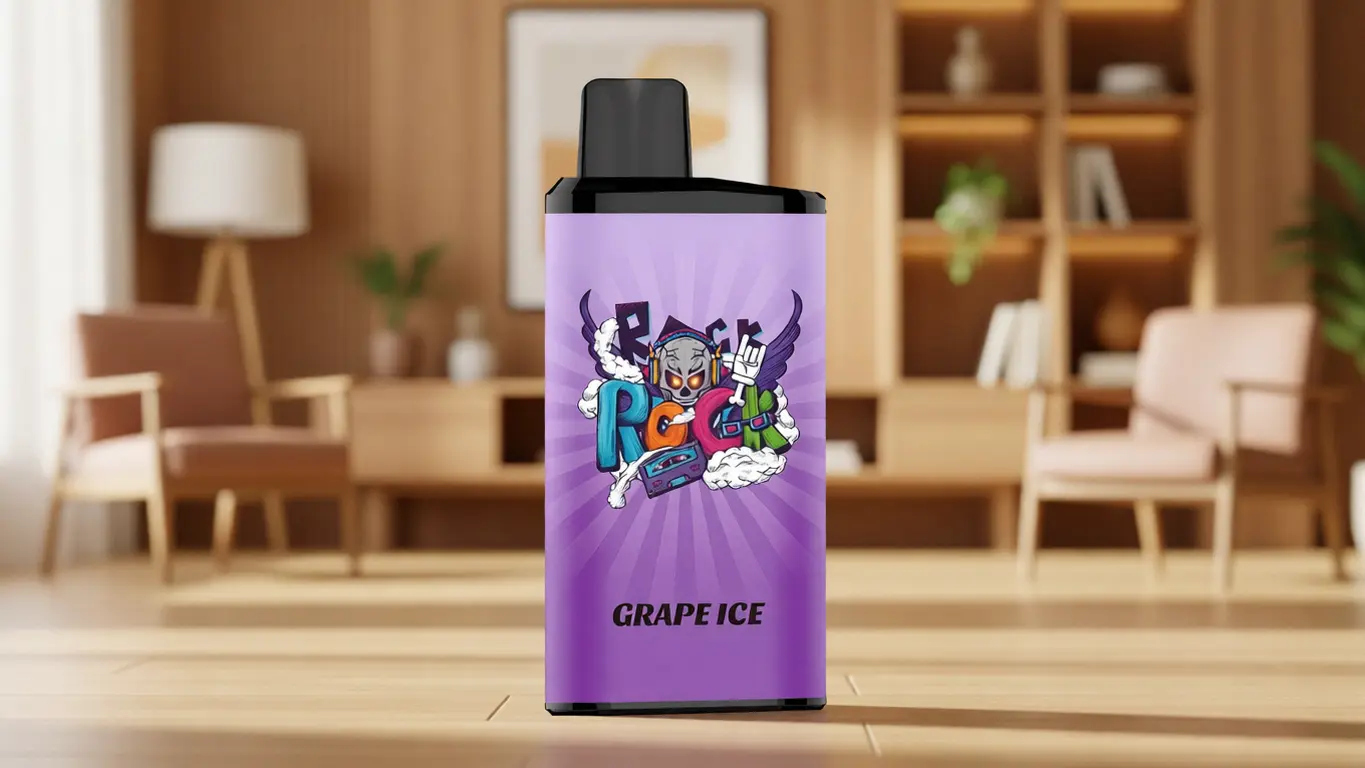
A user who wants a discreet device with minimal visible output and a defined throat sensation will be well‑served by a high‑PG liquid paired with a compact device that operates at moderate power — such as the ALIBARBAR INGOT 9000 or INGOT 15000 series, which are engineered for consistent performance across a range of liquid viscosities.
A user who prioritises large vapour production and a smooth, cool delivery should select a high‑VG liquid and ensure their device features adequate wicking capacity and airflow control.
At OZVAPE Shop, the product specifications for every device in the ALIBARBAR range include the recommended liquid viscosity range. This information is provided so that the user can make an informed pairing, not as a marketing feature. A device that matches the user’s liquid preference will perform predictably and reliably; a mismatch will introduce frustration regardless of the device’s build quality.
Frequently Asked Questions
Q: Can I use a high‑PG liquid in any device?
A: Generally, yes. The low viscosity of PG means it flows easily through most wicking materials. However, some devices with very large wicking channels designed for high‑VG liquids may experience flooding if used with very thin, high‑PG liquids. Check the device’s specification for recommended viscosity range.
Q: Does PG content affect the device’s lifespan?
A: Not directly. Device lifespan is primarily determined by the quality of the heating element, power management, and the user’s maintenance habits. However, a device that consistently runs dry because the liquid is too thick for its wicking system will experience accelerated degradation. PG’s lower viscosity actually reduces this risk in most cases.
Q: Is PG the same as polyethylene glycol (PEG)?
A: No. Despite the similar name, these are chemically distinct compounds. Polyethylene glycol is a polymer with a much higher molecular weight and different physical properties. It is not used in vapor device liquids.
Q: How do I know what PG/VG ratio is in a liquid I purchase?
A: Reputable manufacturers list the PG/VG ratio on the product label or specification sheet. If this information is absent, it is a reasonable indicator that the liquid is not manufactured to a documented standard.
Q: Will a high‑PG liquid produce less visible vapour?
A: Yes. PG produces a thinner, less opaque vapour compared to VG. This is an expected characteristic, not a sign of device malfunction.
Q: Can I mix high‑PG and high‑VG liquids to create my own blend?
A: Yes, provided both liquids are from the same or compatible bases. Mixing them will produce a blend with intermediate properties. Stir thoroughly and allow the mixture to settle before use.
Q: Does storage temperature affect PG liquids?
A: PG has a low freezing point (–59°C), so it remains liquid under normal storage conditions. Extreme heat may affect viscosity, but this is usually temporary and returns to normal once the liquid cools.
Q: What should I do if a high‑PG liquid causes persistent throat irritation?
A: Switch to a lower‑PG formulation (e.g., a 50/50 or high‑VG blend). If the irritation persists, consult a healthcare professional. Individual sensitivity is the most likely explanation.
Conclusion
Propylene glycol is not a mysterious additive. It is a well‑studied, widely used compound that serves a clear functional purpose in vapor device liquids. Understanding its properties — low viscosity, efficient flavour carry, pronounced throat sensation — allows a user to make deliberate choices about both liquid selection and device compatibility. The right knowledge transforms what looks like a technical footnote into a practical tool for achieving a consistent, satisfying experience.
OZVAPE Shop, as the Australian platform for the ALIBARBAR range, provides product specifications that include recommended liquid viscosity ranges. This is one element of a broader commitment to transparent information. When you understand what PG is and how it interacts with a device’s architecture, you are no longer guessing. You are evaluating systematically — and that is the basis of every good decision.