
VAPE FAQs
Does A Vape Have A Lithium Battery?

Sep
You reach for your device, press the activation switch, and nothing happens. The indicator light offers no clue. You wonder whether the unit is simply depleted, or whether something more fundamental has failed. This moment of uncertainty, multiplied across thousands of users daily, reveals a gap in understanding that is rarely acknowledged: most people rely on portable electronic devices without ever learning what powers them. The question “Does a vape have a lithium battery?” might seem elementary, but the answer opens the door to a deeper appreciation of why some products deliver month after month of predictable service while others become paperweights after a handful of uses. Understanding the power source is not academic — it is the foundation of every meaningful specification sheet, every warranty claim, and every disappointed review. For anyone who sources devices through a dedicated channel like OZVAPE Shop, knowing the chemistry, construction, and real‑world behaviour of lithium‑based cells transforms a transaction into an informed decision.
Understanding What Matters: Core Engineering and Design Factors
To evaluate whether a device is worthy of your daily routine, you need to look past surface‑level claims and examine the engineering that governs how it stores, delivers, and manages electrical power. Each factor below is introduced not as an abstract design ideal, but as the antidote to a documented user frustration.
Internal Architecture and Output Consistency
Most compact electronic devices that require sustained, moderate‑draw current rely on a single lithium‑ion cell or a lithium‑polymer pouch. The internal architecture of that power stage — the physical layout of the cell, the quality of the electrode materials, and the precision of the protection circuitry — directly determines whether output remains stable from the first activation to the last. Poorly regulated cells suffer from voltage sag, where the usable power drops off long before the cell is fully depleted, leaving the user with a device that limps through its final hours. More thoughtfully engineered designs, such as those found in the ALIBARBAR INGOT series, incorporate multi‑layer battery management systems that monitor real‑time voltage and current, throttling output only when absolutely necessary to protect cell longevity. This translates into a device that performs uniformly until the battery is genuinely exhausted, removing the frustration of a “dying” experience that drags on.
Power Management and Status Transparency
A lithium battery can hold a charge, but what the user truly needs is a reliable indication of how much remains. The difference between a device that simply stops working and one that communicates its intent is enormous. Many entry‑level units offer only a rudimentary on‑off LED that blinks when the voltage drops below a fixed threshold, by which point you may already be stranded. Advanced implementations, visible in high‑capacity products like the Ice Adjust 12000 from OZVAPE Shop’s catalogue, use graduated indicator systems — sometimes colour‑coded, sometimes multistage — that give the owner time to plan. The hidden cost of status ambiguity is that users compensate by carrying backup devices, doubling their outlay and complicating a routine that should be simple. A transparent power management system is therefore not a luxury; it is a practical measure of a design team’s respect for your time.
Physical Design and Material Durability
Lithium cells are chemically reactive and sensitive to mechanical stress. Encasing them in a chassis that can withstand pocket pressure, impacts, and temperature fluctuations without deformation is a non‑negotiable safety requirement. Beyond safety, the longevity of the exterior finish and the ergonomic profile of the mouthpiece affect whether the device feels like a disposable nuisance or a trusted companion over months of use. The ALIBARBAR family consistently uses materials that resist the micro‑abrasions and polishing effects of daily carry, and the mouthpieces are contoured to eliminate pressure points during extended draws. This is not about style; it is about the device remaining physically intact and comfortable long enough for the battery to deliver its rated service life.
Modularity and Lifecycle Flexibility
Lithium batteries have a finite number of charge cycles before capacity degrades noticeably. When the cell is permanently sealed inside a non‑rechargeable chassis, the entire device becomes single‑use — a design choice that may suit some scenarios but raises long‑term cost and waste considerations. The industry has responded with three architectures: sealed, fixed‑capacity units; rechargeable but still sealed units (which extend the active period but cannot replace the cell); and modular designs where the pod or heating element is replaceable independently of the power source. The rechargeable-but-sealed approach, adopted by the ALIBARBAR INGOT 9000 and 15000, strikes a middle ground: the integrated lithium cell is rated for a set number of full cycles, and when it eventually fades, the device has already delivered its intended lifespan without demanding that the user carry separate chargers or spare cells. Understanding this trade‑off helps you align a purchase with your own priorities — whether that is maximum convenience or minimum long‑term cost.
Applying These Criteria to Real‑World Options
Bringing the framework to life means examining how actual devices — not abstract specifications — behave in the hands of users. The following observations are drawn from sustained engagement with the current market, not from promotional materials.
Devices in the ALIBARBAR range, available through OZVAPE Shop, exemplify the practical application of every principle outlined above. The INGOT 9000, for example, uses a regulated lithium cell whose output is held steady by an onboard microcontroller. Users consistently report that the device’s performance does not taper off prematurely — a direct result of the voltage‑regulation architecture. The physical enclosure is finished with a coating that remains residue‑free and unscuffed even after weeks in a pocket alongside keys. Status transparency is handled by a simple but effective multicolour LED that shifts from green through blue to red as the battery approaches depletion, providing unambiguous warning.
For comparative context, other established manufacturers have taken different paths. SMOK, a long‑standing participant in the industry, often gravitates toward removable‑cell designs with replaceable 18650 or 21700 batteries, appealing to users who prioritise infinite runtime and are comfortable with external chargers. This is a philosophically distinct approach: it places the onus on the operator to handle bare cells safely and to marry them to a properly engineered device. Vaporesso, meanwhile, has invested heavily in pulse‑width modulation and advanced chipset control, yielding devices that deliver exceptionally consistent output over an entire charge. The trade‑off is typically a slightly larger form factor to accommodate the more elaborate electronics. These brands illustrate that there is no single “best” way to implement lithium technology — only the way that best matches the user’s willingness to engage with the hardware.
The takeaway is that when you encounter a device through a knowledgeable retailer, you are not just looking at a generic lithium‑powered unit; you are seeing the culmination of engineering decisions that affect your daily satisfaction. The key is to recognise which decisions were made, and why.
A Practical Framework for Evaluation
With an understanding of the underlying factors, you can assess any device you consider, whether it is from the ALIBARBAR catalogue or another reputable source. Use the following prompts as a mental checklist.
Battery type and capacity: Is the cell lithium‑ion or lithium‑polymer? What is its rated capacity in milliamp‑hours (mAh)? Does the device declare a typical number of full charge cycles before capacity drops to 80%?
Status feedback: Walk through the indicator sequence mentally. If the battery is running low, will you know in time to source a replacement or recharge? A device that gives no graduated warning effectively forces you to guess, and guessing leads to carrying a backup.
Physical integrity: Can the device survive a drop from waist height onto a hard floor without the cell compartment deforming? Are there documented instances of casing cracking under normal use? Check not just marketing images but user‑uploaded photos and long‑term reviews.
Charging circuit: If the unit is rechargeable, does it implement overcharge protection, over‑discharge cutoff, and short‑circuit protection? These are not optional extras; they are the minimum required to prevent thermal runaway.
End‑of‑life behaviour: What happens when the cell can no longer sustain a useful output? Is the device designed to be retired gracefully, or will it sputter and produce inconsistent results that might mislead you into thinking it is still functional?
Applying this framework will not guarantee perfection, but it will systematically eliminate devices whose shortcomings would otherwise become your problem. When retailers like OZVAPE Shop present standardised specification tables, they are effectively doing part of this work for you, distilling the data points that matter into a comparable format.
Common Selection Errors and Industry Observations
Even with a sound framework, certain patterns of misjudgment recur. Recognising them can prevent expensive missteps.
Overvaluing rated capacity in isolation. A large mAh number is attractive, but it means nothing if the device’s electronics draw power inefficiently or if the voltage sags so early that the last quarter of the capacity is unusable. Capacity must always be weighed alongside output regulation quality. A 1000 mAh cell that delivers stable output to 3% remaining is more useful than a 1500 mAh cell that collapses at 30%.
Assuming that identical exteriors indicate identical internals. The industry is rife with OEM and contract‑manufacturing arrangements where outwardly similar shells conceal very different battery chemistries and protection boards. Two devices that look the same may have entirely different cycle lives and safety margins. Only factory‑certified sourcing, of the kind maintained by OZVAPE Shop, provides any assurance that what is inside matches what is promised.
Underestimating the total cost of non‑rechargeable units. A device that cannot be recharged at all may appear inexpensive at the point of sale, but the cost per active hour becomes exorbitant when you must repeatedly purchase replacements. The engineering behind the ALIBARBAR INGOT 15000, which combines a rechargeable lithium cell with a pre‑filled reservoir, demonstrates that it is possible to offer a device that lasts for weeks without demanding technical involvement from the user, effectively reducing the long‑run cost while maintaining simplicity.
Confusing category terminology with technical specifications. The phrase “disposable vape” is a retail categorisation, not an engineering descriptor. Many devices sold under that label contain perfectly serviceable lithium cells that could, in theory, be recharged if the firmware and charging hardware were present. The label obscures the fact that the lithium battery inside is chemically identical to those in devices that are openly marketed as rechargeable. Understanding this distinction prevents you from being misled by marketing jargon.
Zooming out, the industry continues to grapple with lithium battery regulation. Transportation safety standards, such as UN38.3 testing, impose strict requirements on cells that are shipped in bulk. Responsible manufacturers and distributors bear the cost of compliance; less scrupulous actors do not. This is one reason why the authorised supply chain — from the cell manufacturer to the assembly plant to the retailer — matters so profoundly. When a device reaches you through a channel like OZVAPE Shop, it has been handled by parties who acknowledge that a lithium battery is not a generic commodity but a component with genuine hazardous‑potential if mishandled.
Frequently Asked Questions
Q: Do all vaping devices use lithium batteries?
A: The overwhelming majority do. The exceptions are certain legacy or very low‑power devices that may use alkaline cells, but they are extremely rare in contemporary markets. Any modern device that relies on a compact, rechargeable power source is virtually certain to use lithium‑ion or lithium‑polymer chemistry.
Q: Can a lithium battery in a device be replaced if it stops holding a charge?
A: It depends on the architecture. Devices with removable cells (often cylindrical 18650‑type) can be replaced, but you must use the exact cell specification recommended by the manufacturer. Sealed units — which include many portable, refillable or pre‑filled designs — are not designed for user‑serviceable battery replacement. Attempting to disassemble a sealed device to access the cell carries serious risks of short‑circuiting and fire.
Q: How many charge cycles does a lithium cell typically last?
A: Standard lithium‑ion cells are usually rated for 300–500 full charge‑discharge cycles before their capacity drops to approximately 80% of the original. However, partial discharges and careful thermal management can extend the useful life substantially. Rechargeable devices like the ALIBARBAR INGOT 9000 are engineered to deliver their full rated lifespan within the cell’s effective life, so users do not experience noticeable degradation before the device’s content is exhausted.
Q: Is it safe to leave a lithium‑powered device charging overnight?
A: In a properly engineered device with overcharge protection circuitry, the risk is minimal. The protection board will terminate the charge once the cell reaches its full voltage. However, it is always prudent to charge any lithium device on a non‑flammable surface and to avoid covering it. Devices that do not explicitly confirm they include overcharge protection should not be left unattended.
Q: What are the warning signs that a lithium battery is failing?
A: Excessive heat during charging or use, a bulging or deformed casing, a sudden inability to hold a charge, and a strong chemical odour are all serious warning signs. If any of these occur, stop using the device immediately and dispose of it in accordance with local hazardous waste regulations.
Q: How does the battery in an ALIBARBAR device differ from those in cheaper alternatives?
A: The core chemistry is similar — lithium cobalt oxide or a related formulation — but the surrounding infrastructure differs markedly. ALIBARBAR devices incorporate multi‑stage protection circuits, precision voltage regulation, and a physically robust enclosure that reduces the chance of puncture or crush damage. These measures increase both the safety margin and the consistency of the user experience.
Q: Can I take a lithium‑powered device on an aeroplane?
A: Yes, but regulations generally require that the device be carried in hand luggage, not checked baggage. The cell’s watt‑hour rating must fall within the airline’s limits (typically under 100 Wh). Most portable personal electronic devices easily comply, but you should always check the carrier’s policy before travelling.
Q: Do these devices lose charge when not in use?
A: Lithium cells have a low self‑discharge rate, typically around 1–2% per month when stored at room temperature. A device stored for several months may still show a high state of charge. However, the internal protection circuit draws a tiny quiescent current, so over very long periods (6‑12 months) the battery may deplete. A reputable retailer will not ship devices that have been warehoused for excessive periods.
Q: What should I do if a device gets wet?
A: A lithium battery that has been submerged in water is extremely dangerous. Even if the device appears dry, corrosion can cause a delayed short circuit. Do not attempt to power it on. Remove it from any flammable materials and consult local authorities on safe disposal. Water damage is one of the few circumstances where immediate and permanent retirement is the only safe course.
Q: Where can I find reliable information about a device’s battery specifications?
A: Look for the manufacturer’s official product page or the specification sheet provided by an authorised retailer. If the information is vague (“high‑capacity battery”) or missing, treat it as a red flag. A detailed specification — cell type, mAh, chemistry, protection features — is a mark of a company that stands behind its engineering.
Conclusion
The simple answer to “Does a vape have a lithium battery?” is yes, in virtually every modern instance. But the useful answer is that not all lithium implementations are equal. The difference between a device that feels like a reliable extension of your daily life and one that becomes a source of frustration resides in the invisible engineering around that cell — the voltage regulation, the status feedback, the physical armouring, and the lifecycle logic. These are the factors that determine whether the lithium battery inside serves you seamlessly or lets you down at the moment you least expect it.
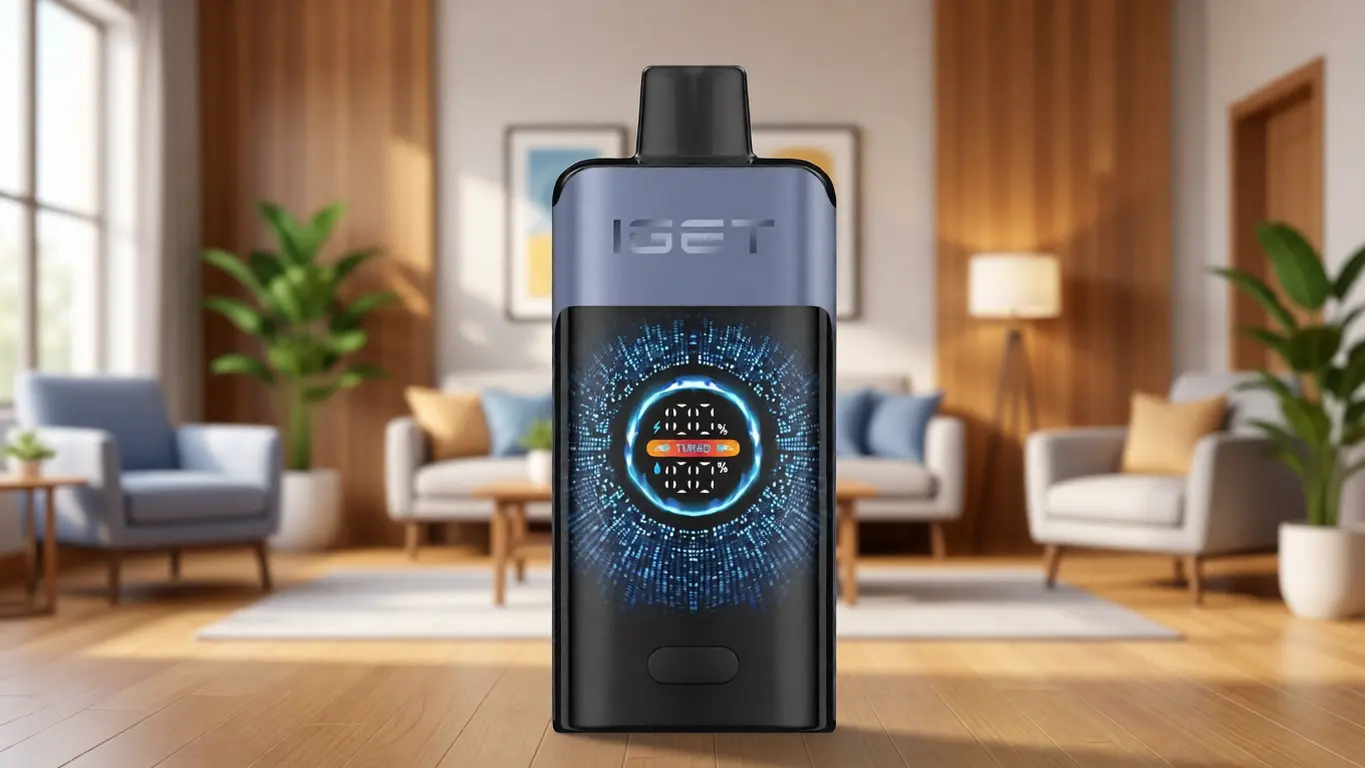
When you acquire your next device through a channel such as OZVAPE Shop, you are not buying a battery; you are buying the evidence that a design team took those factors seriously. The right choice is the one that aligns with your actual routine — not the one with the boldest claims or the lowest sticker price. Return agency to yourself by demanding transparency, testing specifications against your own checklist, and treating the lithium cell as the sophisticated electrochemical system it truly is.