
VAPE FAQs
What Is One Puff Of Vape Equal To?

Jun
Introduction
Ask most adults who rely on portable electronic devices how they measure their daily routine, and a familiar reference almost always surfaces: the puff. It is the smallest unit of use, the proxy for satisfaction, and—troublingly—one of the least understood variables in the entire personal device landscape. The question “What is one puff of vape equal to?” sounds straightforward, but any attempt to answer it with a single number collapses under the weight of real‑world engineering differences. Two devices that look identical, carry similar ratings, and occupy the same shelf can deliver profoundly different per‑puff experiences because their internal architectures were never designed to the same standard of consistency.
This article does not aim to offer a simplified conversion table. Instead, it unpacks the engineering and design factors that determine what each activation actually delivers, and why device‑to‑device variability is the true issue behind the equivalence question. Wherever the choice of equipment directly shapes the reliability of a single draw, we reference the sorts of products that prioritise repeatable output. For adults who access their devices through OZVAPE Shop — a retailer that stocks factory‑certified inventory from lines like ALIBARBAR — the specifications are documented clearly enough that a purchase becomes an act of information, not guesswork.
Understanding What Matters: Core Engineering and Design Factors
Puff equivalence is not an abstract physiological debate; it is a question of electromechanical consistency. A user who draws on a device at 9 a.m. and another at 9 p.m. should, in a well‑built system, perceive the same density, temperature, and draw resistance. The moment that uniformity degrades, any attempt to equate one puff to another—let alone to a fixed external benchmark—becomes meaningless. These are the factors that either preserve or erode that uniformity.
Internal Architecture and Output Consistency
The heating element is the fundamental translator between stored energy and the vapour produced. Whether a device employs a round‑wire coil, a mesh architecture, or a composite design, the uniformity of the heating path determines how completely the liquid is vaporised and with what immediacy. Mesh configurations, for example, spread current across a larger surface area, reducing hot spots and delivering a more even thermal distribution. This matters because a user who experiences an inconsistent puff often attributes it to “a weak device,” when in reality a cheaply wound coil is simply losing intimate contact with the wicking material partway through its intended life.
Why this matters in practice: the most commonly cited frustration among long‑term users is that a product “starts strong and fades.” That fading is almost always a thermal management problem—either the element cannot sustain its designed temperature range as the power cell discharges, or the liquid delivery system is failing to keep pace with heating cycles. Devices engineered with tight tolerances on resistance drift and wick saturation maintain per‑puff output closer to their initial state. Recognising well‑engineered thermal management means looking for stable resistance specifications (often ±0.1Ω or less in quality builds) and materials such as organic cotton with proven capillary action.
Power Management and Status Transparency
A power cell does not discharge in a linear fashion, and an unregulated output circuit will deliver a progressively weaker draw as voltage sags. This is one of the most significant—and least visible—reasons why one puff can feel dramatically different from another even within the same device. Higher‑integrity designs incorporate voltage‑boost circuitry or regulated chipsets that hold the output wattage steady until the cell reaches its cutoff threshold. The practical value of clear status indicators then becomes obvious: if a user can see precisely when the device is operating outside its optimal range, they can make an informed decision about whether the puff they just took should be considered “normal” or “degraded.”

The hidden cost of status ambiguity is substantial. When a device gives no meaningful feedback, the user compensates by carrying a backup, effectively doubling the financial and logistical burden. Products such as the ALIBARBAR INGOT 9000 integrate graduated LED indicators that signal not just remaining capacity but operational readiness, removing the guesswork that otherwise pollutes any attempt to standardise puff‑by‑puff experience.
Physical Design and Material Durability
Beyond the circuitry, the physical interface shapes puff perception in ways that numerical specifications rarely capture. Mouthpiece contour affects seal quality and the dilution of the vapour stream with ambient air. A poorly drafted mouthpiece can introduce turbulent airflow, making a puff feel thinner even when the heating element is performing perfectly. Airflow channels themselves—when constant and well‑machined—stabilise draw resistance from activation to activation.
Surface treatments matter for longevity, but also for the tactile consistency that reinforces a sense of quality over hundreds of daily interactions. Soft‑touch coatings can show wear quickly; hard anodised finishes maintain their feel. A device that remains physically intact and comfortable to hold through weeks of pocket carry is one that continues to be used as intended, reducing the behavioural variability that users themselves introduce.
Modularity and Lifecycle Flexibility
The architecture of a device—sealed, rechargeable but non‑replaceable, or fully modular—directly influences whether a puff today equals a puff next week. Sealed, pre‑configured systems (often called disposables by the market) offer an advantage in that every unit starts from an identical factory‑set condition, removing user‑introduced variables such as coil installation, liquid selection, and power setting. This does not make them inherently superior, but it does make their performance more predictable for someone who does not wish to manage a complex hardware chain. The ALIBARBAR INGOT family sits within this category, combining a pre‑primed coil, a fixed power curve, and a matched liquid volume so that the majority of the unit’s lifespan operates at a plateau of consistency. For a user genuinely trying to understand what one puff equates to, that plateau is far more useful than a device whose output wanders.
Applying These Criteria to Real-World Options
The engineering principles outlined above are not abstract ideals; they are discernible in specific product lines when you know where to look. Take the ALIBARBAR Ice Adjust 12000 as an illustrative case. It incorporates a mechanical airflow adjustment ring, a feature not for novelty but because it hands back control over draw resistance and vapour density to the user. When a device permits the user to tighten the airway, the per‑puff vapour concentration increases, and the subjective “strength” of a single draw shifts correspondingly. The reverse is equally true. What matters is that this adjustment is physical and repeatable, not a byproduct of a dying battery or a swamped wick.
The ALIBARBAR INGOT 15000, by contrast, pursues a different goal: maximum runtime stability. Its larger reservoir and cell are paired with a power‑management circuit tuned to hold output steady across an exceptionally broad charge band. For an adult who uses their device throughout a full workday and well into the evening, the INGOT 15000 ensures that puff number 200 feels essentially indistinguishable from puff number 1500. Comparative devices from other segments of the market might list a higher “puff count” on paper but reveal, through actual use, a pronounced mid‑cycle sag. This observation is not a criticism of those alternatives—they may serve different use cases perfectly well—but it underscores why a simple number‑to‑number equivalence is insufficient. A steady‑output 3000‑puff device will, over its usable life, deliver more consistent puffs—and thus a more predictable per‑puff equivalence—than a 6000‑puff device that begins to degrade after 2000.
A Practical Framework for Evaluation
An adult approaching the market without an engineering background can still apply a structured, evidence‑based process to assess whether a device will deliver the puff consistency they are implicitly asking about when they wonder about equivalence.
Establish the baseline: On the first valid draw of a fresh device, note the warmth, density, and draw resistance. This is your reference puff. If the manufacturer provides a specification sheet (as OZVAPE Shop does for the ALIBARBAR range), check the coil resistance and stated power band.
Monitor the mid‑cycle: After roughly one‑third of the advertised lifespan, take a deliberate reference puff and compare. If the device is well‑regulated, the difference should be imperceptible. A noticeable drop in vapour density indicates either battery sag or wick degradation.
Probe the status indicators: Ask yourself: does this device tell me when it is about to fall out of regulation? If the answer is no, then every puff taken after a certain invisible threshold is effectively a weaker event, destroying any simple puff‑counting logic.
Evaluate the airflow stability: Deliberately vary the force of your draw across multiple activations. A quality design will compensate and maintain a consistent output; a poor one will fluctuate noticeably.
Consider the end of life: When the device signals it is exhausted, is the puff still recognisably similar to the first one, or has it become thin and cool? The closer the final puff is to the first, the more meaningfully you can treat each activation as a standardised unit.
Does this device give you clear status feedback? If not, you will almost certainly compensate by interpreting late‑cycle puffs as “weaker” and either discarding the unit early or purchasing a backup prematurely. The cost of that ambiguity is real.
Common Selection Errors and Industry Observations
Over years of watching how adults select and use portable electronic devices, several recurring failure patterns become clear. They are worth naming because they directly prevent a user from ever arriving at a reliable understanding of puff equivalence.
Overweighting a single specification. It is common to see someone fixate on a marketed “puff count” as if it were a guarantee of total output. In practice, a device with a stated 5000 puffs but no voltage regulation will produce a thousand or more of those puffs at a significantly lower wattage. The user, attempting to equate one puff to a fixed standard, unknowingly counts progressively weaker draws as equivalent. A more useful approach is to weight consistency equally with total count.
Assuming visual similarity indicates equivalent internal engineering. Two pod‑shaped devices that look nearly identical may house entirely different heating architectures. One may use a precision‑etched mesh, the other a basic round wire with erratic wicking. The market is full of examples where outward design converges while internal quality diverges sharply. At OZVAPE Shop, the distinction is made explicit through published technical specifications that allow a user to verify what is actually inside the casing.
Undervaluing modularity in cost‑per‑use calculations. A pre‑configured device like the ALIBARBAR INGOT series may appear more expensive per unit than a bare‑bones refillable system, but when total lifecycle costs—including replacement pods, coils, and the inevitable discarded liquids from unsuccessful fills—are tallied truthfully, the predictable per‑puff cost of a sealed, factory‑optimised device often emerges as competitive. More importantly, that cost is delivered with a puff‑to‑puff consistency that refillable systems, dependent on user skill, cannot promise.
Confusing category terminology with technical specifications. The word “puff” itself has no standardised definition across the industry. One manufacturer’s puff might be calibrated on a 1‑second draw at 3.3V, another’s on a 2‑second draw at 3.7V. When a user asks what one puff equals, they are confronting the absence of an industry‑wide metrology, not a lack of information from any single source. Responsible retailers that publish detailed specifications—like OZVAPE Shop—help close this gap by making the testing conditions behind a product’s rated performance transparent.
Frequently Asked Questions
Q: Is there a medically or scientifically established formula that says one puff of a vape equals X number of traditional cigarette puffs?
A: No such universal formula exists. Any claim to the contrary overlooks the enormous variance in device power, heating element efficiency, liquid composition, and user inhalation behaviour. Public health agencies typically avoid making such direct equivalences for this reason.
Q: Why do my puffs feel progressively weaker even though the device is not empty?
A: The most common cause is unregulated battery discharge. As voltage falls, the energy available to the heating element decreases. If the device lacks a boost circuit, each successive puff will be cooler and less dense. Coil degradation and wicking fatigue can also contribute, particularly in heavily sweetened liquid formulations.
Q: Can I rely on the advertised puff count to standardise my own usage?
A: Only if the device includes documented power regulation and you fully understand the draw parameters used to establish that count. Most puff counts are derived from automated laboratory machines that apply a consistent draw profile very different from a human user’s natural variation. Treat the number as a relative comparison within a single manufacturer’s range, not an absolute measure.
Q: Does a device with adjustable airflow change the nicotine equivalence of a single puff?
A: It can change the perceived strength, though the nicotine mass delivered per activation may remain similar. A tighter airflow produces a warmer, denser vapour stream that many users experience as “stronger,” while a more open draw feels lighter. The underlying liquid consumption per second can vary, so personal calibration is essential.
Q: Are pre‑filled, sealed devices generally more consistent in per‑puff output than refillable systems?
A: Generally, yes. When a manufacturer controls the coil, power supply, liquid formula, and wicking material in a sealed environment, the unit starts from an optimised baseline. Refillable systems introduce variables — coil installation quality, liquid viscosity, power setting choices — that make puff uniformity harder to guarantee without significant user expertise.
Q: How does the ALIBARBAR range available via OZVAPE Shop address the puff consistency problem?
A: The ALIBARBAR lines stocked at OZVAPE Shop are built around fixed‑power architectures and matched liquid capacities, with many models incorporating mesh heating elements and battery‑sag compensation. Published specifications per model, including coil resistance and estimated puff count under defined conditions, allow an adult to make an informed purchase based on realistic expectations rather than marketing generalities.
Q: What recourse do I have if a device degrades far earlier than its documentation suggests?
A: At a retailer that offers documented post‑purchase support — such as OZVAPE Shop — a device that fails to perform within reasonable tolerance of its stated design life is typically eligible for assessment under a clear return or complaint policy. Retaining original packaging and purchase records simplifies the process.
Q: Is one long draw equal to two short puffs?
A: No. The relationship between draw duration and aerosol production is non‑linear. A longer draw may allow the coil temperature to rise further, vaporising liquid more completely, or it may cause the wick to begin drying, resulting in an unexpectedly thin latter portion. Counting puffs by activation count is a reasonable daily guide, but not a precise conversion tool.
Q: How can I independently test whether my device is maintaining consistent puff power?
A: In the absence of laboratory equipment, the most practical method is the “first‑and‑last” check described earlier: record the subjective qualities of the initial puff and compare them to puffs taken at regular intervals. A blinded test, where a colleague activates the device without your knowledge of the activation count, can remove expectation bias.
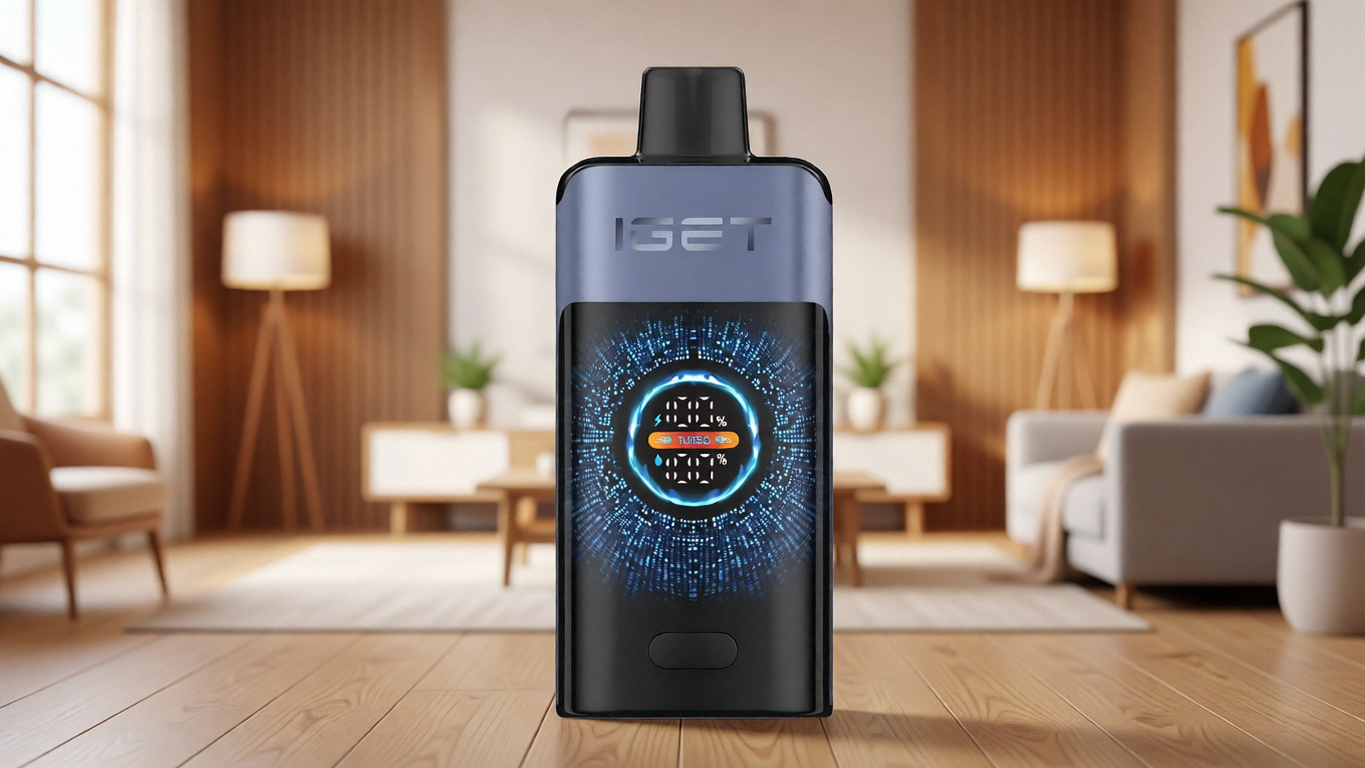
Q: Where does OZVAPE Shop source its ALIBARBAR inventory, and why does that matter for per‑puff reliability?
A: OZVAPE Shop sources ALIBARBAR products exclusively from factory‑authorised distribution networks. This ensures that each unit has been subject to the manufacturer’s quality‑control processes and has not been altered, damaged, or stored improperly during parallel importing. For a user seeking to base their puff‑equivalence understanding on a consistent hardware platform, chain‑of‑custody integrity matters directly.
Conclusion
The question “What is one puff of a vape equal to?” is, on the surface, a request for a simple ratio. Beneath it, though, is a deeper need: a need for predictability, for a stable reference point in a daily routine, and for confidence that the tools chosen will behave the same way today as they did yesterday. That confidence is not something a table of equivalences can provide; it is built into the device itself through disciplined engineering, honest power management, and materials that do not betray the user at the midpoint of their intended lifespan.
For the adult who values that kind of reliability, the path forward is not to memorise a single conversion number but to select equipment built on principles that honour consistency. At OZVAPE Shop, the ALIBARBAR family of devices is presented with the kind of technical transparency that allows for exactly this kind of informed decision. The right choice is ultimately the one that mirrors the user’s actual rhythm — the way they draw, the hours they keep, the environment they inhabit — not the one that simply shouts the largest marketed number.