
VAPE FAQs
What Is One Puff Of A Vape Equal To?
Jun
Understanding the actual output of a personal electronic device is rarely as simple as reading a single number on a label. Many users arrive at the question “What is one puff equal to?” because they are trying to manage their daily usage, compare one device to another, or simply make sense of an experience that seems to vary from one draw to the next. The blunt answer is that a puff is not a fixed unit of measure. What you inhale depends on a chain of engineering decisions that begin with the heating element and end with the way you draw on the mouthpiece. Treating every puff as interchangeable ignores the underlying physics, and that leads to poor comparisons, unexpected results, and wasted money.
This article explains why the question itself needs reframing. It outlines the device‑side variables that determine what a single puff delivers, and it gives you a practical framework for identifying equipment that makes your own puffs repeatable and predictable. For those who prefer to begin their search with tools that publish standardised performance data, platforms like OZVAPE Shop (opens in a new window) eliminate much of the guesswork by listing clearly documented specifications for every device they carry.
Understanding What Matters: The Variables That Define a Single Puff
A single puff is a snapshot of a dynamic system. To know what it equals, you must first understand the components that shape it: thermal stability, electrical regulation, airflow characteristics, and the degree of modularity that controls how the device ages. Each of these factors can cause two devices with the same claimed “puff count” to deliver profoundly different experiences.
Heating Element Architecture and Output Stability
At the heart of every device is a resistive coil that converts battery current into heat. The way that coil is designed—its shape, material, and how it interfaces with the liquid medium—determines whether the hundredth puff feels like the first.
Poorly engineered heating elements tend to develop hotspots or saturate unevenly, leading to a gradual drop in vapor density and a change in flavour profile. Users who report that a device “fell off” after a few days are usually describing thermal degradation or wicking failure. In contrast, a well‑designed mesh‑style element with a generous contact area and consistent capillary action maintains a stable temperature across the entire surface. This translates to a puff that contains roughly the same mass of aerosol from the first activation to the last.
Why this matters: If your goal is to quantify what you are taking in—whether for personal tracking or to match a familiar sensation—a device with poor thermal consistency will make that impossible. You cannot benchmark irregular output against a known standard.
Power Delivery and the Role of Battery Regulation
Not all batteries deliver their stored energy in the same way. Simpler devices often lack a regulated output chip, meaning the voltage applied to the coil sags as the cell depletes. A puff taken at full charge may involve significantly more power than a puff taken at 30% capacity. The user perceives this as a device that “hits weaker” over time, even though nothing about the liquid or the coil has changed.
Regulated devices with constant‑output circuitry hold the power steady until the battery reaches a critical cut‑off point. This is not a luxury reserved for high‑end units; it is an engineering choice that directly affects how consistently a puff can be reproduced. When a device is fitted with a reliable power management system and clear battery indication, the user gains the ability to operate within a known performance envelope. Without that, every puff is a blind estimate.
The hidden cost of status ambiguity: When a device gives you no reliable way to gauge remaining charge, you naturally compensate by carrying a backup. That is an implicit tax on an incomplete design.
Airflow Dynamics and Perceived Intensity
The volume and speed of incoming air shape more than just the cooling effect. Airflow determines the vapour‑to‑air ratio, which in turn affects throat sensation and the total mass delivered per draw. A device with a tight, mouth‑to‑lung draw concentrates the aerosol, making a short puff feel substantial. One with an open, direct‑lung airflow may produce a cooler, larger cloud but a lower per‑millilitre density. Comparing raw puff counts between devices with fundamentally different airflow geometries is like comparing the fuel economy of a motorcycle and a truck based on tank size alone—misleading.
The ergonomics of the mouthpiece also play a role. A contour that seals comfortably against the lips reduces air leakage and produces a more consistent draw effort over repeated sessions. Users who switch between devices often notice that their own draw duration varies unconsciously, which adds another variable to any attempt at standardising “one puff.”
Modularity and Lifecycle Flexibility
The question “what is one puff equal to?” becomes even harder to answer when devices with sealed, non‑rechargeable architectures are compared against modular systems that allow the user to replace pods or reservoirs. A sealed unit has a finite life; its puff‑to‑puff consistency may be excellent for the first 80% of its rated capacity, but it will eventually be discarded. A modular system—one where the power source can be recharged and the liquid cartridge swapped—shifts the consistency equation to the longevity of the heating element and the precision of the connection between components.
For users who measure their consumption over months, modularity matters because it prevents the slow drift that occurs when a fixed‑cell voltage drops below its optimal range toward the end of its discharge cycle. Devices designed with replaceable pods and separate batteries let you maintain the “fresh‑device” experience well beyond the timeframe of a single‑use unit. This does not mean modular devices are always superior; it means the framework for evaluating a puff must include whether that puff came from a system operating within its designed performance window or one being pushed past it.
Applying These Criteria: How Real Devices Give Meaning to a Puff
Knowing that a puff is not a standardised unit is one thing; finding devices that acknowledge this reality is another. The market has responded to the demand for predictability with a range of architectures that document their output more transparently.
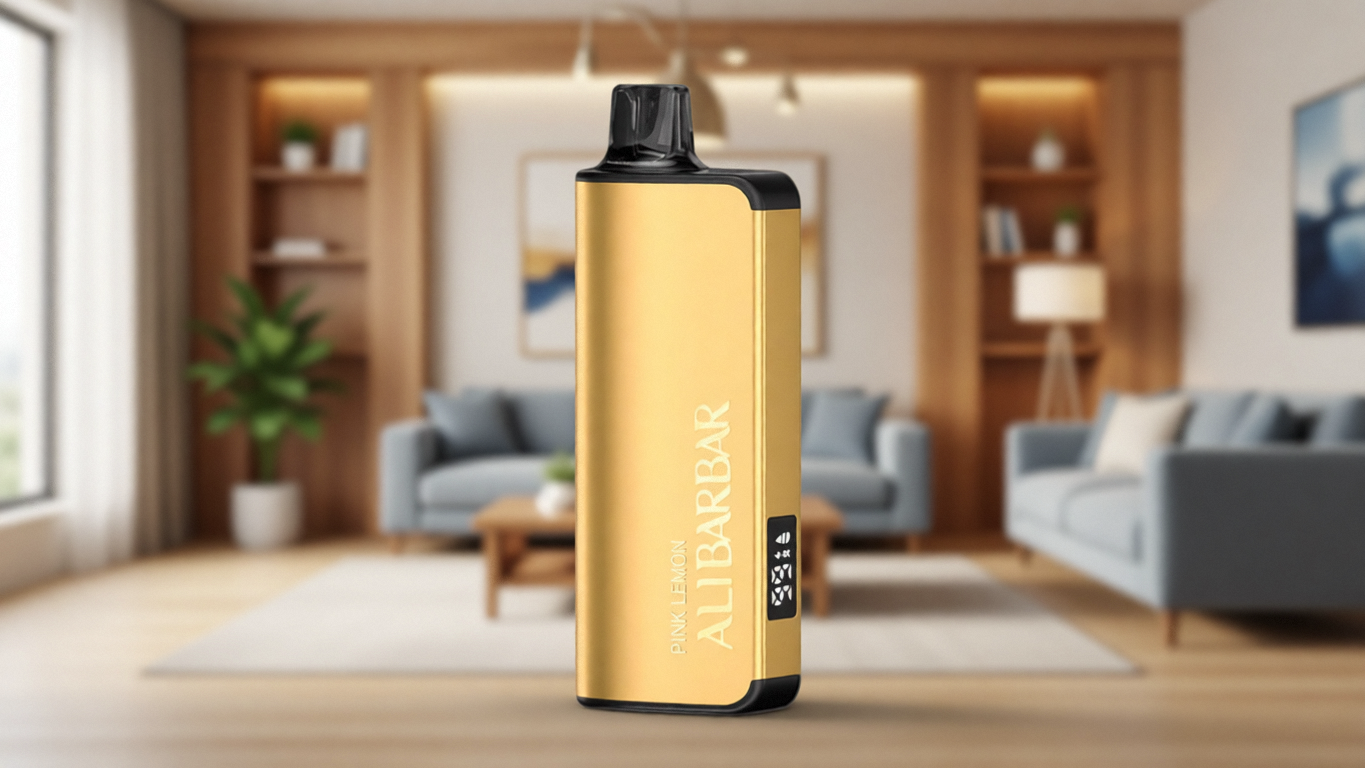
Take, for instance, the ALIBARBAR INGOT series, which has become a reference point for users who value output stability. The INGOT 9000 and INGOT 15000 incorporate constant‑voltage regulation that holds the coil’s power steady until the battery is nearly exhausted. Their mesh‑coil design further supports puff‑to‑puff uniformity by maintaining a large, evenly heated surface. When a manufacturer states a puff count of 9,000 or 15,000, those numbers are not guarantees in a vacuum; they are projections derived from a specific coil resistance, a known liquid capacity, and a regulated power curve. A user who operates such a device will find that each puff feels remarkably similar to the last, making it practical to say that “one puff” is, for their purposes, a repeatable unit.
Other ecosystem participants approach the problem differently. Some opt for devices with variable airflow rings that let the user tune the draw, effectively setting a personal standard for what each puff will feel like. Still others rely on large‑capacity reservoirs and low‑resistance coils to produce consistently dense aerosol at the expense of battery longevity, demanding a top‑up before the day is over. None of these approaches is inherently better; each maps to a different set of priorities. A heavy user who values intensity above all else might accept a shorter battery cycle. A person who wants to forget about the device for days will gravitate toward high‑capacity, regulated units where the puff definition remains stable across a longer run.
The key is recognising that visual similarity tells you nothing about internal architecture. Two pen‑shaped devices may look almost identical, yet one might sag badly after 30 minutes while the other holds its output flat. Comparing specifications—not just puff count, but also coil type, battery capacity, and whether constant‑output regulation is claimed—is the only way to turn a vague promise into a workable expectation.
A Practical Framework for Evaluating Puff Consistency
You do not need laboratory equipment to assess whether a device will give you a repeatable puff. A few structured questions, applied before purchase and during use, will filter out most sources of disappointment.
Check the regulation claim. Does the manufacturer state that the device maintains a constant output? Look for terms like “regulated output,” “constant voltage,” or “smart power management.” If there is no such claim, assume the puff will weaken as the battery drains.
Examine the coil specification. Mesh coils generally provide more uniform heating than traditional wire coils. If the resistance and material are documented, you can cross‑reference them against user reports of longevity.
Look for meaningful status feedback. A battery indicator that shows more than a single blinking light gives you information to plan your usage. Does the device communicate when it is operating within its optimal range? If not, you are operating blind.
Assess modularity relative to your habits. If you intend to use the device heavily, a replaceable‑pod system or a rechargeable unit with a separate reservoir will sustain its “fresh” performance longer than a sealed unit. Ask yourself whether the device is designed for the whole of its capacity or only the first half.
Standardise your own draw. When comparing two devices, consciously try to draw for the same duration and with the same force. Over several sessions, note any drift in sensation. A device that maintains its character after 200 puffs is likely well‑engineered.
If a device gives you no status feedback, you will inevitably carry a backup. If the vapour density drops noticeably once the battery indicator hits 50%, its regulation is insufficient. Use these simple diagnostics to separate equipment that you can quantify from equipment that will keep you guessing.
Common Selection Errors and Industry Observations
Even well‑informed users regularly undermine their own satisfaction by falling into predictable traps. These errors stem not from a lack of information but from the way incomplete data gets overinterpreted.
1. Overweighting puff count while ignoring per‑puff output. A device rated at 15,000 puffs with a weak, wispy output may deliver less total aerosol mass than a 5,000‑puff device set to a higher power level. The number alone is meaningless unless you know what each puff consists of. Users who chase the largest printed figure on the box often end up with a device that feels anemic.
2. Assuming cosmetic similarity equals internal parity. The supply chain is saturated with generic shells that house radically different internals. Two devices in near‑identical casings can differ in coil material, regulation circuitry, and battery quality. Judging by appearance alone is the fastest route to an inconsistent experience.
3. Undervaluing modularity when calculating cost‑per‑use. A sealed device that costs less upfront may deliver, say, 1,500 usable puffs before a noticeable drop‑off, while a slightly more expensive rechargeable pod system provides 5,000 consistent puffs over multiple pod swaps. The cost per puff, measured against consistent output, often favours modularity, yet many purchasers fixate on the sticker price.
4. Confusing category terminology with technical specification. Terms like “disposable,” “rechargeable,” or “refillable” are not standardised. Some “rechargeable” devices cannot be refilled; some “disposables” can be recharged. Reading the actual operating principle—sealed battery and reservoir, rechargeable with replaceable cartridge, etc.—is more instructive than relying on the label.
From an industry viewpoint, the challenge lies in the lack of a universal testing standard. Manufacturers measure puff counts using automated rigs with fixed draw durations and flow rates that may not reflect real human behaviour. Two companies might test at different power levels or cut‑off criteria, making direct comparisons unreliable. This is not a sign of bad faith so much as the absence of an agreed protocol. Until such a standard emerges, the burden of evaluation falls squarely on the user—which is why platforms that publish detailed, standardised specifications, such as OZVAPE Shop, become valuable reference points. They do not solve the industry‑wide problem, but they reduce the information asymmetry that fuels most buyer’s remorse.
Frequently Asked Questions
Q: How much nicotine is in one puff from a typical device?
A: It varies enormously. A low‑output pod system might deliver 0.02–0.05 mg of nicotine per puff, while a high‑wattage device with a high‑concentration liquid can exceed 0.15 mg. The only way to approximate your own intake is to use a device with documented coil resistance and liquid capacity, then calculate the total nicotine divided by the claimed puff count, adjusted for your draw duration.
Q: Can I compare a vape puff to a cigarette puff?
A: Not directly. The absorption rate, particle size, and temperature differ. Cigarette smoke delivers a sharper spike of nicotine; vapour absorption is slower and more gradual. Trying to match a specific number of puffs to a certain number of cigarettes is a rough heuristic at best, and it falls apart when devices are dissimilar.
Q: Why does my device feel weaker after a few days?
A: In sealed units, this usually indicates battery sag coupled with coil gunk accumulation. Without output regulation, the voltage drops, and the coil becomes less efficient. Swapping to a regulated device or a modular system with a fresh pod often restores consistency.
Q: Do all devices with the same puff count give the same total vapor?
A: No. Puff count is a function of liquid volume, power level, and draw duration used in testing. A device rated at 10,000 puffs using a 1.5‑second draw at 10 W will produce very different total vapor than a 10,000‑puff device tested at 15 W with a 2‑second draw.
Q: How can I calculate my daily consumption?
A: Track the number of puffs using the device’s counter (if available) over several days. Multiply by an estimated per‑puff volume based on the manufacturer’s specification sheet. A rough order‑of‑magnitude estimate is more useful than a one‑to‑one cigarette comparison.
Q: What should I look for in a device to ensure consistent puffs?
A: Look for mesh coils, constant‑output regulation, a clear battery indicator, and a sealed pod system that prevents air leaks. Devices with replaceable cartridges or pods allow you to maintain the same performance standard over time.
Q: Is a higher puff count always better?
A: Not if it comes at the expense of per‑puff quality. A huge count paired with a tiny liquid reservoir and a suspect coil often means the manufacturer inflated the number using aggressive test parameters. More useful is a device that delivers a predictable puff within its stated window.
Q: How does battery capacity affect puff consistency?
A: Larger capacity delays the point at which voltage sag becomes noticeable, but without regulation, sag will still occur. A 500 mAh regulated device can outperform a 1,000 mAh unregulated one in terms of puff‑to‑puff uniformity over its entire cycle.
Q: Can I test puff consistency myself?
A: Informally, yes. Weigh the device before and after a known number of draws on a sensitive scale to estimate liquid consumption per puff. More practically, simply note whether the sensation and density hold steady from the first puff after a full charge to the last puff before the indicator shows empty. A 25% drop in perceived intensity suggests poor regulation.
Q: Where can I find devices with verified output consistency?
A: Retailers that publish standardised specifications—coil type, regulation claims, battery capacity, and liquid volume—make it easier to compare. OZVAPE Shop, for example, documents these details for all ALIBARBAR devices it stocks, allowing you to make side‑by‑side assessments before committing.
Conclusion
One puff equals only what the engineering behind it delivers. The moment you treat the puff as a stable unit of consumption is the moment you demand that the device itself be stable: a regulated power source, a thermally uniform coil, an airflow path that doesn’t fight you, and a lifecycle that doesn’t begin to decay before you’ve gotten halfway through its capacity. If the device cannot sustain these properties, then no amount of counting will give you an answer you can trust.
This is not an argument for any single brand or architecture. It is a recognition that the question “What is one puff equal to?” is, at its core, a question about repeatability. Users who prioritise that quality will naturally gravitate toward transparently specified equipment and away from vague marketing claims. For those ready to move beyond guesswork, OZVAPE Shop (opens in a new window) provides a straightforward entry point into a curated selection of devices where output consistency is the baseline, not an afterthought. The right device is the one that makes your own routine measurable—and that is a decision only you can make.