
VAPE FAQs
How To Bring Vape Through Airport Security?

Jun
Airline travel with a personal vaporiser introduces a quiet anxiety that most manufacturers and retailers prefer not to discuss at length. The worry is not theoretical. It is the three‑second pause at the security checkpoint when an officer turns your device over in their hand, the creeping doubt during a long‑haul flight about whether the unit stowed in the overhead locker will survive cabin pressure changes without leaking, and the deflating realisation on arrival that the battery you assumed would last the trip gave no warning before it fell silent.
This article does not offer generic reassurances or recycled lists of prohibited items. Instead, it walks through the specific engineering and design characteristics that determine whether a device can be carried through airport security with a predictable, uneventful outcome. When travellers understand these factors, they stop relying on luck. And when they purchase from a source that publishes standardised, factory‑verified specifications — such as OZVAPE Shop — they gain the ability to match a device to their itinerary before they pack, not after a problem occurs. [Internal link: https://ozvape.shop/collections/alibarbar, opens in new window]
Understanding What Matters: Device Factors That Affect Air Travel
Travel‑ready design is not a marketing label. It is the practical consequence of several independent engineering decisions that, combined, determine whether a device will pass through airport screening without incident, survive the journey intact, and perform as expected at the destination.
Battery Safety and Airline Regulatory Alignment
The burning question at every security lane is not whether passengers can carry a vaporiser, but whether the power source inside it complies with international aviation standards. Lithium‑ion cells must be carried in carry‑on baggage, never in checked luggage, and each battery must not exceed 100 watt‑hours. For the vast majority of handheld devices — particularly those built with integrated, non‑replaceable cells — this threshold is comfortably satisfied. Yet the practical difference between a compliant battery and a travel‑disruptive one often sits in the quality of the cell and the accuracy of its indicated capacity.
Devices that use poorly calibrated power‑management circuits can still fall within the watt‑hour limit on paper, but they introduce a second risk: thermal instability under extended idle periods. A cell that lacks over‑discharge protection or clean voltage regulation may present as safe at the start of a journey and become a hazard mid‑flight. Travellers who carry units with transparent, tier‑based battery indicators — rather than opaque, single‑colour lights — are not merely checking convenience. They are confirming that the onboard control circuit is actively monitoring the cell, exactly the kind of vigilance airline safety protocols attempt to enforce.
E‑liquid Carriage Rules and Device Architecture
Regulations covering liquids in carry‑on baggage are unambiguous: containers must hold 100ml or less, and all such containers must fit inside a clear, resealable bag. For a device that integrates a reservoir, the design’s total liquid capacity becomes the soft ceiling on compliance. A sealed‑pod system with a 2ml, 10ml, or even 15ml reservoir stays well within bounds. Open‑tank rebuildable configurations, while beloved by hobbyists, require additional disassembly and separate carriage of bottled e‑liquids, which multiplies the interactions at security screening.
Equally consequential is the pressure‑equalisation design of the reservoir. Aircraft cabins are pressurised to an equivalent altitude of roughly 2,400 metres. This change compresses the air pocket inside any liquid chamber. Tanks that rely purely on tight‑fitting silicone plugs without a secondary air‑exchange membrane will frequently expel liquid during ascent. The user arrives to find a damp pocket and a compromised device. Tanks engineered with top‑airflow channels and isolated juice wells — a configuration visible in several contemporary sealed‑pod architectures — almost eliminate this failure mode because any pressure differential vents through the chimney rather than forcing liquid past a wick.
Physical Durability and Leak Resistance in Transit
Airport security procedures routinely separate vaporisers from their owners for several minutes while trays pass through X‑ray. During that interval and the subsequent repacking, devices are jostled against keys, phones, and belt buckles. Surface finishes that show scuffs after the first journey do more than look tired — they create microfractures where moisture and debris collect, gradually undermining the unit’s integrity.
Mouthpiece design also becomes a silent arbiter of travel endurance. Wide, shallow mouthpieces tend to gather lint and particulate in bags, while taller, tapered mouthpieces with a silicone dust‑cap groove remain cleaner without user intervention. The difference seems trivial until day four of a conference trip, when a blocked airway turns a morning routine into a frustration. Devices that arrive from the factory with a fitted silicone plug or a recessed tip — a standard detail across the ALIBARBAR catalogue, for instance — acknowledge that travel is an event of continuous small collisions, not a static shelf display.
Modularity and Screening Transparency
Security officers do not read instruction manuals. When a device passes through the scanner, its internal structure must be immediately interpretable from the radiograph. A hermetically sealed unit with no identifiable seams sometimes invites secondary inspection because the operator cannot see the boundaries between battery, circuit board, and reservoir. Conversely, a device built with a separable pod and a clearly delineated power chassis offers an unambiguous silhouette. Some designs go further, allowing the user to detach the reservoir and present it alongside other liquids in the clear bag — a courtesy that speeds the entire lane.
The same modularity serves the traveller in another capacity: lifecycle management across multi‑city itineraries. A sealed disposable unit that runs out mid‑trip leaves the user searching for a replacement in an unfamiliar city, often with no way to verify product authenticity on short notice. A rechargeable device with user‑replaceable pods lets the traveller carry a few factory‑sealed pods in the liquids bag and a single power unit that lasts the entire journey. That small architectural choice shifts control from circumstance back to the individual.
Applying These Criteria to Real‑World Options
When these principles are applied to actual device families available through transparent retail channels, certain patterns become easier to recognise.
The ALIBARBAR INGOT 9000 and INGOT 15000 lines, for example, integrate power cells that fall comfortably under the 100Wh threshold while providing layered battery status feedback — typically a four‑tier LED that reports remaining charge in 25% increments. Such feedback is more than a convenience feature; in a travel context it eliminates the two most common power‑related surprises: departing with a nearly depleted unit, and misjudging how much capacity remains for a return flight. These devices also arrive in a sealed, pre‑filled configuration with liquid volumes well within the 100ml restriction, and their mouthpiece profiles incorporate a recessed air inlet that reduces the likelihood of lint blockage.
The ALIBARBAR Ice Adjust 12000 refines the travel formula further by adding an adjustable airflow dial and a removable pod architecture. In an airport scenario, the pod can be separated and placed in the liquids bag, leaving the battery module to pass through X‑ray as an unambiguously electronic item. This small act of segregation often eliminates the secondary bag checks that slow down frequent flyers. Additionally, the battery chassis includes a USB‑C charging port that draws a regulated charge, meaning a traveller with a power bank and the right cable has full flexibility without needing a proprietary adapter.
None of these observations are intended to suggest these are the only travel‑suited devices available. Rather, they illustrate a consistent design language — visible power status, pressure‑resistant reservoir architecture, and modular separation — that any traveller can use as a checklist against any device they consider. Devices from other manufacturers that omit these features are not necessarily unsafe, but they demand a higher degree of vigilance and contingency planning from the user.
A Practical Framework for Evaluation
Before purchasing any device intended for air travel, or when auditing a device already owned, a few deliberate checks will reveal most pain points in advance. This framework requires no special tools — only an honest assessment of the unit in hand.
Locate the battery specification. If the device or its packaging does not plainly state capacity in milliampere‑hours and watt‑hours, assume nothing. A unit that cannot produce a specification is a unit you cannot reliably defend at a checkpoint.
Cycle the power indicator without drawing. Does the device report its charge state? If the sole feedback is a flash while inhaling, you are blind when the device is idle. In transit, idle is the dominant state.
Fill the reservoir (if applicable) and hold it inverted for 30 seconds. Then place it upright on tissue paper for ten minutes. If a damp ring appears, the tank will almost certainly leak under cabin pressure fluctuation.
Detach all separable components and examine the joints. O‑rings that feel dry, seams that lack a positive click, or mouthpieces that rely purely on friction without a locking notch are candidates for mid‑journey separation.
Research the device’s technical documentation. Does the manufacturer describe the wicking material, the coil resistance range, and the charging protocol? Absence of these details is a decision, not an oversight. Retailers that compile and cross‑reference this information — a practice OZVAPE Shop maintains as standard — reduce the time the traveller invests in fact‑finding.
This checklist does not guarantee a frictionless journey. Security environments are dynamic and officer discretion always applies. But it moves the odds decisively in the traveller’s favour, converting vague worry into actionable preparation.
Common Travel Mistakes and Industry Observations
Years of feedback from adult users reveal that the most consequential travel problems are not caused by the device itself but by understandable oversights in how the device is selected and packed.
Overweighting capacity while ignoring feedback. A device that promises 10,000 puffs but provides no granular battery or liquid status is a gamble for a trip with fixed flight dates. Without visibility, users carry a backup “just in case,” which doubles the volume and expense they initially intended to minimise. The market is slowly moving toward tier‑based indicators, but the transition is uneven. Devices that shipped three years ago still dominate many shelves, creating a duty for the buyer to recognise the difference.
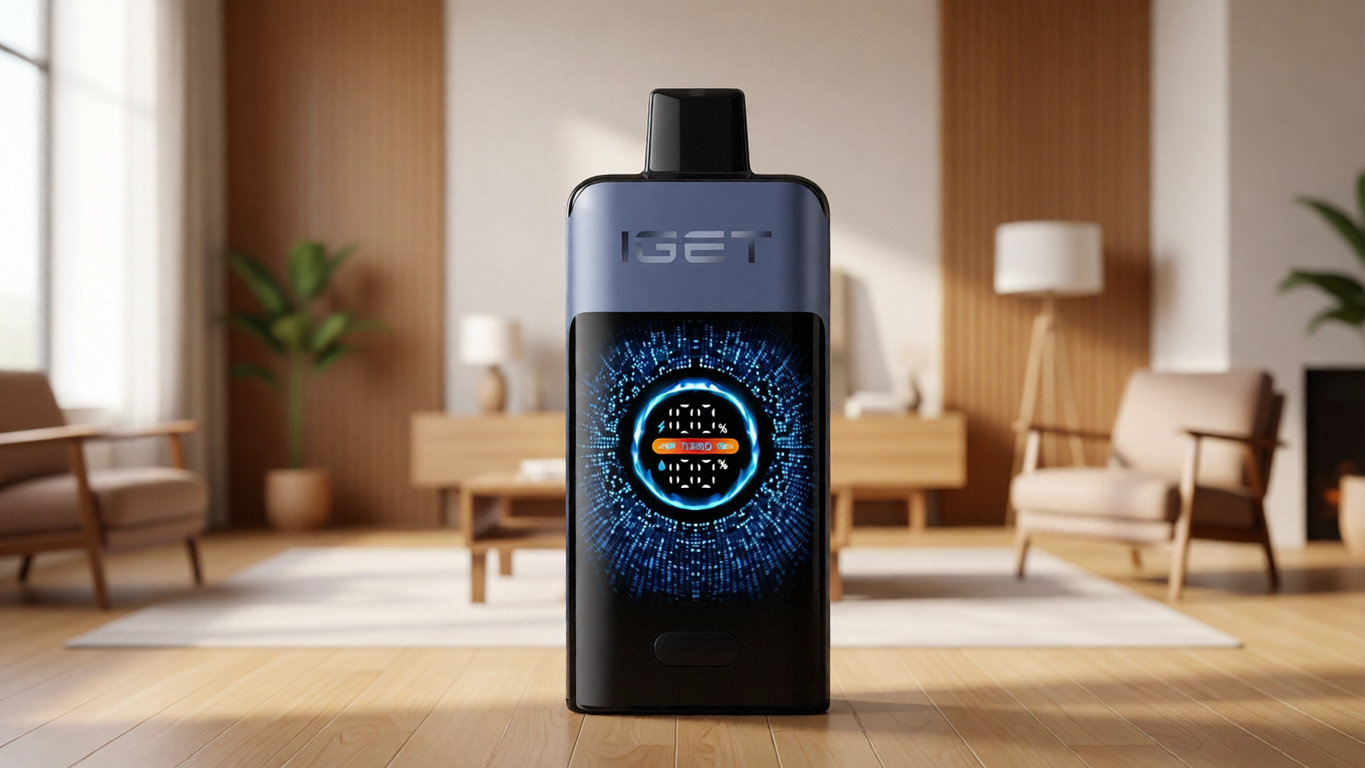
Assuming visual similarity means regulatory equivalence. Two devices with near‑identical external dimensions can contain radically different battery chemistries. A lithium‑polymer pouch cell behaves differently under pressure than a cylindrical lithium‑ion cell, especially at altitude. The traveller has no way to distinguish these without documentation. This is why sourcing through an authorised channel that verifies the bill of materials — rather than a marketplace of unvetted third‑party sellers — is more than a trust signal. It is a functional prerequisite for a predictable outcome.
Ignoring the destination’s rules. Australia’s domestic regulations are relatively uniform, but international airspace introduces patchwork policies. Some jurisdictions prohibit possession of larger‑format devices entirely. A device that sailed through a Sydney departure gate may be confiscated upon arrival in a country with a different product classification framework. Checking the official government resources of the destination country should be as routine as checking the departure terminal map.
Packing the device first, documentation second. Travellers who keep the factory packaging and an invoice in their carry‑on can answer an officer’s questions in seconds. Those who cannot often find themselves delayed while the officer conducts independent verification. This pattern has little to do with the product and everything to do with mundane record‑keeping. Retailers that provide digital receipts and specification sheets in a customer‑accessible portal — a practice OZVAPE Shop has embedded into its post‑purchase experience — make this preparation almost automatic.
From an industry standpoint, there is a quiet shift underway toward what might be called travel‑conscious product design. Manufacturers that once treated portability as a secondary value are now competing on leakage resistance at altitude, battery‑status precision, and modular breakdown for screening transparency. This is not a regulatory mandate. It is a market response to a generation of users who no longer accept that a device should be left in a hotel safe while they board a flight.
Frequently Asked Questions
Q: Can I carry a disposable vaporiser in my carry‑on bag?
A: Yes, provided the battery is integrated and the device capacity does not exceed 100 watt‑hours. All devices must be carried in the cabin, not in checked luggage. Disposables that exceed liquid limits must still be presented appropriately, but most portable sealed‑pod devices contain well under 100ml of e‑liquid.
Q: Will airport security ask me to turn on my device?
A: Generally no, but officers may visually inspect the unit. A clean, uncluttered device with a clear charging port and no visible e‑liquid residue passes inspection smoothly. Devices that show signs of heavy external wear sometimes draw extra scrutiny.
Q: What is the safest way to pack a vaporiser for a flight?
A: Detach the pod or reservoir if possible, place it in your clear liquids bag, and keep the battery module loose in the carry‑on tray for X‑ray. If the unit is a sealed disposable, position it so the mouthpiece is visible and the charging port is unobstructed. Always power it off if a shut‑off mechanism exists.
Q: Do I need to empty the tank before flying?
A: Not required by aviation authorities for tanks within the 100ml limit, but partially filled tanks with poor air‑exchange design will leak. If the device has not been tested for pressure changes, a near‑empty tank is actually more prone to leakage than a full one because a larger air pocket expands more. Following the inverted‑hold test described earlier will tell you what to expect.
Q: Can I put a vaporiser in my checked luggage?
A: Absolutely not. Lithium‑ion batteries are prohibited in checked baggage. Any device with an integrated battery must travel in the cabin. This rule is uniform across most global airlines and is enforced vigorously.
Q: How do I find devices with clear battery status indicators?
A: Look for product listings that specify a multi‑stage LED indicator or a numeric display. Walk past any description that only mentions “LED light.” When comparing options, a retailer like OZVAPE Shop provides standardised specification fields that make this distinction immediately visible, saving the buyer from guesswork.
Q: What if my device is confiscated at an international destination?
A: Confiscation is final. Understanding the destination country’s regulations before departure is the only reliable protection. If uncertainty persists, carrying a low‑value, easily replaceable device for the trip is a pragmatic hedging strategy.
Q: Does cabin pressure affect disposables?
A: Yes. Disposables that rely on a basic cotton wick and a gravity‑fed reservoir design will often leak from the air intake during ascent. The market is trending toward press‑fit, multi‑chamber designs that mitigate this. If a disposable has a “leak‑resistant” claim, verify whether that claim is backed by documented pressure‑cycle testing or is simply a nominal statement.
Q: Can I carry spare pods or e‑liquid in my carry‑on?
A: Spare pods and bottled e‑liquid must follow the liquids rule: containers of 100ml or less, all placed in a transparent bag. Pods are typically well under this limit, but fabricating a logical grouping in the screening tray — placing them near the liquids bag — helps the officer’s assessment.
Q: Is there any way to verify a device’s authenticity before a trip?
A: Purchasing from a retailer that sources only factory‑certified inventory and offers a verifiable batch record is the most practical protection. A receipt that includes the device’s serialised authentication code, combined with a tamper‑evident seal on the box, creates a chain of evidence that can be presented if a question arises.

Conclusion
The difference between a stressful pass through airport security and an unremarkable one is rarely the officer’s mood. It is the presence or absence of a few concrete design features that the traveller consciously selected or inadvertently ignored. Battery feedback clarity, pressure‑equalised reservoir architecture, modular disassembly, and surface durability are not esoteric concerns for engineers. They are the practical determinants of whether a vaporiser travels with you or against you.
Informed selection depends on having access to standardised, cross‑referenced information. When a retailer treats specification disclosure as a routine obligation — not a marketing choice — the buyer’s preparation becomes easier and the entire journey becomes more predictable. OZVAPE Shop has built its approach around that exact principle, providing factory‑certified ALIBARBAR devices with documentation that transforms an opaque purchase into a calculated travel decision. [External link: https://ozvape.shop, opens in new window]
Ultimately, no device removes the need for situational awareness and adherence to local regulations. The right choice is the one that matches your actual itinerary and your tolerance for unexpected complications — not the one with the boldest claims or the highest puff count. Calm travel begins with a clear battery indicator and ends long before you reach the gate.