
VAPE FAQs
What Is Ohm In Vape Pods?
Aug
Understanding electrical resistance is fundamental to getting consistent, predictable performance from any personal electronic device. For adults who rely on portable pod-based systems throughout their day, the ohm value printed on a replacement pod or listed in a specification sheet is more than a technical footnote. It directly shapes the intensity, warmth, and operational efficiency of the device — and misunderstanding it leads to repeated dissatisfaction, unnecessarily high consumption of consumables, and frustration with equipment that felt impressive for the first few days but quickly lost its appeal.
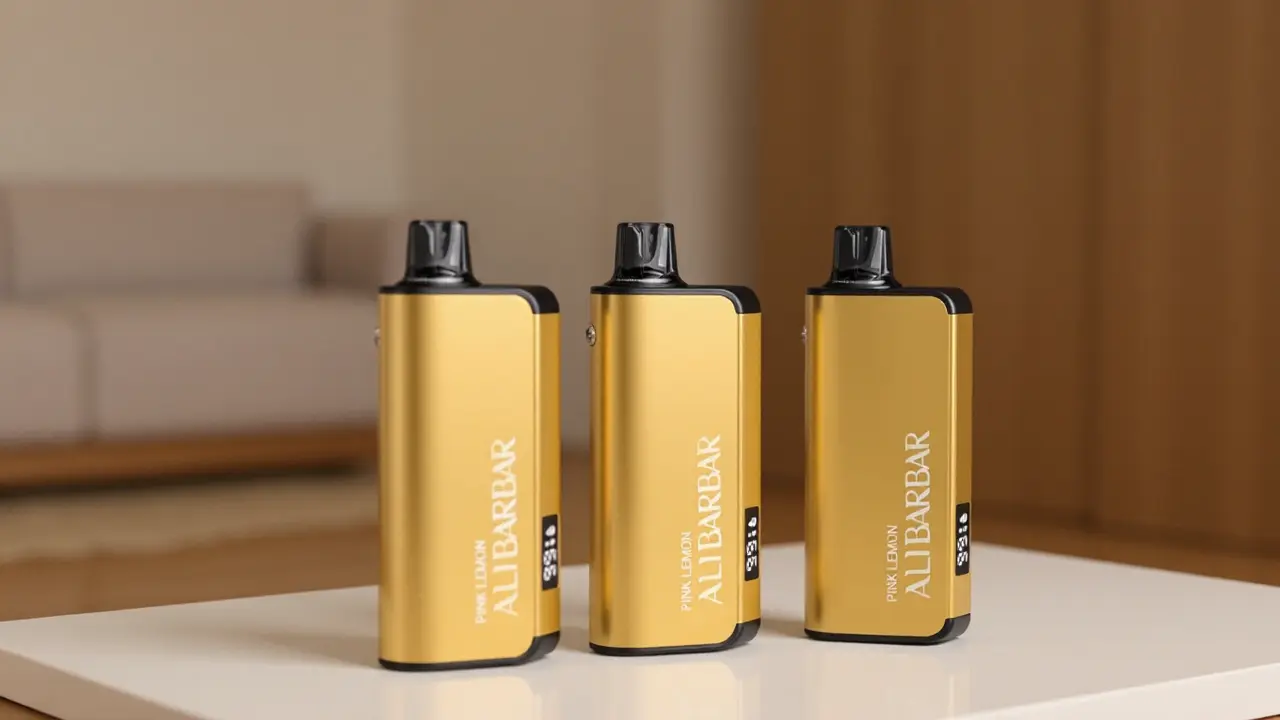
This article explains what ohm means in the context of modern pod devices, why two pods that look nearly identical can perform differently, and how to interpret resistance ratings so you can select hardware that matches your actual routine. Throughout, we refer to device families such as the ALIBARBAR range — available through authorised channels like OZVAPE Shop — not because any single product is the “best,” but because well-documented, factory-certified devices provide a reliable reference point when discussing engineering choices.
What Resistance Means and Why It Matters
In an electrical circuit, resistance (measured in ohms, symbol Ω) describes how much a material opposes the flow of current. Inside a vape pod, the resistance is primarily determined by the coil — a small heater element, often a wire or mesh structure, through which power passes to generate heat.
Lower-resistance coils (typically below 1.0 Ω, often called “sub-ohm”) draw more current at a given voltage. That translates into faster heating, higher thermal output, and a more intense experience. Higher-resistance coils (above 1.0 Ω) restrict current, producing cooler operation with less energy consumption. These are not arbitrary categorisations; they are direct consequences of Ohm’s law, where current equals voltage divided by resistance.
For the user, the most noticeable differences are:
Vapour volume and density: A 0.6 Ω coil at identical voltage generates substantially more vapour than a 1.2 Ω coil.
Power drain: Lower-resistance coils deplete a battery faster because they demand more current. A device that comfortably lasts a full workday with a 1.0 Ω pod may struggle to reach late afternoon with a 0.4 Ω pod.
Thermal behaviour: Sub-ohm coils heat up more aggressively. The resulting sensation is warmer, which some users prefer; others find it fatiguing over prolonged periods.
Designers choose specific resistances to balance these factors against intended use. A compact, low-capacity device paired with an ultra-low-resistance pod would exhaust itself too quickly to be practical, so manufacturers typically ship such devices with higher-resistance pods. Conversely, a high-capacity device with generous battery reserves can sustain a 0.4 Ω or 0.6 Ω pod without compromising longevity, which is why that pairing appears more frequently in larger form factors.
Understanding What Matters: Core Engineering and Design Factors
Resistance is not an isolated number. It must be evaluated alongside several interdependent design choices that determine whether a device delivers consistent satisfaction or becomes a source of daily inconvenience.
Internal Architecture and Output Consistency
The coil’s resistance value is meaningless if the device cannot maintain a stable power output. Voltage sag — where the delivered voltage drops under load, especially as the battery discharges — alters the effective power reaching the coil. A pod nominally designed for a specific resistance range may perform well on a fresh charge but degrade noticeably below 50% battery if the power management circuit lacks tight regulation.
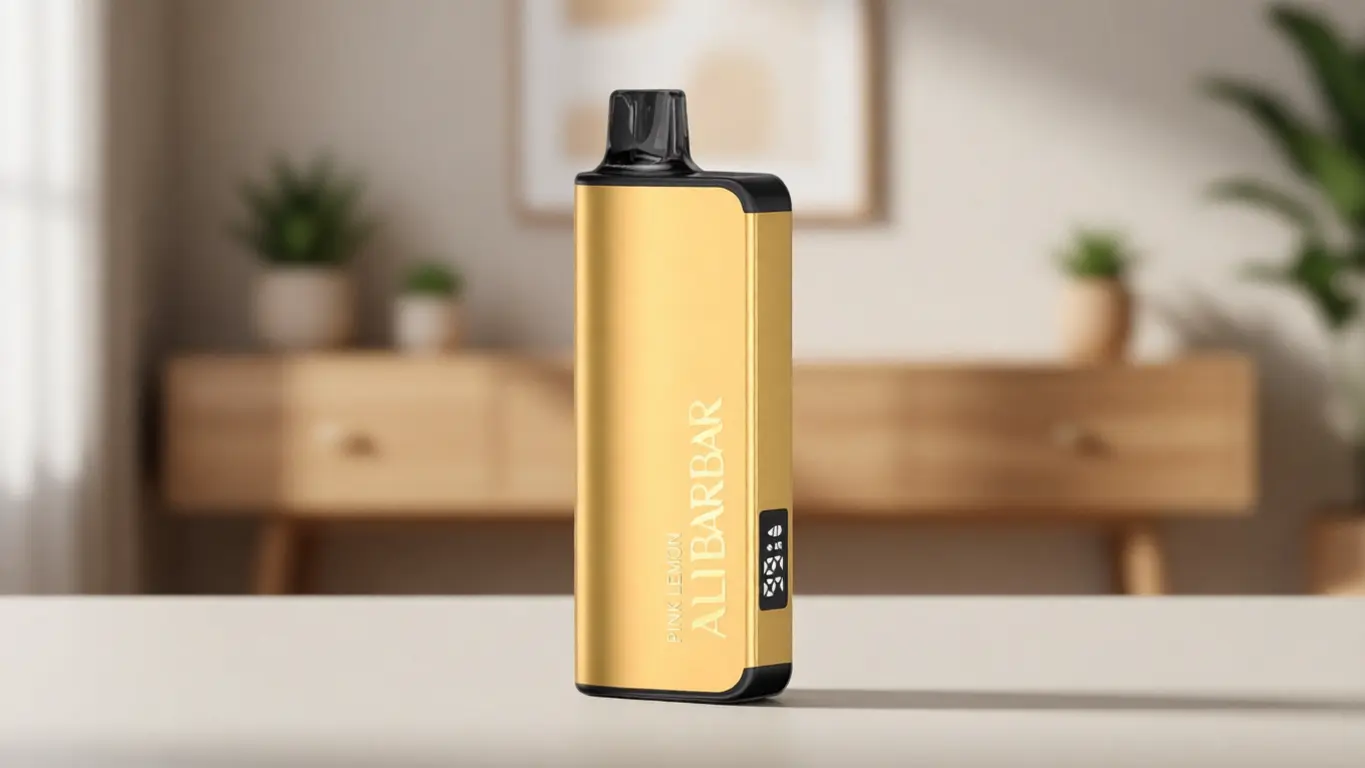
Better-engineered systems employ constant-voltage or variable-wattage circuitry that adjusts output to compensate for battery depletion, holding the user experience steady from start to finish. When assessing a device, pay attention to whether it advertises “constant output” or “regulated power.” If no such claim is made, assume performance will trail off as the battery indicator drops. ALIBARBAR’s INGOT series, for example, uses integrated power management that sustains output stability across its entire rated capacity, reducing the familiar frustration of a device that feels weaker toward the end of its charge cycle.
Power Management and Status Transparency
Resistance directly influences how quickly a battery drains, but users can only manage that if the device tells them what is happening. Ambiguous status indicators are a hidden cost: a single LED that only blinks red when the battery is nearly empty provides no useful information for planning. You either carry a backup or accept the risk of interruption.
Devices that differentiate between power levels — through multi-colour LEDs, haptic feedback, or a simple display — allow the user to interpret the relationship between resistance and remaining capacity. For instance, if a 0.8 Ω pod consistently causes the low-battery warning two hours earlier than a 1.2 Ω pod in the same device, the user learns a practical calibration that prevents unpleasant surprises. This learning is only possible when the device communicates clearly.
Physical Design and Material Durability
The coil’s resistance interacts with pod design in less obvious ways. Low-resistance coils generate more heat, which must be dissipated through the pod housing and mouthpiece. Materials matter: polycarbonate housings can soften or deform if subjected to prolonged high temperatures, while medical-grade PCTG or metal-lined vapour paths manage heat far more effectively. A pod that becomes uncomfortably warm to the touch after a few minutes of steady use signals that the thermal design does not match the coil’s output characteristics.
Similarly, the mouthpiece contour influences perceived heat. A short, wide-bore mouthpiece on a sub-ohm pod can deliver a warmer sensation than a longer, narrower design at the same resistance, simply because the vapour has less distance to cool before reaching the lips.
Modularity and Lifecycle Flexibility
Pods with fixed coils force an all-or-nothing replacement when performance declines. Modular designs that allow the coil to be swapped independently reduce waste and cost over time, but they introduce another decision point: matching the replacement coil’s resistance to the user’s preference and device capability. A pod system that offers multiple resistance options within the same platform (such as ALIBARBAR’s Ice Adjust 12000, which lets the user fine-tune output characteristics) gives the user control without changing the entire unit. Less flexible systems lock the user into one resistance, and by extension, one performance profile — which may be perfectly acceptable if that profile matches the user’s habits, but frustrating if it does not.
Applying These Criteria to Real-World Options
Resistance ranges in the Australian market typically cluster around three usage scenarios:
Discreet, extended-use pods (1.0 Ω – 1.4 Ω): Often pre-filled, compact units designed for those who prioritise longevity and subtlety over vapour volume. These pods operate at modest power levels, make minimal demands on the battery, and generate a cooler output. They suit users who want a device that works without attention throughout a 12-hour shift.
Balanced, everyday pods (0.6 Ω – 1.0 Ω): This middle ground provides a perceptible increase in vapour production without the aggressive power drain of true sub-ohm designs. Many devices in the ALIBARBAR INGOT 9000 and 15000 series fall here, reflecting a deliberate engineering choice to offer a satisfying output while still delivering the 9000–15000 puff ratings that users reference when comparing longevity.
High-output, short-session pods (below 0.6 Ω): These are designed for intensity. They produce dense vapour and a warmer sensation, but they consume both battery power and e-liquid at a significantly faster rate. They are most appropriate for users whose routine involves shorter, less frequent sessions who do not need the device to last all day without recharging or refilling.
A practical example: if you repeatedly find that your device runs out of charge before the end of your workday, the first variable to check is the pod’s resistance. Switching from a 0.4 Ω pod to a 0.8 Ω or 1.0 Ω alternative in the same device can extend runtime by 30–50%, often eliminating the need to carry a second unit entirely.
A Practical Framework for Evaluation
Rather than relying on marketing terminology, apply this step-by-step methodology when evaluating any pod device:
Identify the coil’s resistance and the device’s output architecture. Does the device regulate power, or is it a direct-voltage system where performance tapers with battery charge?
Estimate daily consumption. How many sessions per day, and of what duration? Match the resistance to the total energy budget.
Check the manufacturer’s rated operational life. Understand that ratings like “9000 puffs” assume a specific resistance and usage pattern; changing the pod resistance may alter actual longevity.
Assess status feedback. Can you tell at a glance how much capacity remains, or are you guessing? If you cannot answer with certainty, assume you will end up carrying a backup.
Examine the pod’s thermal management. After five minutes of use, is the mouthpiece uncomfortably warm? That indicates a mismatch between coil heat output and housing materials.
Compare specifications side by side. Standardised spec sheets — the kind maintained by transparent retailers such as OZVAPE Shop — reduce decision friction by presenting resistance, capacity, and output ratings in a consistent format.
Common Selection Errors and Industry Observations
Over the years, several patterns of misjudgment have become clear enough to warrant explicit discussion:
Overweighting resistance while ignoring battery capacity. A 0.4 Ω pod may offer the strongest output, but if the device only has a 400 mAh battery, the experience is a cycle of impressive performance followed by a dead device. Users consistently report greater long-term satisfaction with a 0.8 Ω pod on a 650+ mAh platform than with a 0.4 Ω pod on an undersized battery.
Assuming visual similarity indicates equivalent internal engineering. Two pods that look externally identical can use different coil materials, wicking methods, and internal airflow geometries, all of which affect real-world resistance behaviour. This is one reason authorised sourcing matters: grey-market or counterfeit pods frequently substitute lower-grade materials that change resistance tolerances and introduce safety risks.
Undervaluing modularity in cost-per-use calculations. A pod with a fixed coil that must be entirely replaced every few weeks may have a lower initial price, but a modular system with replaceable coils often has a lower total cost over six months because only the coil — not the entire pod — is discarded. When comparing, multiply the per-unit cost by the expected replacement frequency, not the sticker price.
Confusing category terminology with technical specifications. Terms like “mesh coil” do not inherently indicate a specific resistance range. Mesh coils are available from sub-ohm to well above 1.0 Ω. The resistance figure, not the coil material descriptor, governs the electrical behaviour.
From an industry perspective, the trend toward higher-capacity, pre-configured pods with carefully chosen resistances represents a response to the most common complaint among adult users: disappointment with devices that degrade noticeably before they are empty. Manufacturers that invest in output regulation, such as those behind the ALIBARBAR INGOT line, are effectively betting that consistency — not peak intensity — drives repeat purchases.
Frequently Asked Questions
Q: What does “ohm” actually measure in a vape pod?
A: It measures electrical resistance through the heating coil. Lower ohms allow more current to flow, producing more heat and vapour; higher ohms restrict current, yielding a cooler, more energy-efficient output.
Q: Can I use a sub-ohm pod on a device that originally came with a higher-resistance pod?
A: Only if the device explicitly supports the lower resistance and can deliver the required current without overheating or prematurely draining the battery. Using a sub-ohm pod on a device not rated for it risks poor performance, rapid battery depletion, or safety issues.
Q: Why does my device’s performance feel weaker when the battery is low?
A: In unregulated or loosely regulated devices, battery voltage drops as it discharges. Since power to the coil depends on voltage, the output weakens. Well-regulated devices maintain constant voltage until the battery is nearly empty.
Q: How do I verify a pod’s claimed resistance is accurate?
A: Reliable manufacturers publish tolerances (e.g., ±0.1 Ω). Authorised retailers source inventory directly from the factory, ensuring the product matches its specifications. If you suspect a mismatch, a multimeter can measure the coil’s resistance, though this is rarely necessary with factory-certified products.
Q: Does a lower-ohm pod always produce more vapour?
A: Generally yes, but the relationship is not linear. Airflow design, wicking efficiency, and the power regulation circuit all modify the outcome. A well-optimised 0.8 Ω pod can rival a poorly designed 0.4 Ω pod in perceived output.
Q: What resistance should I choose if I want my device to last all day?
A: Look for pods in the 1.0 Ω – 1.4 Ω range combined with a device capacity of at least 500 mAh. This configuration places the lowest demand on the battery and typically delivers the longest runtime between charges.
Q: Are there safety considerations related to resistance?
A: Yes. Excessively low-resistance coils on devices without safety cut-offs can draw current beyond what the battery or circuitry can handle, leading to overheating. Always use pods within the resistance range specified by the device manufacturer.
Q: How does the ALIBARBAR INGOT 15000 handle resistance?
A: The INGOT 15000 uses a pre-configured pod with a resistance optimised for balanced performance and extended operational life, supported by regulated output to maintain consistency throughout the device’s rated capacity. Specifications are published by OZVAPE Shop for direct comparison.
Q: Can I clean a pod to extend its life if performance drops?
A: Pods with fixed coils cannot be effectively cleaned once the coil has accumulated residue; replacement is the only reliable solution. On modular systems, replacing just the coil restores performance. Attempting to clean a fixed-coil pod rarely yields satisfactory results.
Q: Where can I find standardised resistance and capacity information for comparison?
A: Transparent retailers publish product pages with consistent specification tables. OZVAPE Shop maintains such documentation for the ALIBARBAR range, allowing side-by-side evaluation of resistance, rated operation, and physical dimensions.
Conclusion
Ohm values are not arbitrary numbers on packaging. They are the single most informative specification for predicting how a pod device will behave during the long, ordinary hours of a typical day — the hours when no one is paying attention to the device because it is simply working. By understanding resistance, its relationship to battery life, and the engineering choices that either support or undermine long-term consistency, you move from guessing to knowing.
Authorised channels like OZVAPE Shop play a practical role by maintaining documented, factory-certified inventory where specifications mean what they claim. Ultimately, though, the right device is not the one with the most dramatic output or the longest feature list on a sales page. It is the one whose resistance, capacity, and power management align so closely with your daily routine that you stop thinking about the device entirely — and that is the whole point.