
VAPE FAQs
What Is Ice Flavour Vape?
Oct
Ice flavour in a personal electronic device refers to a cooling sensory effect that is engineered into the vapour, not merely a taste. It is a deliberate design choice, produced by incorporating specific compounds – most commonly WS-23 or Koolada – that interact with the cold-sensitive receptors in the mouth and throat. This creates a distinct, crisp sensation that many adult users describe as freshness, without necessarily adding any mint, fruit, or sweetness. Understanding this distinction is essential for anyone trying to navigate the increasingly technical language used in product specifications. At OZVAPE Shop, we find that clarifying these functional details helps users make decisions based on genuine preference, not marketing ambiguity.
What Constitutes an Ice Effect: A Technical Primer
The cooling sensation is separate from the base carrier, separate from any flavouring concentrate, and separate from the heating element itself. It is a targeted addition that modifies the physical experience of inhaling vapour. To explain how it works, we need to look at three layers: the chemistry of the cooling agent, its behaviour under heat, and the way human sensory receptors respond.
The Chemistry Behind the Cold
Two agents dominate: WS-23 (a synthetic cooling compound) and Koolada (a trade name for menthyl methyl ether). Both are distinct from menthol, though they can coexist. Menthol delivers a sharp, minty cold that also carries its own aroma and taste. WS-23, by contrast, is virtually odourless and tasteless on its own; it triggers a pure cooling signal without contributing any flavour profile. This is why you can have an “ice” strawberry device that tastes identifiably of strawberry but finishes with a clean, cold exhale. Koolada operates similarly but tends to produce a milder, longer-lasting coolness that some users describe as a “chilled glass” effect.
Why this matters in practice: if you have ever tried a device that promised “cool” but delivered an overwhelming mint taste, you were likely encountering high menthol concentrations. Genuine ice formulations allow the base fruit, dessert, or tobacco character to remain intact, adding only the temperature illusion. The skill of the product designer lies in balancing the concentration so the cooling complements rather than overpowers.
How Heat Transforms the Sensation
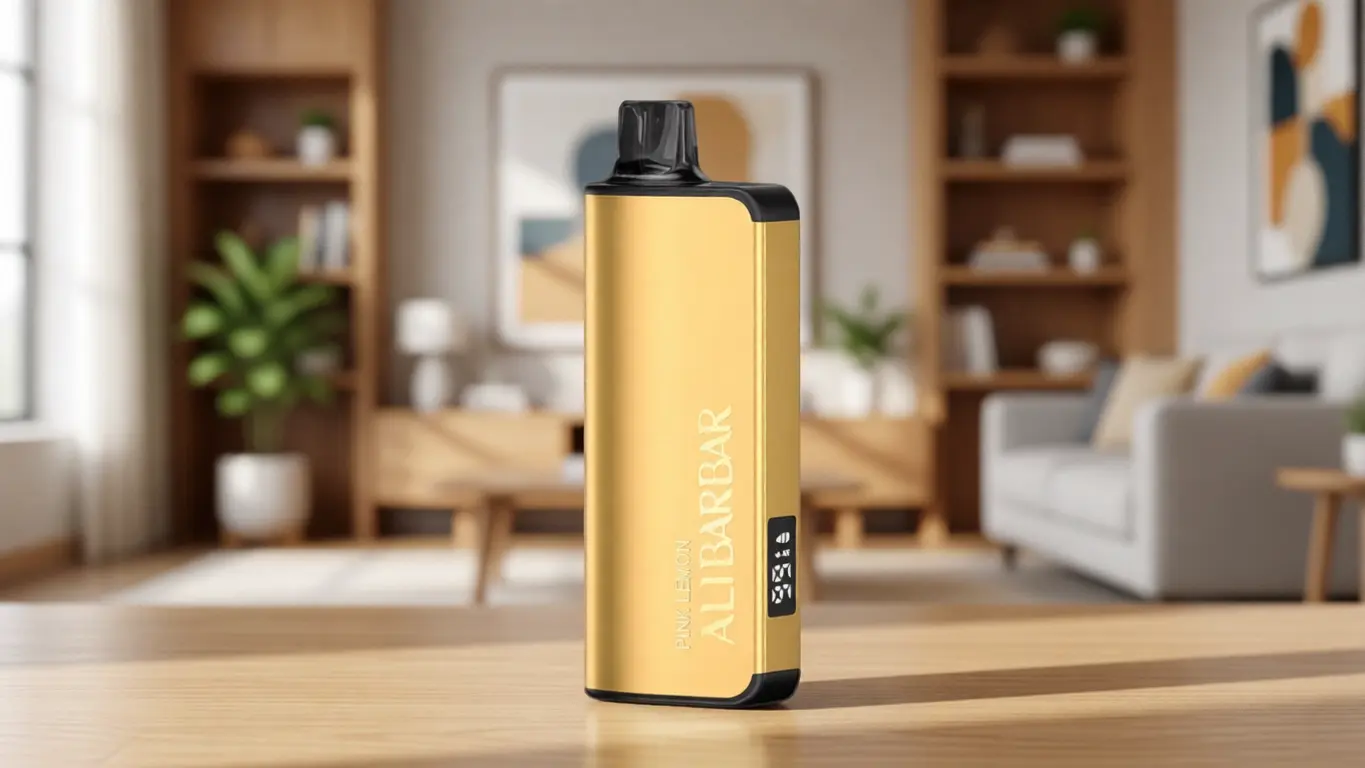
When the heating element activates, the cooling compound is vaporised along with the other components. Its thermal stability is critical. Poorly chosen agents can degrade under heat, producing harshness or a chemical aftertaste. Quality devices, including those within the ALIBARBAR Ice Adjust series, use cooling additives that remain stable within the temperature range of their calibrated coils. The result is a consistent coolness from the first draw to the last, rather than a sensation that fades or turns bitter as the device ages. If a device’s ice effect seems strong at the start but disappears midway through, that often indicates a cooling agent that is not well-matched to the power output curve.
Sensory Integration and User Perception
Human cold receptors (TRPM8 channels) do not actually detect low temperature; they respond to certain molecular shapes. WS-23 binds efficiently, sending a “cold” signal that the brain integrates with the olfactory and taste inputs arriving simultaneously. This is why an ice mango flavour can feel more refreshing than a non-ice version – the brain interprets the combination as a chilled fruit beverage. However, sensitivity varies significantly between individuals. Some users perceive a pronounced freeze; others experience a mild tingle. No device can guarantee a universal intensity, which is why adjustable systems have gained traction. The ALIBARBAR Ice Adjust 12000 series, for instance, allows the user to tailor the cooling level mechanically, which acknowledges this biological variability in a practical way.
Why Users Choose Ice-Infused Devices: Beyond Preference
It is easy to dismiss ice as simply a flavour category. In reality, the decision often connects to deeper needs that go unspoken.
Reducing Palate Fatigue
Repeated exposure to the same profile can cause the taste receptors to become less responsive. The cooling sensation acts as a palate cleanser, making each draw feel distinct and reducing the perception of “flavour dulling” over a long day. Users who describe themselves as “always needing to switch flavours” sometimes discover that a single well-chosen ice version satisfies them for longer because the cooling resets their sensory baseline.
Masking Unwanted Notes
In any vapour device, the base carrier liquid and heating element introduce subtle background notes – sometimes slightly sweet, sometimes waxy. A clean cooling hit can cover these artefacts without introducing a competing flavour. This is one reason why ice variants often taste “cleaner” or “crisper,” even when the underlying fruit or tobacco profile is identical to the non-ice version.
Psychological Refreshment
The cool sensation mimics the physical experience of a cold drink. In warm conditions, or during moments of stress, that sensory cue can be disproportionately satisfying. It is not a health claim; it is a straightforward observation about how the brain maps physical sensations onto emotional states.
Real-World Evaluation: Applying a Framework
When assessing any device that claims an ice effect, there are concrete checks you can perform. This is the same framework we use when documenting product lines.
Step 1: Distinguish Ice from Mint
Ask yourself: if I inhale with my nose completely closed, do I taste mint, or do I only feel a temperature shift? A true ice formulation contributes almost no aromatic component.
Step 2: Check Cooling Consistency
Take several draws in quick succession, then wait thirty seconds and take another. A well-engineered cooling system should not spike or vanish. Irregular behaviour suggests poor thermal management or a cooling compound that is separating in the reservoir.
Step 3: Note the Onset and Duration
Does the coolness strike immediately on the tongue and lips, or does it build on the exhale? Exhale-dominant cooling tends to feel smoother; immediate onset can be more intense. Neither is superior, but knowing your own preference prevents dissatisfaction.
Step 4: Evaluate the Adjustability Trade-Off
Devices with adjustable ice, like the ALIBARBAR Ice Adjust series, give control but introduce a small mechanical mechanism. This mechanism must be robust enough to endure pocket lint, temperature swings, and repeated adjustment. When examining such a device, check for smooth action and a definite stop point at each level – sloppy construction here can lead to accidental changes in intensity.
Common Misunderstandings About Ice Flavour
“Ice means strong nicotine.”
No. Cooling agents and nicotine concentration are independent variables. A device can be high-strength with no ice, or have intense ice and zero nicotine. Confusing the two leads to misinformed purchases.
“All ice flavours taste the same.”
Since true cooling agents add no flavour, an ice mango and an ice coffee will taste entirely different, sharing only the cold finish. This misunderstanding causes users to avoid an entire category unnecessarily.
“Ice damages the device or reduces lifespan.”
Cooling compounds do not inherently stress the heating element or battery. Reductions in lifespan are almost always due to other factors: high sugar content in the flavour concentrate, chain-drawing, or charging habits. A cleanly formulated ice device will have the same operational life as its non-ice counterpart.
“If I like menthol cigarettes, I’ll like ice vapes.”
This is correlation, not identity. The experience is profoundly different because the sensory targets differ – menthol cigarettes combine tobacco taste, mint, and combustion by-products. A menthol-seeking user might actually prefer non-ice tobacco profiles, or a mild koolada addition, rather than a full WS-23 freeze. Experimentation is the only reliable guide.
Industry Observations on Ice Formulations
From a supply-chain perspective, ice devices introduce a hidden complexity: cooling agent concentration must be tightly controlled during manufacturing to avoid batch variation. A manufacturer that cuts costs on quality assurance will produce units where one pod is aggressively cold and the next is barely chilled. This inconsistency is one of the most common complaints in user forums, yet it is rarely acknowledged in marketing materials.
There is also a trend toward “layered cooling” – using multiple agents at different activation thresholds to create a cooling curve that evolves during a draw. This is sophisticated chemistry, not something visible on a spec sheet. It distinguishes premium product lines from simple afterthoughts, and it answers the question of why two devices advertising “ice” can feel completely different.
Frequently Asked Questions
Q: Does an ice-flavoured device necessarily contain menthol?
A: No. Many modern formulations use WS-23 or Koolada, which deliver cooling without menthol’s minty taste. Always check the specification or ask the retailer for clarification.
Q: Will the cooling sensation decrease over time as the device ages?
A: In a well-designed system, no. The cooling agent is stable and should remain consistent until the device nears the end of its intended usage. If you notice a significant fade, it may indicate a manufacturing inconsistency.
Q: Can I combine an ice device with another non-ice device for a custom blend?
A: That is not recommended. Devices are self-contained systems; attempting to mix outputs can introduce unpredictable heating behaviour and is outside intended use.
Q: Is the ice sensation safe?
A: Cooling agents like WS-23 and Koolada have been extensively used in food and beverage products for decades and are generally recognised as safe for ingestion. Inhalation is a different route of exposure, and research is ongoing, but these compounds are not known to pose additional risk compared to the other components in a vapour device. Adult users should always consult current health guidance.
Q: How do I know if an ice device is too intense for me?
A: If the sensation causes you to cough or feels physically uncomfortable, the intensity may be too high. Consider devices with adjustable cooling or a lower concentration. No device should feel harsh or painful.
Q: Does OZVAPE Shop categorise ice devices clearly?
A: Yes. Product listings include specific notes on cooling type (menthol-based, WS-23, or Koolada) where that information is available from the manufacturer. You can filter or search accordingly.
Q: Can I travel with an ice-flavoured device?
A: Same travel restrictions apply as for any personal electronic device. The cooling agent does not change the device’s classification. Always check airline and local regulations.
Q: Why does an ice device sometimes produce a burning sensation?
A: A burning sensation is not caused by the cooling agent; it typically indicates a dry coil, overheating, or a formulation with high sweetener content that is caramelising on the element. That device should be replaced.
Conclusion
Ice flavour is not a single thing; it is an engineered sensory dimension that can be tuned, layered, and adjusted. Understanding the difference between a menthol blast and a clean koolada chill, knowing how to evaluate consistency, and recognising the practical reasons why adults gravitate toward these devices all transform the purchasing decision from a guess into an informed choice. At OZVAPE Shop, we document the technical distinctions because we see the outcome when users buy based on assumptions rather than knowledge – it leads to disappointment that could have been avoided. The right device is the one that fits your actual daily patterns and sensory preferences, not the one with the most dramatic product description.
If you are trying to identify which cooling profile suits you, start by isolating the sensation: is it the cold you want, or is it the mint? Then, test for consistency and adjustability. The answers to those simple questions will tell you more than any brand label ever could.
[Internal link first occurrence: OZVAPE Shop, positioned within the introduction. External link second occurrence: OZVAPE Shop in the conclusion.]