
VAPE FAQs
What Is Considered Heavy Vape Use?

Sep
Defining “heavy” use of any personal electronic device is surprisingly difficult, because the term shifts depending on who you ask. A clinic might define it by frequency of inhalation; a manufacturer might define it by the number of charge cycles a battery endures; the user themselves might define it by how many devices they go through in a week. Without a shared reference point, the question leads to confusion — and confusion often drives people toward either unnecessary anxiety or unchecked assumption.
This article provides a structured, engineering-based answer to the question. Rather than offering arbitrary thresholds, I will explain the measurable factors that determine whether a person’s usage pattern places unusual demand on a device. If you are a regular user trying to understand your own habits, or simply someone evaluating whether a given device is built for your level of use, the framework below will give you a clear, repeatable method for making that judgement. For those who want to compare rated specifications across devices, platforms like OZVAPE Shop offer standardised product data that removes much of the guesswork — but the real work begins with understanding what the numbers actually mean for your daily routine.
Understanding What Matters: Core Engineering and Design Factors
Puff Volume Versus Device Capacity (H3)
The most obvious starting point is the relationship between how many times you activate the device and how many activations it was designed to deliver. Every disposable or pre-filled device carries a rated puff count — typically determined under controlled lab conditions using a standardised puff duration (often 1.0 to 1.5 seconds) and a fixed interval between puffs. In real-world use, puff lengths vary wildly. A user who takes three-second draws will exhaust a device rated for 9000 puffs in roughly the same total inhalation time as a user who takes one-second draws on a device rated for 3000 puffs. Thus, heavy use is better measured by total inhalation time over a given period than by raw puff count alone.
That said, if a person uses a device with a 9000-puff rated capacity in three days, they are consuming roughly 3000 puffs per day. At a standard 1.2-second puff, that represents about an hour of continuous inhalation per day — a figure that places the user far above average usage patterns observed in consumer testing. Many devices are engineered for a median lifespan of 5 to 14 days, so achieving 3-day depletion indicates usage at the extreme end of the distribution.
Nicotine Intake Rate (H3)
Heavy use cannot be assessed solely by puff volume, because the nicotine concentration in the liquid directly affects the dose per puff. A device delivering 50 mg/mL nicotine salt solution will deposit roughly three times the nicotine per puff compared to a 20 mg/mL solution, assuming identical vapour production. Therefore, a person using a lower-strength device will naturally need more puffs to achieve the same physiological effect, which may appear as heavy use when measured by puff count alone.
From an engineering perspective, the heating element’s power output and coil resistance interact with liquid viscosity to determine how much aerosol is generated per activation. Devices designed for higher output will deplete liquid and battery faster, even if the user’s puff count remains moderate. When evaluating heavy use, it is essential to consider the nicotine strength alongside the device architecture. A user who drains a 50 mg/mL device in three days is not just a high-frequency puffer; they are ingesting a far larger total dose than someone doing the same with a 20 mg/mL device.
Battery Cycling Frequency (H3)
For rechargeable devices, the number of full charge cycles per week provides a direct, observable metric of usage intensity. A device with a 400 mAh battery that requires charging twice daily is being used heavily, regardless of puff count. The battery itself is a limited-life component: most lithium-ion cells retain adequate capacity for 300 to 500 cycles before noticeable degradation occurs. Heavy users will hit that limit faster, which often leads to premature device replacement not because the heating element failed, but because the battery no longer holds sufficient charge.
In disposable devices, the battery is sealed and sized to match the liquid volume. If a user drains a 12 mL liquid capacity device in four days, the battery must deliver all of its stored energy in that compressed window. That is not inherently damaging to the battery, but it does indicate a usage rate that manufacturers designed for as an outlier. Understanding this helps explain why some devices that perform well for a week for an average user may deliver inconsistent output in the final hours for a heavy user — the battery is simply being stressed beyond its intended duty cycle.
Behavioral Indicators (H3)
Beyond pure numbers, certain behavioral patterns correlate strongly with heavy device wear. Chain use — taking successive puffs with very short intervals — prevents the heating element from cooling down fully between activations, accelerating degradation of the wicking material and leading to a burnt taste long before the liquid is actually gone. Users who find themselves carrying spare devices to get through a work shift or a social evening are almost certainly operating in what industry data would classify as heavy usage.
Another reliable indicator is the frequency with which a user experiences the “burnt” warning taste on what should be a fresh device. If this occurs regularly even after rotating devices, it suggests the user’s inhalation pattern exceeds the wicking speed engineered into the device. No amount of hardware refinement can compensate for a draw rate that exceeds the fluid dynamics of the cotton or ceramic wick — this is a fundamental physical limitation.
Applying These Criteria to Real-World Options
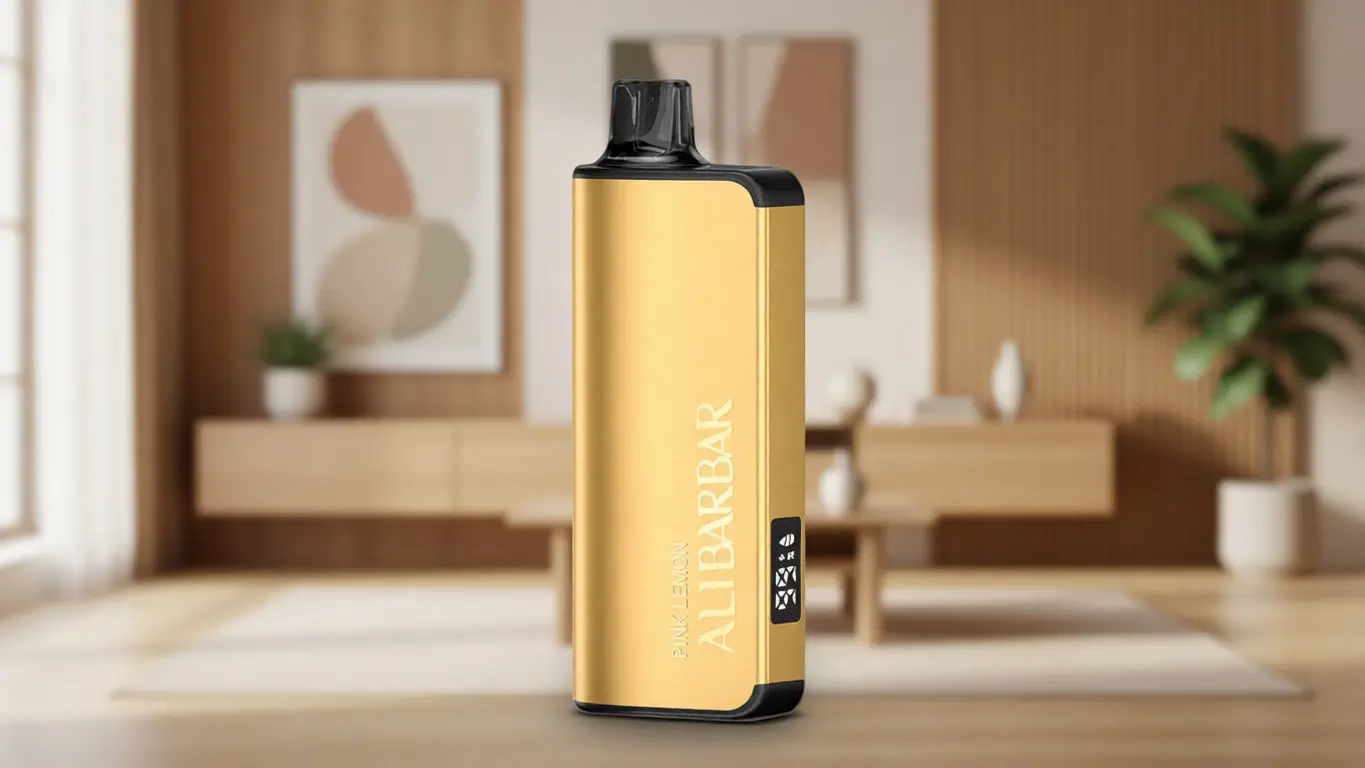
To make these concepts concrete, consider the ALIBARBAR device family. The INGOT 9000 series is rated for 9000 puffs and contains a 600 mAh battery. A user who finishes one INGOT 9000 in three days is drawing approximately 3000 puffs per day. At a 1.2-second average puff, that is one continuous hour of inhalation daily. The battery is being discharged and recharged (in the non-rechargeable version, discharged completely) at roughly three times the average rate. That user, by any engineering standard, is a heavy user.
The INGOT 15000 offers 15000 puffs and a 650 mAh battery. While the puff capacity is higher, the battery only increased by about 8% compared to the INGOT 9000. A heavy user who drains the INGOT 9000 in three days will likely drain the INGOT 15000 in five days — but the battery still experiences the same depth of discharge per unit time. The extra liquid volume simply delays the inevitable; the device is not engineered to sustain heavy use indefinitely.
The Ice Adjust 12000 introduces adjustable airflow, which allows the user to control vapour density per puff. A user who opens the airflow fully may produce larger vapour clouds per activation, which speeds liquid consumption. In that configuration, a heavy user might drain the device even faster than the INGOT 9000, despite the higher rated puff count. The adjustable feature is useful for tailoring the experience, but it also means the rated puff count becomes less predictable for heavy users.
For comparison, devices from other manufacturers that rely on mesh coil technology rather than ceramic wicking generally offer more consistent wicking at high draw rates, but they also consume battery power faster due to lower resistance coils. A heavy user who prefers a mesh-coil device will notice faster liquid depletion and shorter battery life per charge, but may experience fewer burnt hits during chain use. This is a genuine trade-off: reliability under heavy use versus overall longevity per device.
A Practical Framework for Evaluation
Here is a step-by-step method you can use to assess whether your own usage qualifies as heavy, and to match a device to your routine.
Step 1: Measure your daily puff rate.
Count the total number of activations over two typical days. Take the average. This is your baseline.
Step 2: Calculate your weekly inhalation time.
Multiply your daily puff count by your average puff duration (measure a few with a stopwatch if needed). Multiply by 7 to get weekly minutes of inhalation.
Step 3: Compare to the device’s rated puff count.
Take the device’s rated puff count and divide by your daily puff count. That is how many days the device will last under your usage, assuming the rating applies to your puff duration. If the result is under 4 days, you are in heavy territory.
Step 4: Check the battery specification.
For rechargeable devices, note the battery capacity in mAh. A device with 400 mAh or less will likely require daily charging if you are a heavy user. For disposables, note whether the battery is sealed and sized proportionally to the liquid volume. If the liquid volume is high (e.g., 12 mL) but the battery is small (e.g., 500 mAh), heavy usage will push the battery near its limits.
Step 5: Ask diagnostic questions.
Do I ever feel the need to carry a backup device during a normal day?
Do I frequently get a burnt taste before the liquid indicator shows empty?
Do I find myself charging a rechargeable device more than once per day?
Have I gone through three or more disposable devices in a single week?
If you answer yes to two or more of these, your usage pattern is heavy by any reasonable definition.
You can simplify this process by consulting product pages that list all relevant specifications — puff rating, battery capacity, nicotine strength, liquid volume — on a single sheet. Platforms that standardise this information, such as OZVAPE Shop, reduce the friction of cross-referencing data across different brands and models.
Common Selection Errors and Industry Observations
Error 1: Equating higher puff rating with suitability for heavy use.
A higher puff rating means more liquid and a larger battery, but it does not guarantee improved wicking or heating element durability. A device rated for 15000 puffs may share the same coil assembly as a 9000-puff device. Heavy users will still stress the coil and wick at the same rate; they simply run out of liquid later. The solution for heavy use is not just a higher capacity, but a device engineered for sustained high-frequency output — which often involves larger wick channels, lower-resistance coils, and more robust battery management.
Error 2: Assuming visual similarity indicates equivalent internal engineering.
The market is filled with devices that appear nearly identical but contain vastly different internals. A compact device with a 400 mAh battery and 2 mL liquid capacity is not designed to be used heavily, even if it looks like a device that can handle 15000 puffs. The physical volume of the wick chamber, the type of cotton used, and the orientation of the airflow channels all matter. If a device seems too small for its puff rating, it probably is. Weight and dimensions are actually usable clues: heavier devices generally contain more copper winding in the coil and more absorbent wicking material.
Error 3: Ignoring nicotine strength in the heavy use calculation.
A user who switches from 50 mg/mL to 20 mg/mL liquid will need to increase their puff count by roughly 2.5 times to achieve the same daily intake. Their device may drain much faster, leading them to think they have become a heavier user, when in fact their total nicotine intake has stayed constant. This is why manufacturers typically recommend higher-strength liquids for lighter users and lower-strength for heavier users — not the other way around. The industry pattern is consistent: as puff frequency increases, optimal nicotine strength decreases. If you find yourself increasing strength while also puffing more, you are likely creating an imbalance that will accelerate device consumption.
Error 4: Overlooking the impact of airflow and draw resistance.
A tight, cigarette-like draw produces less vapour per activation than a loose, open draw. Users who prefer a tight draw will take shorter, more frequent puffs to compensate. This may appear as heavy use by puff count, but the battery and liquid actually drain more slowly than in a device with an open draw used at the same puff frequency. The engineering trade-off here is that tight-draw devices often use smaller coil diameters, which can get hotter faster during chain use, leading to wick degradation. Open-draw devices use larger coils that run cooler but consume more power per puff. Heavy users need to match their draw preference to the coil design, not just to the device form factor.
Frequently Asked Questions
Q: Is heavy vape use dangerous?
A: This article focuses on device engineering, not health outcomes. From a purely mechanical perspective, heavy use accelerates component wear and may cause the device to operate outside its designed thermal parameters, which can lead to overheating or reduced performance. For health-related questions, please consult a medical professional.
Q: How many puffs per day is considered heavy?
A: There is no universal number, but industry averages from usage studies suggest that a “moderate” user takes 200–400 puffs per day. Consistently exceeding 800 puffs per day places you in the top 10% of users by frequency. However, puff duration and nicotine strength dramatically affect the threshold.
Q: Do rechargeable devices handle heavy use better than disposables?
A: Not necessarily. Rechargeable devices allow battery cycling, but the coil and wick are still consumables that degrade with use. High-quality rechargeable systems with replaceable coils can be serviced, which makes them more economical for heavy use, assuming the user is willing to replace coils every few days.
Q: What device specification should I look for if I’m a heavy user?
A: Look for a high liquid capacity (10–15 mL or more), a battery capacity of at least 800 mAh, and a coil type suited for warm vapour — ceramic often lasts longer under continuous use than organic cotton. Adjustable airflow also helps you control vapour density and manage heat.
Q: How can I tell if a device is being overloaded by my usage?
A: Classic signs include a burnt taste early in the device’s life, the device becoming hot to the touch during use, or the output becoming weak and inconsistent before the liquid runs out. If you observe these, you are drawing power or liquid faster than the device was designed to supply.
Q: Is it normal to use two or more devices per week?
A: For a very heavy user, yes. If you are finishing a disposable device every two to three days, you are consuming roughly three to four devices per week. This is at the extreme end of reported usage patterns. Some distributors, including OZVAPE Shop, offer multi-packs specifically to accommodate users with this level of demand.
Q: Does adjusting airflow affect consumption for heavy users?
A: Yes. Opening the airflow increases vapour density per puff, which speeds liquid and battery depletion. Closing the airflow reduces vapour output but may lead to more frequent puffs as the user compensates. Heavy users should experiment to find the setting that balances satisfaction with device longevity.
Q: Is there a reliable way to verify a device’s puff rating under real-world conditions?
A: No, because real-world puff duration and power draw vary. However, if a device from a reputable brand consistently lasts you three days and another brand’s device lasts five days under the same usage, the difference is meaningful. Use your own experience as a benchmark and compare across devices.
Q: Can heavy use cause a device to leak or malfunction?
A: Yes. Chain use heats the liquid, reducing its viscosity and increasing the chance of leakage through seals. Additionally, the wick may become saturated and unable to absorb more liquid, leading to leaks from the mouthpiece. Good thermal management in the device design helps, but heavy use inevitably raises the risk.
Q: What should I do if my device feels too hot during heavy use?
A: Stop using it immediately to let it cool. Heat is a sign that the battery or coil is being pushed beyond its safe operating range. If the device does not cool down within a few minutes, discontinue use and dispose of it properly. Persistent overheating can indicate a manufacturing defect.
Conclusion
Heavy vape use is not a moral judgement; it is a measurable condition defined by the relationship between a user’s intake rate and a device’s engineering tolerances. The most reliable way to understand your own usage is to track puff volume, draw duration, battery cycling frequency, and nicotine strength together — no single number tells the full story. Once you have that baseline, you can select a device designed to match your routine without premature degradation or unexpected failure.
The market now offers devices that span the range from ultra-compact short-life units to high-capacity systems built for sustained output. The right choice for you is the one that keeps your device performing consistently throughout its rated life, without requiring workarounds like carrying spares or tolerating a burnt taste. Platforms that present standardised specifications and factory-certified inventory, such as OZVAPE Shop, exist precisely to help users make that informed decision without having to navigate conflicting marketing claims.
Ultimately, the definition of heavy use is personal. Your usage is heavy if it exceeds what the device you own was designed to handle. Once you know that threshold, you are in control.