
VAPE FAQs
Can I Bring A Vape On A Cruise Ship?
Sep
You have booked the voyage, mapped the ports of call, and counted the days until the gangway rises. Then a quiet, practical worry surfaces: will security confiscate your personal electronic device before you even reach your cabin? It is a question that cruise forums answer with a confusing mixture of outdated anecdotes, copy‑pasted policy fragments, and overheated warnings that ignore how modern, well‑engineered units actually behave. This article addresses that uncertainty directly. It does not restate what a particular cruise line prints on its website. Instead, it provides a technical, evaluative lens through which you can assess any device — including the ALIBARBAR family available from OZVAPE Shop — and determine whether it belongs in your carry‑on or should stay ashore. By the time you finish reading, you will know what to look for in a device’s engineering, how to interpret the written and unwritten rules of major cruise operators, and which everyday travel habits increase your odds of a friction‑free boarding.
What Really Matters When You Travel With a Personal Electronic Device
Cruise lines rarely ban an entire category outright, but they do impose constraints that make some units far more practical than others. Their concerns centre on fire safety, cabin air handling, and the simple reality that a ship at sea cannot call the fire brigade. Understanding these concerns from an engineering standpoint helps you choose a device that aligns with both the rules and the unspoken expectations of the crew.
Internal Architecture and Output Consistency
In port or at home, a device that degrades in performance after twenty percent of its charge is an annoyance. Aboard a ship, it becomes a liability. You may be hours from a replacement, surrounded by salt air, with limited personal storage. The heating element configuration is the single greatest predictor of how gracefully a device ages during a voyage.
Ceramic‑based conduction systems, particularly those using a porous matrix that wicks uniformly, deliver a resistance curve that stays remarkably flat across a full discharge cycle. By contrast, lower‑cost cotton‑and‑wire assemblies that rely on saturation equilibrium tend to produce noticeable output drift once the reservoir falls below half. If you are planning a seven‑day itinerary with unpredictable access to spares, architecture is not a luxury — it is your primary insurance against mid‑trip disappointment. The ALIBARBAR INGOT series, for instance, was engineered around a vertical ceramic core that mitigates exactly this kind of performance sag, a design decision that directly benefits long‑duration travel.
Power Management and Status Transparency
A cruise cabin is an environment where you cannot afford to guess whether a device is powered, depleted, or in a protection state. Ships require that lithium‑ion cells be carried in carry‑on luggage, not checked, and that terminals be protected against accidental activation. Devices that offer no granular state indication place you in the awkward position of having to test‑fire them — sometimes in a bathroom, under a smoke detector — simply to confirm status.
Look for a device with a multi‑stage LED indicator or a small e‑ink display that distinguishes between active mode, sleep, low battery, and fault conditions. Even better, seek out units that implement a physical lockout — a sequence of clicks that disables the activation circuit entirely until reversed. This single feature transforms a device from “questionable cabin item” to “inert piece of electronics” for the duration of a security screening.
Physical Design and Material Durability
Ocean air corrodes anything with exposed plating. Zinc alloy shells, common on cheaper units, can develop pitting after only a few days of humidity if the surface treatment is thin. A marine‑grade finish is unrealistic at this product tier, but sealed polycarbonate‑blend bodies with minimal seam lines resist salt air far better. The mouthpiece, pressed against lips repeatedly, deserves particular scrutiny: a food‑grade silicone tip with a firm snap‑fit resists cracking and stays cleaner than press‑fit hard plastics that trap moisture in microscopic gaps.
Beyond metallurgy, physical form factor matters. A device that is too long to sit upright in a standard cabin safe, or too wide to occupy a zippered pocket without creating an obvious silhouette against clothing, draws attention at precisely the moments you would prefer it did not. Compact, rounded‑edge geometries do not signal “questionable electronics” the way sharp‑edged, conspicuously branded boxes do.
Modularity and Lifecycle Flexibility
A cruise may last seven days, or twenty‑one. Your day‑to‑day consumption pattern might be light sightseeing or extended sea‑day lounging. A sealed, pre‑filled unit offers convenience but introduces a hard ceiling: once it is spent, it is spent, and you are at the mercy of the shipboard sundry shop — if one even stocks compatible units. A modular system that allows you to swap a power source or a reservoir extends your independence and lowers the risk that you will face exactly the scenario cruise lines want to avoid: a passenger improvising a workaround with a device not designed for the task.
Applying These Criteria to Real‑World Options
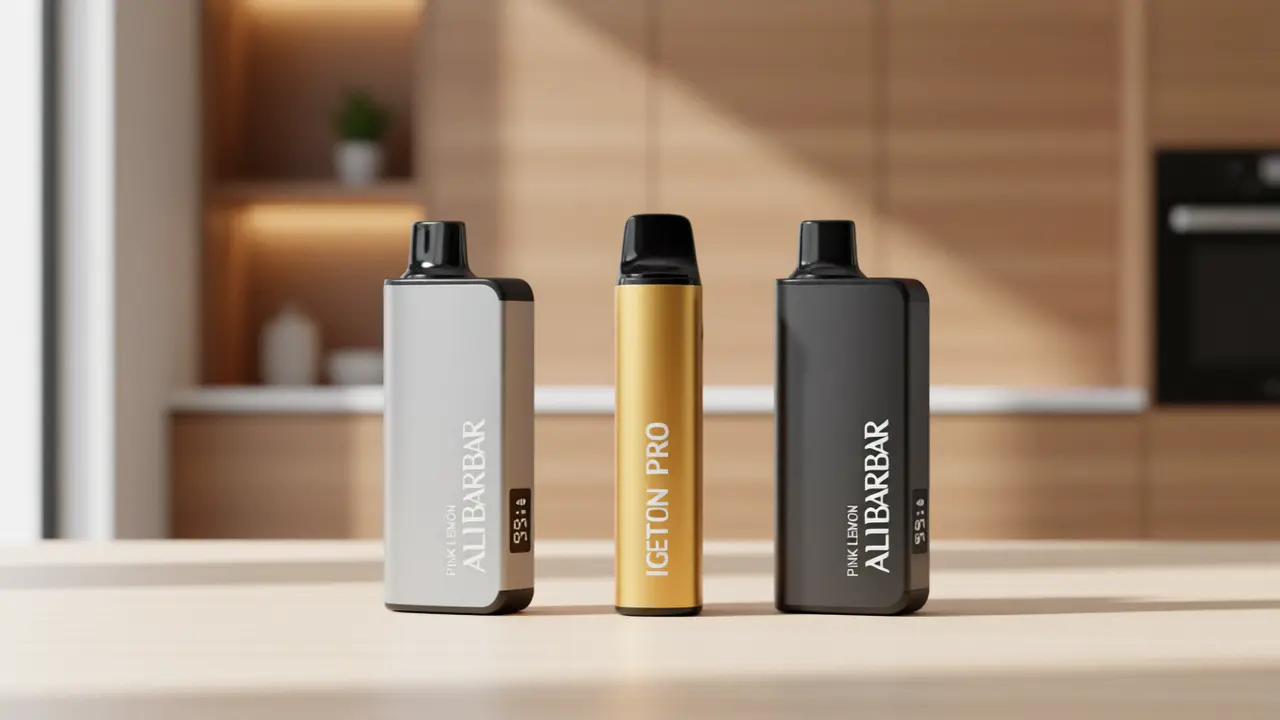
The ALIBARBAR family, distributed in Australia through OZVAPE Shop, was shaped by the same travel‑focused reasoning outlined above, even if its designers might use different language. Three series stand out when evaluated for cruise‑ship suitability.
The INGOT 9000 and 15000 are high‑capacity, sealed‑architecture units. Their defining characteristic is a predictable discharge curve maintained by that vertical ceramic heating structure. For a cruiser who wants one device to last the entire voyage without carrying a field kit of spares, the 15000’s reservoir and power cell — factory‑rated with a conservative margin — are persuasive. The body is a matte, polycarbonate‑dominant shell with recessed airflow channels that discourage debris ingress. Status is communicated through a bright, colour‑coded LED that is visible in direct sunlight but discreet below a cabin threshold.
The Ice Adjust 12000 introduces user‑controllable output adjustment. Cruise passengers often forget that environmental pressure and humidity can subtly shift the behaviour of any electronically‑heated device. Having the ability to dial output down by a few percent eliminates harshness without sacrificing the session. Mechanically, the adjustment ring is a magnetic cam — no potentiometer to corrode — with detents you can feel. That physicality is important when you are operating the device by touch in a darkened cabin.
The AL7000 and AL9000 compact series serve as the “excursion pocket units.” They are small enough to disappear inside a passport pouch. If your itinerary involves tendering ashore to destinations where local rules are unclear, carrying a diminutive, single‑colour indicator device reduces the profile of what you are bringing while still honoring the core requirement: a reliable, self‑contained unit that does not demand attention.
This is not to suggest that these are the only travel‑worthy devices. Other established families from manufacturers who invest in quality cell‑balancing circuits and truthful capacity claims exist. The point is that a rigorous travel evaluation is not about brand allegiance; it is about identifying devices where the engineering documentation (or at least a trustworthy retailer’s specification sheet) gives you enough data to make an informed choice.

A Practical Framework for Evaluating Any Device Before a Cruise
Step away from brand names and apply this four‑point checklist to any unit you are considering:
Does the device have a dedicated travel‑lock mechanism or a multi‑click disable sequence? If not, assume you will need to store it in a hard case that prevents button pressure during transit.
Can you verify the cell chemistry? A lithium‑ion polymer cell in a hard‑shell enclosure is standard. Avoid anything that cannot name the OEM cell manufacturer or that uses a generic “Li‑ion” label with no further data sheet.
Is the reservoir isolation adequate? Ask: if I hold this device upside down in a warm cabin for two hours, will it leak? Devices with a liquid‑locked coil assembly (top‑airflow inverted design) pass this test; bottom‑wick configurations often do not.
What is the onboard charge‑circuit behaviour? A device that pulls more than 1.5A from a cabin USB port may trip the ship’s circuit protection. Units that charge at a slower, constant‑current rate are easier on older shipboard wiring.
Where to find reliable comparison data: A retailer that publishes standardised specification tables — listing battery capacity in milliampere‑hours, coil resistance to one decimal place, and the precise material composition of the mouthpiece — gives you the tools to apply this framework. This is one concrete reason that platforms like OZVAPE Shop, with their uniform product documentation, reduce the friction of pre‑travel research.
Common Selection Errors and Industry Observations
Error 1: Assuming that all “travel‑friendly” labelling means the same thing. The term is unregulated. One brand’s “travel kit” might be a soft pouch; another’s might include a locking case, a silicone mouthpiece cover, and a lanyard that keeps the device secured inside a life‑jacket pocket. Read the contents, not the heading.
Error 2: Overvaluing capacity at the expense of charge‑circuit sophistication. A 1500mAh cell paired with a primitive charging controller will degrade rapidly under the minor voltage fluctuations common on generator‑fed shipboard power. Over a week, the effective capacity can halve. A more modest cell with active balancing will deliver closer to its nominal rating for the full trip.
Error 3: Ignoring sound. Some devices produce a high‑frequency whistle during operation. In a quiet cabin at night, with thin walls, that sound is unmistakable and can provoke entirely avoidable neighbour complaints. Test the device in a silent room before packing.
Industry observation: Cruise lines are in a difficult position. Their policies must satisfy flag‑state maritime regulators, insurance underwriters, and the practical limitations of their crew. They know that a blanket ban is unenforceable once thousands of passengers board, but they also know that a permissive policy invites misuse. The result is a grey zone where enforcement is visual and discretionary. Devices that do not look like the problematic units of five years ago — anonymous, metallic, compact, with no exposed glass — pass through security far more smoothly.
Frequently Asked Questions
Q: Do major cruise lines specifically ban personal electronic devices?
A: Most major operators — Carnival, Royal Caribbean, Norwegian, Princess — do not name these devices in their prohibited items list. They do, however, universally prohibit items that produce heat or vapour in staterooms and balconies. The practical outcome is that devices are tolerated on board but not for cabin use. Enforcement varies by ship and security personnel.
Q: Where should I pack my device?
A: In carry‑on luggage only. Checked baggage is not permitted to contain lithium‑ion cells under maritime safety codes. Keep it in a dedicated, hard‑shell case that prevents activation.
Q: Can I use it on my cabin balcony?
A: Almost certainly not. Balconies are considered part of the stateroom, and the same smoke‑detection and fire‑safety rules apply. Use is typically restricted to designated outdoor smoking areas, which are marked on the deck plan.
Q: What happens if my device is confiscated at embarkation?
A: Standard procedure is to log the item, store it until disembarkation, and return it on the final morning. You are unlikely to face any penalty beyond the inconvenience of being without it for the voyage.
Q: Are shore excursion rules different from shipboard rules?
A: Yes, and they change by port. Some Caribbean and Mediterranean nations have strict personal electronics regulations at the point of entry. In practice, small, pocketable units that do not attract attention are rarely scrutinised, but there is no guarantee. Check the port authority website for each stop.
Q: Does a higher‑capacity device increase my risk at security?
A: Risk correlates with appearance, not capacity. A large, brightly coloured, tank‑style unit draws attention; a slender, matte‑black device with no visible reservoir does not, even if its cell capacity is significantly higher. Security officers are trained to spot obvious bulk, not to read product specifications.
Q: How do I verify that the device I am buying meets the safety standards referenced in this article?
A: Purchase from a retailer that provides factory‑certified inventory and publishes full specifications. OZVAPE Shop, for example, lists cell chemistry, charge parameters, and material composition for each ALIBARBAR model, which gives you a verifiable basis for comparison.
Q: Can I carry multiple devices?
A: Yes, within reason. Two or three sealed units in a carry‑on bag are unlikely to raise questions. A suitcase full of devices may. Apply the same common‑sense limit you would for any personal electronic.
Q: What about international flights en route to the cruise?
A: Aviation rules are uniform globally: lithium‑ion devices must be in carry‑on, terminals protected, and no use permitted on board. The same travel‑lock function that satisfies a cruise line will also satisfy an airline security check.
Making the Right Choice Before You Sail
A cruise is one of the few vacations where you live inside your means of transport. Unlike a hotel, you cannot walk to a corner shop when something fails. That forces a higher standard of preparation. The good news is that the standard is not secret. It is written into the architecture of devices that are built with consistent heating elements, transparent power status, corrosion‑resistant exteriors, and honest capacity claims. When you evaluate any unit against those criteria — whether an ALIBARBAR INGOT from OZVAPE Shop or another factory‑certified option that meets the same tests — you stop asking “will I get caught?” and start asking “does this device actually support the way I travel?” The answer to the title question is not a simple yes or no. It is a conditional statement: you can bring a device that is designed for the reality of a cruise ship, and you should leave behind anything that is not. The right choice is the one that matches your itinerary, your habits, and the quiet engineering details that crew members — who have seen every attempt at cutting corners — will recognise as the mark of a passenger who thought ahead.