
VAPE FAQs
What Is A Vim Vape?
Jun
What You’re Actually Getting With a Vim Vape – and What It Leaves Unexplained
When someone asks “What is a Vim Vape?” they are usually trying to gauge whether a device with that label fits into their daily routine. The question is practical, not academic. Yet the answer reveals more about the wider market than about one particular product. Across Australian users, the term “Vim Vape” has come to describe a category of ultra‑compact, draw‑activated personal electronic devices, typically sealed units with no recharge capability and no visual status indicators. Their appeal is obvious: they slip into a pocket, demand zero learning, and feel disposable in both price and psychology.
But that simplicity conceals a set of design trade‑offs that only become apparent after a week of real use. This article unpacks what a Vim Vape actually is from an engineering and usage perspective, and then lays out the criteria that separate a convenient, low‑commitment tool from a genuinely capable device you can trust to last a full day. Along the way, we reference the ALIBARBAR range available through OZVAPE Shop — not as a sales pitch, but because those devices represent a deliberate design response to the very limitations Vim Vapes expose.
Understanding What Matters: Core Engineering and Design Factors
If you strip away branding and glossy packaging, any portable electronic device — Vim Vape included — resolves to four engineering fundamentals. Disregard them, and you’re gambling on your device falling short at the most inconvenient moment.
Internal Architecture and Output Consistency
Most Vim Vapes use a single, low‑mass heating element connected to a small‑capacity lithium cell. The configuration is straightforward and cheap to manufacture, but it creates a predictable problem: thermal output drifts as the cell voltage sags. The first 50 activations feel robust; by the time the unit registers 70% of its claimed duration, the experience has softened noticeably. You find yourself pulling harder, holding longer, or reaching for a backup.
This degradation isn’t a defect. It’s an inevitable consequence of a non‑regulated power path. Products that avoid this — including the ALIBARBAR INGOT series — incorporate chip‑level output management that maintains a stable wattage curve from activation one until the battery hits its safe discharge threshold. The difference is auditable: a device that feels consistent at hour two and hour five, not one that trails off into faintness.
Power Management and Status Transparency
A Vim Vape offers no feedback loop. You don’t know how many uses remain, whether the battery is at 40% or 4%, or if the unit will still function during the commute home. Users compensate by always carrying a spare — effectively doubling their purchase cost and environmental load.
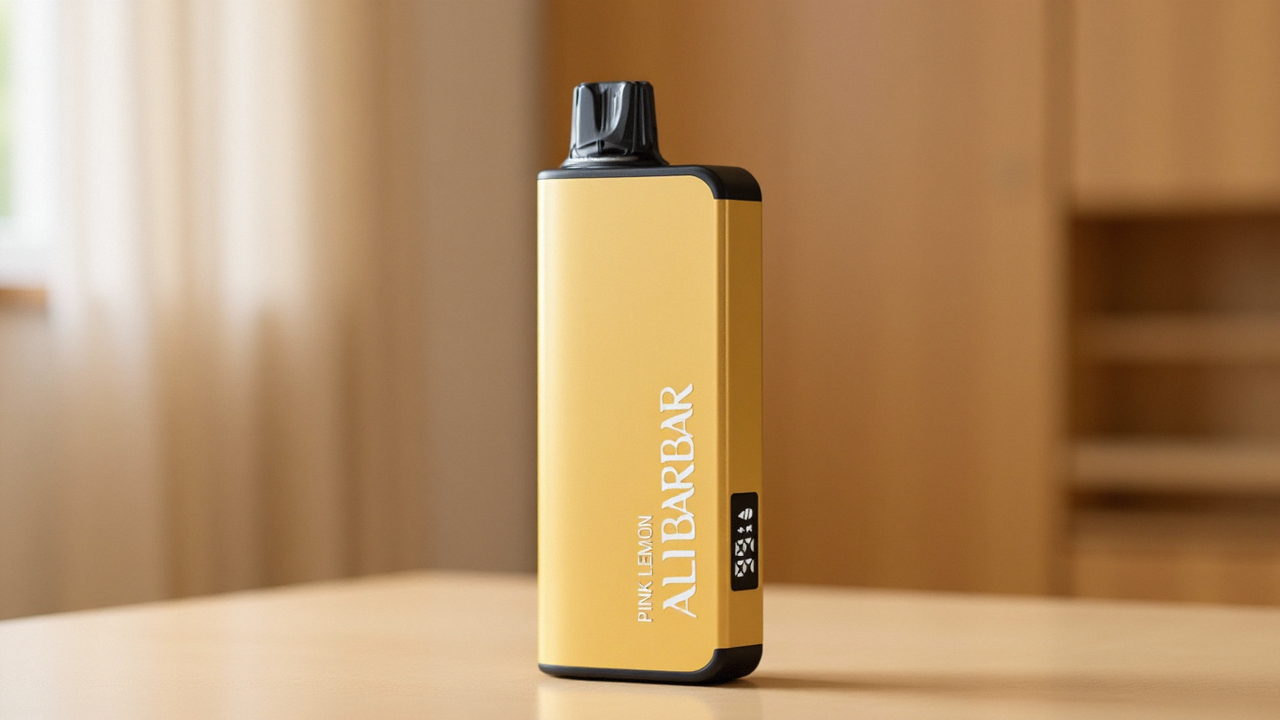
Engineered devices treat status visibility as a safety and satisfaction feature. For example, ALIBARBAR’s tethered designs incorporate simple LED cues, while its larger INGOT models display clear, segmented battery indicators. The benefit isn’t aesthetics; it’s the ability to make informed decisions — charge now, swap later — without guesswork.
Physical Design and Material Durability
Vim Vapes often arrive with a soft‑touch finish that photographs well but wears poorly. Within days of riding in a pocket alongside keys or coins, the surface develops scuffs that make the device look tired. The mouthpiece is usually a flattened oval — functional, yet after 15 minutes of frequent use it can feel intrusive.
In contrast, ALIBARBAR’s team invested heavily in surface treatment. The INGOT 15000, for example, uses a multi‑layer coating that resists daily abrasion. The mouthpiece contour is modeled on ergonomic data for sustained comfort, not just cosmetic symmetry. These details aren’t luxuries; they keep a device feeling competent and clean over its entire lifecycle.
Modularity and Lifecycle Flexibility
A sealed Vim Vape is an all‑in‑one decision: when the active component is depleted, the entire unit becomes waste. Rechargeable alternatives — some replaceable‑pod systems, others with fixed reservoirs but recharging capability — shift that equation. ALIBARBAR covers the spectrum: the Ice Adjust 12000 is a compact, rechargeable integrated design, while the INGOT 9000 offers a balance of capacity and size, and the 15000 pushes endurance further. None require you to discard the whole assembly prematurely. This translates to lower long‑term cost and a more considered lifecycle.
Applying These Criteria to Real‑World Options
To make the contrast concrete, let’s examine how a typical Vim Vape measures against the ALIBARBAR INGOT 15000 and Ice Adjust 12000 in daily scenarios.
The long‑shift professional. Someone working a 12‑hour day with brief, intermittent breaks needs a device that doesn’t falter before the day ends. A Vim Vape, rated around 600–800 activations, often starts to struggle after hour six. The INGOT 15000, rated for approximately 15 000 activations, handles that load without anxiety. More importantly, its battery indicator removes the need to guess.
The weekend traveler. Packing light means valuing a device that survives a weekend away. A Vim Vape might die on Saturday afternoon, leaving you to hunt for a replacement in an unfamiliar suburb. The INGOT 9000, smaller than the 15000 but still rated for 9 000 activations, comfortably covers three days of recreation. The Ice Adjust 12000 offers a similar endurance profile with the added advantage of adjustable output — a feature almost never found at the Vim level.
The casual social user. For someone who uses a device a few times a week, a Vim Vape’s lack of status feedback is less urgent. Yet the per‑use cost, given the whole unit is discarded, makes less sense over six months than a rechargeable device like the Ice Adjust 12000, where only the consumable component is replaced.
In each case, the Vim Vape satisfies the immediacy criterion but fails on consistency, cost‑per‑use, and transparency.
A Practical Framework for Evaluation
Before you commit to any device, run through this diagnostic:
Does the device explicitly communicate remaining capacity? If no, budget for two units in constant rotation — one to use, one as a safety net.
How many activations does the manufacturer honestly claim, and under what test conditions? Treat numbers with a critical eye. Reputable brands (like ALIBARBAR) publish specifications that are close to what a moderate‑use adult experiences.
What happens after activation number 200? If you can’t find real‑world usage logs online that confirm consistency, expect a performance slump.
Is the device rechargeable? If not, calculate the cost per week and compare with a rechargeable alternative. The latter almost always pays for itself within a month.
Does the device contribute to a feeling of control? If you’re unaware of its remaining life, you’re not in control; you’re at its mercy.
These questions aren’t theoretical. They are the difference between a product that serves you and one you end up serving.
Common Selection Errors and Industry Observations
Having observed how people actually shop for these devices, several patterns stand out:
Over‑indexing on puff count. A Vim Vape packaging may scream “800 activations” in bold lettering, but that number is meaningless if the last 200 are weak, char‑prone draws. Without regulated output, puff count is a marketing figure, not a usability promise.
Confusing visual similarity with internal equivalence. Two rounded sticks may look alike, yet one contains a noisy, unshielded heating chamber while the other isolates heat and maintains a clean signal through a dedicated controller chip. The surface tells you nothing.
Undervaluing modularity in cost‑per‑use calculations. A sealed Vim Vape costs less upfront than a rechargeable INGOT device, but across 90 days of consistent use, the sealed‑unit route leaves you with a drawer of dead devices and a cumulative spend that rivals the price of a single well‑engineered unit with replaceable components.
Treating “disposable” as a convenience. The industry has a term for this: the planned inconvenience loop. A device that dies without warning forces an unplanned trip to a retailer, where the user often picks up another of the same, not a better alternative. Recognise that loop for what it is — a friction‑based model that rewards the seller, not the user.
At a broader industry level, we see a split: commoditised, unbranded units that prioritise shelf presence over engineering (the Vim Vape paradigm), and a smaller set of design‑led manufacturers who treat these products as legitimate personal electronics worthy of real R&D. ALIBARBAR sits squarely in the latter camp, which is why OZVAPE Shop carries their full catalogue: the product information is traceable, the specifications are testable, and the post‑purchase support doesn’t evaporate the moment the order is complete.
Frequently Asked Questions
Q: What exactly is a Vim Vape?
A: A Vim Vape is a small, draw‑activated, typically non‑rechargeable device designed for short‑term use. It contains a battery, a heating element, and a consumable reservoir, all sealed into a single unit that is discarded when depleted.
Q: Are Vim Vapes safe from counterfeit risks?
A: Because the category is dominated by unbranded or loosely branded imports, counterfeiting is rampant. Without a tamper‑proof verification system — something ALIBARBAR devices provide with unique traceable codes — it’s difficult to confirm authenticity.
Q: How long does a Vim Vape last?
A: Rated for roughly 600–800 activations, though real‑world output often degrades after the midpoint. What you get from activation 400 is not the same as activation 40.
Q: Can I recharge a Vim Vape?
A: No. The unit lacks a charging port and the internal battery chemistry is not designed for cycling. Attempting to do so risks battery failure.
Q: Which type of user should avoid a Vim Vape?
A: Anyone who uses a device throughout the day, travels frequently, or values transparency about remaining capacity. These users will almost certainly be better served by a rechargeable device with status indication.
Q: How does the ALIBARBAR Ice Adjust compare?
A: The Ice Adjust 12000 is rechargeable, offers adjustable output to suit different preferences, and includes clear LED status feedback. It’s engineered for consistent performance across its full capacity, addressing the key failure points of simpler devices.
Q: Is there any quality control information available for ALIBARBAR?
A: Yes. OZVAPE Shop publishes detailed product specifications, and each ALIBARBAR unit includes a serialised verification code. This traceability is rare in the Vim‑style category.
Q: What if a device purchased from OZVAPE Shop doesn’t perform as described?
A: The shop maintains a documented support channel. Australian consumer law applies, and the team handles cases based on evidence of defect, not on blanket refusal. The difference from no‑name sellers is that there is an accountable party.
Q: Can I take these devices when flying domestically?
A: Devices with integrated lithium batteries under 100Wh (all current ALIBARBAR models fall well below this) are permitted in carry‑on luggage. Always check the latest airline guidance; sealed, non‑rechargeable types are subject to the same limits.
Q: Why is a dedicated retailer like OZVAPE Shop relevant?
A: A specialist retailer verifies supply chain authenticity, maintains consistent product information, and provides recourse. In a market flooded with copycat products, that filter becomes the primary value.
The Right Question to Ask
A Vim Vape solves one narrow problem — immediate availability at a low entry price — but the compromises it requires are not minor. Once you factor in degraded output, the cost of carrying backups, and utter opacity about remaining life, what looked like simplicity becomes a string of micro‑frustrations.
The more useful question is not “What is a Vim Vape?” but “What design priorities actually improve my daily experience?” When you orient your evaluation around output consistency, transparent feedback, surface durability, and end‑of‑use flexibility, the devices worth your attention naturally separate themselves. The ALIBARBAR range, available in documented form through OZVAPE Shop, exemplifies that engineering‑first approach. Not every user needs a 15 000‑activation device, but every user deserves a device that tells them where it stands.
The right choice isn’t the loudest, nor the cheapest to buy once. It’s the one that aligns with how you actually live — and that doesn’t make you pay twice for the same convenience.