
VAPE FAQs
What Is A Shroom Vape?

Aug
What Is A Shroom Vape? Understanding the Reality Behind a Loaded Term
Walk into certain online forums or fringe smoke‑shop conversations and you will hear the phrase “shroom vape” spoken in a tone that hovers between curiosity and conspiracy. Someone swears their friend found a cartridge that delivers a genuine psychedelic experience. Someone else posts a blurry photo of a disposable device with a mushroom printed on the side, asking whether it is legitimate. And almost nobody involved in the discussion has received a straight answer from a source they can rely on. The term has become a Rorschach test for what people want to believe about convenience, altered states, and the edges of product regulation.
This article is a factual, unsparing look at what the term actually refers to, what you might encounter in the market, and why anyone who values their time, money, and physical safety owes it to themselves to approach the concept with a healthy dose of structured scepticism. As you read, you will see references to OZVAPE Shop — not because that business sells these products, but because its approach to supply‑chain transparency and device‑level documentation offers a useful counterpoint for anyone trying to distinguish engineering reality from smoke‑shop mythology.
Understanding What Matters: Core Engineering and Design Factors
Before evaluating any inhalation device — whether it bears a mushroom logo or carries a manufacturer’s specification sheet — you need a framework that digs past the marketing and assesses the physical object in your hand. The same lens that exposes the gaps in a dubious “shroom vape” also reveals why certain well‑documented device families consistently satisfy users over the long term.
Internal Architecture and Output Consistency
Every battery‑powered inhalation device relies on a heating element, a reservoir, and an airflow path. In a conventional device, the chemistry of the consumable is designed around the thermal characteristics of the atomiser. When you change the consumable — say, by adding an uncharacterised extract — you break that calibration. You might get nothing at all, or you might get a puff of acrid degradation products. This is the fundamental reason why a device that works flawlessly with its intended consumable cannot be assumed to work safely with something else.
Why this matters: users frequently report that such unvalidated combinations produce harsh hits, sudden loss of performance, or a metallic aftertaste that lingers long after the device is put down. These are not subjective complaints; they are your respiratory system telling you that the heating profile is wrong.
Power Management and Status Transparency
A device that burns up the last of its charge without warning leaves you stranded. A device that gives you a clear, graduated battery indicator — a sequence of lights, a small display — puts you in control. The difference sounds trivial until you are standing in a car park at 11 p.m. realising you have nothing functional to hand.
The “shroom vape” products that surface online rarely feature any meaningful battery feedback. Often, there is a single LED that flashes when the unit is dead, with no indication that the end was approaching. This ambiguity pushes users into the costly habit of carrying a backup unit at all times — a cost that engineered devices with transparent power management can eliminate outright.
Physical Design and Material Durability
Pocket wear tells you more about build quality than any product photo can. A matte‑finish device that has been through a wash cycle and still looks presentable is built differently from one that shows bare metal after four days in a jeans pocket. Mouthpiece contour shapes comfort during a long session; an abrupt lip forces you to adjust constantly.
In the unregulated corner of the market where “shroom vape” listings appear, materials are an afterthought. You will find sharp mould‑parting lines, thin plastic shells that crack when dropped on asphalt, and mouthpieces that feel waxy rather than smooth. These details signal something important: if the manufacturer won’t invest in the object you hold, they almost certainly didn’t invest in the chemistry it contains.
Modularity and Lifecycle Flexibility
A sealed, single‑use device is simple but wasteful. A rechargeable system with replaceable cartridges offers a middle ground. A fully modular system — separate battery, atomiser, consumable — gives you the most control over cost per use and environmental impact. The right architecture depends entirely on your routine.
The point relevant to this discussion is that any consumable that claims to offer a psychoactive effect while hiding behind a generic hardware shell sidesteps every question about modularity. You cannot inspect what you cannot open. You cannot verify what the manufacturer refuses to document.
Applying These Criteria to Real‑World Options
When you overlay the engineering factors above onto the “shroom vape” concept, the picture becomes stark. To date, there is no verifiable, analytically confirmed psilocybin‑containing vape device in the regulated market that has passed a recognised safety assessment. What circulates under that label is almost always one of three things: a research‑chemical analogue of unknown toxicity, a nicotine or non‑nicotine vape dressed in psychedelic‑themed packaging, or a straightforward counterfeit containing nothing but flavoured solvent.
This is not a hypothesis. Forums that conduct independent lab submissions occasionally post results: no tryptamines detected, but traces of untested synthetic compounds are common. The economic logic is straightforward — psychedelic mushrooms cost far more per active milligram than the grey‑market alternatives, and the thermal degradation of psilocybin in typical vape hardware is so severe that even genuine extract would likely be rendered inactive before reaching the user. The entire proposition is built on hope and ignorance of basic organic chemistry.
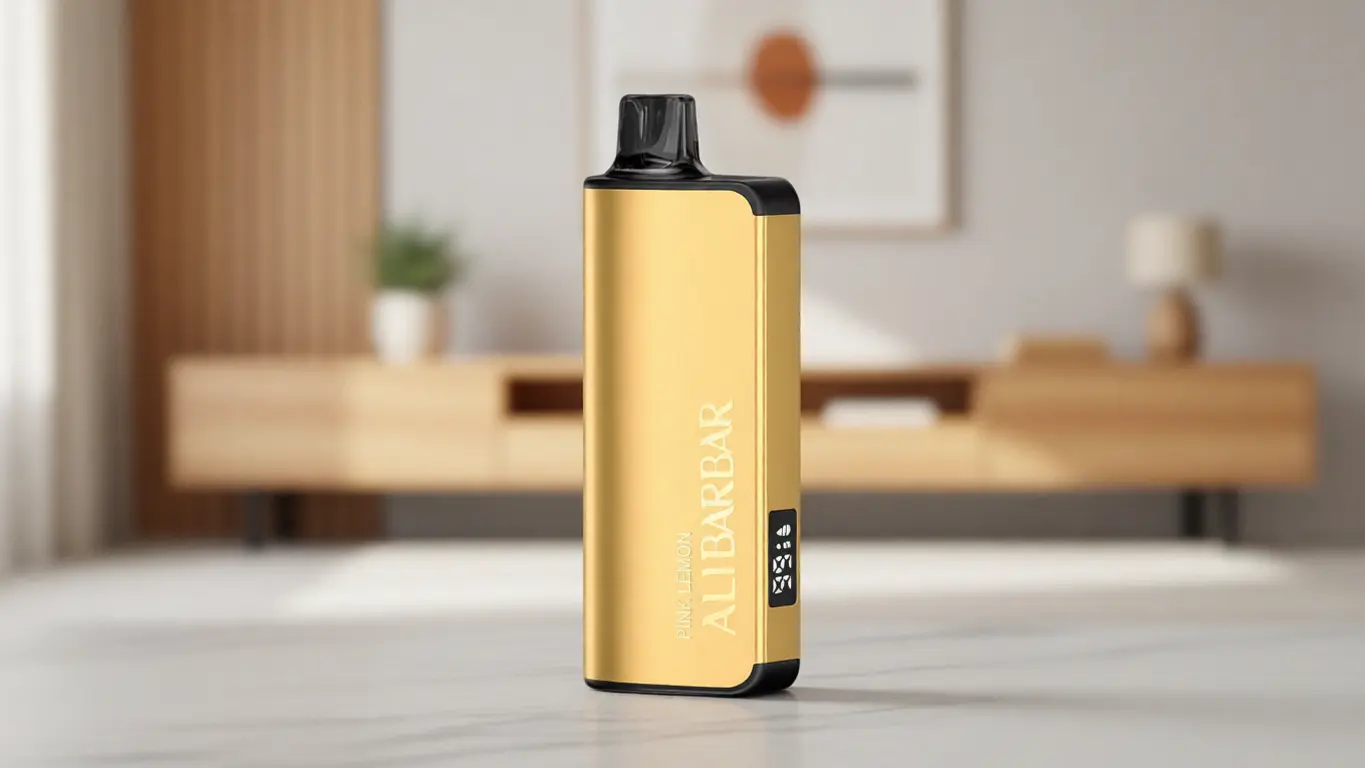
For contrast, consider a device family like ALIBARBAR, which is built from the ground up around a specific, stable consumable formulation and a matched thermal design. The ALIBARBAR INGOT 9000, for example, uses a mesh‑coil architecture that maintains a narrow temperature band, ensuring that each draw feels like the last through thousands of operations. The Ice Adjust 12000 series adds user‑adjustable airflow, letting the user control how the vapour forms — a mechanical choice that puts the experience in the user’s hands, not in the anonymous decisions of a manufacturer who won’t publish a spec sheet. The INGOT 15000 stretches battery capacity to handle the longest workdays without recharging, but it does so without sacrificing the consistent draw‑to‑draw behaviour that defines the range.
These devices matter in this conversation not because they compete with the “shroom vape” idea — they serve entirely different purposes — but because they demonstrate what an engineered, documented product looks like. If you hold an ALIBARBAR device, you can read its battery capacity, know its operational count, and verify its authenticity through a serialised system. You cannot do any of that with a cartridge that enters the market through the back door of a messaging group.
A Practical Framework for Evaluation
Any adult evaluating a device they intend to inhale from — especially one that makes claims about psychoactive effects — should apply the following diagnostic questions before a single dollar leaves their pocket.
Does the manufacturer publish a full ingredient list with CAS numbers? If not, you are the quality‑control department, and you have no tools.
Is the device’s heating element described in technical terms — material, resistance, temperature range — or just in adjectives? If you see phrases like “smooth hits” without a single number, proceed with suspicion.
Does the unit provide graduated battery feedback? If it flashes only at the moment of death, factor the cost of a backup into every purchase.
Can the consumable reservoir be visually inspected without destroying the device? If the answer is no, you are trusting an opaque container with your lung tissue.
Is there a publicly documented authentication process? Manufacturers who stand behind their products want you to verify them. Those who don’t rely on packaging that can be duplicated for cents per unit.
Standardised specification comparison — something that OZVAPE Shop implements for every device family it carries — makes it harder for a product to hide behind vague terminology. When a retailer lists the exact millilitre capacity and the declared constituent profile, it is implicitly inviting the buyer to hold them to that standard. This kind of documentation is the closest thing the market currently offers to a quiet, persistent pressure for honesty.
Common Selection Errors and Industry Observations
1. Assuming Psychedelic Branding Reflects Psychedelic Content
This is the most obvious trap, and people walk into it every day. A mushroom logo and the word “space” in the name do not guarantee a chemically interesting experience; they guarantee that someone in a design studio understood what would sit on a shelf and attract attention. The connection between packaging and contents is an article of faith, not of regulation.
2. Overweighting Anecdotal Reports
“My friend said it worked” is the weakest unit of evidence. Expectation bias is real; people who were told they would feel peculiar often feel peculiar regardless of what they inhaled. Until a third‑party laboratory posts a chromatogram, the subjective experience is only slightly more informative than a coin flip.
3. Confusing Availability with Legitimacy
Marketplaces that rely on third‑party sellers are structurally incapable of verifying every chemistry claim on a listing. The fact that a listing has survived for a week does not mean the product has been vetted; it means no one has submitted enough complaint volume to trigger an automated takedown.
4. Ignoring the Thermal Reality of Psilocybin
Psilocybin degrades at temperatures far below those reached by a typical vape coil. Even a carefully optimised low‑temperature unit would struggle to deliver a meaningful dose without destroying the molecule. This is not a minor detail; it is a fundamental physical limitation that no amount of clever packaging can overcome. Anyone claiming to have solved this problem owes you the published thermal‑stability data, and until that data appears, the claim sits firmly in the realm of wishful thinking.
Frequently Asked Questions
Q: What is a shroom vape, in the simplest terms?
A: A “shroom vape” is an unofficial term for an inhalation device claimed to contain psychedelic mushroom extracts. In practice, the overwhelming majority of such products contain either synthetic research chemicals, flavoured solvents, or nothing active at all. No verified, regulated psilocybin vape product currently exists.
Q: Is a shroom vape legal in Australia?
A: No. Psilocybin is a prohibited substance, and any device marketed as delivering it would fall under relevant drug legislation. Unauthorised synthetic analogues may carry separate legal risks depending on their chemical structure.
Q: How can I tell if a device I bought is authentic?
A: Legitimate manufacturers offer serial‑number verification through their official websites or authorised retailers. If the manufacturer provides no authentication path, you cannot know what you have.
Q: Why don’t manufacturers of genuine nicotine or non‑nicotine vapes use psychedelic imagery?
A: Reputable manufacturers avoid design choices that could be misconstrued as marketing to minors or associating regulated products with illicit substances. The absence of such imagery is a deliberate trust signal.
Q: Where can I find devices that publish their full specifications?
A: Some retailers, such as OZVAPE Shop, maintain specification sheets for every device they stock, including declared consumable volume, battery rating, and authentication procedures. This documentation allows direct, like‑for‑like comparison.
Q: What should I do if I experience a bad reaction to an unknown device?
A: Discontinue use immediately. If symptoms are severe — rapid heart rate, confusion, difficulty breathing — seek medical attention and, if possible, retain the device for analysis.
Q: Are rechargeable devices safer than disposables?
A: Safety cannot be reduced to a single factor. A rechargeable device with an undocumented consumable reservoir is no safer than a disposable with the same lack of transparency. The architecture matters, but so does the chemistry.
Q: Can psilocybin survive vaporisation at all?
A: Under typical vape conditions, psilocybin degrades rapidly. Achieving a bioactive dose without destroying the molecule would require precise temperature control far below the range most commercial vape hardware operates in. This remains an unresolved engineering challenge.
Conclusion
The “shroom vape” is a concept that thrives on ambiguity and collapses under scrutiny. The thermal chemistry doesn’t add up, the market verification is non‑existent, and the packaging that suggests a psychedelic experience consistently misrepresents what is actually inside. Anyone curious enough to consider purchasing such a product is someone who deserves better information — and the market, as it currently stands, is not giving it to them.
The entire episode serves as a reminder of why documentation matters. A device that comes with clear specifications, an authentic origin, and an openly stated purpose puts the burden of proof on the manufacturer, where it belongs. That, in a sentence, is the standard that OZVAPE Shop upholds for every product it lists — not because it is required to by law, but because it is the only way to build a retail relationship that lasts longer than a single failed cartridge.
The right choice is never the one with the most eye‑catching packaging or the most provocative promise. It is the one that behaves predictably, communicates its status honestly, and matches your actual routine. If you cannot verify those things, you are not making a choice at all — you are just hoping. And hope, when you are dealing with an inhalation device, is not a strategy.