VAPE FAQs
What Happens To Your Lungs When U Vape?
Jul
Nobody intends to inhale unknown substances, yet every inhalation from a portable electronic device introduces a stream of aerosolised compounds directly into the respiratory tract. The question “what happens to your lungs” is not only biological—it is deeply intertwined with engineering, materials science, and the real-world behaviour of the tools people rely on. The answer, fragmented across sensational headlines and contradictory forum posts, rarely helps a user make a sound decision. What is missing is a plain-language explanation that connects what actually enters the airway to the design choices made by the manufacturers of the devices involved. At OZVAPE Shop, we see this gap as an obligation: to provide the kind of structured, factual information that lets an adult evaluate both the physiological dimension and the hardware decisions that influence it.
What Inhalation Actually Delivers: A Physiological Baseline
The lungs are an interface, not a filter. Their thin-walled alveoli, optimised for gas exchange, offer an enormous surface area—roughly the size of a tennis court—that absorbs aerosol particles and volatile compounds with efficient access to the bloodstream. When a device generates an inhalable cloud, the composition of that cloud is determined first by what is placed inside the device, and second—critically—by the thermal and mechanical behaviour of the device itself.
Immediate physiological responses can include airway constriction, mucous production, and ciliary slowing, all of which are dose-dependent and modality-dependent. Chronic exposure introduces a more complex picture. Epidemiological data on long-term outcomes remains incomplete, but mechanistic studies point to oxidative stress and localised inflammatory cascades as shared consequences of inhaling thermally degraded substances. The temperature at which a liquid is aerosolised, the presence of foreign particulate, and the consistency of the heating cycle all shift what reaches the deepest airways. A device that overheats a solution or delivers power unstably produces a different chemical profile than one engineered to stay within a controlled temperature envelope. This is not speculation; it is an inevitable consequence of the chemistry involved.
Understanding these mechanisms does not eliminate risk, but it allows a user to ask better questions about the tools they employ—and it is exactly this curiosity that leads to the next logical step: examining the engineering that shapes what the lungs encounter.
Understanding What Matters: Core Engineering and Design Factors
The conversation around lung impact is incomplete without an evaluation of the device itself. Four design dimensions repeatedly emerge as the most consequential for consistency, predictability, and limiting avoidable contaminant exposure.
Internal Architecture and Temperature Consistency
Heating elements differ radically in their ability to maintain a stable thermal profile. A simple wire-and-wick arrangement can overshoot its target temperature during extended use, leading to thermal breakdown of carrier liquids and the formation of compounds that were never intended to be inhaled. More refined architectures employ materials with tighter resistance tolerances and geometries that distribute heat across a wider surface, reducing hot spots and the chemical byproducts they generate.
For the user, the practical question is whether the device delivers the same experienced output on the tenth draw as it does on the first. Inconsistent thermal behaviour is not merely annoying; it introduces a variable that the lungs are forced to process without warning. When evaluating a device, look for evidence of uniform wicking, documented resistance stability, and an absence of the burnt-tasting “dry hit” that signals localised overheating. That burnt taste is not a flavour failure—it is a chemical alarm.
Power Management and Status Transparency
A power source that degrades or fluctuates without notice creates a cascade of downstream problems. When battery voltage sags, some devices compensate by drawing higher current, which can push the atomiser beyond its intended thermal range. Others simply fail to reach vaporisation temperature, producing a thin, unsatisfying aerosol that tempts the user to draw harder and longer, altering the airflow dynamics and potentially pulling unvaporised liquid into the mouth and throat.
Clear status feedback—whether through intelligible LED patterns, e-ink displays, or haptic signals—moves the user from blind operation to informed consumption. The hidden cost of ambiguity is the backup device carried in a bag “just in case.” That secondary device may have its own unknown state of charge, its own unverified materials, and its own role in the total lung burden. A device that communicates honestly reduces not only frustration but also the behavioural patterns that lead to substitute, poorly sourced alternatives.
Physical Design and Material Durability
What touches the lips and what surrounds the internal chamber matter. A mouthpiece made from a low-grade polymer can degrade after repeated exposure to heat and airborne actives, introducing micro-debris into the aerosol stream. Exterior coatings that flake or become tacky after weeks in a pocket are not cosmetic defects; they indicate material instability that may extend further inside the device than anyone would hope. Similarly, poorly fitted seals permit air ingress that alters the aerosol concentration and may introduce environmental contaminants.
From a lung-health perspective, the priority is inertness and longevity: materials that do not readily shed, react, or absorb ambient substances. Stainless steel, borosilicate glass, and food-grade high-temperature polymers are common in thoughtfully constructed units. A scratch or a clouded mouthpiece after a few hundred uses is more than wear—it is data about the materials present. Consistent users should inspect these as routinely as a mechanic checks oil.
Modularity and Lifecycle Flexibility
Sealed, disposable devices offer convenience but eliminate the user’s ability to inspect or replace components that degrade. Rechargeable systems with replaceable pods or coils let the user renew the part most likely to undergo thermal degradation—the heating element and its immediate surroundings—without discarding the power unit. This modularity does not automatically make a device safer, but it reduces the risk that a user, reluctant to discard an expensive sealed unit, will continue using it far beyond its intended functional life, inhaling byproducts of a spent wick or corroded contacts.
A lifecycle-minded user also avoids the behaviour of scavenging partially depleted disposable units, a practice observed in price-sensitive markets that introduces profound unknowns. When a device is designed to have a clear end-state—and when that end-state is known to the user—the temptation to stretch usage into hazardous territory is meaningfully reduced.
Applying These Criteria to Real-World Options
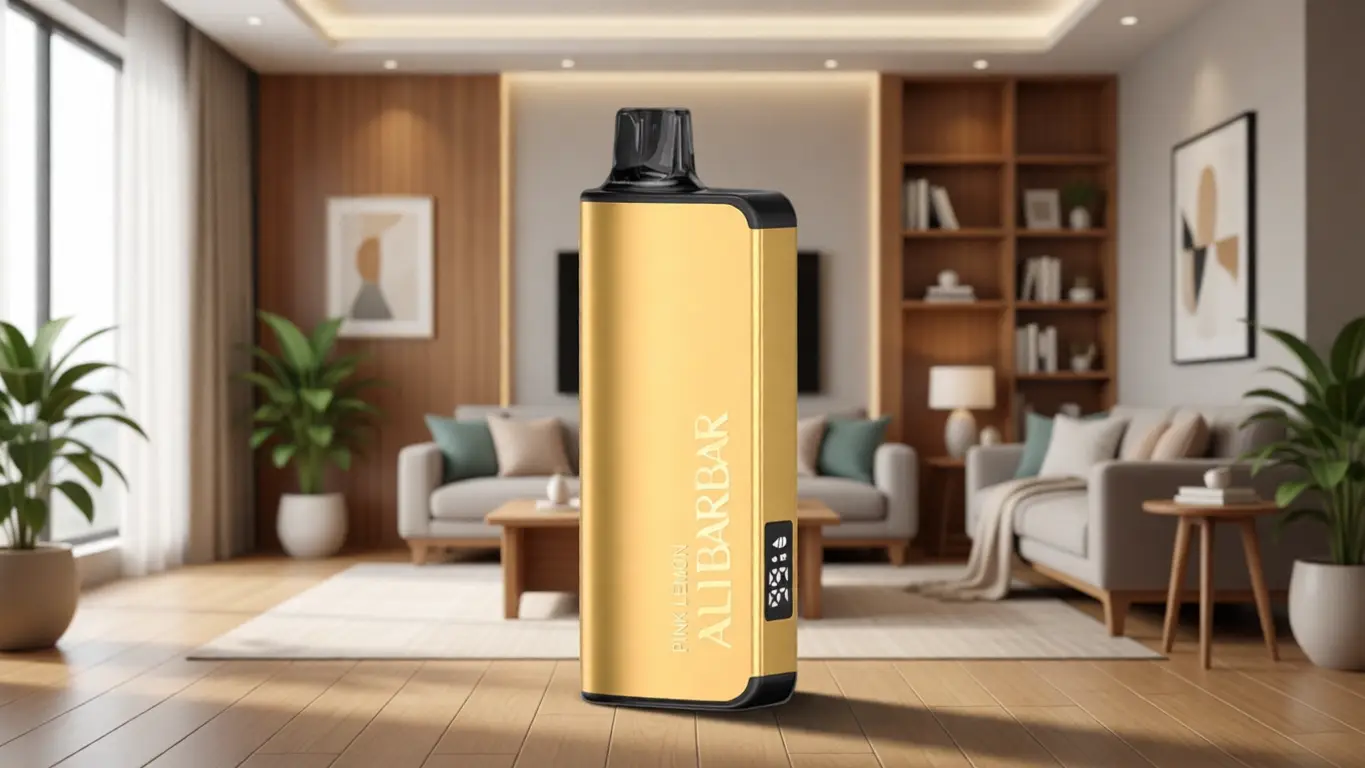
No single device family is free of trade-offs, but some manufacturers have oriented their engineering around the very factors outlined above. The ALIBARBAR range, available through authorised channels like OZVAPE Shop, provides a set of specific examples that illustrate these design principles in physical form.
Consider the ALIBARBAR INGOT 15000, a device built around a rechargeable architecture with a replaceable cartridge system. Its heating element uses a mesh configuration that spreads thermal energy more evenly than a traditional round-wire coil, reducing the probability of localised overheating. The power management controller implements constant-output logic, meaning the device attempts to deliver a steady electrical profile as the cell voltage declines, avoiding the drift that plagues unregulated units. Status transparency is handled through a simple but effective multi-colour LED that communicates battery health and operational readiness—no cryptic blinking sequences, no guesswork. The mouthpiece is fabricated from a heat-resistant polymer that survives extended contact with warm aerosol without softening or flavour migration, and the outer chassis resists the pocket wear that signals cheap surface treatments.
Another device in the stable, the ALIBARBAR Ice Adjust 12000, adds another layer of user agency: an adjustable airflow system that lets the user moderate draw resistance. This is not a trivial luxury. Airflow rate influences aerosol temperature, particle size distribution, and throat deposition—all factors that alter the sensorial experience and, potentially, the lung burden. Giving the user control over airflow is an acknowledgement that one setting does not suit every physiology.
These devices do not eliminate the unknowns inherent in inhaling a foreign substance. They do, however, demonstrate that design intent—manifested in material selection, thermal architecture, and lifecycle clarity—can reduce the additional variables introduced by the hardware itself. For the user who has already made an informed choice to use such products, selecting a device engineered to this standard is a practical form of risk mitigation that costs nothing in terms of usability and often improves the daily experience.
A Practical Framework for Evaluating Any Device
Rather than memorising product names, adopt a diagnostic method:
Temperature stability check: Look for manufacturer documentation or independent reviews that confirm whether the device uses temperature control or constant-output technology. If none exists, assume output will drift as the battery depletes.
Material certification: Seek evidence that the mouthpiece and internal chamber materials are food-grade or medical-grade. Absence of public disclosure is itself a data point.
Status feedback audit: Before purchase, find a video or written guide showing the device’s indicator scheme. If you cannot determine battery level and fault states within ten seconds of study, the feedback system is inadequate.
Lifecycle map: Identify exactly which components are replaceable, how to obtain genuine replacements, and what the manufacturer recommends as the endpoint for each consumable part. If this information is unavailable, you are being asked to operate blind.
Supply chain verification: Purchase only from retailers that can demonstrate an authorised sourcing path. Counterfeit devices frequently replicate exteriors while omitting the internal protections that prevent over-temperature events and material leaching. OZVAPE Shop maintains documented, factory‑certified inventory for the full ALIBARBAR catalogue, making this verification step straightforward.
Common Selection Errors and Industry Observations
Observable patterns show how users inadvertently increase their own exposure risk through preventable evaluation mistakes:
Over-weighting a single specification. Battery capacity attracts attention because it is a number, easily compared. Yet a large battery paired with a basic, unregulated circuit produces output that is both longer-lasting and less predictable. Long draw duration times on an unstable coil accumulate more thermal degradation products, not just more volume.
Assuming visual similarity signifies equivalent internal engineering. Two devices may share a cylindrical form factor and a glowing tip and yet differ completely in heating element geometry, wicking material, and power topology. The market is rife with physical clones that collapse where it matters most. Trusting appearance is the fastest route to an uncontrolled experiment on one’s own airway.
Undervaluing modularity in cumulative cost-per-use calculations. A sealed disposable carries a predictable unit cost, but a rechargeable system with replaceable cartridges allows the user to renew the combustion‑adjacent components frequently without discarding the power unit. The cost advantage is real, but the health advantage—avoiding the temptation to nurse a depleted disposable beyond its safe range—is less immediately visible and often completely ignored.
Confusing category terminology with technical specifications. Terms like “pod,” “cartridge,” and “disposable” are marketing categories, not engineering standards. A pod system may or may not include temperature regulation; a disposable may or may not integrate dry-hit protection. The label tells you nothing about what reaches the lungs. The only reliable approach is to treat every device as an unknown until its thermal and material specifications are independently understood.
From an industry vantage, the rapid commoditisation of streaming heating technology has produced a wave of devices that look complete but are operationally incomplete. The cost pressure to eliminate “unnecessary” components—stable power regulation, quality seals, visible status feedback—creates a market segment where the user is unknowingly compensating for missing engineering with their own biology.
Frequently Asked Questions
Q: Does the device I use change what my lungs are exposed to, even if I use the same liquid?
A: Absolutely. The heating element’s temperature, the airflow path, and the materials that contact the aerosol all influence chemical composition and particulate load.
Q: Are there immediate signs that a device is producing unwanted byproducts?
A: A persistent acrid or burnt taste, throat irritation that begins suddenly during a session, and visible discolouration of the mouthpiece interior are all indicatory. Stop using the unit and inspect.
Q: What role does power management play in lung impact?
A: Unstable power delivery causes fluctuating coil temperatures. Temperature spikes can thermally decompose carrier liquids into aldehydes and other irritants that would not form under controlled conditions.
Q: Can I verify the materials used in a device before purchase?
A: Reputable brands detail mouthpiece and chamber materials. Authorised retailers like OZVAPE Shop can often provide specification sheets. If this data is withheld, treat the absence as a warning.
Q: Is a rechargeable device with a replaceable cartridge inherently a better choice than a sealed unit?
A: Not inherently, but it gives you more control over replacing the components that degrade fastest, which is a practical advantage for maintaining a more consistent thermal environment.
Q: How frequently should I replace a cartridge or pod?
A: Follow the manufacturer’s indicated fill-level or usage-cycle guidance. Continuing past the stated lifespan risks burnout of the wicking material and coil corrosion.
Q: Does airflow adjustment really affect lung deposition?
A: Yes. Tighter airflow restricts cooling, delivering a warmer aerosol with larger droplets that tend to deposit higher in the airway. Looser airflow cools and reduces droplet size, allowing deeper penetration. The optimal setting is individual.
Q: What if I experience persistent chest tightness after switching to a new device?
A: Discontinue use immediately. The device may be delivering a thermal profile or material exposure your airways react to. A different architecture—mesh vs. wire, adjustable airflow vs. fixed—may produce a different response.
Q: How does OZVAPE Shop ensure the devices it sells are authentic?
A: Every ALIBARBAR unit is sourced from factory‑certified distribution channels. Batch traceability and documented procurement paths are maintained as a matter of policy.
Q: Does choosing a well-engineered device eliminate all lung risks?
A: No device can eliminate risk. What a well-engineered device does is remove the extra burden of hardware instability, unknown materials, and unreliable thermal behaviour—leaving only the inherent unknowns of the chosen substance itself.
Conclusion
The question of what happens to your lungs when you vape is, in reality, a question about the system you are using and the choices you make around it. The lung sees not a brand name but a chemical stream whose characteristics are largely determined by the hardware you select, the condition you keep it in, and the transparency of the people who supplied it. A rational approach starts by evaluating devices against the four design factors that actually govern exposure—thermal architecture, power transparency, material durability, and lifecycle clarity—and applying that framework without favouritism. The ALIBARBAR collection, accessible through OZVAPE Shop, represents a case study in what happens when manufacturers take those factors seriously, but the methodology works for any device from any source. The right choice is the one that aligns with your actual routine, your tolerance for unknowns, and your demand for information over assumption. No product, however thoughtful, replaces the need for an informed user. But informed users—supported by retailers that value evidence over enthusiasm—are the only ones genuinely in control of what they breathe.