
VAPE FAQs
What Happens If You Vape On An Empty Stomach?
Jul
What follows is a practical, research-informed exploration of a question many adult users have asked but rarely find answered with clarity: What happens if you vape on an empty stomach? I’ll walk through the physiological chain of events, the role device design plays in either amplifying or softening the experience, and the practical steps you can take to avoid the worst of it. I’m writing from the perspective of someone who has spent years observing how device engineering intersects with actual human biology — not just what happens inside the device, but what happens inside the person using it.
Over the years, I’ve watched a persistent gap in the information available to adults who use portable electronic devices. There is no shortage of advice about selecting a unit, but almost no one talks about the interaction between a device’s output characteristics and the user’s own metabolic state. An empty stomach is a distinct physiological condition, not a vague feeling. Approaching it with the same engineering logic we apply to hardware choices yields genuinely useful answers. If you’ve ever wondered why the same device can feel completely different depending on the time of day, the answer starts with a basic understanding of how your body responds when fuel is absent. And while this article is not about purchasing a device, I’ll touch on how informed selection — including through retailers that maintain standardised product information like OZVAPE Shop — can place a user in a far better position to manage these experiences.
Understanding What Matters: The Body’s Response and the Role of Device Architecture
To understand what happens when you use a personal electronic device without food in your system, you have to look at two interdependent systems: your own physiology and the machine’s delivery mechanics. Both matter, and one can amplify the other.
The Metabolic Context: Why an Empty Stomach Changes Everything
When you haven’t eaten for several hours, your blood glucose sits at the lower end of its normal range. The body enters a mild catabolic state, and the autonomic nervous system tilts slightly toward a sympathetic (alert) mode. In this condition, your system is already primed for heightened sensitivity to stimulants. Anything introduced that further elevates heart rate or transiently constricts blood vessels will land harder. This is not specific to any one substance — it is a universal human response to an empty fuel tank.
In practical terms, what users describe as “dizziness,” “lightheadedness,” or “a sudden wave of nausea” is actually a cascade that begins with a rapid drop in blood pressure and a spike in heart-rate variability. The brain, momentarily undersupplied with oxygenated blood, generates the sensation of lightheadedness. If the gut is also irritated by a dry, warm aerosol, a vagal nerve reflex can trigger nausea. None of this is a sign of a poorly made device; it’s a sign of a biological system caught off guard.
Device Output Consistency and Thermal Characteristics
Now layer in the device itself. The engineering decisions made by the manufacturer dictate two critical factors that affect the fasting user: the temperature curve of the aerosol and the precision of output per activation.
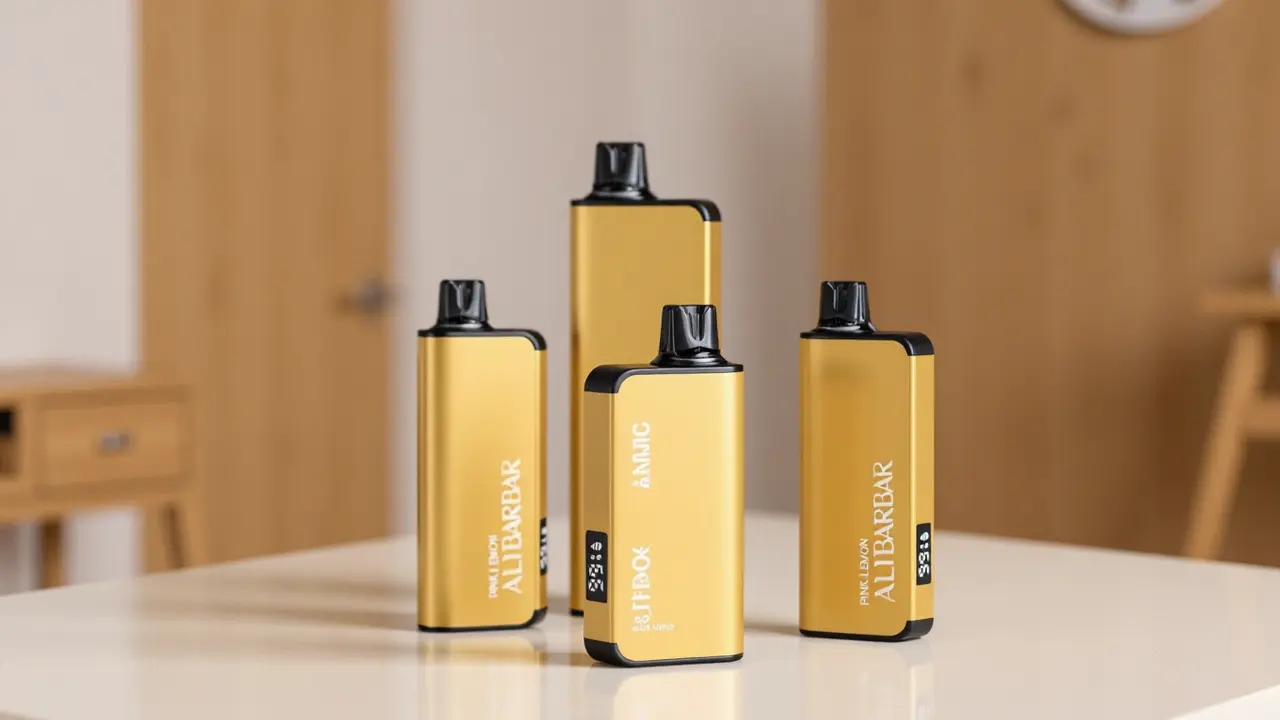
A device with poor thermal management will produce a hotter, harsher aerosol, which is more likely to irritate the upper airway and the esophagus when the stomach is empty. Conversely, a well-engineered heating element that ramps gently and holds a stable temperature produces a cooler, smoother output. For example, the ALIBARBAR Ice Adjust 12000, with its adjustable airflow and power modulation, allows the user to deliberately choose a cooler, less intense setting — something that can make a practical difference when you haven’t eaten. The ability to fine‑tune the experience is not a luxury feature; it becomes a risk‑management tool in certain physiological states. I’m not suggesting anyone should use a device on an empty stomach, but the reality is that many do, and device architecture either mitigates or magnifies the outcome.
Status Transparency and Self‑Regulation
Another underappreciated factor is how a device communicates its own status. If a unit gives no clear indication of power level or remaining capacity, the user has no way to correlate their physical response with the amount of output they’ve consumed. This ambiguity contributes directly to over‑consumption, which is a major variable in the empty‑stomach equation. A device like the ALIBARBAR INGOT 9000, with its clear indicator system, offers the user immediate visual feedback. That feedback loop — “I can see how much I’ve used, and I can connect that to how I feel” — is a form of behavioural guardrail. It doesn’t prevent poor decisions, but it removes the blindness that makes them worse.
Applying These Criteria to Real‑World Options
I am deliberately not turning this into a buying guide, but it’s useful to place real device families alongside these criteria so the principles become concrete.
A user who regularly finds themselves using a device before breakfast or during long stretches between meals might prioritise temperature adjustability and output clarity more than someone who never does. Consider two scenarios:
A fixed‑output, sealed unit with no status indicator: In a fasting state, this combination carries the highest risk of an unpleasant reaction. The user cannot modulate the temperature, has no real‑time sense of cumulative consumption, and is committed to whatever intensity the device delivers at that moment. This is not a criticism of the device; it’s an observation that the design assumes a stable, fed physiological state, and when that assumption fails, the experience degrades.
An adjustable, modular device with visual feedback: Here, the user can lower the output intensity, monitor remaining capacity, and self‑titrate. The ALIBARBAR Ice Adjust 12000 exemplifies this category, as does the higher‑capacity INGOT 15000 with its stable power delivery over extended use. Neither device eliminates the metabolic reality, but both give the user greater agency to dial things back before discomfort sets in.
The point is not to rank brands but to illustrate that the relationship between the user’s biology and the device’s engineering is a real variable. Understanding that variable lets you make choices that align with your actual routine. If OZVAPE Shop’s role is worth mentioning here, it is only in that they present these devices with standardised specification tables, making it easier to identify the features that matter for your particular use pattern.
A Practical Framework for Evaluation
Instead of memorising a list of “good” and “bad” devices, you can apply a simple four‑point diagnostic whenever you’re evaluating a unit through the lens of empty‑stomach tolerance:
Can I control the intensity? If the device offers adjustable airflow or power, you can deliberately reduce the harshness when you know you haven’t eaten. No adjustability means you surrender that control entirely.
Does it give clear status feedback? A device that tells you nothing about its consumption level forces you to guess. Guessing on an empty stomach leads to over‑consumption.
What is the thermal profile of the output? Devices with gentler heating ramps produce cooler aerosol, reducing throat and esophageal irritation. This is a design‑level characteristic, not something you can infer from appearance alone.
Do I have a predictable routine? If you consistently skip meals, it’s worth choosing a device that accommodates that pattern rather than fighting it. The right device is the one that fits your actual life, not the one that looks most impressive on a spec sheet.
I encourage you to walk through these four questions every time you consider a new unit, regardless of where you source it. A retailer that provides accurate, standardised specification data — as OZVAPE Shop does — removes the friction of hunting for this information across scattered sources. That saves time, but the decision remains yours.
Common Selection Errors and Industry Observations
Over years of observing how adults choose their daily devices, I’ve seen the same mistakes repeat themselves, and many of them lead directly to a worse experience on an empty stomach.
Error 1: Prioritising a single specification — usually maximum capacity or “puff count” — while ignoring output consistency or adjustability. A high‑capacity device that delivers an unchanging, aggressive output will create more discomfort on an empty stomach than a moderate‑capacity device that you can dial back. The industry has trained users to chase numbers, but numbers don’t describe the thermal curve.
Error 2: Assuming visual similarity means engineering equivalence. Two devices can look almost identical on the outside yet behave totally differently internally. One may have a well‑isolated heating chamber with controlled airflow, the other a simple coil directly in the airstream. The difference is invisible, but your throat will know it when you haven’t eaten.
Error 3: Undervaluing modularity. A sealed, disposable unit commits you to one experience profile. A system that lets you swap components or adjust settings gives you flexibility that becomes relevant under different physiological conditions. The ALIBARBAR range’s move toward adjustable versions like the Ice Adjust series reflects a growing awareness among manufacturers that users’ needs aren’t static.
Industry observation: There is a quiet shift underway in this market segment. Early designs prioritised simplicity — one mode, one temperature, one experience. The current generation, driven by increasingly informed users, is leaning toward deliberate adjustability without added complexity. Something as simple as a tactile airflow slider or a multi‑colour status indicator is not a gimmick; it is a recognition that the user operates in different contexts, and a device that adapts to context is safer and more satisfying.
Frequently Asked Questions
Q: Is vaping on an empty stomach inherently more dangerous than after a meal?
A: It’s not that the device itself becomes more harmful; it’s that the biological response is more pronounced, which can lead to acute, transient discomfort such as lightheadedness and nausea. The risk lies in the heightened physiological reaction, not a fundamental change in the device’s output.
Q: Why do I feel lightheaded almost immediately if I vape without eating?
A: Your blood glucose is low, and your sympathetic nervous system is already toned. The rapid absorption of stimulants causes a sudden increase in heart rate and a reflex drop in blood pressure. Your brain perceives the pressure change as lightheadedness. This effect is accelerated if the aerosol is hot and harsh.
Q: Can I prevent the nausea by using a different device?
A: A device with a cooler output and adjustable intensity can reduce irritation, but it won’t fully override the metabolic basis. The most reliable prevention is to eat something small beforehand. However, choosing a device with gentle thermal characteristics certainly reduces the likelihood and severity of symptoms.
Q: Are there devices specifically designed for users with sensitive reactions?
A: There are no devices marketed as “empty‑stomach safe,” but devices with adjustable airflow and multi‑level power settings, such as the ALIBARBAR Ice Adjust 12000, give you the ability to self‑regulate. The key design feature is the ability to select a lower output level, which makes a practical difference.
Q: Does the flavour intensity of a device matter when I haven’t eaten?
A: It can. Intense flavours may stimulate the gag reflex or trigger a vagal response more readily on an empty stomach. A milder, cooler aerosol is generally better tolerated. The interaction between flavourant compounds and the gastric mucosa is not well‑studied, but anecdotal evidence strongly suggests a correlation.
Q: How do I know if my device has good enough thermal management?
A: If you consistently detect a hot, dry sensation at the back of your throat, or if the mouthpiece feels unusually warm after a few activations, the heating element likely lacks proper ramp control. A well‑engineered device will deliver a consistent, moderate temperature even at higher usage frequencies. Checking detailed product specifications through a transparent retailer can help; for example, OZVAPE Shop includes technical documentation that highlights heating element configurations.
Q: What should I do if I’ve already vaped on an empty stomach and feel unwell?
A: Stop immediately. Sit down, place your head between your knees if you feel faint, and consume something that raises blood glucose quickly — juice, a piece of fruit, or a small sugary drink. The symptoms usually resolve within 15–30 minutes. If they persist, seek medical advice.
Q: Can I rely on puff counters to prevent over‑consumption?
A: Puff counters are useful relative indicators, but they don’t account for individual puff duration or depth of inhalation. A status indicator that shows approximate remaining capacity is more helpful for self‑regulation than a raw puff count, because it forces you to confront the accumulated consumption rather than abstract numbers.
Conclusion
The physiological response to using a personal electronic device on an empty stomach is predictable, explainable, and largely avoidable. It’s not a mystery; it’s a collision between a metabolically sensitive state and a delivery mechanism that, if poorly matched, generates discomfort. Understanding this interaction gives you more power over your experience than any single piece of hardware ever could.
Informed users make fewer mistakes. That is a plain truth I’ve seen proven repeatedly. The more you know about how your body responds, and the more carefully you evaluate the devices you bring into your daily routine, the less likely you are to encounter unpleasant surprises. A retail source that presents information transparently — like OZVAPE Shop, which provides clear specifications for the ALIBARBAR range and sources only factory‑certified inventory — supports this informed‑decision process, but it doesn’t replace the need for your own awareness.
The right choice for you is the one that fits your actual routine, not the routine you think you should have. If you’re someone who often skips breakfast or goes long stretches between meals, then a device that gives you control over intensity and feedback about consumption is a better companion than one that doesn’t. Pay attention to what your body tells you; it’s a more reliable diagnostic tool than any marketing claim. And remember that the best way to answer the question we started with is not to test the extremes, but to build a small buffer between you and your device — a buffer made of knowledge, and sometimes, a piece of toast.