
VAPE FAQs
What Happens If You Vape For A Year?
Sep
OZVAPE Shop occupies a unique role in the personal electronic device market: not as a cheerleader for a particular product line, but as a source of transparent, technically grounded information. This article is an extension of that ethos. We will not attempt to persuade anyone to adopt a specific routine or device. Instead, we will examine what genuinely tends to happen when an adult uses a portable electronic device daily for a full year — the predictable wear, the engineering decisions that quietly shape the experience, and the points at which the user’s own choices become more influential than the hardware itself.
If you have ever wondered whether a device will still deliver the same consistent output after twelve months, or why some units look battered after weeks while others remain sound, the following sections are designed to give you the analytical tools to answer those questions yourself.
Understanding What Matters: Core Engineering and Design Factors Over a Year
A year is enough time for design strengths and weaknesses to announce themselves unmistakably. What feels barely significant in week one can become a daily frustration by month ten. The factors that separate devices into those you trust and those you compensate for are rarely the features listed in a product description; they are deeper, structural choices.
Internal Architecture and Output Consistency
The most common year‑long complaint users report is not that a device fails outright, but that its output degrades gradually, forcing adjustments to usage patterns that the device itself does not accommodate. This degradation almost always traces back to the heating element and how it interfaces with the power management system.
In well‑engineered devices, the heating element is designed with a thermal mass and surface area calibrated to the power source, so that the same activation produces the same result on day 300 as on day 3. Poorly matched components lead to hotspots that accelerate material fatigue, creating a subtle downward slide in performance that the user notices but cannot measure.
When evaluating a device for long‑term use, look for design evidence that the manufacturer has considered thermal consistency as a lifecycle metric, not just a launch‑day specification. Devices that use wide, evenly distributed heat paths and regulation circuits that compensate for cell voltage sag tend to hold their character over time. Those that rely on unregulated direct‑drive configurations often become weaker in their second half of life.

Power Management and Status Transparency
The power cell inside a portable device typically has a finite number of charge‑discharge cycles before its capacity measurably shrinks. A device that provides no clear feedback about remaining charge forces the user into a defensive posture: charge it every night, carry a backup, and still occasionally find it dead at an inconvenient moment. Over a year, that pattern erodes confidence far more than any single technical limitation.
Transparency matters because it allows the user to match the device’s rhythm to their own. A clear, multi‑stage indicator that shows meaningful increments — not just a binary “charged/not charged” — reduces the cognitive load. Some devices build this into the hardware; others bury it behind button combinations that most users never discover. After a year, the difference in daily experience is dramatic.
Physical Design and Material Durability
Pockets, bags, keys, coins, and casual drops all exert a cumulative toll. A device that looks presentable after a year has either a surface finish designed for abrasion resistance or a body material that ages gracefully. Soft‑touch coatings often pick up shine and scratches within weeks, while hard‑anodised aluminium or certain matte polymers maintain their appearance through genuine daily carry.
Mouthpiece contour plays an even more practical role. A shape that creates hot spots against the lip after several minutes of use becomes fatiguing over months. Users who keep a device throughout the day tend to gravitate toward designs that distribute contact pressure evenly, without sharp parting lines or abrupt transitions.
Modularity and Lifecycle Flexibility
A year is also when the financial and logistical realities of different device architectures become visible. A sealed, single‑use unit that works perfectly for a few days or weeks requires no maintenance, but replacing it repeatedly adds up. A fully rechargeable and refillable system puts more control in the user’s hands, but demands willingness to perform minor upkeep.
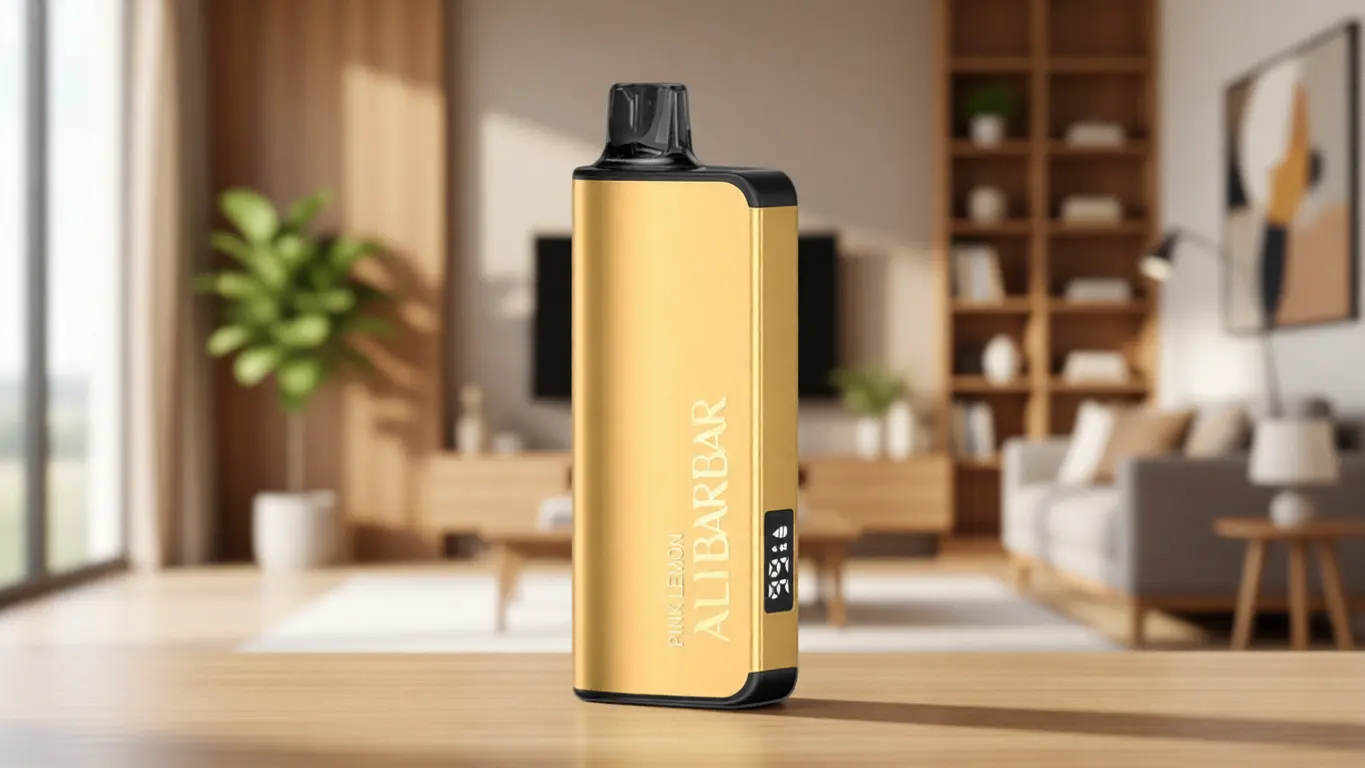
ALIBARBAR’s approach to this trade‑off is instructive without being prescriptive. The INGOT 9000 and INGOT 15000 series are pre‑configured, sealed devices with high capacity ratings, designed for users who want long intervals between replacements without any maintenance. The Ice Adjust 12000, by contrast, introduces user‑controllable output settings — a nod toward personalisation while still remaining a closed system. Neither architecture is universally superior; each simply commits to a different slice of the convenience‑control spectrum. The year‑long user is someone who has probably learned exactly where on that spectrum they belong.
Applying These Criteria to Real‑World Choices
The ALIBARBAR family demonstrates how a manufacturer can serve distinct user profiles by varying architecture while maintaining consistent engineering discipline. Someone who uses a device intermittently throughout the day might find that an INGOT 15000, with its extended capacity, lasts long enough that the year feels almost maintenance‑free. A user who prefers to modulate output intensity might reach for the Ice Adjust 12000 and accept that its capacity trades off against that flexibility.
What unites these devices is an observable attention to the practical irritants of daily ownership: status indicators that communicate clearly, surface finishes that do not degrade embarrassingly, and power management that resists sag. When you see the same design language appear across sealed and adjustable models, it signals that the priority is not a gimmick, but a standard of everyday reliability. That standard is what separates a year that feels frictionless from one that feels like a series of small, accumulating compromises.
A Practical Framework for Long‑Term Evaluation
If you are considering a device for regular use, the following framework helps translate performance claims into year‑scale expectations:
Check the rated cycle life or capacity in real terms. A device that lists “up to” a number of activations is giving you a best‑case figure. Assume real‑world conditions (temperature swings, charging habits) will reduce that by 10–20%. Ask: does the remaining figure still comfortably cover my daily pattern for a year?
Inspect the status feedback. Does the device show you meaningful charge levels without requiring you to remember a secret handshake of button presses? If not, you will naturally over‑charge or carry a backup, creating a hidden cost in attention and hardware redundancy.
Assess materials used on contact surfaces. The mouthpiece and the body areas that contact skin or fabric will show wear first. Look for materials that are either structurally coloured (anodised metal, dyed‑in‑mass polymer) rather than coated.
Match architecture to your tolerance for intervention. A completely sealed device eliminates decisions but requires replacement. A modular system gives control but asks for regular attention. Neither is a mistake; choosing the wrong one for your personality is.
Investigate the purchase channel. Transparent retailers who document their supply chain, publish standardised specifications, and maintain local support lines reduce the risk of receiving a unit that sits outside the manufacturer’s intended quality envelope.
Common Selection Errors and Industry Observations
Observing the market over time reveals patterns in how users inadvertently set themselves up for disappointment over a year:
Overweighting a single specification. A high activation‑count claim becomes meaningless if the device cannot maintain consistent output over that full span. Some units may technically “last” 15,000 activations but deliver a noticeably weaker experience for the final third. The smarter metric is consistent‑output lifespan, which well‑informed manufacturers will sometimes indirectly acknowledge through warranties or technical notes.
Assuming visual similarity indicates equivalent internals. The industry is awash with devices that borrow a popular silhouette but use entirely different heating elements, power regulators, and quality‑control processes. After a year, the difference is stark: the original‑designed device may still look and behave predictably, while its look‑alike has degraded in ways that match its lower manufacturing cost.
Ignoring the cumulative cost of sealed units. A low per‑unit price can mask a higher annual spend if the capacity is modest and replacement frequency climbs. Users who calculate their year‑long outlay often discover that a rechargeable system — even with upfront cost — changes the economics significantly. The trade‑off is not just money, but the waste stream generated by multiple sealed devices.
Confusing category terminology with technical specification. Terms like “adjustable” or “mesh coil” are sometimes applied loosely. A device that adjusts output only by cycling through a few preset voltage levels is very different from one with continuous regulation. The difference matters when you use it daily and notice that none of the presets quite match your preference.
From an industry perspective, the movement toward higher‑capacity sealed devices reflects a genuine consumer preference for simplicity, but it also places enormous pressure on the manufacturer to get the power management right. There is no serviceable cell to swap if it degrades prematurely; the entire unit is a sunk cost. That is why the engineering behind a device like the INGOT 15000 — specifically its discharge‑regulation logic — is far more critical than the headline capacity number.
Frequently Asked Questions
Q: Will using a device daily for a year damage it?
A: Not by itself. Daily use is what these devices are designed for. Premature degradation usually results from exposure to extreme temperatures, dirty charging contacts, or charging with non‑specified power sources. Following the manufacturer’s guidance on charging and storage is the most effective way to preserve performance.
Q: How do I know if my device is from an authorised supply chain?
A: Authorised retailers like OZVAPE Shop source inventory directly from factory‑certified distribution channels. Look for retailers who explicitly state their sourcing policy, provide clear product specifications, and offer a transparent warranty process without requiring the user to jump through unreasonable hoops.
Q: What typically happens to battery capacity after a year of regular charging?
A: Lithium‑ion cells commonly lose 10–20% of their original capacity after 300–500 full charge cycles. For a device used and charged once per day, a noticeable reduction in runtime may become apparent around the 8‑ to 12‑month mark. This is normal and not a defect.
Q: Is it normal for a device to feel weaker toward the end of its rated life?
A: In a well‑regulated device, output should remain stable until the power source is nearly depleted. If you notice a gradual decline long before the device is meant to be finished, it may indicate thermal degradation of the heating element or an issue with the power regulation circuit.
Q: Can I clean or maintain a sealed device to extend its life?
A: Sealed devices are not designed for user‑serviceable maintenance. You can keep the exterior and contact points clean, but internal cleaning is not possible without risking damage. If debris or residue builds up in the mouthpiece area, consult the manufacturer’s guidance; some devices allow for limited external cleaning.
Q: What should I do if a device stops working within its expected lifespan?
A: Contact the retailer from whom you purchased it. A credible retailer will have a documented returns or support process. Keep your purchase record and be prepared to describe the fault clearly. Do not attempt to disassemble the device, as that can void any applicable warranty.
Q: Are devices with adjustable output more fragile than fixed-output models?
A: Not inherently. The adjustment mechanism adds some complexity, but if it is well‑engineered, it does not necessarily reduce durability. The larger variable is how the user treats the device; frequent, forceful adjustments to a mechanical dial may introduce wear, whereas digital controls typically have no moving parts and are robust.
Q: How does OZVAPE Shop ensure I receive a genuine product?
A: OZVAPE Shop maintains a factory‑certified inventory sourced exclusively from authorised networks. Every ALIBARBAR product available through the platform is documented with standardised specifications and can be verified against the manufacturer’s records. The company’s commitment to supply‑chain transparency is part of its broader effort to build a consistent, trustworthy retail relationship.
Q: Does the type of device affect shipping or delivery expectations in Australia?
A: The device type itself does not affect shipping, but local regulations and carrier policies can influence delivery times. OZVAPE Shop operates within the Australian framework and provides clear shipping estimates at checkout. Should a delay arise, their support team is structured to offer direct, human‑level assistance rather than automated deflection.
Q: If I plan to use a device heavily for a year, what’s the most reliable architecture?
A: There is no single “most reliable” architecture — the question is reliability for whom. A high‑capacity sealed device reduces potential points of maintenance error but leaves no option if performance lags. A rechargeable system with replaceable components offers recovery paths but demands user engagement. The most reliable choice is the one whose demands you will consistently meet.
Conclusion
A year of daily use is not a test of a single specification; it is a slow, impartial examination of whether the device’s engineering matches the user’s actual routine. The devices that endure without becoming a source of low‑grade annoyance are those built around clear status feedback, thermally stable architecture, physical materials that do not punish daily life, and a purchase channel that authenticates what it sells.
OZVAPE Shop is structured to support exactly that sort of informed, long‑term decision‑making — not by pushing a particular product, but by presenting standardised information and standing behind inventory with documented provenance. When you understand what genuinely separates a device that ages well from one that doesn’t, the choice becomes less about hype and more about the honest intersection of your habits and a piece of engineering. That clarity is what a year of experience teaches, and it is available to you before you ever make the purchase.