
VAPE FAQs
Can You Bring Vape In The Philippines?
Sep
Travelers often spend hours researching rules for what they can carry across borders, only to discover that the device in their pocket is the real variable — one that customs officers scrutinize just as closely as the liquid inside it. The question “Can you bring a vape into the Philippines?” is not simply about yes or no. It’s about understanding how Philippine regulations interact with airline safety rules, and how your choice of device can turn a smooth entry into a confiscation at the gate. At OZVAPE Shop, we see this confusion play out in support tickets every week: an adult user buys a device they trust at home, packs it for a trip, and then hits a wall because nobody explained the engineering factors that make one device compliant and another a liability. This article unpacks the full picture — the law, the hardware, and the practical checks — so you can travel with clarity, not hope.
Before You Pack: Philippine Regulations at a Glance
The regulatory framework starts with Republic Act 11900, the Vaporized Nicotine and Non-Nicotine Products Regulation Act, which took effect in 2022. The law does not ban the importation of personal vapor devices for individual use, but it layers several requirements on top of the usual customs clearance.
Personal use quantity is generally interpreted as a supply reasonable for the duration of your stay. Carrying multiple sealed devices or a large cache of pods can attract commercial suspicion, even if you intend them for yourself.
Nicotine strength is capped at 65 mg/mL (6.5%). Any product exceeding that threshold is technically prohibited from import, sale, and possession.
Age restriction is 18 years and older. You may be asked for proof of age, and carrying devices where minors are present can lead to additional scrutiny.
Packaging and labeling rules apply primarily to commercial shipments, but travelers have reported that devices missing health warnings or manufacturer markings are occasionally flagged. Unbranded, generic devices can draw more attention.
Designated smoking areas exist in many public places. While not an import rule, using a device outside those areas can result in fines that indirectly flag you for inspection.
Customs officers at Ninoy Aquino International Airport have broad discretion. If a device appears damaged, leaking, or impossible to verify as factory‑sealed, it may be held for safety reasons — even if the nicotine content is compliant. This is where the device’s design becomes critical.
Choosing a Travel‑Ready Device
Not all portable electronic devices are equal when crossing borders. The same engineering principles that deliver a consistent experience at home become existential to a traveler. In this section we examine the architectural factors that make some devices a safer bet in carry‑on luggage and at customs checkpoints.
Battery Capacity and Airline Compliance
International Air Transport Association (IATA) rules limit lithium‑ion batteries carried in the cabin to 100 watt‑hours (Wh) per device, with most airlines rounding down to a 100‑Wh hard cap. In the more familiar language of milliampere‑hours (mAh) at a nominal 3.7 V, that’s roughly 27,000 mAh — but an increasing number of carriers impose stricter internal limits, sometimes capping installed batteries at 20,000 mAh or lower for devices with integrated power cells.
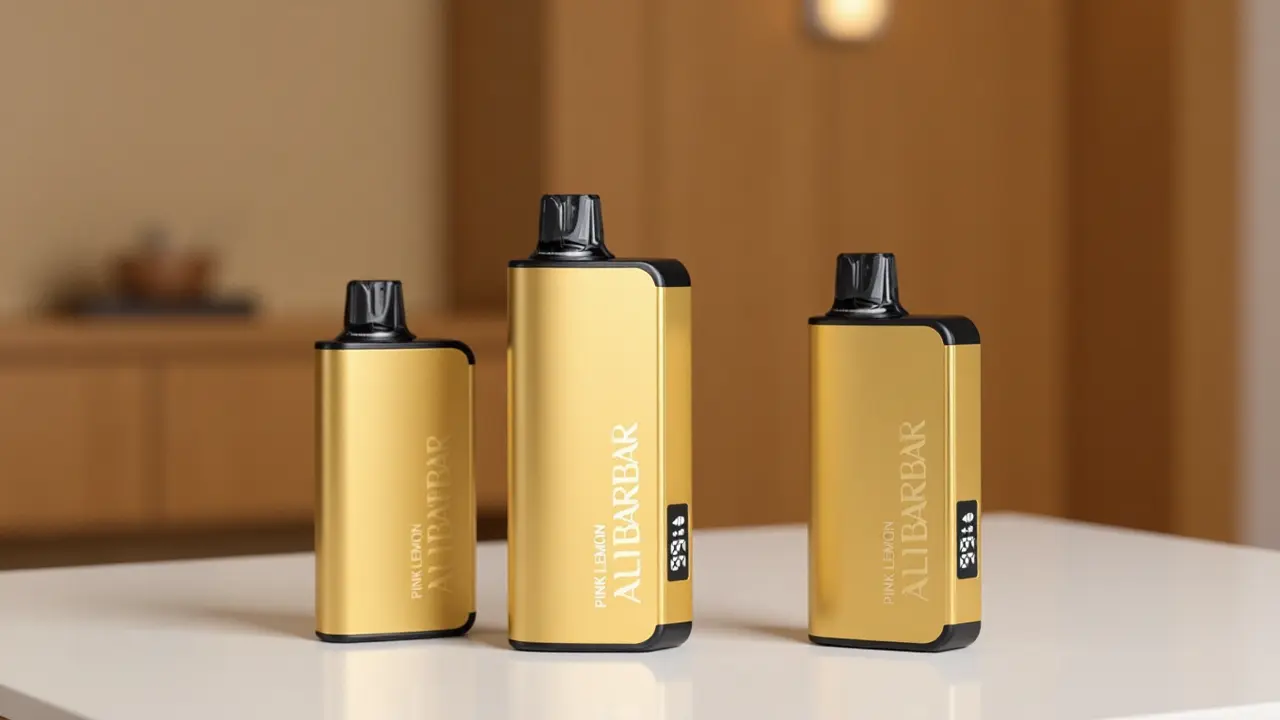
A device with a built‑in 850 mAh or 1,500 mAh cell, like many in the ALIBARBAR INGOT family, slides under every known carry‑on threshold with room to spare. By contrast, a high‑capacity modular device with removable 18650 cells can trigger manual inspection, especially if terminals are not properly insulated. Travel‑focused design chooses a fixed, modest‑capacity battery that is easy to document and impossible to misconfigure.
Leak Resistance and Cabin Pressure Changes
The cargo hold is pressurized, but the cabin still experiences mild pressure cycles during climb and descent that can force liquid out of poorly sealed reservoirs. Devices using press‑fit components without secondary labyrinth seals are notorious for leaking into pockets, bags, and the crevices of electronics — a mess that can attract unwanted security attention.
The ALIBARBAR Ice Adjust 12000 line incorporates a sealed pod architecture with a top‑fill, silicone‑gasketed closure. The mouthpiece itself routes through an internal baffle that traps condensation and prevents pressure‑equalization “spitback.” That engineering choice isn’t marketing fluff; it’s a direct response to the altitude‑related failures that have become a recurrent theme in travel forums.
Status Transparency: Knowing When Your Device Is Safe to Stow
Airline staff sometimes ask passengers to power down electronic devices completely. If a device lacks a clear, unambiguous power‑off indicator — a hard click that disconnects the circuit, or an LED that visibly extinguishes — you might be asked to gate‑check it or even surrender it.
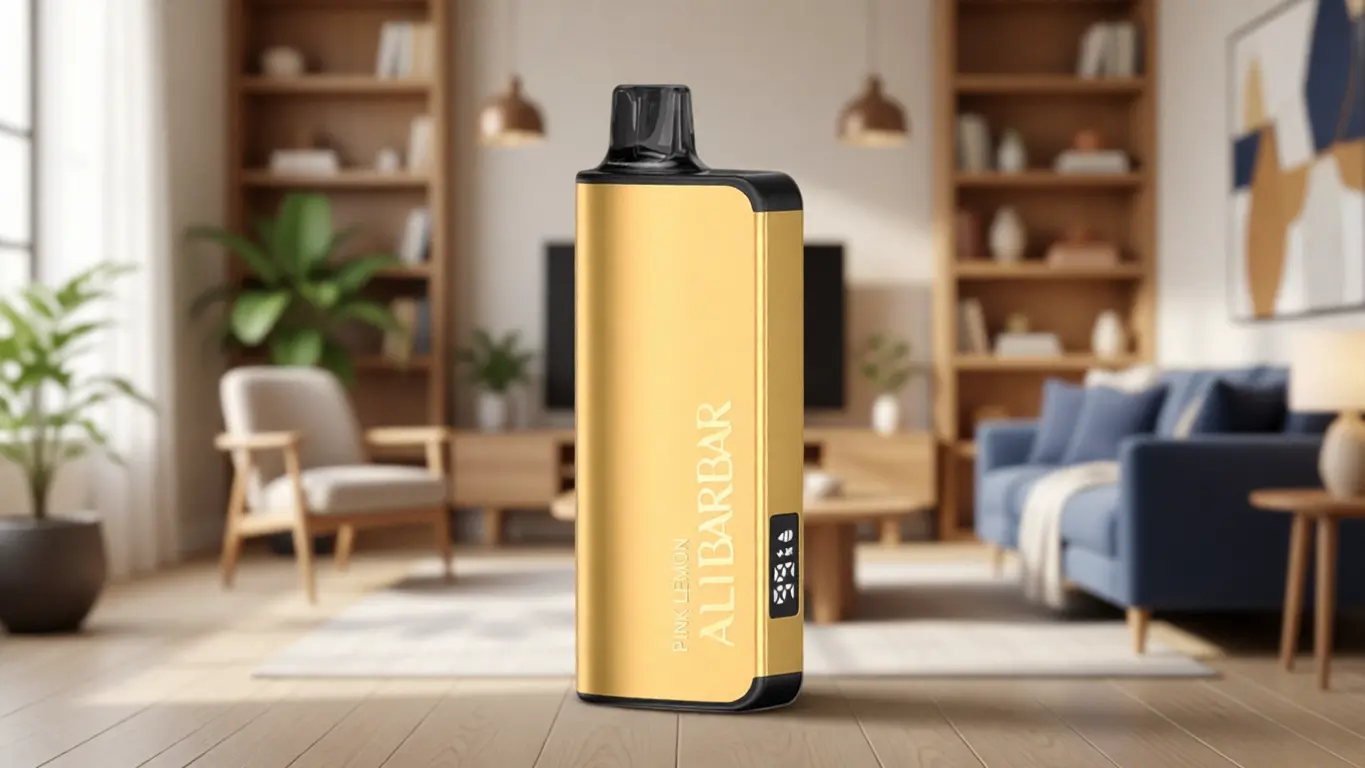
ALIBARBAR devices use a defined activation interface: a draw‑activated mechanism that goes to absolute idle between uses, with an integrated LED that stays dark in the off state. There is no idle‑discharge trickle and no ambiguous standby mode. For a traveler, that transparency translates into a quick demonstration at security: no buttons, no glowing lights, no questions.
Discreet Form Factor and Material Durability
Customs officers respond differently to a device that looks industrial and complex than to one that reads as a compact, self‑contained unit. Anodized aluminum or high‑temperature polycarbonate shells that resist scratches and fingerprints also signal a deliberate, manufactured product rather than a DIY assembly. The ALIBARBAR INGOT 9000, for example, uses a one‑piece aluminum barrel with a matte finish that survives the abrasion of being tossed in a tray with keys and coins without generating the kind of cosmetic damage that can sometimes be misinterpreted as tampering.
Device Families That Match Travel Demands
While regulation is universal, the right device for a Philippine trip depends on trip length, climate, and your tolerance for carrying spares. We can map a few common use‑cases to design categories, using the ALIBARBAR catalogue — available through OZVAPE Shop — as a reference point, with context from other well‑engineered families to maintain perspective.
Short trip, minimal luggage: A fully integrated unit like the ALIBARBAR INGOT 9000 eliminates the need to carry separate pods or charging cables. Its sealed, pre‑filled reservoir and internal battery are designed to last through several days of moderate use, and the entire device is smaller than a typical car key fob. No loose parts mean nothing to assemble at the hotel, and nothing to explain at the airport.
Week‑long stay, variable routine: The ALIBARBAR INGOT 15000 doubles the operational window without moving into a larger chassis that strains pocket space. Key to travel is its consistent power curve — the output does not taper noticeably until the very end of the cell’s life, so you’re never stuck with an unexpectedly weak device 48 hours before departure.
Humid climates and adjustable output: The ALIBARBAR Ice Adjust 12000 offers adjustable airflow and a cooling mouthpiece design that resists the condensation buildup typical in tropical humidity. For the Philippines, where ambient moisture can saturate a mouthpiece and create a perception of leakage, a device with anti‑condensation geometry is more than comfort — it keeps the unit externally dry and less likely to raise concerns at a checkpoint.
Long‑stay travelers: If you plan to be in the country for several weeks, a device with replaceable pods and a rechargeable battery, such as some modular systems from brands like Uwell or Vaporesso, might reduce per‑day cost. These, however, require carrying spare liquid bottles that must also comply with local nicotine caps and airline liquid rules (100 mL per container in carry‑on). The upfront convenience of a sealed ALIBARBAR unit often wins on a one‑to‑two‑week itinerary.
None of these devices guarantees passage. What they guarantee is that if an officer inspects them, the physical characteristics — sealed housing, clean labeling, modest battery size, and absence of adjustable wattage controls — match the profile of a low‑risk personal electronic device rather than something that demands secondary screening.
A Practical Pre‑Trip Checklist
Use this sequence to audit any device before you book a ticket. The questions are designed to surface the real‑world risks that generic travel guides overlook.
Is the battery capacity clearly marked in mAh or Wh on the device body? If not, airline staff may default to a ban. A laser‑etched rating is ideal.
Can the device be completely powered down, with a visible change in indicator status? Practice showing it to a stranger in 3 seconds.
Does the pod or tank have a secondary seal beyond a press‑fit O‑ring? Press the mouthpiece hard with a tissue; if any moisture transfers instantly, expect a leak at altitude.
If carrying spare pods or liquid, are all containers under 100 mL and sealed in a clear bag? Philippine customs treats any open or unlabeled bottle as suspicious.
Is nicotine strength clearly marked in mg/mL on the pod or packaging, and is it 65 mg/mL or lower? Documentation matters more than your word.
Do you have a printed or saved copy of the device’s specifications, especially battery size and liquid capacity? A manufacturer PDF or a screenshot from an authorized seller like OZVAPE Shop can cut inspection time dramatically.
Does the device material feel dense and finished, with no exposed wires or sharp edges? Perception of quality affects officer discretion.
Common Mistakes Travelers Make
Years of feedback from users and industry observations highlight a handful of misjudgments that repeat with surprising regularity.
Over‑relying on a single specification. A traveler will focus entirely on nicotine limits and ignore battery labeling, only to have the device confiscated at the departure gate because the airline cannot verify mAh. Battery transparency is a hard gate; without it, nothing else matters.
Assuming visual similarity means equivalent safety. Two devices that look almost identical from the outside can have radically different internal sealing. A clone product built without a labyrinth seal will leak under cabin pressure just as reliably as the original product won’t. At checkpoints, customs are not equipped to tell the difference; a leaky clone reflects poorly on the entire category.
Ignoring the status‑indicator silence problem. Many seasoned travelers carry a backup device not because they need extra capacity, but because their main device doesn’t tell them when it’s about to die. That “just in case” second unit doubles the volume of electronic items, which itself can trigger a bag search. A device with binary status feedback (dead/not dead) is, ironically, a travel essential.
Lumping all refillable systems into one category. Not all modular systems are heavy, and not all sealed units are light. The assumption that “pod mods are always a hassle” leads travelers to carry a backup that is actually heavier and more complex than a modern, travel‑optimized modular device. Evaluate by the checklist, not by category label.
The underlying pattern: travelers often treat device selection as a consumer preference exercise, when at an international border it is a compliance exercise. Those two frameworks demand different criteria.
Frequently Asked Questions
Q: Can I bring multiple vape devices into the Philippines for personal use?
A: Yes, provided the total quantity suggests personal consumption. Two or three sealed, compact devices are rarely questioned. A dozen in original retail packaging may be treated as commercial goods and subject to import duties or seizure.
Q: Are disposable vapes treated differently from refillable systems at Philippine customs?
A: The law does not distinguish by form factor. In practice, sealed, non‑refillable units with all components integrated can reduce inspection time because there is no loose liquid and no battery terminals to examine. They present a simpler “closed unit” profile.
Q: Is it safe to pack vape devices in checked luggage?
A: No. IATA regulations explicitly forbid lithium‑ion battery‑powered devices in checked baggage on almost all airlines. They must be carried in the cabin, and many airlines require that they be protected from accidental activation. A hard case or the original packaging works.
Q: Do I need to declare my vape device on the Philippine customs form?
A: The standard electronic travel declaration does not ask specifically about personal electronic devices, but you must declare goods if you exceed duty‑free allowances. If asked, answer candidly; undeclared electronic items found during screening can escalate a routine check into a formal search.
Q: What should I do if a customs officer wants to confiscate my device?
A: Remain calm. Ask for the specific regulatory basis for the confiscation. If the issue is battery labeling or leakage, offer to remove the battery if possible or dispose of the device voluntarily rather than arguing. A raised voice rarely changes an officer’s judgment; documentation sometimes does.
Q: Are there vape shops in the Philippines where I can buy a spare?
A: Yes, there are licensed retailers in major cities, but availability of specific brands varies. If you rely on a particular device family like ALIBARBAR, it is safer to bring what you need than to assume you can find an exact match locally. OZVAPE Shop provides specification sheets that can help you identify a comparable device in an unfamiliar market if the need arises.
Q: Can I use my vape in the airport smoking lounge in Manila?
A: Officially, the use of electronic nicotine devices is restricted to designated smoking areas under Republic Act 11900. Some airport lounges designate specific rooms; others prohibit them entirely. Look for signage and ask staff if unsure. Using a device outside those areas can incur fines.
Q: Do Philippine rules restrict the type of coil or pod I can carry?
A: No regulation targets coil materials or pod construction specifically. However, spare coils that look like metal projectiles in an X‑ray machine can trigger a bag search. Pack them in the original packaging with clear labeling to reduce suspicion.
Q: How long can a device from OZVAPE Shop realistically last on a trip?
A: The ALIBARBAR INGOT 9000, for example, is engineered for approximately 9,000 activation cycles under moderate usage. For a typical adult user, that translates to 5–7 days of consistent use without recharging or refilling. The INGOT 15000 extends that to roughly 10–12 days. Actual lifespan depends entirely on individual usage patterns, which is why we recommend trialing a device for a full day at home before relying on it for travel.
Q: What is the recourse if a device purchased from OZVAPE Shop fails during travel?
A: If a unit does not perform as documented due to a manufacturing defect, OZVAPE Shop will replace it under the stated warranty. While we cannot intervene with foreign customs, we do provide factory‑certified documentation that you can present to any official. In the rare event of a failure caused by the device itself, we ask users to retain the unit and contact our support team so we can arrange an appropriate resolution.
Travel with Information, Not Assumptions
Bringing a vape into the Philippines is not a lottery. It’s a test of whether your device and your paperwork meet the thresholds that airline safety protocols, Philippine customs procedures, and personal responsibility demand. Every confiscation story we hear at OZVAPE Shop traces back to a moment where an officer made a binary choice based on what they could see in three seconds: a clean, documented, sealed device, or something that warranted a second look. The law gives you the framework; the engineering of your device determines how the framework is applied. Choose a device with a low‑profile battery, pressure‑proof sealing, and status you can demonstrate without explanation, and you’ll spend your trip enjoying the Philippines, not pleading your case at a baggage claim. That’s not a brand pitch — it’s a travel strategy that holds regardless of which factory‑certified device you pick.