
VAPE FAQs
What Happens If U Vape?

May
When a person draws from a portable electronic device, the immediate sensation is rarely the result of a single component doing its job. It is the outcome of a tightly choreographed sequence of engineering decisions — some visible, most hidden — that together determine whether the experience feels effortless or subtly frustrating. Understanding what physically occurs inside these devices is not an exercise in idle curiosity. It is the difference between making a purchase based on surface impressions and selecting a tool that behaves predictably across hundreds of uses.
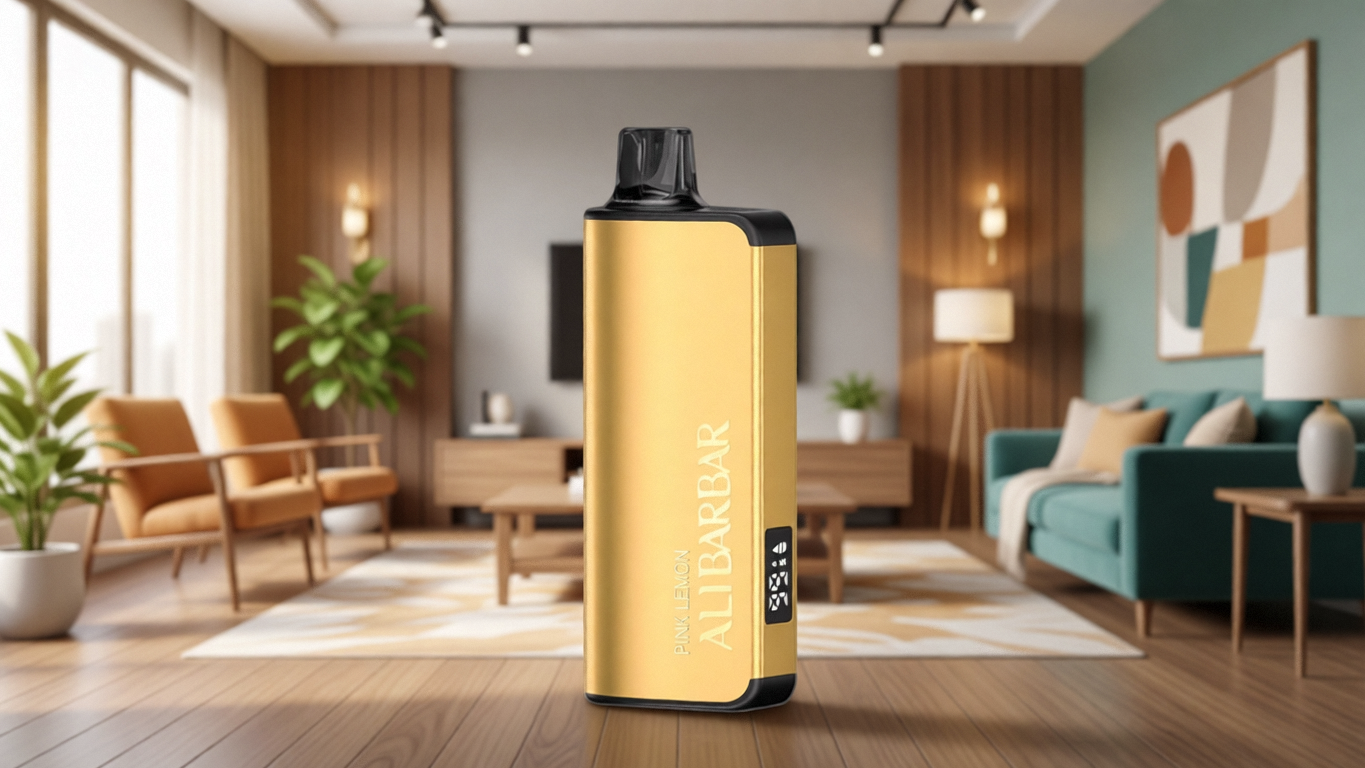
At OZVAPE Shop, where the ALIBARBAR range is sourced exclusively through factory‑certified channels, we have observed that the majority of user dissatisfaction stems not from the device itself but from a mismatch between expectation and design reality. This article unpacks exactly what happens when you use a contemporary device, mapping each stage to the engineering choices that define it. By the time you finish reading, you will not only understand the mechanics at play but will possess a framework for evaluating any device against your own routine — whether you encounter it on a shelf or in a specification sheet.
OZVAPE Shop (internal link, opens in new window) has structured its product information around this same principle: clear, comparative specifications that let the device speak through its engineering, not through inflated adjectives.
Understanding What Matters: Core Engineering and Design Factors
Before you can interpret what happens when you activate a device, you need to know which design elements control the experience. The following framework isolates the four factors that most directly affect consistency, longevity, and day‑to‑day usability. Each factor is connected to a common user frustration — and a practical method for uncovering it before you commit.
Internal Architecture and Output Consistency
The heart of any device is its heating element — typically a mesh, coil, or ceramic structure — and the wicking material that delivers the consumable substance to that element. When you draw, a pressure sensor or button closes a circuit, current flows, and the element rises to its operating temperature in less than a second. If the architecture is well‑matched, the result is an even, repeatable vaporisation that feels identical from the first use to the hundredth.
Why this matters: users consistently report that performance degrades noticeably in the latter portion of a device’s life. This is almost always a consequence of wicking fatigue, caramelised residue accumulation, or a heating element that drifts from its specified resistance. A well‑engineered device — such as those in the ALIBARBAR INGOT family — employs vertical mesh configurations with optimised porosity, which slows that degradation and maintains thermal stability longer. You can recognise good thermal management by looking for transparent documentation of the heating element material (Kanthal, stainless steel) and the wicking substrate. If a manufacturer avoids specifying these, treat it as a gap in the engineering story that may translate into an inconsistent tail‑end experience.
Power Management and Status Transparency
Every electronic device contains a power cell, a control board, and some form of status feedback. When you draw, the board regulates power delivery to the heating element, and the feedback mechanism — an LED, a haptic pulse, a small display — communicates whether the device is awake, active, or approaching depletion.
The practical value of clear status indicators is enormous. A user who receives a clear warning when the power cell reaches 20% capacity can plan the next charge with confidence. Conversely, a device that goes dark without warning forces the user into a defensive posture: carrying a backup, conserving use, and nursing a constant low‑grade anxiety. This hidden cost — the second device you carry because you cannot trust the first one — is one of the most expensive consequences of status ambiguity. Devices like the ALIBARBAR Ice Adjust 12000 incorporate graduated LEDs that move through a predictable sequence, removing guesswork. In contrast, many slim‑profile designs omit this entirely, prioritising a clean exterior over operational clarity.
Physical Design and Material Durability
Beyond aesthetics, the physical envelope of a device determines how it withstands pocket lint, key scratches, and the minor impacts of daily life. Surfaces treated with soft‑touch coatings often feel premium on day one but can become tacky or visibly worn after a few weeks of pocket carry. Hard‑anodised finishes, matte polycarbonate bodies, and integrated mouthpiece contours all serve functional roles.
Consider mouthpiece geometry: a narrow, cylindrical mouthpiece may feel sleek but can concentrate heat uncomfortably during prolonged use. A wider, tapered mouthpiece — as found on the ALIBARBAR INGOT 9000 — spreads thermal load and supports a more natural lip position, reducing subtle strain. These choices are not accidental. They reflect a design team that has thought about the device as something that will sit against skin, be held for minutes at a time, and be retrieved dozens of times a day.
Modularity and Lifecycle Flexibility
Devices fall into three broad architectural categories: fully sealed units designed for a fixed operational life; rechargeable units that can be replenished but not reconfigured; and systems with replaceable pods or cartridges that allow users to change the consumable independently. Each architecture implies a different relationship with cost, waste, and flexibility.
A sealed unit offers simplicity at the expense of end‑of‑life predictability — you must trust the stated capacity and cannot intervene if performance wanes early. Rechargeable designs extend the operational window but still lock you into a fixed consumable configuration. The most flexible platforms, which decouple the power element from the consumable component, allow users to manage costs per use more precisely and reduce the volume of discarded material. When you compare devices, the lifecycle architecture should match your expected usage pattern. A heavy daily user will see different economics from someone who uses a device intermittently over weeks.
Applying These Criteria to Real-World Options
The ALIBARBAR collection illustrates how a single manufacturer can address distinct user need‑states through targeted engineering, rather than offering a one‑size‑fits‑all product.
The INGOT 9000 series, for instance, prioritises portability and pocket‑friendliness without sacrificing status transparency. Its compact form houses a mesh architecture that prioritises consistency across a predetermined operational window. Users who prefer a device that disappears into a pocket and requires no management beyond drawing will recognise its design logic. The trade‑off is a fixed lifespan — you must accept the manufacturer’s capacity claim rather than being able to extend it through user action.
The INGOT 15000 extends capacity significantly while maintaining the same family design language. Here, the engineering challenge was to increase consumable volume without disrupting thermal management. The solution — a re‑proportioned airflow path and a slightly modified heating geometry — means the larger device does not simply last longer; it maintains output quality across that longer duration. The trade‑off is increased physical size, which may not suit every pocket or preference.
The Ice Adjust 12000 introduces a variable airflow mechanism, allowing the user to tune draw resistance. This is a meaningful departure from the fixed‑airflow convention, and it addresses a very specific frustration: the sense that a device feels too tight or too loose against one’s personal draw style. The benefit is genuine personalisation; the trade‑off is that the additional mechanical component introduces a new point for potential failure over extreme long‑term use. Nonetheless, for users who have repeatedly abandoned devices because they “didn’t feel right,” an adjustable design offers a practical solution.
In the wider market, one encounters devices that compete on aesthetic minimalism, often omitting status indicators and using smooth unibody enclosures. While visually appealing, such designs can leave the user guessing about power state, which erodes trust over time. ALIBARBAR’s consistent inclusion of LED feedback reflects a different priority: operational transparency over sleekness at all costs.
A Practical Framework for Evaluation
When you encounter a device — whether in a physical retail environment or while reading specifications online — you can apply a simple sequence of diagnostic questions to surface the engineering story beneath the marketing surface. This framework works regardless of brand or price point.
Status feedback: Does the device provide graduated power indication, or only a binary “on/off” signal? If the latter, how will you know when you are entering the final 15% of capacity?
Construction materials: Is the heating element material and wicking substrate documented anywhere? If not, are there third‑party teardowns or industry references that validate the architecture?
Surface durability: Is the finish described in terms of functional properties (hard‑anodised, matte PVD, etc.) or solely with aesthetic adjectives? A finish that cannot withstand daily pocket carry will show its age quickly.
Lifecycle architecture: Is the device sealed, rechargeable, or modular? Multiply the stated capacity by your expected daily usage rate. Does the per‑use cost align with your budget, and does the end‑of‑life handling match your convenience threshold?
Traceability: Can the retailer document the device’s journey from manufacturer to point of sale? An authorised supply chain, like the one that connects OZVAPE Shop directly to ALIBARBAR’s certified distribution network, reduces the risk of counterfeit or mishandled inventory.
Using a standardised specification comparison — the kind provided on product pages that list not just headline figures but the underlying architecture — is one of the simplest tools for reducing decision friction. When you compare two devices side by side using these criteria, differences that were previously invisible often become stark.
Common Selection Errors and Industry Observations
Even experienced users make missteps that could have been avoided with a shift in how they evaluate devices. Drawing on patterns observed across thousands of interactions, we can identify four recurrent errors.
Overweighting a Single Specification
A device that claims a high capacity figure may attract immediate attention, but if that capacity is delivered through an architecture that degrades output consistency in the final third, the headline number becomes misleading. Capacity must always be evaluated in conjunction with the heating element’s degradation curve — something rarely published but often inferable from community teardowns and long‑term usage reports.
Assuming Visual Similarity Indicates Equivalent Engineering
Two devices that share an external silhouette may contain radically different internal architectures. A clone that replicates the shape of an ALIBARBAR device but uses a standardised coil‑and‑cotton assembly will not deliver the same thermal stability across its life. The exterior tells you nothing about the wicking substrate, the heating element alloy, or the consistency of the airflow path.
Undervaluing Modularity in Cost‑per‑Use Calculations
A sealed unit with a lower upfront price may appear more economical than a modular system with replaceable pods. But over three months of daily use, the sealed unit’s fixed capacity and inevitable discard cycle often generate a higher per‑use cost and more waste. This is not an ideological argument; it is a straightforward spreadsheet exercise that many users discover only after they have committed to a particular design.
Confusing Category Terminology with Technical Specifications
Terms like “mesh technology” or “advanced airflow” are widely used but seldom defined. A mesh heating element, for instance, can vary in surface area, resistance, and wicking material pairing by an order of magnitude. Without an accompanying technical baseline, such phrases function more as category signifiers than as evaluative criteria. A sophisticated buyer asks: “What specific mesh material? What wicking substrate? At what resistance?”
From an industry perspective, the current landscape reflects a maturation cycle. Early markets prioritise differentiation through external design; later, as users become more knowledgeable, the basis of competition shifts toward internal engineering transparency. ALIBARBAR’s trajectory — from simple sealed units to an ecosystem with adjustable airflow and graduated status indicators — mirrors this pattern. The brands that will retain user trust over the next three years are those willing to explain, not just assert.
Frequently Asked Questions
Q: What is actually happening inside the device the moment I draw?
A: A pressure sensor or button activates the circuit. The control board sends regulated current to the heating element, which reaches its design temperature within approximately half a second. Air drawn through the intake channels picks up the resulting vapour and carries it through the mouthpiece.
Q: Why does the experience sometimes feel different after a few days of use?
A: Gradual changes are usually attributable to wicking saturation levels, minor residue accumulation on the heating surface, or power cell voltage sag as it approaches a lower charge state. Well‑engineered architectures slow these changes, but some variation is inherent to any consumable heating system.
Q: How can I tell when the device is nearly depleted?
A: Look for graduated LED signals — a blinking indicator, a shift in colour, or a sequence that differs from the standard activation light. On devices without such feedback, you are effectively operating blind, which is why many experienced users prioritise status transparency in their selection criteria.
Q: Does a device need to be fully discharged before recharging?
A: Most contemporary lithium‑ion chemistries do not suffer from memory effect, so partial charging is generally safe. However, regularly draining the cell to a very low voltage can accelerate chemical degradation. Following the manufacturer’s indicated usage window provides the longest service life.
Q: What role does the mouthpiece material play?
A: Mouthpiece material affects heat transfer, comfort, and long‑term hygiene. Food‑grade silicone or PTFE‑lined tips often remain cooler and are easier to clean than standard plastics, while metal tips can become uncomfortably hot during extended draws.
Q: If a device is advertised as “high capacity,” does that mean it will perform consistently throughout?
A: Not necessarily. Capacity describes volume; consistency describes the heating element’s ability to maintain thermal stability as the consumable is depleted. Both must be evaluated together.
Q: Why do some retailers offer lower prices for what appears to be the same product?
A: Pricing discrepancies can signal inventory sourced from non‑authorised channels, older production batches with shorter shelf lives, or, in some cases, counterfeits. A documented, fully traceable supply chain — such as the one maintained by OZVAPE Shop — is a strong signal of product authenticity.
Q: Can I reuse a sealed unit once it stops working?
A: Sealed units are designed for a single operational cycle. Attempting to dismantle or recharge a non‑rechargeable device introduces safety risks and voids any applicable warranty. If extended use is important, a rechargeable or modular device better matches that requirement.
Q: How do I verify that a device’s specifications are accurate?
A: Cross‑reference the manufacturer’s published data sheet with independent teardown analyses or verified user records. A retailer that provides standardised specification tables, as OZVAPE Shop does for the ALIBARBAR range, makes this verification straightforward.
Q: What is the most common avoidable mistake made when choosing a device?
A: Prioritising one impressive number — often raw capacity — while ignoring the complementary factors of status feedback, heating architecture, and lifecycle design. The result is a device that looks good on paper but creates friction in daily use.
Conclusion
The question “What happens if you vape?” is best answered not with a single blanket description, but with an understanding of the engineering variables that shape the experience from first draw to last. Consistency, predictability, and transparency — these are not accidental outcomes. They are the direct result of deliberate choices made during design and controlled by the integrity of the supply chain that delivers the device to you.
At OZVAPE Shop (external link, opens in new window), the entire ALIBARBAR catalogue is presented through this lens: documented specifications, traceable provenance, and a local support structure that treats product education as the foundation of a trustworthy relationship. When you know what to look for — a clear status indicator, a documented heating architecture, a finish that endures — you are no longer choosing between brands. You are choosing between engineering philosophies.
The right device is never the one with the most attention‑grabbing claim. It is the one that disappears into your daily routine so completely that you stop noticing it, because nothing ever goes wrong. That is the standard worth seeking, and it is achievable. The framework is now yours.