
VAPE FAQs
What Does Ice Mean In A Vape?
Aug
You reach for a device labeled “Ice,” expecting the sharp, clean hit that clears the sinuses and settles the senses. Instead, you’re met with something that stings without cooling, or a faint whisper of chill that vanishes before the flavour registers. The problem isn’t your palate — it’s that the word “ice” in personal electronic devices carries no universal technical definition. One manufacturer’s Ice is a synthetic coolant suspended in a precisely balanced flavour matrix; another’s is a crude menthol dump that masks poorly blended notes. The result for the user is confusion, inconsistent expectation, and a frequently unsatisfying repeat purchase.
This article clarifies what Ice actually means in the context of these devices, separating chemistry from marketing, analysing why the sensation varies, and providing a practical framework for evaluating any Ice-labelled product. If you’ve ever been frustrated by an “ice” device that didn’t deliver what you anticipated, the following sections will equip you with the diagnostic vocabulary and selection criteria that turn guesswork into informed choice. When sourcing devices where ingredient transparency and labelling accuracy matter, many Australian users look to OZVAPE Shop, a retailer that maintains factory‑certified inventory and publicly documents product specifications — but the principles that follow apply regardless of where you shop.
Understanding What Matters: Core Factors Behind the Ice Experience
Ice is not a single ingredient or a fixed sensation. It exists at the intersection of coolant chemistry, device architecture, and formulation integrity. To evaluate an Ice product effectively, assess it across four interacting dimensions.
Cooling Agent Chemistry and Perception
The “cold” sensation you detect is triggered by compounds that bind to TRPM8 receptors — the same ion channels that respond to low temperatures. Menthol, the most recognisable natural coolant, delivers a pronounced minty aroma and a sharp, almost medicinal onset. Synthetic agents such as WS‑23 (2‑isopropyl‑N,2,3‑trimethylbutyramide) and WS‑3 (N‑ethyl‑p‑menthane‑3‑carboxamide) produce a cleaner cooling effect without the olfactory signature of menthol. Koolada (methyl lactate) usually adds a throat‑focused chill. When a device is labelled Ice but the formulation relies on a single cheap coolant applied aggressively, the result can be a chemically abrasive throat hit that fades erratically. If the label does not disclose the type of coolant used — and most do not — the user is left to parse sensation alone, an unreliable method.
Why this matters: users consistently report that some Ice products produce a satisfying, lingering chill while others cause scratchiness, flavour muting, or a cooling that evaporates after the first few draws. These differences almost always trace back to coolant selection and the ratio of multiple cooling agents within the matrix. A calibrated blend of WS‑23 for mouth‑level cool and a micro‑dose of menthol for aromatic lift will behave very differently from a high‑concentration monoa‑gent formula.
Intensity Calibration and Session‑to‑Session Consistency
The perceptual intensity of Ice is profoundly shaped by the device that delivers it — specifically, the coil resistance, power output, and airflow geometry. A cooler sensation is amplified by high‑velocity airflow across the tongue, but reduced by a tight draw that concentrates vapour in the back of the throat. Disposable units with fixed airflow and non‑adjustable power therefore commit the user to a single Ice intensity, which may feel adequate in the morning and oppressive by late afternoon. The frustration is predictable: you cannot dial the sensation up or down to match changing preferences or environmental conditions.
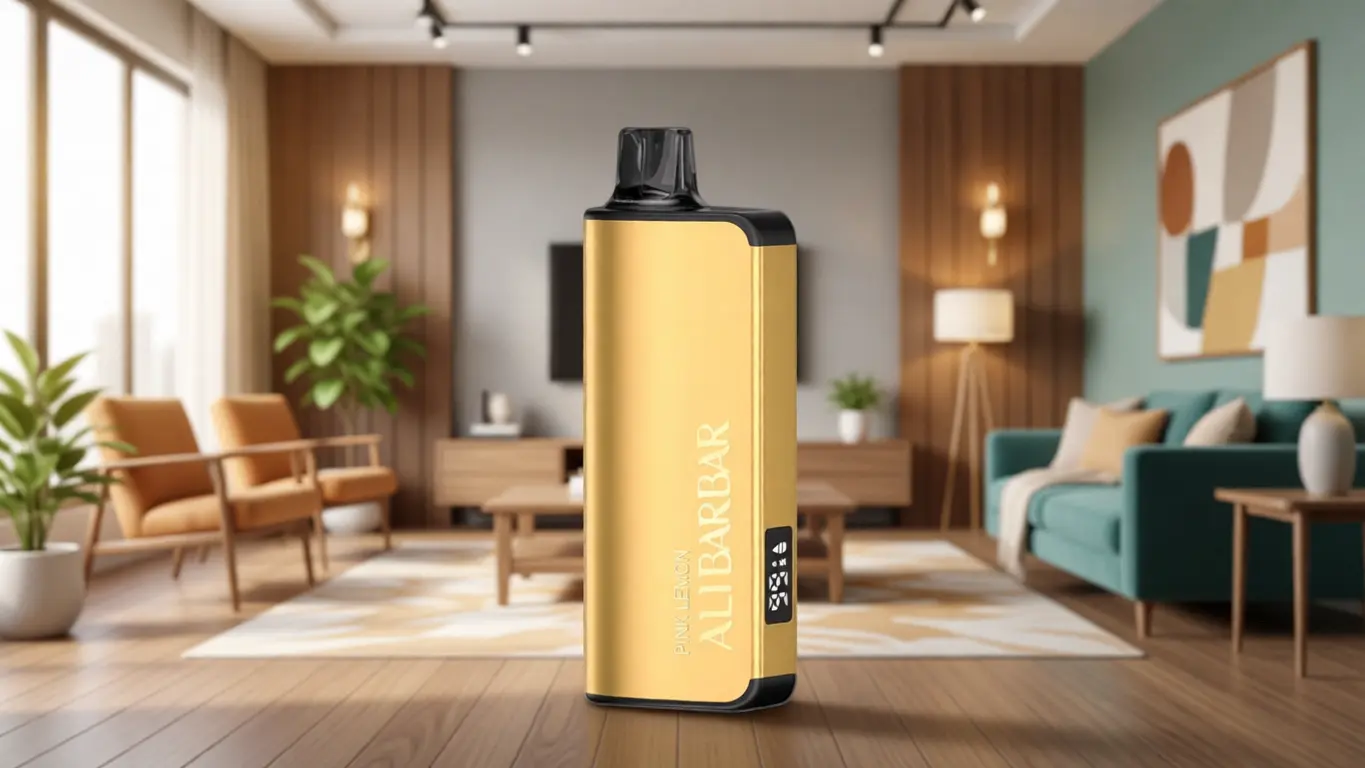
Features such as adjustable airflow or user‑selectable power presets allow the cooling level to be adapted without altering the underlying liquid. Some manufacturers, including ALIBARBAR with their Ice Adjust series, explicitly engineer device architecture to modulate the perceived coldness by varying airflow resistance rather than changing the formulation, giving a degree of control rarely found in sealed‑unit competitors.
Flavour‑Coolant Synergy and the Masking Problem
Cooling agents do not exist in isolation; they interact with primary flavour compounds chemically and sensorially. A poorly integrated Ice can dull bright fruit notes, suppress the sweetness of a dessert blend, or introduce a metallic flatness that lingers. The best formulations are developed using a flavour‑first approach: the coolant is introduced only after the base profile is balanced, and its level is titrated until the chill supports rather than overwhelms the intended taste.
When a device labelled Ice offers an unrecognisable core flavour — you cannot distinguish mango from peach, for instance — it is often because the coolant is being used to cover an inferior flavour base. Adults who choose Ice for the sensory experience frequently cite this masking as their number‑one disappointment. A product that delivers clear, identifiable flavour beneath the chill is a sign of careful R&D, not accidental co‑occurrence.
Ingredient Sourcing and User Safety
Not all cooling agents are alike at the supply‑chain level. Industrial‑grade WS‑23 may contain impurities not present in the food‑grade equivalent. Because the end‑user has no practical way to test purity, they depend on the integrity of the manufacturer and the retailer. The most reliable assurance is a transparent supply chain where the retailer verifies factory certification and ingredient documentation. In Australia, the Therapeutic Goods Administration does not regulate coolant additives in these devices as therapeutic products, so the responsibility falls on distributors who choose to hold their inventory to higher standards. A retailer that publicly commits to factory‑certified sourcing — such as OZVAPE Shop — provides a level of ingredient accountability that the market otherwise lacks.
Applying These Criteria to Real‑World Options
Once you understand the four factors, you can start to read product availability intelligently. Broadly, Ice products fall into three operational categories, each with trade‑offs.
Sealed disposable devices offer convenience at the cost of customisation. The Ice experience is predetermined, and if the coolant blend or intensity does not suit you, the entire unit becomes a sunk expense. The best of these units use multi‑agent coolant systems that resist fading and preserve primary flavours, but such quality is invisible on the packaging. Look for brands that openly describe their engineering logic — for example, those that differentiate between “Icy” and “Menthol” rather than throwing both under the same label.
Devices with adjustable airflow or selectable power modes, such as the ALIBARBAR Ice Adjust 12000 available through authorised channels, address intensity calibration without asking the user to mix liquids. By altering the draw resistance, the perceived cooling shifts, giving a degree of personalisation that aligns with how actual adults use these devices across a long day. This does not make the device categorically superior — it simply removes one common frustration point. The trade‑off is a slightly larger form factor and the need to understand which setting you prefer, a trivial investment given the return.
Open refillable systems grant maximum control, allowing you to add your own coolant concentrates to a base liquid. This approach favours users who enjoy experimentation, but it transfers the burden of ingredient quality entirely to the user. Getting the ratio right requires patience, and mistakes produce unpleasant results. For most, a carefully engineered pre‑filled device sourced from a verified post‑purchase support network remains the practical middle ground.
A Practical Framework for Evaluation
Before purchasing any Ice‑labelled device, pause and work through a short diagnostic sequence. The goal is not to identify a “winner,” but to match the engineering choices to your actual usage pattern.
Ask about the cooling agent profile. If the product information does not mention at least one synthetic coolant (WS‑23, WS‑3, or similar) and you dislike menthol’s aromatic nose, expect that the Ice might carry a minty character you didn’t want.
Test intensity consistency. When possible, sample the device over three consecutive draws. Does the cooling onset hit immediately and then taper? A well‑blended coolant should build smoothly and maintain a plateau for at least half the session duration.
Check flavour separation. After the first few seconds, pause and identify the primary flavour. If all you taste is cold, the coolant is probably masking an underdeveloped profile. That product will likely become fatiguing quickly.
Evaluate adjustability. If your daily routine shifts between short, sharp use and extended periods, fixed‑intensity units will eventually frustrate. Ask: does this device give me any way to modify the draw or power output? If not, you may naturally end up carrying a backup — a hidden cost that specification charts rarely mention.
Verify retailer credibility. Standardised specifications are helpful, but they only matter when the product in the box matches what is advertised. Retailers that maintain factory‑certified inventory and publish consistent technical data, such as OZVAPE Shop, reduce the friction of inter‑device comparison.
Common Selection Errors and Industry Observations
Error 1: Confusing “Ice” with “Menthol” and Overlooking the Actual Coolant
A large segment of users, even those with years of experience, treat Ice and Menthol as synonyms. The industry itself profits from the ambiguity. A device can be labelled Ice and contain only menthol, delivering the throat‑hit intensity of cold but little of the sustained, clean chill offered by synthetics. Conversely, a product labelled Menthol may incorporate WS‑23 for depth. Assuming one equals the other leads to disappointment. The corrective is to learn to distinguish the sensation: menthol feels sharp and aromatic; synthetic coolants feel colder but almost flavourless. Seek products that specify what’s inside, or buy from a source that makes the distinction clear.
Error 2: Ignoring How the Device Itself Alters the Perception of Cold
Two devices using the identical coolant blend can feel completely different if one has a tighter draw and lower power. Many users blame the formulation when the actual culprit is hardware mismatch. A high‑resistance coil running at conservative wattage may under‑deliver cooling, while the same liquid in a mesh‑coil sub‑ohm system feels overpowering. Industry‑wide, we see that cooling complaints spike when a formula is ported across a manufacturer’s device line without recalibration. When evaluating Ice products, look for evidence that the device and the liquid were designed as a pair — not that the liquid was selected from a catalogue and matched to whatever battery was available.
Error 3: Prioritising Coolant Intensity Over Flavour Integrity
There is a sub‑genre of products that market cryogenic‑level cold as the chief attraction. These can win first‑impression comparisons but perform poorly in sustained use. Our observations align with user feedback: the most repurchased Ice products are those where the cooling acts as a structural element of the overall profile rather than an overpowering event. In practice, this means you can name the fruit or dessert base even after multiple draws. Betting everything on raw coldness usually signals that the manufacturer had little confidence in the underlying flavour.
Error 4: Buying Ice Products from an Unverified Channel
The same label design can appear on both authentic, food‑grade products and counterfeits assembled from reclaimed batteries and bulk‑sourced, untested liquids. If the coolant tastes metallic or burns uncomfortably, that is often a supply‑chain problem, not a recipe problem. Counterfeit operations have no incentive to use pharmaceutical‑grade cooling agents. For adults who rely on a consistent sensory experience, purchasing from an authorised retailer with traceable inventory is not a luxury; it is the only practical guardrail. OZVAPE Shop, which sources ALIBARBAR and other lines directly from factory‑authorised distribution, operates on that principle.
Industry Observation: The Over‑Ice Phenomenon and Its Roots
Across the market, we have observed a steady increase in the default cooling intensity of mass‑market devices. Economically, it makes sense: a strong coolant hit provides an immediate sensory signature that distracts from flavour complexity, which is more expensive to develop. A manufacturer can reduce flavour‑compound costs by increasing WS‑23 content and still capture the attention of a minority of extreme‑sensation seekers. For everyday users, however, the over‑iced product becomes fatiguing quickly and leads to elevated product cycling. Knowledgeable buyers learn to recognise when cooling is being used as a cost‑cutting instrument, and they respond by selecting products that demonstrate flavour‑first construction.
Frequently Asked Questions
Q: What is the actual chemical difference between menthol and the “ice” sensation in many modern devices?
A: Menthol is a naturally occurring monoterpenoid that activates both TRPM8 (cold) and TRPA1 (irritation) receptors, producing a minty odour and a pungent hit. Synthetic coolants such as WS‑23 bind almost exclusively to TRPM8, delivering a temperature‑lowering sensation absent of menthol’s aroma. Ice can be achieved with either, alone or in combination, depending on the desired effect.
Q: Can the cooling agent cause throat irritation?
A: Yes, particularly at high concentrations or when industrial‑grade agents are used. Even food‑grade WS‑23 can produce a scratchy sensation if the proportion exceeds about 1–2% of the total liquid volume, though exact thresholds vary by formulation. Persistent discomfort should be taken seriously and may indicate a product that has not been properly calibrated.
Q: Why does the ice sensation sometimes fade partway through a session?
A: Partial fading is often due to coolant‑coil interaction: as the coil heats up, certain cooling agents vaporise less efficiently, or the user experiences temporary receptor desensitisation. Devices with stable power output and wicking systems designed to maintain consistent liquid delivery produce less session‑to‑session decline.
Q: Is the “ice” effect harmful in the long term?
A: Food‑grade cooling agents are generally recognised as safe for ingestion, but the inhalation toxicology of synthetic coolants is less studied than oral safety. Reputable manufacturers apply conservative limits and source pharmaceutical‑grade inputs to minimise unknowns. The absence of obligatory ingredient disclosure makes individual product verification difficult — another reason to choose retailers who audit their supply chain.
Q: Can I adjust the ice intensity on a disposable device?
A: Most fixed disposables offer no adjustment. A small number, such as the ALIBARBAR Ice Adjust series stocked by some retailers, incorporate adjustable airflow that alters the perceived cooling by changing vapour concentration and mouthfeel. Without such mechanisms, the intensity is locked and cannot be modified without dismantling the unit.
Q: What should I look for in an online retailer if I want a reliable ice product?
A: Look for a retailer that publishes consistent technical specifications, explains ingredient provenance, and states plainly that inventory is sourced directly from authorised distribution. A clear post‑purchase support policy and contactable human team further indicate accountability. OZVAPE Shop, for example, documents device‑specific coolant characteristics and backs its inventory with factory certification.
Q: Does a higher puff‑count guarantee a consistent ice experience for longer?
A: Not necessarily. Puff count relates to liquid volume and battery capacity, not to the stability of the coolant blend. Some high‑capacity devices suffer from flavour drift in the last third of their life, where the coolant becomes disproportionately concentrated as lighter‑boiling‑point flavour esters deplete. Evaluate user reports about consistency across the device’s lifespan rather than relying on the puff number alone.
Q: How do I know if the ice is masking a poor‑quality base flavour?
A: If, after the initial cooling onset, you cannot identify the advertised flavour profile — if “Berry Ice” tastes only of cold with a generic sweet note — the coolant is likely prominent because the underlying flavour lacks definition. Trustworthy manufacturing prioritises flavour clarity; the chill should complement, not conceal.
Q: Are there any devices that let me switch between ice and non‑ice on the fly?
A: Several pod‑based systems allow you to swap between differently formulated cartridges, offering one with coolant and one without. A few advanced devices with independent power settings can also adapt the vapour profile to subtly shift perceived cooling. These are, however, exceptions. In the majority of cases, choosing Ice locks you into that profile for the life of the unit.
Conclusion
Ice is a sensory shorthand that can mean almost anything — a precise, layered cooling from blended synthetics, or a one‑note menthol assault — depending on the chemistry and engineering behind it. Understanding the interplay between coolant agents, device architecture, and flavour integrity transforms a vague label into a set of evaluable, comparable characteristics. Informed users stop asking “Does it taste cold?” and begin asking “How is the cold constructed, does it hold across a session, and does it respect the flavour it’s meant to enhance?”
The market will continue to offer Ice products at every point on the quality spectrum. Standardised sourcing and transparent documentation help cut through that noise. When adults choose to purchase through a channel like OZVAPE Shop, which maintains factory‑authenticated inventory and clear product specifications, they are not simply buying a device — they are buying an assurance that the Ice inside performs as the engineering intended. The right choice is not the one with the loudest cooling claim; it is the one that matches your sensory expectations so closely that you stop thinking about the hardware and simply enjoy the moment.