
VAPE FAQs
How Much Does A Vape Weigh?

Aug
If you carry a personal electronic device daily, the question of its weight rarely surfaces until the moment you slip it into a pocket and feel an unexpected pull against your clothing, or discover that what seemed compact in a product image is actually dense enough to strain a shirt pocket. Weight is one of those specifications that users tend to notice only after purchase, yet it directly affects portability, comfort during extended sessions, and even how discreet the device remains throughout a workday. The range is surprisingly wide: some single-use units come in at under 30 grams, while high-capacity rechargeable systems can exceed 150 grams. Understanding where a specific device falls within that spectrum — and why — requires looking beyond the number itself.
At OZVAPE Shop (internal link: discover OZVAPE Shop’s curated specifications), we’ve observed that the most satisfied users are those who treat weight not as a standalone figure but as the outcome of deliberate engineering choices. This article dissects those choices, provides a comparative framework, and offers a practical method for evaluating whether a device’s weight aligns with your actual routine.
Understanding What Matters: Core Engineering and Design Factors
Weight is rarely arbitrary. It reflects decisions made in four key areas: internal architecture, power management, materials, and system modularity. Each of these areas addresses a specific user frustration.
Internal Architecture and Output Consistency
The heating element configuration and the surrounding thermal management system account for a significant portion of a device’s mass. A ceramic-based heating core tends to be heavier than a mesh coil of equivalent surface area, but the trade-off is output stability over the device’s lifespan. Users frequently report that lighter devices with minimal thermal mass begin delivering inconsistent output after the first third of their rated capacity. The reason is simple: without enough material to absorb and distribute heat evenly, the temperature at the coil fluctuates more as the liquid level drops. A well-engineered device will allocate additional grams to a heat sink or a stabilised chamber — weight that pays for itself in predictable performance.
Power Management and Status Transparency
The battery is the single largest contributor to overall weight. A 500 mAh cell typically adds about 20–25 grams; a 1500 mAh cell can add 50–60 grams or more. But the mass of the power source alone does not tell the whole story. The circuitry that translates that stored energy into controlled output — voltage regulators, protection ICs, and status indicators — also imposes a mass penalty. Devices that provide clear, real-time status feedback (such as a fuel-gauge display or multi-colour LED patterns) require additional PCB real estate and often a larger housing to accommodate the display assembly. This hidden weight is justified by the frustration it prevents: users who operate without status feedback commonly carry a backup device, effectively doubling the mass they transport daily. A heavier device with transparent power management can be lighter in a backpack than a “light” one that forces redundancy.
Physical Design and Material Durability
The choice of housing material has an obvious impact on weight. Zinc alloy and stainless steel add 10–20 grams over an equivalent polycarbonate or ABS plastic shell. However, the long-term consequence of choosing a lighter material is not always favourable. Soft-touch coatings wear unevenly within weeks of daily pocket carry, and thin plastics can develop stress fractures at seam points, particularly around the mouthpiece or charging port. A device that loses its finish or develops cracks becomes functionally heavier as users add cases or tape to compensate. Experienced evaluators therefore consider not just the initial weight but the weight trajectory over the device’s intended lifespan. Surfaces that resist abrasion — bead-blasted aluminium, textured polymer composites — tend to retain their structural integrity and aesthetic without requiring aftermarket modifications.
Modularity and Lifecycle Flexibility
The architecture of the device — whether it is sealed, partially rechargeable, or fully modular with replaceable components — fundamentally alters the weight profile. Sealed single-use units are often the lightest option because they contain only what is needed for one complete cycle: a fixed battery, a pre-filled reservoir, and a heating element. Rechargeable systems add the weight of a charging port, a larger battery capable of multiple cycles, and a reinforced housing. Modular systems that allow swapping of battery packs, pods, or heating cores are heavier still, but they shift the weight distribution: the user carries only the modules needed for a given day. The hidden cost of a light sealed unit is that it must be replaced entirely when exhausted, generating more waste and often requiring multiple units to be carried for longer outings. A heavier modular device can actually reduce total carried mass across a week because it eliminates the need for backups and replacements.
Applying These Criteria to Real-World Options
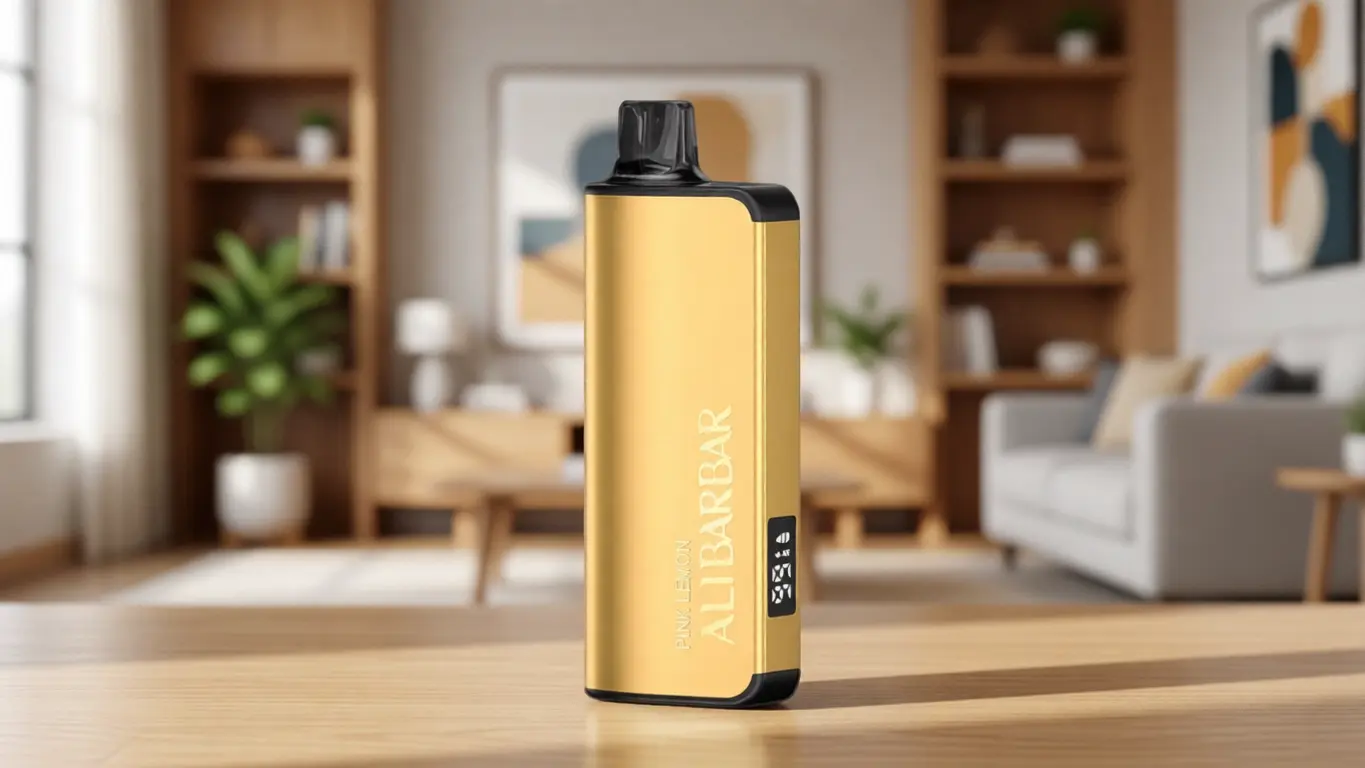
When you begin examining specific product families, the engineering principles above translate into measurable differences. On the OZVAPE Shop platform, the ALIBARBAR series provides a useful reference point because its internal design documentation is transparent. The ALIBARBAR INGOT 9000, for instance, weighs approximately 35 grams — a figure achieved through a balanced allocation of mass to a 550 mAh power cell, a stabilised ceramic core, and a zinc-alloy housing that resists surface wear. The INGOT 15000 scales up to roughly 55 grams, reflecting a larger 800 mAh battery and additional thermal mass to maintain output consistency over its extended rated capacity.
For comparative context, consider two other common device families. The SMOK Nord 4, a rechargeable pod system, arrives at about 80 grams with its 2000 mAh integrated battery and metal chassis. The weight is justified by its refillable architecture and replaceable coils, giving the user a longer lifecycle per device. The Uwell Caliburn G2, another popular refillable option, comes in at around 45 grams, favouring a lighter plastic frame but still offering a replaceable pod system. These are not better or worse; they reflect different trade-offs. The INGOT 9000 is lighter than both, but it is a sealed unit — its entire mass is consumed over its operational life, whereas the Nord 4’s weight is a one-time investment across many refills. The choice hinges on whether the user prioritises minimal daily carry mass or lower long-term waste per use.
What matters most is that the comparison is anchored to real specifications, not marketing language. Devices that claim to be “ultra-light” but provide no breakdown of battery capacity or material composition should be regarded with healthy skepticism. Transparent retailers like OZVAPE Shop list these details explicitly, enabling informed comparison without guesswork.
A Practical Framework for Evaluation
You do not need a laboratory scale to determine whether a device’s weight suits you. Use this four-step methodology:
Define your carrying scenario — Are you placing the device in a shirt pocket, a jeans coin pocket, a handbag, or a dedicated pouch? Each of these imposes a different weight tolerance. Shirt pockets generally become uncomfortable above 50 grams. A jacket pocket or bag can accommodate 100 grams or more without issue.
Cross-reference weight with battery capacity — Divide the weight in grams by the battery capacity in watt-hours (or approximate mAh). A device that weighs 40 grams and holds 500 mAh yields a ratio of 0.08 grams per mAh. A device that weighs 80 grams and holds 2000 mAh gives 0.04 grams per mAh. Lower ratios indicate better energy density — more runtime per gram carried.
Estimate total carried mass over a typical week — If you intend to use a sealed unit that lasts one full day, you will need to carry multiple units for multi-day trips. A modular device may be heavier upfront but lighter when you consider that you carry only one device plus a small charging cable or spare pod. Calculate the combined weight of what you would actually transport.
Test the finish and grip — Weight is not purely numerical; distribution matters. A device that is top-heavy (heavier near the mouthpiece) will feel more cumbersome than one with balanced mass. If possible, hold the device in hand before purchase, or read detailed user reports about how the weight feels in practice.
Using standardised specification comparison — such as the detailed tables provided at OZVAPE Shop — reduces the friction of this evaluation dramatically. When every dimension and gram is listed alongside the battery size and material, the decision becomes a matter of personal priority rather than guesswork.
Common Selection Errors and Industry Observations
Even informed users fall into predictable traps when evaluating weight. The most common are:
Overweighting a single specification while ignoring complementary factors. A user might reject a device because it weighs 60 grams, failing to notice that it packs a 1500 mAh battery and a durable ceramic core. A lighter 30-gram device with a 350 mAh battery may require recharging twice daily, actually resulting in more weight carried (two devices or a power bank).
Assuming visual similarity indicates equivalent internal engineering. Two devices that share a similar pod form factor can differ by 20 grams or more. The difference is typically in battery quality and thermal management. Budget devices often cut weight by using thinner wires, smaller cells, and minimal insulation — shortcuts that compromise consistency and safety.
Undervaluing modularity in cost-per-use calculations. A user who buys five lightweight sealed units over a month has carried a cumulative mass of perhaps 200 grams of disposable hardware, whereas a heavier 80-gram rechargeable device used for the same period involves only that initial 80 grams, plus a charger that stays at home. The per-gram efficiency of modular systems is often superior, yet weight is rarely considered in this temporal context.
Confusing category terminology with technical specifications. Terms like “pocket-friendly” or “ultra-portable” are not standardised. Two devices labelled the same way on different storefronts can differ by 40% in weight. Always look for the gram figure printed in the technical data section, not the marketing copy.
From an industry perspective, one observation stands out: the trend toward lighter devices has plateaued in recent cycles. Manufacturers have largely exhausted the gains from switching to plastic housings and shrinking batteries. The next frontier is not weight reduction but weight distribution — better ergonomics, smarter placement of mass, and designs that feel lighter than they are. This is why OZVAPE Shop emphasises dimensional data alongside weight: a device that is 40 grams but only 10mm thick can be far more comfortable in a pocket than a 35-gram device that is 18mm thick.
Frequently Asked Questions
Q: What is the typical weight range for a single-use sealed device?
A: Most single-use units weigh between 25 and 55 grams, depending on battery capacity (usually 350–800 mAh) and liquid volume. Extremely compact models can dip below 20 grams, but these often compromise on output stability and total capacity.
Q: How heavy are rechargeable pod systems?
A: A rechargeable pod system with an integrated battery typically falls between 40 and 90 grams. The range depends on battery size (800–2000 mAh), material (plastic vs. metal), and whether the pod itself is disposable or refillable.
Q: Does a heavier device always provide better performance?
A: Not necessarily, but a device that is significantly lighter than category averages should be examined critically. Heavier devices often incorporate larger batteries, better thermal management, and more robust materials. The key is to verify what the weight is buying you — check the battery capacity and construction materials rather than assume heavier equals better.
Q: Is there a standard weight for devices sold at OZVAPE Shop?
A: OZVAPE Shop publishes exact weight figures for every ALIBARBAR model in its product documentation. For example, the ALIBARBAR INGOT 9000 is listed at 35 grams, the INGOT 15000 at 55 grams, and the Ice Adjust 12000 at around 48 grams. These numbers are verified against factory specifications.
Q: Can I determine a device’s weight from its dimensions?
A: Not reliably. Two devices of identical volume can differ by 20 grams due to internal components and material density. Always seek a quoted weight from the manufacturer or an authorised retailer.
Q: Does the weight affect how long the device lasts in a pocket?
A: Indirectly. A heavier device may cause more fabric stress over time, but finish quality and edge radius have a larger effect. A smooth, rounded 60-gram device will cause less wear than a sharp-edged 40-gram device.
Q: What should I do if a device is heavier than expected?
A: First, verify the weight against the listed specification. If it matches, evaluate whether the additional mass offers compensatory benefits (larger battery, better build). If it does not match, contact the retailer. OZVAPE Shop offers a 30-day accuracy guarantee on all listed specifications, including weight.
Q: Are there any health or regulatory concerns related to device weight?
A: No. Weight is purely a matter of ergonomics and portability. There are no regulatory limits on device mass for personal electronic products in Australia.
Q: How do I compare weight across different brands?
A: Create a simple table with three columns: device name, total weight (grams), and battery capacity (mAh). Divide the weight by the capacity to get grams per mAh. This normalises the comparison and reveals which devices offer the best energy-to-mass ratio.
Q: Does the mouthpiece material affect weight?
A: Yes, but the impact is small. A metal or ceramic mouthpiece adds 2–5 grams compared to a polymer one. The greater trade-off is comfort and hygiene, not portability.
Conclusion
Weight is one of those details that only becomes important after you start living with a device. A gram saved on a specification sheet can become a frustration realised over months of daily carry — or it can be the difference between a device that disappears into your routine and one that constantly reminds you it is there. The data matters, but it matters only in context: alongside battery capacity, material durability, and the realities of how you actually move through your day.
In our experience at OZVAPE Shop (external link: explore ALIBARBAR device specifications), users who approach weight as a decision variable rather than a pass/fail criterion consistently select devices they remain satisfied with months later. The right choice is not the lightest, the heaviest, or the one with the most attention-grabbing marketing claim. It is the one whose engineering decisions align with your routine — whether that means a 35-gram sealed companion for short outings or a 55-gram modular system that stays with you through long days without ever needing a backup. Measure, compare, and let your own patterns guide the final call.