
VAPE FAQs
What Does Dtl And Mtl Mean On A Vape?
Jul
Understanding what DTL and MTL mean on a personal vaporiser is one of those small but essential pieces of knowledge that separates a consistently satisfying experience from a string of misjudged purchases. Plenty of adults, especially those transitioning away from combustible products, encounter these two acronyms and are given little more than a one‑line definition. That lack of context leads directly to the wrong device, the wrong consumable, and the kind of daily frustration that erodes confidence in the whole category. At OZVAPE Shop, we hear versions of this question so often that a plain‑language, technically grounded explanation is overdue. What follows unpacks exactly what DTL and MTL refer to, how the underlying engineering differs between the two draw styles, and – most practically – how knowing the difference changes the way you evaluate any device before you commit to it.
Understanding What Matters: The Real Differences Between DTL and MTL
The labels themselves are straightforward: MTL stands for Mouth‑To‑Lung, DTL for Direct‑To‑Lung. But treating them as mere inhale techniques misses the point. Those two patterns demand fundamentally different internal architectures, power management, and even surface‑level ergonomics. Once you see the chain of design decisions that flow from a single choice of draw style, you can read a product page in seconds and know whether a device is built for your routine.
Airflow, Coil Architecture, and the Inhale Signature
At the device level, the difference begins with how air moves through the chamber. An MTL device intentionally restricts airflow with smaller intake channels and a narrow chimney, raising the pressure difference and forcing the user to draw in a slow, deliberate way that replicates the sensation of a filtered cigarette. The coil inside – usually a round‑wire build with a resistance above 1.0 ohm – operates at lower wattages and vaporises liquid in a cooler, more concentrated stream. This produces the familiar throat hit and keeps cloud production minimal, which matters for discretion.
A DTL device reverses almost every one of those parameters. The airflow pathway is wide open, often adjustable but rarely as tight as even the loosest MTL setting. The coil resistance sits below 1.0 ohm, frequently in the 0.15–0.4 ohm range, pulling significantly more current from the power source. The result is a warm, voluminous cloud that carries flavour in a different way – softer at the back of the throat, more about lung‑filling density than sharp impact. If you see a coil head described as “mesh” and low‑resistance, expect it to be DTL‑oriented; if you see a pod with a tiny single‑hole airflow inlet, it is almost certainly MTL.
Power Requirements and Status Transparency
Because the coil mass and the cooling demands are so different, the power supplies in DTL and MTL devices follow divergent lifecycles. An MTL setup can often run for an entire day, sometimes two, on a modest integrated battery because the average current draw rarely exceeds 10–12 watts. The device stays cool, the power indicator changes slowly, and the user rarely feels caught off guard.
A DTL system that cranks 40, 60, or even 80 watts through a low‑resistance mesh coil stresses the battery far harder and generates heat that must be dissipated through the chassis. In a well‑engineered device, that heat is a sign the conduction path to the outer shell is working; in a poorly managed design, it accelerates cell degradation and sometimes leads to unpredictable voltage sag that a user feels as weakening output long before the battery indicator suggests anything is wrong. This is one of those hidden costs of the DTL experience that most marketing copy ignores. If the device gives you no real‑time wattage readout or at least a stepped battery gauge, you are operating blind – and in DTL, that blindness punishes you with prematurely dead sessions.
Physical Form, Mouthpiece Design, and Daily Carry
The two draw styles also pull the external design in opposite directions. MTL mouthpieces tend to be narrower, mimicking the ergonomics of a cigarette filter, which supports the natural lip closure needed for a restrictive draw. Because MTL tanks and pods stay small and the batteries are compact, a complete MTL device often disappears in a closed hand. That point matters for adults who want something that does not announce itself in a pocket or a bag.
DTL devices need a wider drip tip simply to allow enough air volume to pass without whistling or creating uncomfortable turbulence. The atomiser itself is larger, the airflow slots are prominent, and the hand feel shifts toward a more substantial, cordless‑tool‑like mass. None of this is a flaw; it is a consequence of the physics. But if you assume that a larger, heavier device inherently “hits better” for your pattern, you may end up with something whose form factor fights your daily reality.
Nicotine Delivery and Session Character
Perhaps the most overlooked dimension is how the draw style interacts with nicotine strength and the overall rhythm of use. MTL intake keeps the vapour in the mouth and upper airways longer, which, when combined with higher‑strength nicotine salt formulations (often in the 20–50 mg/mL range), delivers rapid absorption that more closely mirrors the pharmacokinetic curve of a traditional cigarette. The session itself feels brief and purposeful – a handful of draws, then you set it aside.
DTL vaporisation, because it produces such a large volume, is usually paired with much lower nicotine concentrations – typically 3 mg or 6 mg in freebase form. Taking a lung‑filling inhale of high‑strength salts through a sub‑ohm coil would be punishingly harsh. DTL sessions tend to stretch out, becoming an ambient, almost continuous background behaviour rather than a series of sharp, discrete moments. Understanding your own pattern – are you the person who steps outside for two minutes, or the person who absent‑mindedly uses a device while working? – should directly steer you toward one architecture or the other.
Applying These Criteria to Real‑World Options
Once the engineering distinctions are clear, the act of evaluating any device becomes much faster. Most fixed‑configuration disposables on the market are MTL by default because they target the largest addressable user base: adults seeking a cigarette‑like draw in a portable, no‑settings format. That is entirely reasonable, but it also means that if you have discovered you genuinely prefer a direct‑lung inhale, walking into a purchase blind will disappoint you.
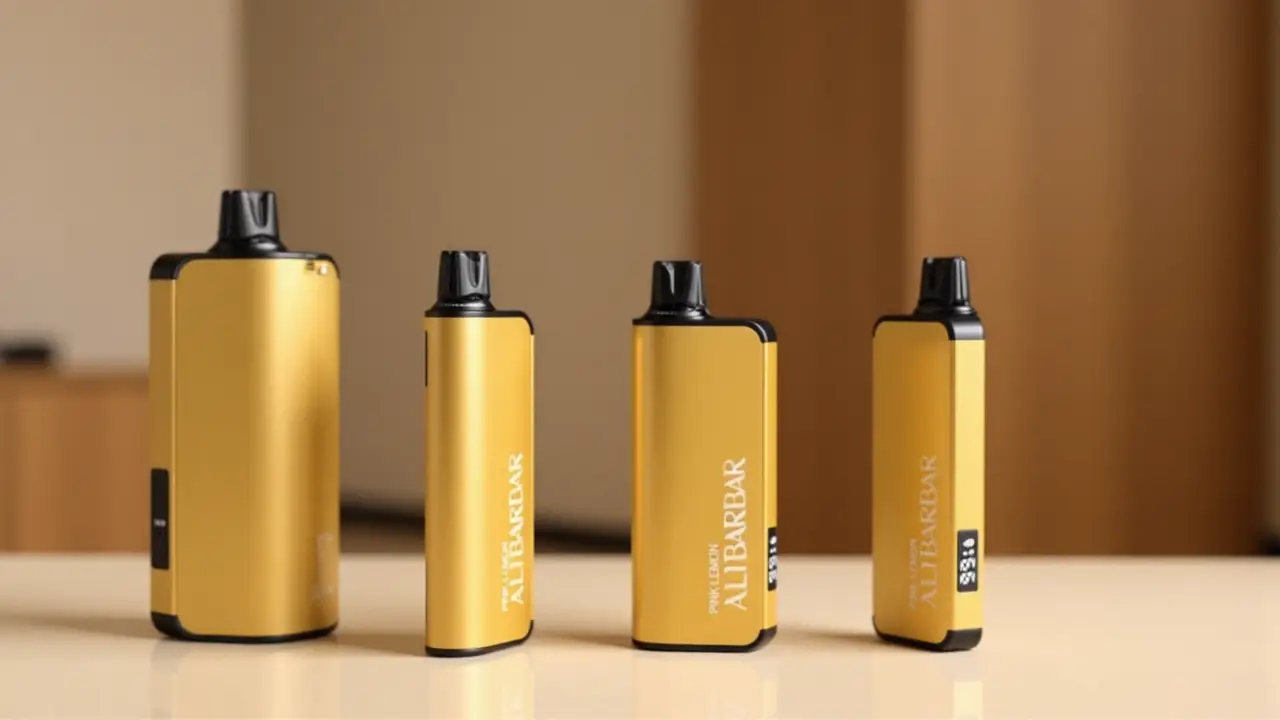
Some manufacturers have recognised this gap and designed products that allow the user to toggle between restricted and open airflow without changing the consumable. In the ALIBARBAR range, the Ice Adjust 12000 series places a tangible airflow control ring at the base of the device. When the ring is rotated to the tightest position, the draw mimics a traditional MTL experience with a noticeable throat response. Rotated fully open, the pressure drops, the vapour temperature rises slightly, and the inhale shifts into DTL territory – though the coil remains a balanced resistance value designed to accommodate both ends of that spectrum. This is not a marketing claim; it is a direct consequence of variable air inlet geometry. Similarly, other ALIBARBAR models like the INGOT 15000, while not offering manual adjustment, use an internal airflow calibration that lands firmly in a restricted‑direct‑lung zone – enough openness to satisfy a lung inhale while still retaining enough tension to remind the adult that the device is responding.
The point is not to suggest that one brand solves all cases, but that airflow flexibility and draw‑style engineering have become specific, observable attributes you can check before ordering. When you compare two devices side by side, ask not “which one is better?” but “which one’s airflow geometry and coil build match the way I naturally inhale?”
A Practical Framework for Deciding
Rather than abstract advice, here is a step‑by‑step process any adult can use when DTL or MTL terminology shows up in a product listing.
Self‑audit your natural inhale. Without a device in hand, take a slow, gentle pull through pursed lips, as if drawing on a straw. Now take a deep, open‑throated breath directly into the lungs. Which feels more automatic? That is your resting draw pattern, and fighting it will always feel unnatural.
Check the coil resistance and power range. If the specification sheet lists a coil above 1.0 ohm and a maximum wattage under 20 W, the device is engineered for MTL. If it lists resistances below 0.6 ohm and a recommended wattage above 30 W, it is built for DTL. Devices that sit in the 0.8–1.2 ohm range and run between 10 W and 18 W often allow a middle ground sometimes called RDL (restricted direct lung), but treat them as MTL with a looser draw unless the airflow control specifically permits otherwise.
Inspect the mouthpiece and airflow inlet. A narrow, cigarette‑filter‑shaped tip combined with a single tiny air slot points to MTL. A wide‑bore tip and multiple large cyclops‑style airflow slots indicate DTL. If the device has an adjustable ring, close it completely and see if the draw becomes genuinely tight – many “adjustable” designs never fully restrict the airflow enough for a true MTL sensation.
Match nicotine strength to draw style. If your preferred liquid is 20 mg/mL or higher, MTL will almost certainly be the right fit. If you have been using 3 mg or 6 mg freebase and find the throat sensation lacking with tighter devices, DTL is your natural home. Crossing these wires – sub‑ohm with high‑strength salts – will create an unpleasant, rough experience that is sometimes mistaken for device failure.
Estimate your session duration. MTL lends itself to short, punctuated use because the hit is concentrated. DTL often extends over longer periods as the vapour is less intense per millisecond but more voluminous overall. If you want something you can use discreetly for 30 seconds and put away, lean MTL. If you expect to use it continuously while sitting somewhere comfortable, DTL may fit better.
A retailer that makes these parameters immediately visible – resistance, wattage window, airflow control type – gives you the raw material to make an assessment without needing to guess. At OZVAPE Shop, we structure product specifications so that these three values sit at the top of every relevant listing because, frankly, they tell you 80 percent of what you need.
Common Selection Errors and Industry Observations
Watching how adults actually make decisions across the broader market reveals several recurring mistakes. Recognising them will save you from the most predictable forms of buyer’s remorse.
Mistake 1: Using “Pod System” as a Draw‑Style Label. The industry has allowed the word “pod” to be applied to both tight‑draw MTL cartridges and wide‑open DTL pods with swap‑able coils. Assuming that every device with a magnetically attached pod is an MTL mouth‑to‑lung inhale is a shortcut that fails almost as often as it works. Always check the coil resistance and airflow, not the form factor.
Mistake 2: Assuming All Low‑Resistance Coils Are for DTL. Some manufacturers deliberately place a 0.8 ohm mesh coil in a heavily restricted pod, creating a restrained direct‑lung hit that is not quite MTL and not truly open DTL. This can work well for a specific audience, but if you go in expecting a full lung inhale, the restriction feels suffocating. Conversely, expecting a cigarette‑like tightness from a 0.6 ohm coil in a device with no airflow control is a setup for disappointment.
Mistake 3: Judging Throat Hit Solely by Nicotine Concentration. The throat sensation is a combined function of nicotine strength, vapour temperature, PG/VG ratio, and airflow velocity. A 20 mg salt in a fully open DTL draw might produce almost no throat impact at all, while a 6 mg freebase through a tight MTL chimney can come across as harsh. Treat the entire system, not any single variable.
Mistake 4: Ignoring the Role of Power‑Delivery Consistency. DTL devices, especially those with replaceable batteries, can suffer from voltage drop as the cell depletes. If the regulator has poor line regulation, the last third of the charge can feel anaemic, causing a user to blame the coil or the liquid. MTL devices suffer less from this because the absolute power level is lower, but the irritation remains: if the device does not give you meaningful feedback about its remaining run time, you end up carrying an unnecessary backup just to avoid being stranded.
On the industry side, there is a clear push toward “dual‑mode” devices that aim to stretch across both MTL and DTL users through interchangeable pods and adjustable airflow. Done well, this approach reduces decisions for a new adult user who does not yet know their preference. Done poorly, it produces a device that is mediocre at both styles – an airflow that never fully tightens and a coil that runs too cool when the air is closed down. The subtlety that gets lost in flashy advertising is that a truly capable hybrid requires not just a sliding ring but a coil architecture that behaves differently under the two airflow conditions. Some of the better implementations in the current market, including certain models within the ALIBARBAR adjustable lineup, achieve this by selecting a middle‑range mesh geometry with surface area and heat flux that remain stable at both the restricted and open ends of the airflow range, but it takes deliberate engineering to avoid the jack‑of‑all‑trades compromise.
Frequently Asked Questions
Q: What do DTL and MTL literally stand for?
A: DTL stands for Direct‑To‑Lung, meaning the vapour is inhaled straight into the lungs without first being held in the mouth. MTL stands for Mouth‑To‑Lung, where the vapour is first drawn into the mouth and then briefly inhaled into the lungs, similar to the draw of a traditional cigarette.
Q: Is one inhale style safer than the other?
A: From a device‑engineering standpoint, neither is inherently less safe; the safety profile is determined by the quality of the components, the battery management, and the liquid composition, not by the draw style. Using high‑strength nicotine with a DTL setup can cause discomfort, but that is a question of user comfort, not device safety.
Q: Can I use MTL coils in a DTL tank?
A: In most sealed cartridge systems, the coil and airflow are integrated, so you cannot swap styles. In open‑system tanks that accept multiple coil options, you can often fit an MTL‑oriented coil (higher resistance, smaller inner diameter) into the same tank, but you must close the airflow accordingly. The tank itself does not change; the coil and airflow setting together determine the draw.
Q: Are ALIBARBAR devices MTL or DTL?
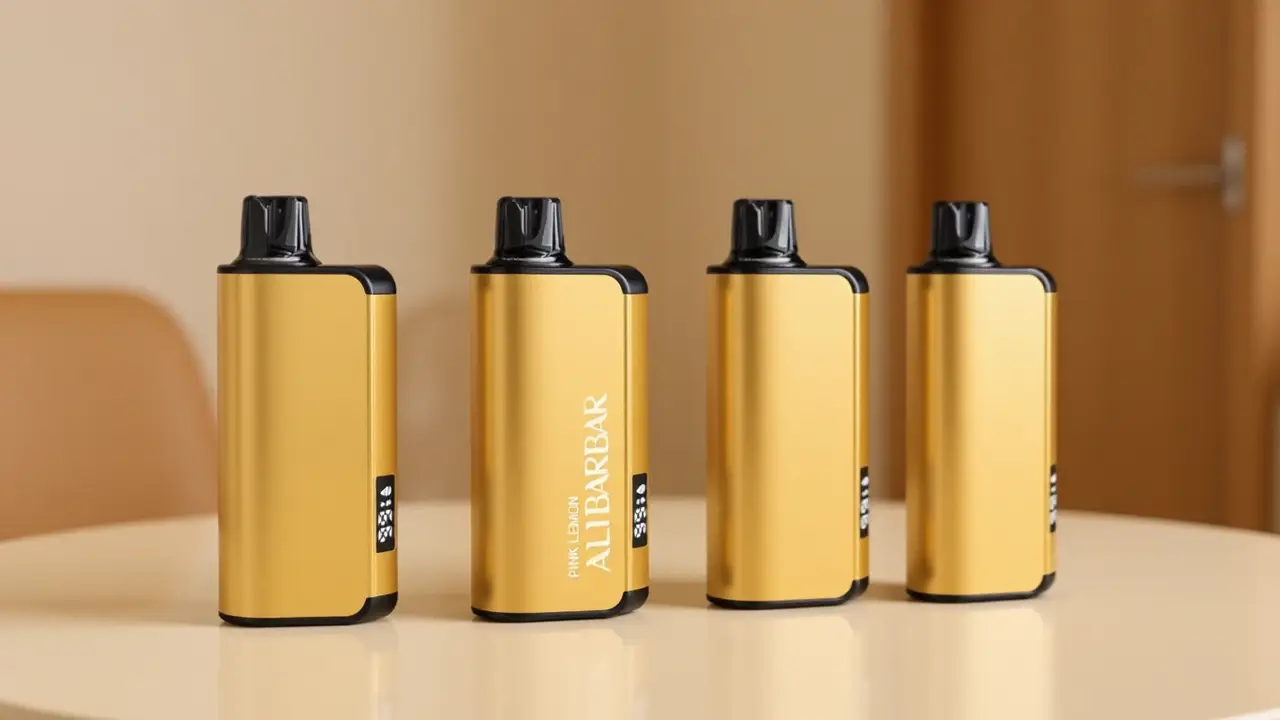
A: The ALIBARBAR range includes models that lean toward each draw style. The Ice Adjust 12000 allows the user to manually switch between a tight MTL draw and an open DTL inhale through an airflow control ring. Other models like the INGOT 9000 and INGOT 15000 are calibrated for a restricted direct‑lung experience out of the box – enough openness for a lung inhale but with noticeable back‑pressure. Checking the airflow description in the product listing is the most reliable way to determine where any specific SKU falls.
Q: Which style is better for someone quitting smoking?
A: Most adults who have recently switched from cigarettes find MTL more intuitive because it recreates the mouth‑to‑lung respiratory pattern and delivers nicotine with a similar throat sensation. High‑strength nicotine salts, which work well in MTL devices, also help bridge the initial transition. That said, some people never take to the tight draw and prefer a restricted direct‑lung hit from the start. There is no universal answer; trying a device with adjustable airflow can be a useful way to discover your preference without committing to one camp.
Q: Why does DTL produce bigger clouds?
A: The combination of low‑resistance coils running at higher power, greater airflow volume, and a larger vapourisation surface area generates more vapour per second. MTL vapour is denser but comes in a smaller total volume because less air is mixed with the aerosol. Cloud size is a direct consequence of those engineering choices, not an indicator of device quality.
Q: Can I use any e‑liquid with both MTL and DTL?
A: In principle, yes, but the experience changes dramatically. Vegetable glycerin (VG) is thicker and produces denser vapour; high‑VG liquids (70% VG or more) work best in DTL systems with large wicking ports. High‑PG liquids and nicotine salt formulations, which are thinner and carry flavour differently, perform better in MTL devices with tighter wick channels. Putting a 70% VG liquid in a small MTL pod can lead to dry hits because the wicking cannot keep up.
Q: How do I know which inhale style a device is designed for without opening the box?
A: Look for three pieces of information: the coil resistance (above 1.0 ohm suggests MTL, below 0.6 ohm DTL), the stated or recommended wattage range (under 20 W is MTL territory, over 30 W DTL), and the presence of an adjustable airflow. If the product description mentions a “tight cigarette‑style draw,” it is MTL. If it mentions “direct lung inhale” or “sub‑ohm,” it is DTL. A clear specification table removes the guesswork.
Q: Does MTL use less liquid than DTL?
A: Generally, yes. Because DTL vaporises significantly more liquid per puff to produce the increased vapour volume, consumption rates are higher. An adult using a DTL device throughout the day will normally go through more millilitres than the same person using an MTL setup at a comparable frequency.
Q: What is “RDL” and how does it fit in?
A: RDL stands for Restricted Direct‑Lung, a middle ground where the airflow is open enough to inhale directly into the lungs but there is still noticeable resistance. It is sometimes achieved by using a 0.6–0.8 ohm coil in a tank with partially closed airflow. Some ALIBARBAR devices without manual adjustment sit in this RDL zone by design, providing a smoother throat experience while maintaining a degree of control over the inhale pace.
Conclusion
The terms DTL and MTL are not simply jargon to memorise and forget. They describe two separate engineering paths that touch every part of a device’s behaviour – how it feels in the hand, how long it runs on a charge, how often you refill, and what kind of satisfaction it delivers in the critical first seconds of use. Once you internalise the relationship between airflow geometry, coil resistance, and nicotine delivery, you can walk into any product comparison with the confidence that you are evaluating the machine, not the marketing.
That is why, when you browse at OZVAPE Shop, the draw‑style classification and the supporting engineering figures are treated as first‑class product information. It is not about steering anyone toward a particular model; it is about giving an adult the tools to rule out devices that would never feel right, and to focus only on those that align with their actual daily pattern. The right choice is never the one with the most attention‑grabbing claims. It is the one that disappears into the background of your routine because its fundamental design matches the way you already inhale.