
VAPE FAQs
Can You Vape In Ireland?

Jul
Vaping in Ireland is not a simple yes-or-no question. Legally, adults can purchase and use vaping devices, but the rules that dictate what can be sold, how much nicotine a device can contain, and where you can use it are precise. Many people arriving in Ireland or encountering the category for the first time misunderstand these boundaries, often because they assume regulations mirror those of the United Kingdom or the United States. They don’t.
Ireland operates within the European Union’s Tobacco Products Directive (TPD), and it has layered additional national restrictions on top. If you are planning to carry a device through Dublin Airport, order online for local delivery, or simply understand what is available in Irish retail, you need to know not just the headline permission but the engineering and packaging standards that separate a compliant device from one that could be refused at customs or pulled from a shelf. This article unpacks those standards, explains why they matter for device reliability and user safety, and offers a framework for evaluating any product against Ireland’s specific requirements. Where it helps to illustrate a point about sourcing transparency or build quality, we will reference how retailers such as OZVAPE Shop approach documentation — not because they serve the Irish market directly, but because their commitment to verifiable specifications demonstrates the kind of rigour an informed user should expect from any vendor, anywhere.
Understanding What Matters: Core Engineering and Design Factors in a Regulated Market
Ireland’s regulations are not arbitrary; they align with a broader European philosophy of harm reduction, product safety, and consumer protection. For a device to be sold legally in Ireland, it must pass through specific notification and testing pathways. But regulation alone does not guarantee a satisfying daily experience. Users who ignore the engineering behind compliance often end up with devices that meet legal minimums but fail under real-world use. The following four factors define that gap.
Internal Architecture and Output Consistency
The TPD mandates a maximum tank capacity of 2 ml and restricts nicotine strength to 20 mg/ml. Those numbers get attention, but the durability of the heating element and the quality of the wicking material determine whether the device delivers the same experience from the first use to the last. In non-compliant devices built outside TPD requirements, manufacturers often compensate for poor design by increasing liquid volume — a strategy that masks inconsistent output with sheer capacity. A well-engineered TPD-compliant device, by contrast, must achieve consistent aerosol production and flavour stability within tight constraints. The user who understands this will look for details about coil composition (cotton versus silica, mesh versus wire) and ask whether the device has been subjected to any voluntary testing beyond the mandated nicotine delivery profile.
Why this matters: Many users report that devices degrade noticeably in the final quarter of their operational life. In the Irish market, where compliant products are designed to operate for a defined number of puffs, that degradation often traces back to thermal management failures — a clogged wick, a coil that cannot maintain temperature, or a power cell that drops voltage too early. Reputable manufacturers address this by pairing the heating element with the battery’s discharge curve, something that becomes visible only in a detailed specification sheet of the kind that a meticulous retailer like OZVAPE Shop insists on publishing.
Power Management and Status Transparency
Ireland’s ban on certain single-use plastics and the broader EU push toward reducing electronic waste have increased interest in rechargeable and refillable systems. A device with a USB-C port and a sealed battery does not automatically offer better power management — it only provides the option. The real test is whether the device communicates its remaining charge and, just as critically, whether it offers clear feedback when the liquid is depleted. Without this transparency, users habitually carry a backup, negating the convenience that a portable device is supposed to provide.
In the context of Irish regulations, power indicators on TPD-compliant products are often minimal because the notification process favours simplicity. A pragmatic user will check whether the device has an LED that distinguishes between battery end-of-life, pod connection faults, and low liquid. Devices that lack such granularity force the user to guess, and guessing leads to premature disposal or wasted travel time. Retailers that publish instruction manuals and specification charts online — as OZVAPE Shop does for its catalogue — allow the user to assess this before purchase rather than discovering the limitation on a rainy Galway afternoon with no shop in sight.
Physical Design and Material Durability
The humid maritime climate of Ireland means that a device carried in a coat pocket or a backpack will encounter more moisture and sudden temperature shifts than one used in drier regions. Exterior finishes that look sleek in photographs often fail quickly when subjected to these conditions. Anodised aluminium can pit if the seal is compromised; soft-touch coatings can become tacky after repeated exposure to dampness. The mouthpiece, in particular, deserves scrutiny: a poorly contoured tip will cause discomfort during prolonged use, and some materials degrade under regular cleaning.
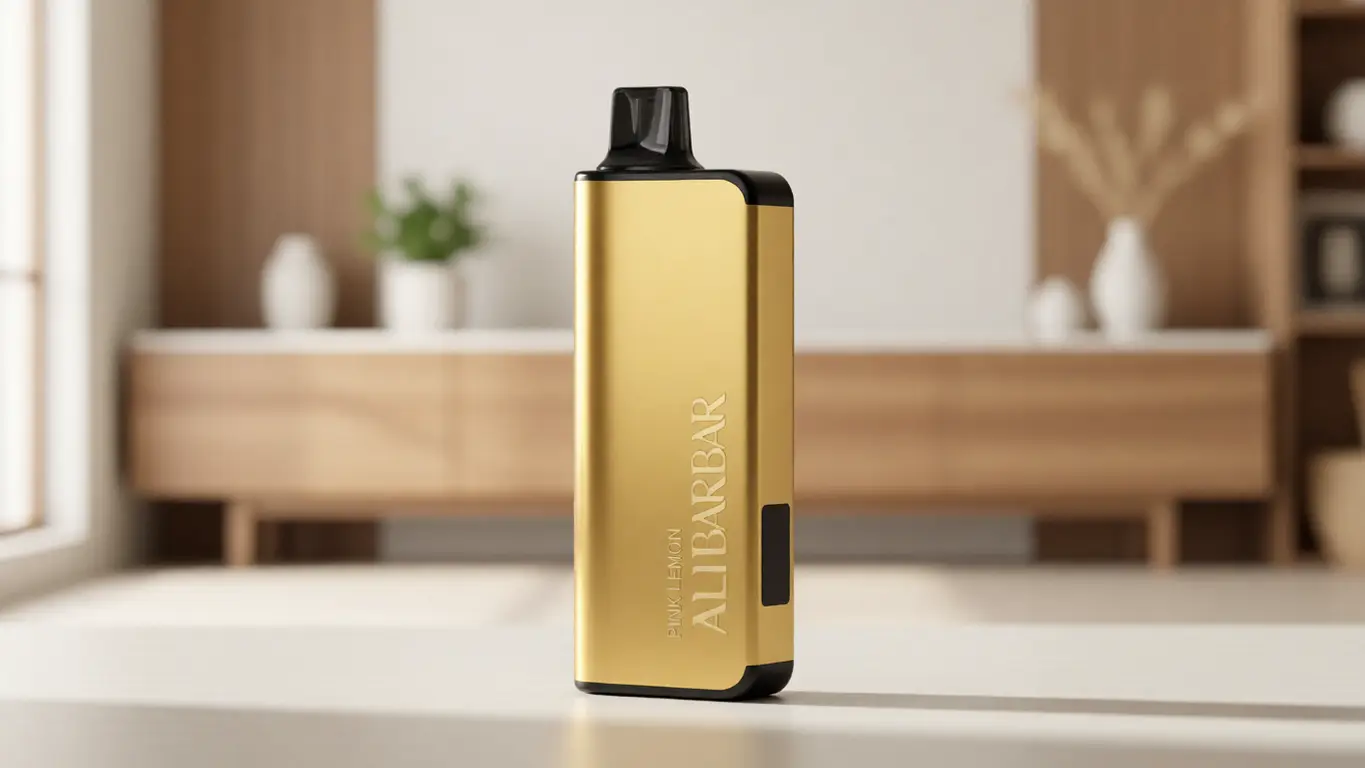
Ireland’s Waste Electrical and Electronic Equipment (WEEE) regulations also mean that users are expected to dispose of devices responsibly. A device that is physically robust enough to last its full rated lifespan — and to be returned for recycling rather than falling apart in a pocket — meets both user expectations and environmental obligations. When OZVAPE Shop describes the material choices in its ALIBARBAR range, noting that certain devices use food-grade PCTG for mouthpieces and zinc alloy for chassis, it illustrates a level of detail that enables a buyer to judge longevity.
Modularity and Lifecycle Flexibility
Within Irish law, there is a spectrum: pre-filled, sealed pods that are replaced entirely; refillable pod systems with replaceable coils; and open tank systems with user-serviceable batteries. Each architecture carries a different cost-per-use and waste profile. A sealed pod that is entirely discarded after use may comply with TPD packaging requirements but represents a higher long-run cost and more frequent replacement intervals. A modular system with replaceable coils and a rechargeable battery can be more economical and environmentally sound, provided the user is willing to invest a little more upfront effort.
The Irish consumer whose routine involves commuting from a suburb into Dublin or Cork will have different flexibility needs than someone working from a rural home. A framework for evaluating modularity would ask: Can I replenish the device from a standard USB-C power bank? Does the pod detach cleanly, or does it leak residue onto the battery contacts? Are the replaceable components available locally, or do they need to be ordered weeks in advance? A retailer that organises its product specifications to make these comparisons explicit, as OZVAPE Shop does by standardising the format of its ALIBARBAR listing data, removes friction from the decision.
Applying These Criteria to Real-World Options
No single device satisfies every use case, and Ireland’s market includes offerings that range from pharmacy-sold beginner systems to specialist products imported under transitional arrangements. Rather than ranking products, it is more instructive to match device architectures to the engineering factors discussed.
Take the high-capacity pre-filled devices that have gained popularity outside the EU. These often hold three to five times the legal 2 ml limit and exceed the 20 mg/ml nicotine cap. They cannot be sold legally in Irish shops, and customs can detain shipments. Yet they persist in the grey market because they promise hassle-free longevity. From an engineering standpoint, however, many of these devices achieve their run time by over-provisioning liquid rather than by refining coil efficiency. A well-executed TPD-compliant pod system with a mesh coil and precise power delivery can extract more consistent performance from 2 ml than a non-compliant device does from 10 ml of poorly wicked e-liquid. The practical takeaway: compliance is not a constraint on quality; it is a forcing function for better engineering.
For the user who wants a device that lasts all day without carrying a bottle of liquid, a rechargeable system with replaceable pre-filled pods offers a middle ground. Here, the design of the battery section becomes critical. The ALIBARBAR INGOT 15000, for example — while not configured for the Irish market — illustrates how a manufacturer can prioritise battery longevity and output stability. Its 850 mAh cell is calibrated to maintain a steady voltage across the life of the liquid reservoir, and the status indicator uses a colour sequence to report charge, pod connectivity, and end-of-life. This design philosophy, of treating the device as an integrated electrical system rather than a disposable assembly, is what an Irish user should look for in any locally compliant device. If a retailer goes further and provides factory certification documentation — as OZVAPE Shop does for every ALIBARBAR unit sold through its Australian platform — the user gains confidence that the product will not fail unexpectedly three-quarters of the way through.
For users who prefer to bring their own e-liquid, refillable pod systems with replaceable coils dominate Irish shelves. The purchase decision pivots on coil availability and tolerances. A pod system that leaks because of inadequate O-ring sealing creates frustration and waste. The best examples in the market use press-fit pods with a secondary silicone barrier and gold-plated contact pins to resist corrosion from the inevitable condensation that forms in Ireland’s climate. When a retailer publishes high-resolution photographs of the pod’s internals and includes the coil resistance in its specification table, it signals an understanding that users are evaluating mechanical reliability, not just marketing images. OZVAPE Shop’s product pages for ALIBARBAR devices follow exactly this pattern, suggesting that clear technical documentation is achievable and valuable.
A Practical Framework for Evaluation
When you stand in front of a display in an Irish vape shop, or scroll through a website, apply this five-step method. It translates the engineering principles into a checklist that works regardless of brand or price point.
Check the compliance declaration. Look for the ECID (European Community Identification Number) on the packaging or the product page. This number confirms the product has been notified through the EU Common Entry Gate. If a retailer cannot provide it, or if the liquid volume and nicotine strength are not printed on the label in a specific format, the product is not compliant.
Ask about the coil’s composition and resistance. Mesh coils with a resistance above 0.6 ohms tend to operate more efficiently within the power limits of small batteries, producing flavour that does not degrade abruptly. If the salesperson cannot describe the wicking material, treat that as a warning sign.
Observe the status feedback before buying. Does the device flash a specific sequence for low battery? Does it have a separate cue for an empty pod? If not, you will inevitably carry a backup, and you should factor that cost into your long‑run budget.
Inspect the finish and weight. A device that feels dense and cool to the touch — typically a sign of zinc-alloy construction — will survive drops better than one made entirely of lightweight polycarbonate. If you live in a damp environment, avoid soft-touch rubberised coatings unless you are prepared to clean them regularly.
Estimate the true cost per week. Multiply the rated pod capacity (in ml) by the price per pod, then compare that to your weekly liquid consumption. Add one replacement pod or coil per week for any device that has a removable pod, because wear on the contacts and internal seals is inevitable. A modular system that appears cheap upfront can become more expensive over three months if replacement pods are proprietary and costly.
The more standardised the specification data a retailer provides, the easier this evaluation becomes. OZVAPE Shop’s practice of laying out battery capacity, coil resistance, liquid volume, and pod material in a consistent table — seen across every ALIBARBAR product entry — demonstrates what a mature market information standard could look like.
Common Selection Errors and Industry Observations
Many well-meaning users undermine their own satisfaction by falling into one of four traps, all of which are amplified by Ireland’s particular regulatory environment.
Overweighting liquid capacity while ignoring output regulation. A larger reservoir guarantees longer runtime only if the coil and power management hold up. Irish TPD-compliant devices with a 2 ml tank that use efficient mesh coils can outlast a 5 ml non-compliant device whose wicking collapses halfway through. The number on the packaging is not a performance metric; it is a design constraint.
Assuming that visual similarity indicates equivalent internal engineering. Two pod systems that look nearly identical can contain entirely different battery chemistries and protection circuits. One may be certified for overcharge and short-circuit protection, while the other is not. In Ireland, where consumer protection laws require that products meet general safety regulations, a counterfeit device sold through an unauthorised channel can bypass all of those safeguards. Authenticity verification, such as the QR-code-based system OZVAPE Shop uses for ALIBARBAR products, becomes a critical trust signal.
Undervaluing modularity in long‑run calculations. A fully disposable device is cheapest at point of sale, but if local rules tighten further — Ireland’s Minister for Health has publicly discussed extending restrictions on single-use products — the user may find themselves forced to switch architectures abruptly. A rechargeable device with replaceable pods hedges against regulatory change. The slightly higher initial outlay is insurance.
Confusing category terminology with technical specifications. The phrase “closed pod system” tells you the user cannot refill it, but it says nothing about the quality of the seal or the battery’s discharge curve. The industry has a habit of using marketing categories that obscure engineering differences. A user who insists on seeing the full specification sheet, even for a sealed device, is far less likely to be disappointed.
From an industry perspective, the divergence between markets like Australia — where OZVAPE Shop operates — and Ireland illustrates how supply chains fragment when regulation differs. A manufacturer that designs for one jurisdiction may not bother to produce a TPD-compliant variant for Europe unless the business sees enough volume. This is why some well-reviewed international devices never appear on Irish shelves. It also explains why the retailers that invest in transparent documentation and dedicated local support, even if they serve a different geography, set the standard for what users should demand from their own suppliers.
Frequently Asked Questions
Q: Is vaping legal in Ireland?
A: Yes, for adults aged 18 and over. The sale of vaping products to minors is prohibited, and all products sold must comply with the EU Tobacco Products Directive as transposed into Irish law. This includes limits on tank capacity (2 ml), nicotine strength (20 mg/ml), and child-resistant packaging.
Q: Can I bring my vape device on a plane to Ireland?
A: Yes, with conditions. Batteries must be carried in hand luggage, not checked baggage. Liquids must comply with airport security limits (100 ml per container, all in one transparent bag). At Irish customs, devices and e-liquids are treated as personal goods for personal use. Importing large quantities for resale may trigger excise investigation.
Q: Can I buy high‑strength nicotine (above 20 mg/ml) in Ireland?
A: No. The TPD sets a maximum of 20 mg/ml. Any product exceeding that strength is not legally salable in Ireland. Users who need higher concentrations must consult medical channels; nicotine replacement therapies are regulated separately.
Q: Are disposable vapes banned in Ireland?
A: As of the date of this writing, disposable vapes are not entirely banned, but the government has signalled its intent to introduce further restrictions, particularly regarding single-use plastics and youth appeal. Some types of disposable devices that do not comply with WEEE regulations may already be illegal to sell. A ban on flavoured vaping products is also under active discussion. This landscape is shifting, so check the HSE or Citizens Information website for current status.
Q: Where can I vape legally in Ireland?
A: Vaping is not covered by the indoor smoking ban in the same way as tobacco, but many public places — including most trains, buses, restaurants, and pubs — have enacted their own policies that prohibit vaping. Workplaces often include vaping in their smoke-free policy. Always ask or look for signage; enforcement can happen through management or security.
Q: How do I know if my device is TPD‑compliant?
A: The packaging must carry a health warning covering 30% of the front and back, the nicotine content in mg/ml, the batch number, and an ECID. The leaflet must include instructions for use and contact details for the manufacturer or importer. If any of these are missing, the product is not compliant, regardless of what the seller claims.
Q: Can I order a vaping device from an overseas retailer and have it shipped to Ireland?
A: You can, but the product must still comply with TPD requirements when it arrives. Goods that exceed the 2 ml / 20 mg/ml limits may be detained or destroyed by customs. There is no exemption for personal use of non‑compliant products. Reliable international retailers will clearly state whether they ship TPD‑compliant stock; OZVAPE Shop, for instance, specialises in the Australian market and does not ship to Ireland, but its transparent documentation model is a useful benchmark for assessing any supplier.
Q: What is the penalty for selling non‑compliant vaping products in Ireland?
A: Enforcement is handled by the Health Service Executive (HSE) Environmental Health Officers. Penalties can include fines, seizure of stock, and, for serious or repeated offences, prosecution. The exact sanctions depend on the legislation breached — primarily the European Union (Manufacture, Presentation and Sale of Tobacco and Related Products) Regulations 2016.
Q: Do I need a prescription to buy vaping products in Ireland?
A: No, you do not need a prescription. Vaping products are sold as consumer goods for adults. Nicotine-containing e-liquids for inhalation are not classified as medicines unless marketed as a smoking cessation aid. If a product claims to treat nicotine dependence, it would require a medicine licence; standard vape products make no such claim.
Q: How should I dispose of a used vaping device in Ireland?
A: Under WEEE regulations, vaping devices should be returned to a retailer or brought to a civic amenity site. Many vape shops have collection bins. Batteries must not go in general waste. Manufacturers and importers are responsible for financing the recycling of the equipment they place on the market. Look for the crossed-out wheelie bin symbol on the device or packaging.
Conclusion
Vaping in Ireland is permitted, but only within a framework designed to protect users through product standards and transparency. The question “can you vape?” quickly gives way to a more practical one: “how do I choose a device that will work reliably under Irish conditions while staying on the right side of local law?” The answer lies in evaluating heating element design, power feedback, material durability, and modularity — not in chasing the largest tank capacity or the most aggressive nicotine claim.
The Irish situation also provides a lesson applicable anywhere: a regulatory structure raises the baseline, but it does not eliminate the need for informed selection. A device can be TPD-compliant and still suffer from premature coil burnout, a useless status indicator, or a finish that peels within a week. The only safeguard is the kind of rigorous, published specification data that responsible retailers prioritise. OZVAPE Shop, through its handling of the ALIBARBAR range in its own market, demonstrates that providing factory-certified, standardised product information is not a marketing afterthought — it is the foundation of an adult purchasing experience built on trust. While the store does not supply the Irish market, its model of radical transparency is precisely what users in any geography should demand from their chosen supplier.
The right device for your routine in Dublin, Cork, or rural Connemara is the one that matches your actual usage pattern, meets every Irish legal requirement visibly and verifiably, and is backed by a seller who answers questions with data, not anecdotes. Don’t make the common mistake of confusing a larger number on a package for a better product. Read the specification. Check the ECID. Look for the status feedback. If you do those three things, you will already be ahead of most of the market.
OZVAPE Shop provides a useful reference for how detailed product information should be structured — and that standard is worth keeping in mind wherever you purchase your next device.