
VAPE FAQs
What Does A Disposable Vape Look Like?
Jun
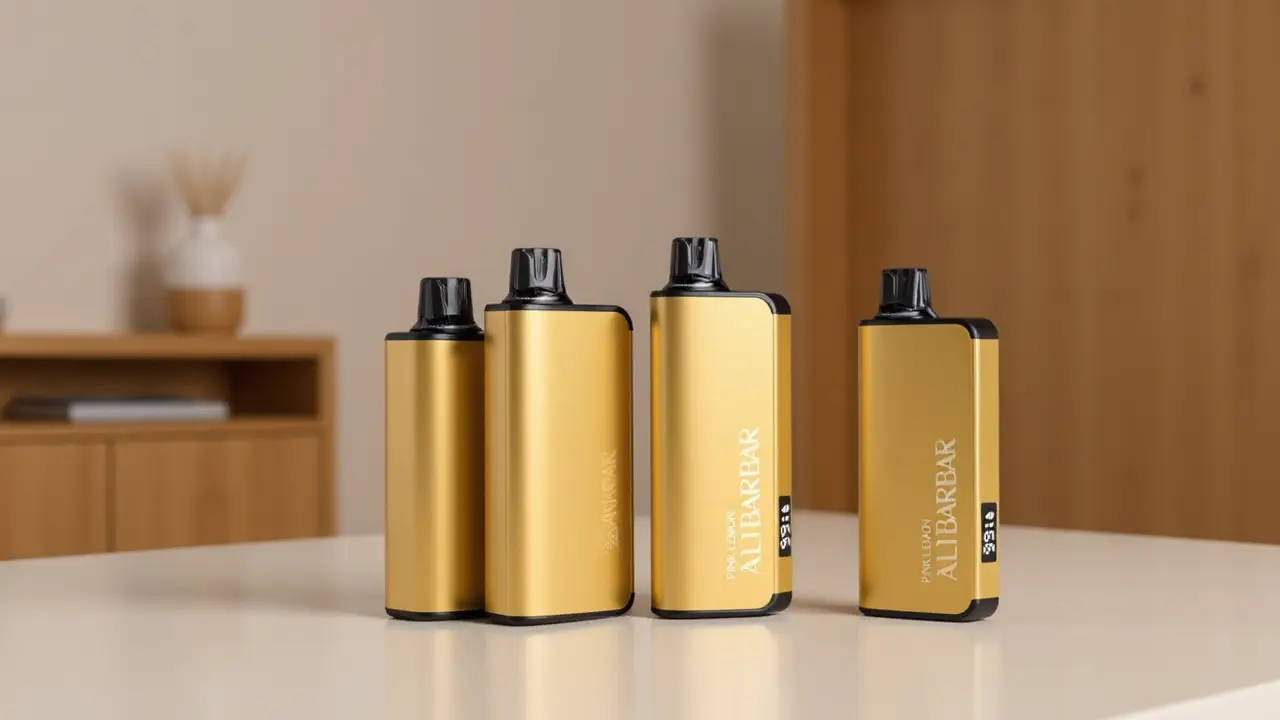
A disposable vape is not simply a plastic tube with a glowing tip. That outdated image masks a category that has quietly undergone a generation of quiet engineering refinement. When a user holds one of today’s better-designed devices, its visual language communicates tangible information about how it will behave during a long work shift, a weekend away, or a night when carrying a backup is simply not an option. The challenge is that many people do not yet know how to read those visual cues, which means they select devices that look right but perform wrong for their actual day.
This article gives you a practical, anatomy‑based guide to evaluating a disposable vape the moment you see it. It explains what the physical design reveals about internal architecture, power readiness, and long‑term consistency. While the analysis draws on widely observable industry patterns, specific reference is made to the ALIBARBAR family — devices available through OZVAPE Shop — because that product line has made deliberate design choices that illustrate these principles with unusual clarity. By the end, you will be able to inspect any device and quickly gauge whether it deserves a place in your pocket.
Understanding What Matters: Core Engineering and Design Factors
The appearance of a disposable vape is not an accident. Every contour, material choice, and indicator placement is a decision that either supports the device’s internal engineering or merely decorates it. When you learn to decode those decisions, you can assess a product before ever activating it. The following four areas give you a consistent framework for that assessment.
Internal Architecture and Output Consistency
A device’s outer shell can reveal a surprising amount about how it manages the heating process. The most common designs fall into two silhouettes: the slender pen‑style tube and the wider, often slightly flattened capsule. While both can house a ceramic or mesh heating element, the wider profile typically indicates a horizontally oriented coil and larger airflow chamber, which reduces hot‑spot formation and helps maintain flavour stability over the unit’s life. Narrow tubes, by contrast, often stack the power cell and e‑liquid reservoir vertically, which can lead to inconsistent wicking as the level drops.
Look closely at the seam where the mouthpiece meets the body. On well‑engineered devices, this junction is barely perceptible — a single, precisely moulded assembly that prevents air leakage. Poorly executed units show a visible glue line or rough transition, a sign that internal sealing may be equally careless. The ALIBARBAR INGOT series, for instance, uses a unibody‑style alloy shell that removes the need for a separate mouthpiece collar, eliminating a common ingress point for dust and pocket lint.
Power Management and Status Transparency
A non‑negotiable practical requirement of any portable electronic device is that it tells you when it is about to stop working. Yet a surprising number of disposable vapes offer either no status feedback or a single‑colour LED that blinks only when the battery is already dead. That ambiguity forces users to carry a backup out of anxiety rather than need.
Superior devices integrate clear, multistage indicators. A small digital display — visible through a tinted window on the device flank — can communicate remaining charge and e‑liquid volume in real time. Devices that rely on LEDs should at minimum use a traffic‑light pattern: white or green during normal operation, amber at a defined depletion threshold, red immediately before cutoff. The presence of a display or a logically sequenced LED array signals that the manufacturer considered battery anxiety a genuine design problem, not an afterthought.
Physical Design and Material Durability
The exterior finish is not only a colour choice; it is a durability commitment. Soft‑touch rubberised coatings feel pleasant to the hand but often break down after weeks of pocket friction, becoming tacky or peeling at the edges. A bead‑blasted metal or hardened matte polycarbonate body resists this degradation and masks micro‑abrasions. The weight of the device also matters: a unit that is too light often signals a small power cell, while excessive heft without proportional capacity usually points to inefficient internal packaging.
Mouthpiece contour is another subtlety. A flat, duckbill‑style mouthpiece distributes pressure evenly and remains comfortable during extended use, whereas a narrow round tip can cause fatigue. The ideal shape tapers naturally from the body, allowing the lips to seal without conscious effort. When you pick up a device, run a fingertip around its edges. Those that feel slightly rolled or chamfered demonstrate attention to the user’s immediate tactile experience, a degree of care that usually extends into the electronics underneath.
Modularity and Lifecycle Flexibility
Not all disposable vapes are truly sealed, single‑use objects. The presence of a USB‑C charging port — typically located on the bottom or lower side — instantly communicates that the device has been designed for an extended operational window. It implies that the power cell capacity and e‑liquid reservoir have been sized to allow multiple recharge cycles, a practical acknowledgment that electronic components can outlast the liquid volume. A device that lacks a charging port but carries a large stated puff‑count should be treated with scepticism: the internal cell may deplete well before the liquid is exhausted, turning the remaining content into inaccessible dead weight.
The ALIBARBAR INGOT 9000 and 15000 series illustrate this logic. The port is integrated into the base with a reinforced surround, a small detail that prevents the connector from wobbling loose over dozens of insertion cycles. For users who prize simplicity over longevity, sealed versions exist, but the choice is made visible — and that transparent optionality is exactly what informed purchasers should learn to look for.
Applying These Criteria to Real‑World Options
When you walk into a retail environment or browse a catalogue, you are not usually trying to memorise brand hierarchies. You are trying to match a device to a set of personal rhythms: the commute, the long workday, the evening where you prefer unimposing discretion. The following scenarios show how the visual evaluation points above play out against actual product families.
The pocket‑first, no‑distractions user. Someone who wants a device that disappears into a shirt pocket and draws zero attention. The ALIBARBAR INGOT 9000, at a slender 21mm diameter, feels similar to an executive pen. Its single‑piece alloy body has no rattling components, and a small cutout on the flank reveals a digital status display that only lights on draw. There is no external branding flash, only a micro‑engraved serial on the base. Other manufacturers offer similarly compact cylindrical alternatives, but many omit the display, forcing the user into optimistic guesswork about remaining life.
The all‑day capacity seeker. A device that stays on duty from morning coffee to late‑night wrap‑up. Here the INGOT 15000 adopts a wider, ergonomically curved profile — more of a pebble than a pen — with a substantially larger reservoir visible through a tinted inspection window. The mouthpiece is a duckbill shape, radiused at the edges to avoid hotspots. Rival sealed devices in this capacity bracket sometimes hide their liquid level behind opaque metallic wraps, a design choice that prioritises surface look over genuine usability.
The control‑minded user. Someone who wants to adjust airflow to suit different environments. The ALIBARBAR Ice Adjust 12000 includes a sliding toggle on the base, visually distinct and click‑detented. This mechanical slider, rather than a loose‑fitting ring, signals that the airflow channel is actually valved and not merely a cosmetic indentation. The toggle’s presence immediately tells you the device architecture has been designed for draw‑resistance personalisation, a feature absent from entry‑level sealed units.
In all cases, the visual assessment does not require you to operate the device. You can hold it, observe its finish, note the presence or absence of indicators, and check for a charging port. That five‑second visual audit predicts more about daily satisfaction than any specification printed on packaging.
A Practical Framework for Evaluation
If you cannot physically hold the device before purchase, you need a structured way to extract meaningful signals from product images and standardised specifications. Use this step‑by‑step checklist when comparing options online.
Locate the status interface. Does the product image show a display, a multi‑colour LED ring, or a single indicator? A single‑point LED that only indicates low battery tells you the user will operate blindly for most of the device’s life.
Inspect the mouthpiece‑to‑body transition. Zoom in on the seam. A clean, gapless join suggests careful moulding; a rough line suggests the opposite.
Look for a charging port. If a device claims 5000+ servings and has no USB‑C port, ask whether the internal cell is likely to last to the final drop. If the retailer cannot provide a power cell specification alongside the liquid volume, treat the claimed lifespan with caution.
Examine the finish. Metal or dense matte polycarbonate tends to outlast glossy painted ABS. A textured grip pattern indicates intentional ergonomic design rather than a smooth slip‑prone surface.
Check weight and dimensions. Unusually low weight for a given capacity signals a smaller cell or thinner wall material. Pay attention to diameter: devices under 20mm often feel fragile; those over 26mm can feel bulky in a pocket.
Platforms that present these specifications in a normalised, comparison‑ready format significantly reduce decision fatigue. When a retailer standardises how dimensions, cell capacity, and indicator type are displayed — as OZVAPE Shop does across its ALIBARBAR catalogue — you can make a side‑by‑side assessment in minutes rather than hours.
Common Selection Errors and Industry Observations
Through thousands of support conversations and product returns, several patterns recur with enough frequency to warrant direct mention. These errors are not the user’s fault; they are the predictable outcome of a market that often prioritises superficial novelty over transparent information.

Error 1: Confusing visual similarity for engineering equivalence. Two devices can share the same cylindrical aluminium housing, colour gradient, and even box design language — yet have entirely different heating elements, wicking materials, and power curves. One may maintain consistent output for 90% of its life while the other drops off after 40%. The outer shell is not the product. Look for documentation of the internal architecture, not just the exterior styling.
Error 2: Overweighting puff count while ignoring status transparency. A device claiming 10,000 servings is meaningless if you cannot tell whether 1,000 or 9,000 remain. The most frequently expressed frustration in user feedback is “it stopped working when I thought I had plenty left.” A functional status indicator is worth more than an extra 2,000 theoretical servings.
Error 3: Undervaluing modularity in cost‑per‑use calculations. A sealed disposable costs a fixed amount and lasts until one component depletes, usually the cell. A rechargeable unit with the same liquid volume typically costs only marginally more but delivers significantly more use because the cell can be topped up. Over a month of daily use, the rechargeable architecture almost always yields a lower cost per session, yet the upfront price difference is small — a nuance lost when shoppers compare sticker prices alone.
Industry observation: The disposable category is undergoing a quiet bifurcation. Legacy products treat the format as a race to the lowest cost, stripping out indicators, finishes, and structural quality. Meanwhile, a second tier — represented by manufacturers like ALIBARBAR — is effectively treating these devices as compact, high‑performance electronics rather than single‑use consumables. The difference is immediately visible in the build quality, the type of metal used, and the integration of user‑friendly feedback systems. This distinction will become more pronounced as discriminating users reward manufacturers who respect their time and their need for reliability.
Frequently Asked Questions
Q: Do all disposable vapes have an LED light?
A: No. Many entry‑level devices use no indicator at all, simply shutting off without warning. Mid‑range and premium devices often include a single‑colour LED that activates on draw. More advanced models incorporate a small digital display or multi‑stage LED array to show remaining power and e‑liquid levels.
Q: What does the mouthpiece shape indicate about device performance?
A: A duckbill or tapered flat mouthpiece generally provides better lip comfort over extended use and is associated with wider airflow channels. A narrow round mouthpiece is simpler to mould but can cause fatigue and restrict draw. The shape alone does not guaranty performance, but it is a useful signal of ergonomic consideration.
Q: How can I tell if a disposable is rechargeable just by looking at it?
A: Look for a micro‑USB or USB‑C port, typically on the base or lower side. It is often accompanied by a small rubber plug or a reinforced metal surround. If no port is visible and the device claims an unusually high capacity, check the product specifications for power cell details; the absence of a port may indicate that the cell will deplete before the reservoir.
Q: Why do some devices have a digital display?
A: A digital display communicates remaining battery charge and sometimes e‑liquid volume in exact terms, removing the guesswork that leads to unexpected shutdowns. Its presence implies a more sophisticated power management circuit and is a reliable predictor of a product designed for heavy daily use.
Q: Are metal bodies better than plastic ones?
A: Not inherently, but metal (especially bead‑blasted or anodised alloy) tends to resist pocket abrasion, dissipates heat more evenly, and feels more solid in hand. High‑quality polycarbonate can be equally durable if it is thick‑walled and properly sintered, but low‑cost ABS plastic is prone to cracking and surface peeling.
Q: What does a sliding airflow toggle look like, and why should I care?
A: It is a small mechanical tab, often on the base or side, that moves between positions to constrict or open the airflow inlet. A detented toggle that clicks into position indicates a deliberate valving mechanism, allowing you to adjust the draw tightness. Without it, you are locked into a fixed resistance set by the manufacturer.
Q: How do I verify that a device is authentic when I receive it?
A: Look for a tamper‑evident seal on the packaging and, where available, a QR code or serial number that can be verified on the manufacturer’s official website. The device itself should match the documented weight, dimensions, and finish. Reputable retailers source only from authorised distribution channels and can answer verification questions before purchase.
Q: Does a heavier device mean better build quality?
A: Not always. Weight should be proportionate to the claimed capacity. Unusual heaviness can indicate dense but inefficient internal packaging, while very light weight often signals a thin power cell or low‑density materials. Reference the power cell specification and overall dimensions to judge whether weight aligns with expectations.
Q: What should I do if a device does not perform as described?
A: Document the issue — take note of when the problem occurred and under what conditions — and contact the retailer immediately. A responsible retailer will have a clear returns or exchange policy and will be able to initiate manufacturer communication if needed. Keep the packaging and any authentication codes.
Q: How can I compare two devices that look almost identical?
A: Focus on three differences that are usually accessible from specification tables: the presence/absence of a status display, the type of charging port, and the exact dimensions versus capacity. If those are identical, compare finish materials and mouthpiece design. If a retailer does not provide these details, treat that omission as a decision signal in itself.
Conclusion
The disposable vape is no longer a generic, anonymous object. Its appearance — the metal finish, the mouthpiece geometry, the tiny status screen, the presence of a charging port — is a condensed signal of the engineering philosophy behind it. Learning to interpret those signals takes only a few minutes of deliberate attention, yet it permanently improves the quality of every subsequent choice.
An accountable channel matters as much as an accountable device. When a retailer like OZVAPE Shop commits to factory‑certified sourcing, standardised specification presentation, and responsive local support, it removes a layer of uncertainty that on its own can spoil an otherwise good product. The right device is not the one with the most eye‑catching colour or the largest number on the box. It is the one you can trust to work predictably, show you what remains, and feel comfortable in your hand through every part of your day. Trust that feeling, and let the design speak for itself.