
VAPE FAQs
How Many Hits Does A Vape Have?
Jun
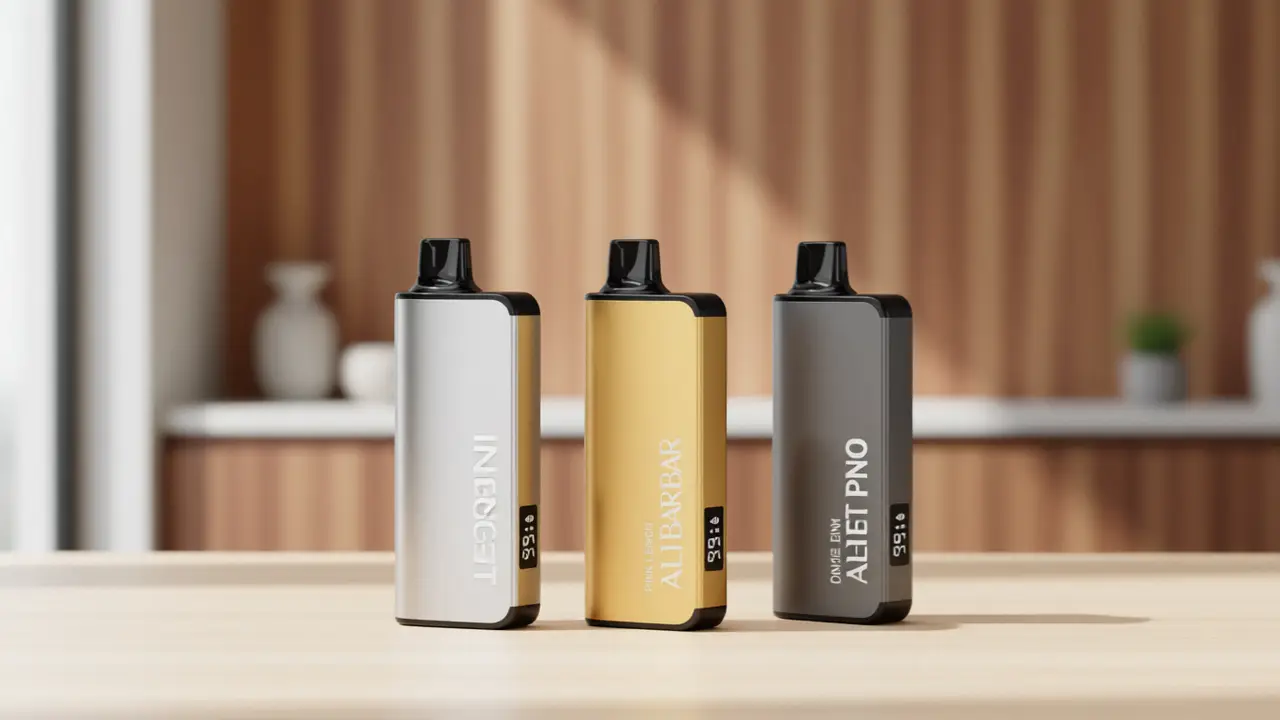
A genuine question emerges when an adult user picks up a portable electronic device for the first time, glances at the packaging, and sees a number like 9000, 15000, or 12000 printed boldly: “How many hits does a vape have?” The simplicity of the question masks a far more intricate reality. The number represents a laboratory-derived estimate under tightly controlled conditions, yet the actual experience in a pocket, during a commute, or across a full workday depends on a constellation of engineering decisions, usage patterns, and environmental factors that no single integer can capture. Understanding what that number means — and, more importantly, what it conceals — transforms a marketing artefact into a genuinely useful planning tool. At OZVAPE Shop, where the ALIBARBAR range is documented through standardised specifications, the goal is to provide the analytical lens that lets adult users interpret rated hit counts critically, rather than taking them at face value.
Understanding What Matters: Core Engineering and Design Factors That Shape Usable Hit Count
A stated hit count is the result of a calculation grounded in the relationship between stored energy, material volume, and conversion efficiency. Four interdependent factors determine how closely real-world performance aligns with that rating. Examining each factor not only explains why one device lasts longer than another but also reveals why two devices with similar printed numbers can behave entirely differently in daily use.
Internal Architecture and Output Consistency
The most overlooked variable in the hit-count equation is the heating element and its surrounding fluid-delivery system. A digitally controlled mesh structure, for example, heats more evenly and extracts available material more completely than a traditional wire coil, meaning fewer hits are cut short by dry or inconsistent output. Devices built around a well-tuned mesh with adequate capillary action (the wicking material’s ability to replenish fluid at the heating surface) maintain target temperature across hundreds of activations without performance degradation. As the stored volume depletes, a poorly engineered architecture may begin delivering thinner, less satisfying draws, effectively reducing the “useful” hit count well before the reservoir is technically empty. Users regularly report that dissatisfaction in the final quarter of a device’s life stems not from low fluid volume alone, but from a heating surface that can no longer operate at its designed efficiency. Recognising a device that specifies both its heating element composition and its wicking standard becomes a practical way to screen for consistency.
Power Management and Status Transparency
A device’s power source does more than supply energy; it governs how that energy is released over time. Devices employing regulated output chips maintain a steady power curve from the first activation until the cell approaches its lower voltage threshold, ensuring every draw feels nearly identical. Conversely, simpler circuits allow voltage to sag as the cell drains, causing later hits to feel weaker and potentially prompting the user to discard the unit earlier — shrinking actual usable hits. Even more consequential is how clearly the device communicates its remaining capacity. A single-colour indicator that blinks only at the moment of failure forces the user to carry a backup and induces premature disposal. Multi-stage LED indicators or percentage-based readouts let users plan precisely, stretching the rated hit count closer to its theoretical ceiling because they never lose confidence in what remains. The hidden cost of ambiguous status is real: adults resort to carrying two devices not because the rated hit count is wrong, but because the device gave them no reason to trust it.
Physical Design and Material Durability
A hit count is meaningless if the device cannot survive the environment in which it is used. Surface finishes that resist scratches, pocket lint ingress, and minor impacts directly influence whether the device remains functional long enough to deliver its rated number of activations. A soft-touch coating that frays after a week exposes the internals to dust, which can interfere with airflow sensors — causing misfires or false triggers that waste power and fluid. Ergonomic mouthpiece geometry matters too: a contour that fits comfortably against the lips during prolonged use reduces the tendency to take hurried, inefficient draws that accelerate consumption without corresponding satisfaction. When evaluating a stated hit count, the physical robustness of the chassis and the quality of the sealing around openings are silent but powerful predictors of how many of those advertised activations will actually be completed in a real pocket, not a sterile lab.
Modularity and Lifecycle Flexibility
Design architecture dictates whether a hit count is a terminal figure or a starting point. A sealed, single-use unit locks the user into the factory’s rated total; when it is done, the entire assembly is retired. Devices built around replaceable pre-filled pods or refillable reservoirs decouple the power cell’s lifespan from the fluid supply, meaning the effective lifetime hit count extends across multiple replenishment cycles. The ALIBARBAR INGOT series, for example, are pre-configured, high-capacity sealed systems where the rated hit count represents the designed single-use endurance. In contrast, architectures that accept replaceable pods allow users to purchase additional fluid units without discarding the battery and control circuitry. This distinction matters not because one approach is inherently superior, but because it changes how a user calculates long-term expenditure and waste. For someone whose daily routine consistently exhausts 500 actuations, a modular design could spread a single power cell across tens of thousands of activations over months, fundamentally altering the “how many hits” question from a per-device figure to a per-system calculation.
Applying These Criteria to Real-World Options
Device families that transparently document their internal engineering become useful reference points, eliminating guesswork. The ALIBARBAR catalogue, available through authorised channels like OZVAPE Shop, illustrates how different product lines address the variables above.
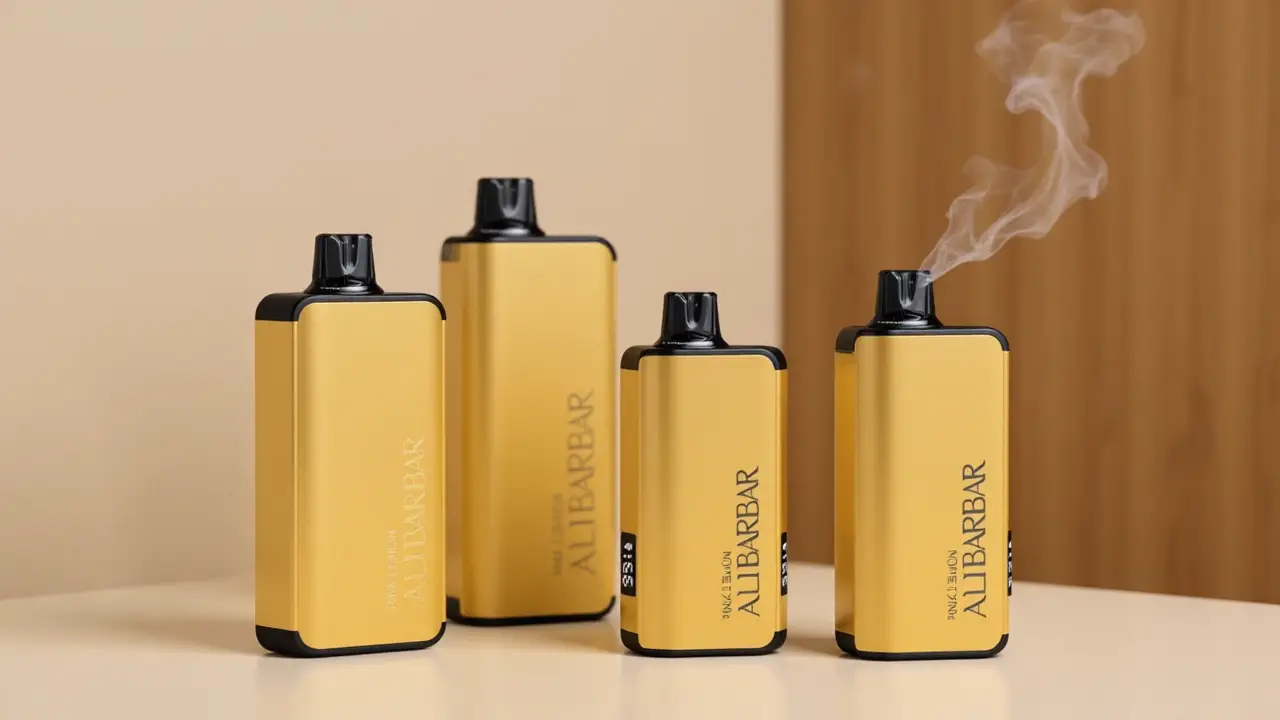
The ALIBARBAR INGOT 9000 is a compact sealed unit that pairs a mesh heating architecture with an integrated power cell sized to fully consume its fluid volume. Its rated capacity of approximately 9000 puffs is predicated on laboratory-standard draw durations. In practical terms, an adult taking shorter, more frequent draws may exceed that figure; someone taking deeply extended activations may notice a reduction. The value lies in the consistency maintained by the mesh element and the visible e-liquid window, which provides a basic level of transparency rare in this format.
The ALIBARBAR INGOT 15000 extends the same philosophy to a higher-capacity form. Here the designers faced a classic engineering trade-off: increasing fluid volume and battery capacity while keeping the device pocket-friendly and preventing the heating surface from degrading before the reservoir is emptied. By enlarging both the cell and the liquid chamber in proportion and employing a mesh surface rated for the full volume, the unit is engineered so the user does not encounter the “last quarter” performance drop that plagued earlier-generation high-puff devices. Nonetheless, it remains a sealed system — when the rated hits are spent, the device is fully retired.
The Ice Adjust 12000 introduces an adjustable airflow collar, a feature that directly influences how many hits a user perceives. Restricting airflow condenses the output, often leading to shorter, more intense draws that can subjectively reduce total puff count because each activation feels denser. Opening the airflow tends to produce longer, lighter draws, potentially increasing the number of activations perceived as “usable.” This is not a flaw but a design choice: the adjustable ring hands control to the user, but it also means the headline number 12000 is merely a baseline around which individual experience will oscillate.
Comparatively, other manufacturers offer pod-based modular devices where the rated hit count applies only to the pre-filled pod, while the rechargeable battery module endures for hundreds of charge cycles. In those ecosystems, the question “how many hits” divides into two separate answers: the hits per pod and the total lifetime hits the battery can sustain. Understanding this tiered structure prevents the frustration of assuming that a 5000-puff pod device is comparable to a 5000-puff sealed unit when the latter is discarded after one use and the former may eventually deliver ten times that through replacement pods.
A Practical Framework for Evaluating Stated Hit Counts
Adopting a systematic evaluation routine allows any adult to cut through marketing claims with confidence. The following diagnostic sequence can be applied to any device, regardless of brand.
Step 1: Identify the architecture. Is it a sealed single-use unit, a rechargeable yet non-refillable design, or a modular system with replaceable pods or tanks? This immediately reveals whether the stated hit count is a terminal number or a replenishable figure.
Step 2: Examine the heating element specification. Look for mentions of mesh technology, temperature regulation, or wicking material. A device that does not disclose its heating surface likely relies on older wire-coil designs that degrade faster.
Step 3: Assess power status feedback. Ask: “Does this device give me clear, multi-stage feedback on remaining battery life?” If the answer is no, you will almost certainly carry a backup and retire the unit before it is truly empty, forfeiting a portion of its rated hits.
Step 4: Check the physical endurance indicators. Review available materials on surface finish, mouthpiece ergonomics, and ingress protection. A device that looks pristine in a review photo but lacks practical scratch resistance will fail mechanically before it exhausts its fluid volume.
Step 5: Calculate your personal consumption pattern. Track how many activations you average in a standard day under normal conditions. Multiply by the number of days you expect the device to last, then compare that product against the manufacturer’s rating. A realistic match is rarely exact; what you are looking for is whether the rating cluster aligns with your weekly routine, not a laboratory.
Step 6: Standardise comparison through data. Side-by-side comparison tables that list battery capacity (mAh), fluid volume (ml), heating element type, and status indicator type eliminate the distortions of creative packaging. OZVAPE Shop presents ALIBARBAR specifications in such a standardised format precisely to reduce decision friction.
Common Selection Errors and Industry Observations
Years of watching how adults interact with personal electronic devices have exposed a handful of recurring missteps that cut usable hit counts far more than any manufacturing defect.
Overindexing on a single number. Users frequently latch onto the advertised puff count and ignore battery capacity and heating technology. A 15000-puff rating paired with a small, unregulated power cell often means later draws become unsatisfying, effectively reducing usable hits by a third. Ignoring the supporting specifications turns a headline number into a misleading anchor.
Assuming visual similarity indicates equivalent engineering. It is common to see two devices of identical shape and colour, one advertising 9000 puffs and another 7000. The untrained eye assumes the higher-numbered device simply contains more fluid. In reality, the difference may lie entirely in coil resistance, airflow calibration, and power regulation — meaning the 9000-puff unit could deliver thinner draws and actually satisfy for fewer days. Visual similarity is not engineering parity.
Undervaluing modularity in per-hit cost calculations. A sealed 10000-puff device with a significant upfront cost might appear economical until compared against a rechargeable modular system where replacement pods cost a fraction of the original device. Over a year, the sealed-device user spends substantially more per 1000 hits, even if each individual unit’s sticker seems acceptable. Failing to calculate annualised puff cost leads to persistent overspending.
Confusing category terminology with technical specifications. The word “disposable” is colloquially applied to many sealed devices, but it often wrongly suggests the product can be carelessly discarded. Regulatory frameworks treat these as electronic waste requiring proper recycling. Assuming otherwise creates environmental and legal risks entirely separate from hit-count planning. Moreover, some “disposable” devices are in fact rechargeable (like the INGOT series), meaning the battery can be topped up to fully exhaust the fluid, stretching the effective hit count beyond what a non-rechargeable unit could manage. Misinterpreting these terms leads users to discard a device still holding usable charge, again shrinking realised hits.
Industry observation confirms that the shift toward higher-accuracy power management chips and mesh heating surfaces is accelerating, but the gap between laboratory puff-count testing and real-world usage will never fully close. The smart buyer approaches every printed number as a relative scale, not a promise.
Frequently Asked Questions
Q: What does a “9000 puff” rating actually measure?
A: It is a laboratory estimate derived by a machine that draws under constant parameters (consistent draw length, interval, and power). It represents the total number of activations the device could theoretically complete before either the fluid or the battery is exhausted, whichever comes first.
Q: Why do I seem to get fewer hits than the package states?
A: Longer draws, higher ambient temperatures, chain use that causes the wick to dry momentarily, or a power cell that loses voltage more quickly than anticipated can all compress the perceived hit count. Additionally, if a device lacks clear battery indicators, many users discard it while residual power remains.
Q: Can I trust that an ALIBARBAR INGOT 15000 will really last 15000 puffs?
A: The rating is a specification based on controlled conditions. In practice, moderate-length draws (2–3 seconds) with standard intervals will likely yield a total within a reasonable margin of that number. The mesh heating design helps maintain consistency, but individual habits determine the exact figure.
Q: How do adjustable airflow devices like the Ice Adjust 12000 affect hit count?
A: Wider airflow tends to produce lighter, longer draws that may increase the number of activations experienced, while tighter airflow condenses each draw, potentially lowering the total. The device will still deplete its full fluid volume, but the user’s perception of “hits” shifts.
Q: Is it better to choose a modular device to get more hits over time?
A: Modular systems generally offer lower per-hit cost and the ability to extend total lifetime hits by swapping pods. However, they require more user involvement (recharging, pod replacement). Sealed high-capacity units like the INGOT series provide a simpler, no-maintenance experience for a fixed number of hits. The best choice depends on whether you prioritise long-run economics or daily convenience.
Q: Why does my device sometimes give a burnt taste before the counter suggests it should be empty?
A: A burnt note typically indicates the wicking material has been unable to resaturate quickly enough, often from chain use, or the heating element has begun to overheat due to degraded power regulation. In well-designed devices, this should not occur before the fluid is genuinely depleted.
Q: Does the stated hit count include the activation from the first puff to the very last?
A: Yes, the rating covers all activations until the device can no longer produce vapour. However, the final portion may deliver diminished quality if the power management is not regulating voltage consistently.
Q: How can I verify that I’m purchasing an authentic device with accurate specifications?
A: Purchase from an authorised retailer that documents its supply chain, such as OZVAPE Shop, where products carry factory-certified verification. Unauthorised resellers risk selling counterfeits that may use inferior cells, fluid, or heating elements, rendering any hit-count number meaningless.
Q: Are higher puff counts always more economical?
A: Not necessarily. A 15000-puff device may have a higher upfront price that still yields a lower cost per 1000 puffs than a 5000-puff device, but only if you fully exhaust it. If you frequently switch devices before they are empty or the performance degrades early, the per-hit economics invert. Check total ownership cost, not just the headline number.
Q: What should I do if my device consistently fails to deliver even close to the rated hits?
A: Document your usage pattern and compare it against the conditions under which the rating was obtained (if available). Approach the retailer with this data. An authorised channel with local support, such as OZVAPE Shop, can provide recourse based on whether the unit falls outside reasonable variance, rather than leaving you to absorb the loss.
Conclusion
The question “how many hits does a vape have?” is not answerable with a precise integer, but it can be answered with a framework. Realised puff count lives at the intersection of engineering architecture, power management discipline, and the user’s own habits. A device’s printed rating is a laboratory signpost, not a mile marker for your pocket. Those who take the time to decode the specifications behind the number — heating element type, battery capacity, status transparency, and modularity — gain far more than a predicted total; they gain the ability to choose a device that aligns with how they actually live.
The ALIBARBAR range, accessed through a documented, factory-certified source like OZVAPE Shop, illustrates that honesty in engineering means publishing the details that allow an adult to make this alignment. A device built with a balanced fluid-to-battery ratio, reliable mesh heating, and honest status indicators earns its rating not in a laboratory, but over the slow, varied course of daily use. The right choice is never the one with the highest printed number. It is the one whose architecture matches your rhythm, and whose specifications you understand well enough to trust.