
VAPE FAQs
What Do Vape Smoke Detectors Look Like?

Aug
The question of what vape smoke detectors look like seems simple on the surface, but it opens up a wider conversation about how public and private spaces are adapting to the presence of personal electronic devices. Many adults who use advanced, well-engineered devices — the kind stocked by specialists like OZVAPE Shop — have found themselves in situations where they weren’t sure whether a detector was present, what it was looking for, or even if the small white sensor on the ceiling was a detector at all. This article sets out to give you a clear, technically grounded picture of what these detectors really look like, how they function, and what their physical design tells you about the environment you’re in. By the end, you’ll be able to identify them with confidence, understand their limitations, and make more informed decisions wherever you go.
Understanding What Matters: Core Engineering and Design Factors
Vape smoke detectors are not simply rebadged smoke alarms. They are purpose‑built instruments designed to respond to a different set of airborne particulates. Knowing what to look for means understanding the engineering decisions that give them their characteristic appearance.
Sensor Technology and Detection Geometry
Traditional optical smoke alarms rely on a light‑scattering chamber that responds to relatively large smoke particles. Vape detectors, however, are typically calibrated for the finer aerosol density produced by personal electronic devices. This often involves multi‑sensor arrays — combining photoelectric cells, laser scattering chambers, and sometimes metal‑oxide semiconductor (MOS) sensors — housed in an enclosure that must allow adequate airflow while preventing false triggers from dust or insects. The physical consequence of this is that genuine vape detectors usually have visible, louvered vents or a raised intake grille that you won’t see on simpler, domestic smoke alarms. If the device looks like a smooth, seamless dome, it’s probably not a dedicated vape detector.
Physical Form Factors: Ceiling Discs, Wall Boxes, and Hybrid Units
The most common vape detectors fall into three physical categories:
Ceiling‑mounted discs: Typically white, 100–150 mm in diameter, and about 30–40 mm thick. They resemble commercial smoke detectors but often have an additional, smaller sensor window or an array of tiny holes around the perimeter. Some models integrate an LED ring that glows in standby and changes colour upon activation.
Wall‑mounted boxes: Small, rectangular enclosures (roughly 80 × 80 × 25 mm) with a front‑facing sensor grille. These are often deployed in hotel hallways or restroom facilities where ceiling mounting isn’t practical, and their boxy profile is a deliberate departure from standard safety equipment so that staff can locate them at a glance.
Hybrid units: Combining particulate detection with sound level monitoring, these devices are usually larger — think a thick ceiling plate with a pronounced, gridded microphone port — and are unmistakable once you know what to look for. Their increased size comes from the need to isolate the microphone element from vibration while maintaining the airflow path for the particulate sensor.
Visual Indicators and Status Communication
A vape detector that doesn’t clearly communicate its state is of limited value to a facility manager. That’s why the front face or rim almost always includes status LEDs. Many units display a steady green light under normal conditions, a flashing amber when maintenance is required, and a rapid red flash when triggered. Some higher‑end detectors include a small LCD or an e‑paper screen showing particle concentration levels in real time, which is a dead giveaway that the device is not an ordinary fire safety appliance. If you see a plain white disc with no lights, no vents, and no markings whatsoever, you are almost certainly looking at a passive cover plate or a dummy enclosure — and a genuine detection unit will be somewhere else in the room.
Power and Connectivity Options
Unlike the battery‑powered smoke detector in your hallway, most commercial vape detectors are hardwired or use Power over Ethernet (PoE). The physical signs are subtle but telling: look for a small Ethernet port concealed behind a removable cover, or a low‑voltage power cable running into a backbox. Wireless, battery‑operated units do exist, but they tend to have a thicker profile to accommodate the battery pack and a removable faceplate for periodic cell replacement. If you spot a detector with a conspicuous seam around its edge and a small release tab, you’re likely dealing with a battery‑powered vape detector rather than a decade‑sealed smoke alarm.
Applying These Criteria to Real‑World Detector Models
Walk into a hotel lobby, a university library, or a modern office restroom, and you’ll start noticing devices that match the descriptions above. For example, the Hikvision DS‑PD2‑V‑E series takes the form of a ceiling disc with a prominent, slotted intake ring and a multi‑colour LED status indicator. It is deliberately distinct from the brand’s fire‑safety range, which uses a solid, sealed‑looking enclosure. The 3S‑SD2 wall‑mounted unit, in contrast, is a small white rectangle with a horizontal louvre and a blue LED that is visible in daylight — a design clearly aimed at being noticed by maintenance teams rather than concealed. These design choices reflect the fact that vape detection is not a life‑safety function; it is a policy enforcement tool, and its physical language is therefore more about transparency and deterrence than about blending in.
This is an area where the engineering philosophy of the devices people carry intersects directly with the environment they move through. A device from a range like ALIBARBAR — built on the principles of integrity of materials, simplicity of operation, and respect for the user’s preference for discretion — produces a consistent, predictable aerosol signature. That consistency is what detection algorithms are trained to recognise. Understanding that your personal device delivers the same output from first use to last, without the quality drift that plagues poorly engineered alternatives, helps you appreciate exactly why well‑maintained detectors in certain venues react the way they do. It is not about the device being “worse” or “better” — it is about a match between stable engineering and sensitive instrumentation, and knowing that gives you a more realistic sense of where a detector might be present.
A Practical Framework for Identifying a Vape Detector
If you want to assess a room quickly, use this mental checklist:
Look for vents or grilles. A smoke detector is a sealed disc. A vape detector needs airflow. Genuine units almost always have visible openings.
Check for multiple LEDs. A single, faint red blink every minute is typical of a smoke alarm. A coloured ring, a blue pilot light, or a display screen points toward vapour detection.
Note the thickness. If the device protrudes more than 40 mm from the ceiling, it likely houses a complex sensor array and possibly a battery.
Scan for brand labels that are not fire‑safety brands. If the label says “Honeywell” or “Kidde,” it’s probably fire‑related. If it says “Hikvision,” “3S,” “Verkada,” or an unfamiliar brand, it may be a vape detector.
Look for a separate sound sensor. A microphone grille that doesn’t match a smoke detector’s profile is a strong indicator of a hybrid vapour and noise monitoring unit.
If a device gives you no status feedback, you are operating blind, and any assumption about its purpose is guesswork. In environments where detection carries consequences, that ambiguity is what forces people to behave more cautiously than they really need to — exactly the kind of hidden friction that thoughtful product design, whether in a detector or in the device you carry, aims to eliminate.
Common Misconceptions and Industry Observations
Several misinterpretations repeat themselves so often that they are worth addressing directly.
Misconception 1: “It looks like a camera, so it must be a vape detector.”
In reality, surveillance cameras and vape detectors share almost no physical traits. A dome camera has a clear or tinted bubble; a vape detector does not. A box camera has a lens barrel; a wall‑mounted detector has a vent. Confusing the two betrays a lack of familiarity with how these systems are built. In practice, a venue that installs vape detectors may also have cameras, but the devices themselves are visually distinct.
Misconception 2: “If it’s small and white, it’s a vape detector.”
Many small white ceiling fixtures are occupancy sensors for lighting, Wi‑Fi access point covers, or even blanking plates. The absence of vents and status LEDs should immediately rule out vapour detection.
Misconception 3: “Vape detectors only exist in restrooms.”
Although restrooms are the most talked‑about location, the trend is toward broader deployment. Hotel corridors, locker rooms, open‑plan offices, and even some retail stockrooms now include vapour detection. The devices themselves are no longer confined to a single niche application, and that means their appearance is evolving as manufacturers respond to a wider set of installation challenges — including the need to look less industrial and more architectural in visible spaces.
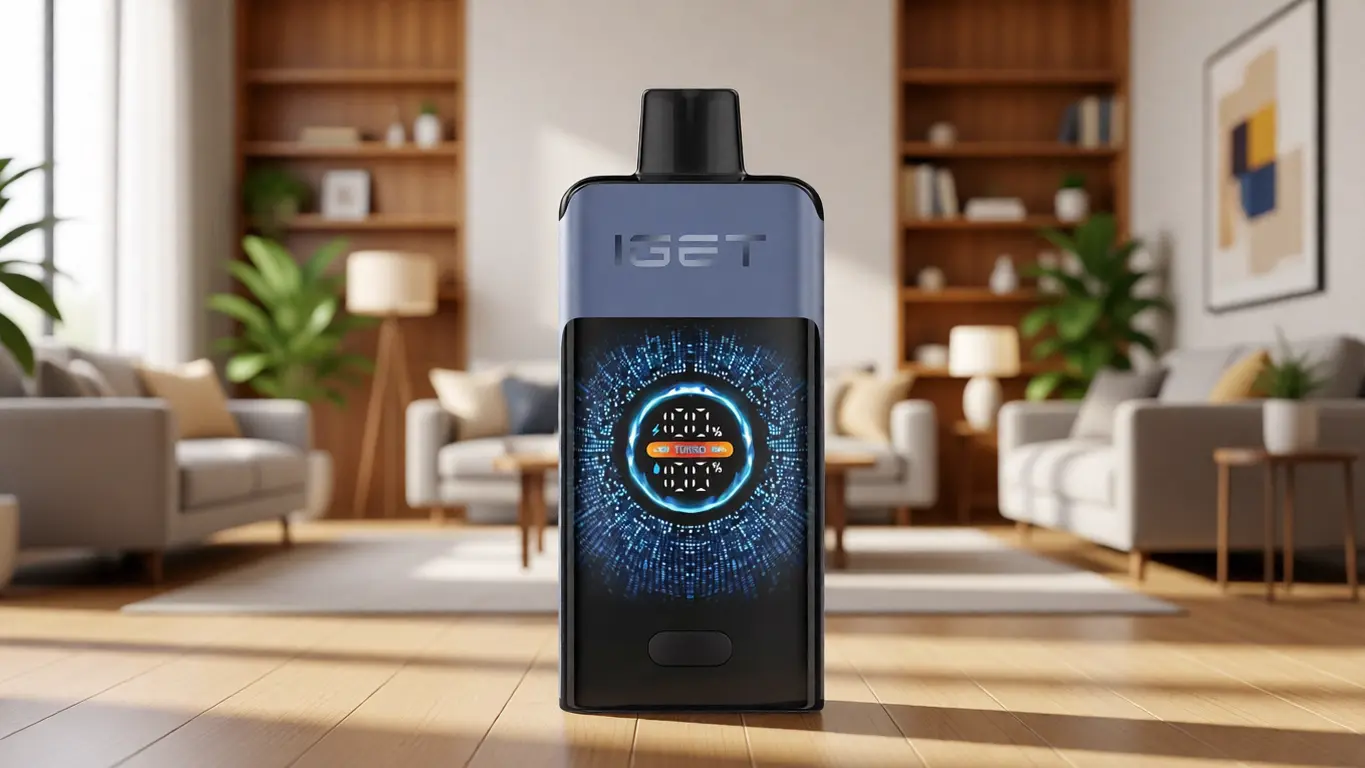
From an industry perspective, what we are seeing is a gradual convergence between environmental monitoring and policy enforcement. Detector manufacturers borrow from industrial hygiene instrumentation, while the consumer‑side brands that OZVAPE Shop represents — with ALIBARBAR being a prominent example — continue to refine their output characteristics so that the user knows exactly what they are working with. It is not unusual for people who value predictability to gravitate toward products that are engineered to perform identically from unit to unit, and that same desire for predictability is what drives a venue to install detection equipment in the first place. The two sides of the market, in other words, are responding to the same deep human preference for consistency, just from opposite ends of the interaction.
Frequently Asked Questions
Q: Do vape detectors look exactly like smoke detectors?
A: They often share the same mounting footprint, but the presence of intake vents, multiple LEDs, and sometimes a display screen sets them apart. A standard smoke alarm is visually simpler.
Q: How can I tell if a detector is active or just a dummy?
A: A genuine detector will have at least one illuminated status LED. If you cannot see any light at all under normal room lighting, the device is either unpowered or a passive cover.
Q: Are wall‑mounted vape detectors common?
A: They are less common than ceiling‑mounted units but are increasingly found in tight spaces where ceiling access is difficult. Their boxy shape is quite distinctive.
Q: Why do some vape detectors have a microphone grille?
A: Hybrid units combine particulate sensing with sound monitoring to detect aggressive behaviour, glass breakage, or shouted keywords. The size and shape of the grille help isolate voice‑frequency sounds from background vibration.
Q: Can a vape detector look like a thermostat?
A: Rarely. Thermostats have a temperature display and user controls, and they lack the airflow vents found on vape detectors. The visual language is quite different once you look for details.
Q: If a device from ALIBARBAR is used in a room with a detector, is it more likely to trigger an alarm?
A: Detectors are sensitive to the total aerosol concentration in their field of view. A device that delivers a consistent, well‑engineered output is not inherently “safer” or “riskier” — its behaviour is simply more predictable. Predictability helps you manage your environment intelligently, but it does not change the detector’s calibration.
Q: Are there portable vape detectors I can carry?
A: Portable particle counters exist, but they are laboratory instruments, not consumer products. The detectors this article describes are fixed installations.
Q: Do vape detectors record audio or video?
A: Some hybrid units capture sound level data and may record short audio clips upon a trigger event, but they do not contain cameras. Their privacy implications are tied to sound, not imagery.
Q: How do I know if a detector has been installed specifically because of vaping policies?
A: Check for signage. Many venues that deploy vapour detection also post notices. In the absence of signs, the physical characteristics described in this article are your best guide.
Q: Where can I find reliable information about the devices that these detectors are designed to sense?
A: For detailed specifications, consistent output data, and a transparent overview of what current‑generation personal electronic devices offer, authorised retailers who maintain factory‑certified inventory are the most dependable source. This ensures you get the documented engineering facts, not marketing generalisations.
The Value of Knowing What You Are Looking At
Vape smoke detectors are not mystery objects. Their appearance is a direct consequence of the engineering constraints their designers faced: how to move air through a sensor chamber, how to communicate status from across a room, and how to survive in environments as varied as a school hallway and a high‑end hotel corridor. Once you learn to read those design cues, the question “What do they look like?” becomes almost trivial. The deeper insight is that the same attention to detail that makes a detector identifiable at a glance is what distinguishes a thoughtfully engineered personal device from one that merely looks the part on a screen.
At OZVAPE Shop, that philosophy of transparency and technical clarity is what guides every product listing and every customer conversation. When you know what you’re using, and you understand how the world around you responds to it, you are no longer making decisions in the dark. You are choosing with the same kind of informed judgment that an engineer would apply, and that is ultimately what leads to fewer surprises and greater satisfaction — whatever device you carry and wherever you happen to use it.