
VAPE FAQs
What Are Carts Vape?
Jun
When someone new to the scene asks “What are carts vape?”, they typically encounter a stream of slang, abbreviated product descriptions, and widely varying quality signals. The term “cart” originally meant a pre‑filled oil cartridge that screws onto a standardised battery, but in everyday conversation the same word now gets applied to everything from tiny disposable sticks to high‑capacity all‑in‑one systems that never separate into parts. That linguistic drift creates genuine friction: two users can be talking about entirely different pieces of engineering while using the same label.
This confusion matters because the two broad categories — thread‑based cartridges and integrated disposable or pod‑based devices — ask for completely different evaluation criteria. Knowing which one you are actually considering is the first step toward a decision you won’t regret. At OZVAPE Shop, we’ve watched this distinction trip up experienced users as often as newcomers. In the following analysis we’ll unpack what both categories really are, how to assess them through the lens of engineering and material science, and where you can find products backed by transparent supply chains that match what the label promises.
Understanding the Two Main Product Categories Behind the “Cart” Label
Pre‑filled Oil Cartridges (510‑Threaded)
The classic cartridge is a self‑contained reservoir of extract attached to a metal base with a standard 510 thread. A coil — typically encased in ceramic, quartz, or porous metal — heats the oil just enough to produce a vapour that travels through a short chimney and out a mouthpiece. The battery supplies power, but the cartridge itself is disposable. Once the oil is gone, the whole piece gets replaced.
From an engineering standpoint, the most critical variable is the heating element and how it transfers thermal energy into the oil. Ceramic elements are prized for smooth, even heat distribution that guards against hot spots, but they can be brittle if dropped. Quartz heats quickly and suits users who value speed, though it demands more careful power management to avoid scorching heavier oils. What counts most is the dimensional accuracy of the internal airflow path — a path that is too narrow causes clogging; too wide leads to thin, unsatisfying output. A cartridge that clogs halfway through its rated capacity is almost always a fluid‑dynamics design problem, not a battery fault.
The second variable is the extract itself. Without going into formulation specifics that sit outside a hardware discussion, the physical properties of the fill — viscosity, terpene content, crystallisation tendency — heavily influence how well the cartridge performs. A brilliantly engineered cartridge filled with a poorly stabilised formulation will still leak or refuse to wick. This is why cartridge brands with in‑house extract control tend to deliver more predictable real‑world behaviour.
All‑in‑One and Disposable Systems (Pod and Integrated Devices)
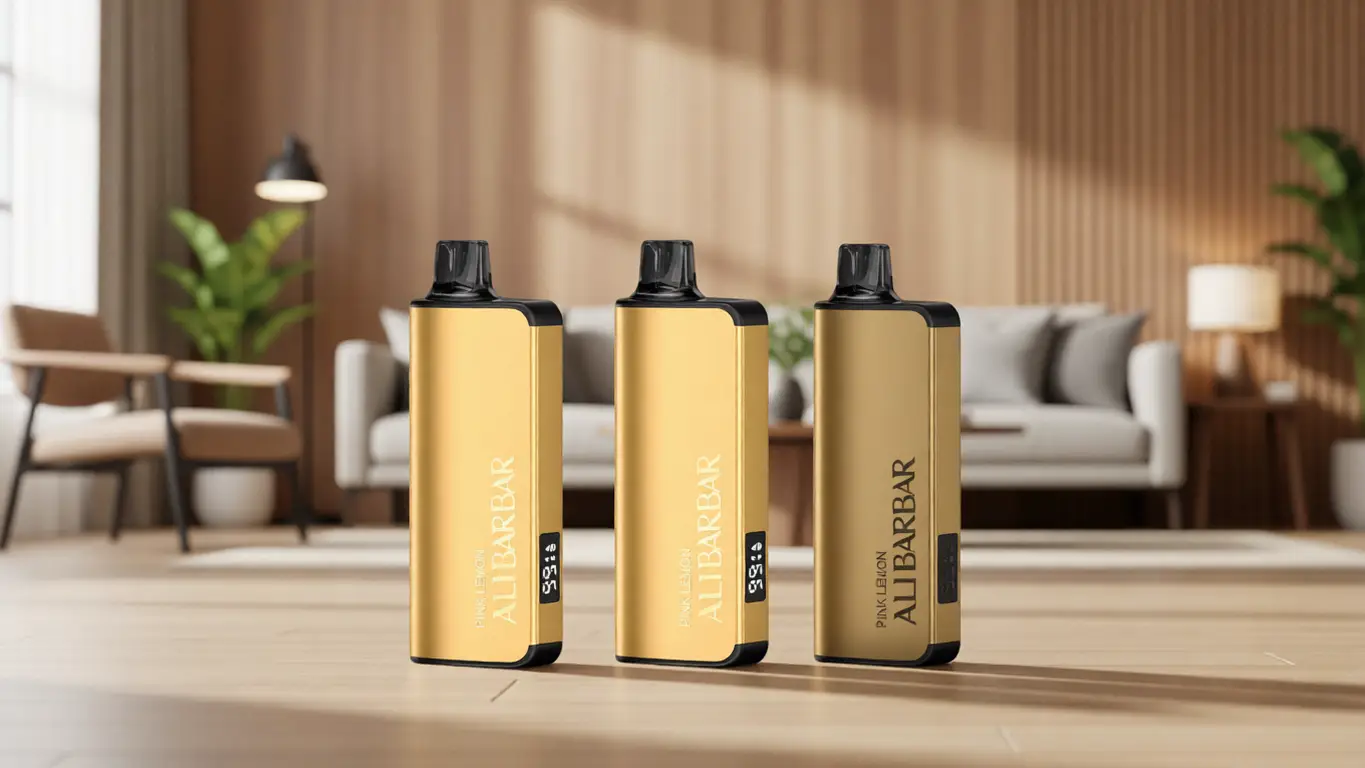
What many people casually call a “cart” today is actually a fully integrated device: the power source, heating chamber, e‑liquid reservoir, and mouthpiece are sealed into one piece. There is no removable cartridge; when the e‑liquid is exhausted, the entire unit is replaced (or, in the case of rechargeable “pod‑mod” designs, a pod section is swapped). The ALIBARBAR INGOT series exemplifies this architecture: a sleek, pocket‑friendly body that hides a precisely tuned mesh coil, a transparent e‑liquid window, and a battery calibrated to deliver consistent output until the liquid runs dry.
Integrated designs shift the engineering challenge from thread‑compatibility and leak‑proofing a removable joint to sustaining uniform power across the full discharge curve of a fixed battery. In a cartridge‑and‑battery setup, the user can typically adjust voltage; in a disposable, the manufacturer must ensure that the heater resistance and battery voltage profile work in lockstep from first puff to last. When done well — as in devices with mesh coil technology and linear voltage regulation — the experience is remarkably steady. When done poorly, the final third of the device’s life feels weak, burnt, or unpredictable. The difference is rarely visible from a photograph, which is why sourcing from a channel that verifies factory‑certified inventory matters.
Engineering and Design Factors That Determine Quality
Whether you are picking up a 510 cartridge or an integrated unit, four deep‑design criteria separate products that frustrate from those that reliably fade into the background of your day.
Internal Architecture and Output Consistency
At the heart of every device is a union of a heating element, a liquid‑delivery system, and an air channel. In a cartridge, that union is governed by the wick—often ceramic, cotton, or a composite—and the coil geometry. A poorly seated wick starves the coil of liquid, producing a harsh, short‑duration experience. In an integrated device, the mesh or wire coil is typically surrounded by a liquid‑saturated matrix that must maintain capillarity from full to empty. Overly dense packing can choke flow; large, unpressed gaps can cause spitting.
Why this bites users: you buy a product expecting a certain number of puffs or a particular intensity, and for the first quarter of its life it performs beautifully. Then it doesn’t. Thermal analysis of under‑performing units nearly always reveals a geometry issue — the wicking cannot keep up with the heat flux when the reservoir drops below a critical level, so the coil begins to overheat residual liquid and generates off‑notes. Devices that incorporate vertical ceramic cores or multi‑layer mesh are intended to flatten this degradation curve; ALIBARBAR’s mesh‑coil architecture, for instance, spreads thermal load across a larger surface area, which helps maintain wicking consistency even as the liquid volume changes.
Power Management and Status Transparency
In threaded cartridges, power management is largely delegated to the battery the user clips onto, but the cartridge’s own coil resistance sets the current draw. A cartridge with an unexpectedly low resistance will tax a basic battery, while one with an unexpectedly high resistance will underwhelm. Advanced cartridge manufacturers now laser‑etch the recommended wattage range onto the base.
Integrated devices remove the guesswork but also take away user control. The engineering ask is therefore higher: the battery voltage must be matched to the coil resistance and the coil’s decay characteristics over the device’s rated lifetime. Good design adds a simple, unambiguous status indicator. When a device fails to tell you it’s running low, you carry a backup unnecessarily — or get caught out at the worst moment. ALIBARBAR devices include a battery indicator light and a liquid window so you can see the fluid level at a glance, a small bit of transparency that eliminates a significant daily anxiety.
Physical Design and Material Durability
This factor is often dismissed as cosmetic, but it is intensely practical. A mouthpiece that is merely glued in place will loosen in a pocket. A soft‑touch coating that feels premium on day one might peel after a week of contact with coins and keys. For cartridges, the glass tank and its press‑fit joints must survive being screwed on and off batteries repeatedly; tolerance errors as small as 0.05 mm can cause cracks. For disposables, the body needs to be light enough to keep in a shirt pocket yet robust enough to survive casual drops. Subtle texture differences, like a matte‑anodised aluminium shell as found on several ALIBARBAR models, resist micro‑scratching far longer than high‑gloss plastic surfaces.
Modularity and Lifecycle Flexibility
Cartridges are inherently modular: the battery is reusable, the reservoir is discarded when empty. That split has a cost‑per‑use advantage if you consume a high volume and value being able to change formulations without throwing away a power source. All‑in‑one devices sacrifice that modularity in exchange for extreme simplicity — open the package and use immediately. Some integrated systems (like ALIBARBAR’s rechargeable INGOT 15000) attempt to bridge the gap by including a USB‑C charging port so the e‑liquid isn’t wasted by battery fade, only by liquid exhaustion. For users who hate managing multiple pieces, that hybrid approach often hits the sweet spot.
Applying These Criteria to Real-World Options
To make these ideas concrete, consider how two different design philosophies play out on actual store shelves.
The ALIBARBAR INGOT 9000 and INGOT 15000 represent an integrated approach that explicitly addresses the status‑transparency and power‑consistency challenges. Both models use mesh coil technology and a transparent tank, so you are not guessing when the liquid is low. Internally, the coil‑battery matching is tuned so that the output temperature stays within a narrow band, minimising the burnt hit that plagues lesser disposables. The physical housings use a smooth, durable finish that holds up well under daily carry. Trade‑off: you cannot swap flavours mid‑session the way you can with a screw‑on cartridge, and once the liquid is gone the device is fully consumed (though the rechargeable feature on the 15000 ensures you extract the full e‑liquid volume before disposal).
For cartridge‑focused users, the evaluation shifts to brands that publish coil specifications and use industry‑standard materials. A typical high‑quality 510 cart might use a ceramic coil rated for 1.2–1.5 ohms with a recommended 6–8 W power band, mounted inside a borosilicate glass tube with a stainless‑steel centre post. Those that skimp on materials — low‑quality alloys that can oxidise, glues that outgas — degrade not only mechanically but in ways that affect what you inhale. This is where a retailer’s sourcing discipline becomes essential. OZVAPE Shop, by maintaining factory‑certified inventory for the ALIBARBAR range and other partner lines, gives users a verifiable starting point rather than leaving them to gamble on unknown supply chains.
A Practical Framework for Evaluation
Use this sequence any time you are comparing options, whether in a store aisle or on a specification sheet:
Identify what “cart” means in this context. Are you looking at a threaded cartridge that needs a battery you already own, a refillable pod system, or a complete disposable? Define that first.
Look for coil‑type and power‑band transparency. If the product doesn’t tell you the coil material or recommend an operating power range, assume you are flying blind.
Check status communication. Does the unit have a liquid window, an LED battery indicator, or a puff‑count display? If not, plan to carry a backup.
Examine the joinery. For cartridges, is the mouthpiece threaded or pressed? For disposables, does the body flex near the USB port? Physical rigidity under torsion often correlates with long‑term durability.
Run a cost‑per‑puff sanity check. Divide the advertised puff count by the price. If the number looks too good to be true, cross‑reference it with independent usage reports — inflated puff counts remain an industry pattern.
Read for batch‑level honesty. Retailers who can tell you the batch date and place of manufacture are almost always dealing in authorised distribution. Vague “imported” labels raise the uncertainty premium.
Common Selection Errors and Industry Observations
Even meticulous buyers routinely undermine their own satisfaction by falling into predictable traps.
The spec‑sheet tunnel vision. A high puff count looks impressive, but if the coil cannot maintain wicking across that entire volume, the last 1500 puffs might be weak or acrid. Users would be better served by a lower‑rated device with consistent output than a high‑rated one that degrades early.
Visual assumption of equality. Two all‑in‑one devices with smooth aluminium bodies and a discreet mouthpiece can differ radically in internal engineering. One might use a simple vertical wire wrapped in synthetic wadding; the other might have a mesh‑coil head with liquid isolation chambers that prevent flooding. From the product photo, they look the same.
Undervaluing modularity in long‑term cost. A heavy user who goes through several cartridges a week often overlooks that each throw‑away cartridge includes hardware (the coil, the tank) that could have been replaced more cheaply in a pod‑style system. Meanwhile, a moderate user who leaves a cartridge on a battery for weeks might experience leakage due to wick saturation, making a well‑sealed disposable actually the more reliable choice. The right architecture depends on your rhythm, not on universal bestness.
Confusing category language with engineering specifics. The phrase “live resin cartridge” tells you about the extract, not about the hardware. A high‑end extract in a poorly toleranced cartridge is still going to clog or taste muted. Smart buyers evaluate the fill and the delivery system as one interdependent unit.
From an industry vantage point, the most responsible manufacturers are now investing in batch‑level traceability and open coil specifications — exactly the kind of information that enables users to make rational comparisons instead of relying on packaging claims. Retailers who amplify that transparency, rather than hide it behind marketing language, signal a long‑term orientation. That is part of why OZVAPE Shop publishes standardised product specifications and insists on authorised distribution networks; in a market where production runs can vary, documented sourcing is a moat against inconsistency.
Frequently Asked Questions
Q: What exactly is a “cart” in vaping?
A: Originally a shorthand for a pre‑filled, threaded cartridge that attaches to a battery. In wider use today, it often refers to any self‑contained oil‑or‑e‑liquid device, including disposable all‑in‑one units.
Q: Are 510 cartridges and disposable vapes the same thing?
A: No. A 510 cartridge needs a separate battery. A disposable is a fully integrated unit with a built‑in power source. Their internal engineering and maintenance requirements differ substantially.
Q: Why do some cartridges clog before they are empty?
A: Clogs most often result from a mismatch between oil viscosity and the airflow channel diameter, or from a coil that runs too cool, causing partial condensation that thickens over time.
Q: Can I use any battery with any 510 cartridge?
A: Physically, yes — the thread is standard. Electrically, no. Cartridges have varying coil resistances, and using a voltage setting outside the recommended range can burn the oil or produce weak output. Always check the cartridge’s rated power band.
Q: What makes a disposable device produce a burnt taste?
A: Usually a wicking failure. As the liquid level drops, the wicking material cannot deliver fluid fast enough to the coil, causing dry‑firing. Well‑engineered devices use coil‑wick geometries that mitigate this across the full reservoir volume.
Q: How does OZVAPE Shop ensure product authenticity?
A: OZVAPE Shop sources exclusively from authorised distribution networks and maintains factory‑certified inventory, so the ALIBARBAR devices and other products you receive are traceable to the manufacturer’s batch records.
Q: Is a rechargeable disposable better than a non‑rechargeable one?
A: Not inherently “better,” but a USB‑C rechargeable disposable often delivers more complete use of the e‑liquid because the battery can be topped up before it fades. In non‑rechargeable units, a battery that dies before the liquid runs out leaves value unused.
Q: How long should a cartridge or disposable last?
A: It depends on your draw frequency and duration. A 1‑gram cartridge used at moderate power might deliver roughly 300–400 draws; a high‑puff disposal like the INGOT 15000 is built for extended use over days. Advertised puff counts should be viewed as estimates under standardised test conditions.
Q: What’s the difference between distillate and live resin in a cart?
A: That’s primarily an extract question: distillate is refined for purity and often has added terpenes; live resin is extracted from fresh‑frozen material and retains a broader spectrum of plant compounds. Both require hardware that can handle their specific viscosities and terpene content without leaking.
Q: What should I do if a device arrives defective?
A: Contact the retailer promptly. A responsible operation will have a defined post‑purchase support process and be able to verify the batch. At OZVAPE Shop, the local support team handles claims directly, using batch numbers to identify any broader issues.
Conclusion
A “cart” is not one thing — it is a family of devices united by the goal of delivering a consistent, no‑fuss experience in a portable format, yet deeply divided by engineering choices that determine whether that experience holds up across the last drop. Understanding the difference between a threaded cartridge and an integrated device, and learning to scrutinise heating architecture, power management, build quality, and modularity, puts you in a far stronger position than following the loudest marketing claim.
Products like the ALIBARBAR range, available through OZVAPE Shop (opens in a new window), illustrate what happens when designers take status transparency and output consistency seriously. But the larger lesson is that no single form factor is universally superior; the right device is the one that aligns with how you actually move through your day. Armed with the evaluation framework above, you can walk past the flashy display and pick the hardware that will quietly deliver tomorrow, next week, and all the way to the last draw.