
VAPE FAQs
What Are Blinkers Vape?

May
What Are Blinkers Vape?
If you have ever picked up a compact disposable device, taken a draw, and been met with a blinking light instead of the expected output, you have encountered the exact moment that has defined an entire product category. That blinking signal is not a random glitch; it is the device’s way of communicating something critical — a depleted power source, a connection fault, or the end of its engineered life. Yet for many adult users, that moment arrives without warning, at the worst possible time, and the ambiguity of the signal leaves them guessing. The term Blinkers Vape has emerged both as a casual name for devices that feature this kind of indicator and, in some markets, as a specific brand name for a line of disposable electronic tools. Understanding what blinkers are — and more importantly, what design choices make that blinking experience either frustrating or genuinely informative — requires looking past the light itself and into the engineering that controls it.

Users who want to move beyond guesswork need accurate device specifications and transparent sourcing. This is where curated platforms such as OZVAPE Shop serve a practical function: they provide standardized product information and factory‑certified inventory, so the blinking light you encounter corresponds to a documented behaviour, not an unexplained inconvenience.
Understanding What Matters: Core Engineering and Design Factors
Most conversations about personal electronic devices circle around superficial metrics: how many actuations a unit promises, how compact it looks in a photograph. Those numbers matter, but they are downstream of the engineering decisions that determine whether a device actually serves its user over days and weeks. Four design factors consistently separate devices that deliver a predictable, low‑friction experience from those that leave their owners carrying a backup.
Internal Architecture and Output Consistency
The heating assembly inside any portable electronic unit is its most mechanically stressed component. In mass‑market designs, a simple coiled wire wrapped around a wicking medium is common. This configuration is cost‑effective, but it can suffer from gradual thermal degradation — uneven heating, hot spots, and eventual dry operation — well before the device’s rated lifespan is exhausted. Users often report a distinct decline in output quality in the final third of a device’s life. Better‑engineered alternatives use mesh or planar heating structures that distribute thermal load more evenly, resisting the formation of damaging temperature gradients. When you evaluate a device, consider whether the manufacturer discloses its heating element geometry. If that detail is absent, it is fair to ask what design trade‑offs are being hidden.
Power Management and Status Transparency
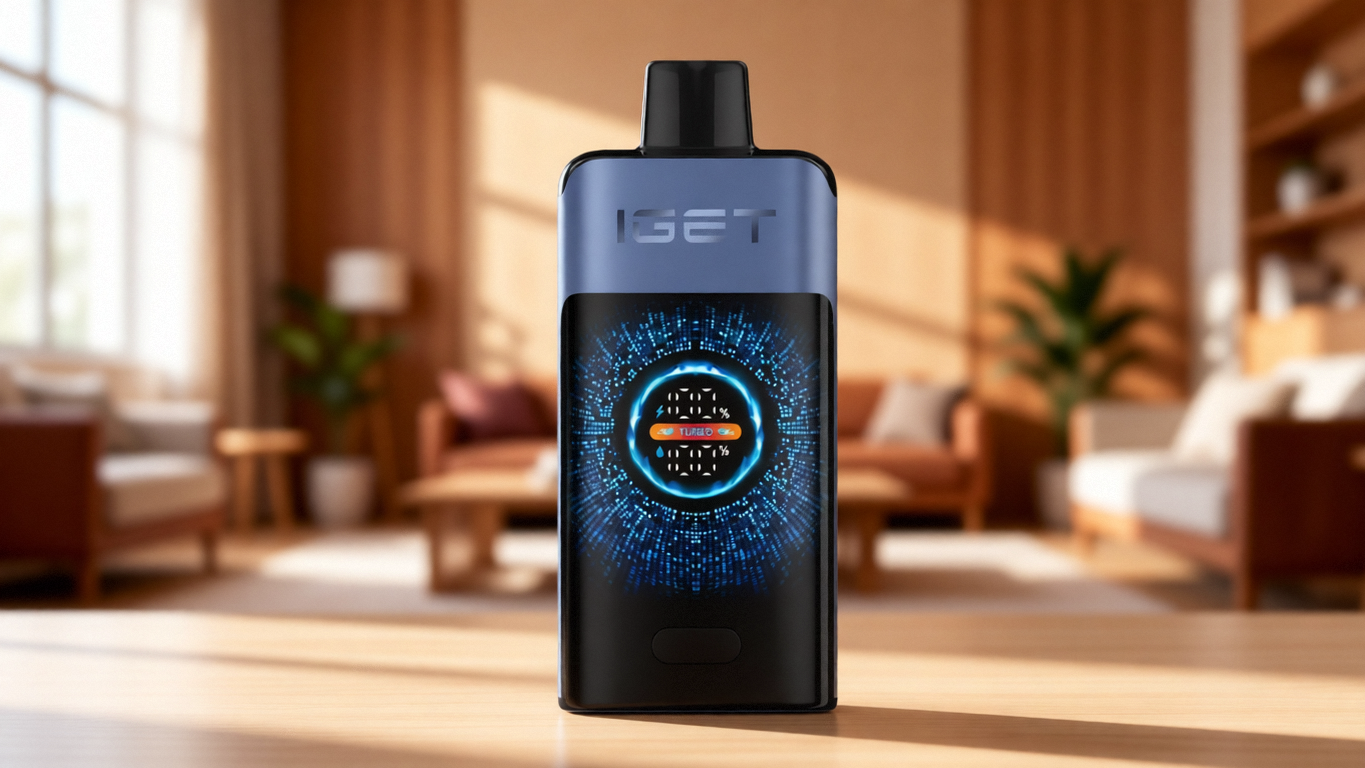
The blinking light that gives Blinkers Vape its name is, at heart, a power‑management signal. The real question is how useful that signal is. A simple low‑voltage cut‑off triggered by a sagging cell will produce a blink, but it provides no advance notice. The user is left with nothing in the moment they need it. More sophisticated power management circuits track cumulative energy draw and can issue graduated alerts — perhaps a colour change or a pulse pattern — well before total shutdown. This early warning is not a luxury; it eliminates the need to carry a second device “just in case.” A device that communicates clearly reduces the cognitive load of managing multiple units. Look for status indicators that convey multiple states, not just a single dead‑battery blink.
Physical Design and Material Durability
A device that lives in a pocket, a bag, or a cup holder endures constant abrasion. Surface finishes may look premium on day one, but soft‑touch coatings often develop a sticky patina after a few weeks of handling. Brushed metal or hard anodized finishes retain their appearance longer, but they come at a higher manufacturing cost. The mouthpiece contour matters just as much: a sharply tapered tip distributes pressure unevenly during prolonged use, while a wider, ergonomically sculpted design reduces localised discomfort. Ergonomic decisions like these are easy to overlook during a quick product scan, yet they determine whether a device feels like a considered tool or a disposable commodity.
Modularity and Lifecycle Flexibility
Not every user wants to manage multiple components, and that is a valid preference. But sealed disposable units, once exhausted, become electronic waste with no practical path to reuse. Modular architectures — devices that accept replaceable power cells or that separate the power unit from the output section — offer clear long‑term advantages: lower cost per use, reduced waste, and the ability to swap only the depleted element. The trade‑off is increased initial complexity. Many users default to sealed units because they associate simplicity with a pre‑configured device, but a well‑designed modular system can be genuinely simpler in daily practice because you never find yourself entirely without power.
Applying These Criteria to Real‑World Options
The principles above translate directly into observable differences among the devices that are currently on the market. Consider the ALIBARBAR INGOT 9000, a device that has attracted attention for its unusually explicit status feedback. Instead of a single blink, the INGOT 9000 uses a battery‑level indicator that visibly decreases in steps as the cell drains. That kind of graduated readout transforms the user’s relationship with the device: you know exactly how much operating time remains, not just that the end has arrived. Compare this with a generic “Blinkers” style unit where the first and only signal may be a flicker at the point of complete power loss. The difference in day‑to‑day peace of mind is significant.
Another instructive example is the ALIBARBAR Ice Adjust 12000, which integrates airflow adjustment. That control is not simply a convenience; it allows the user to tune the thermal behaviour of the device, compensating for ambient temperature or personal preference. This level of adjustability is rare in sealed disposable designs, which are typically locked to a single operating point. The trade‑off is that the Ice Adjust is slightly larger, and the user must experiment with settings to find their preferred configuration. It is not a universal solution, but it demonstrates how thoughtful design can address the most common user frustrations — unpredictable output and a lack of control — that make basic units so frequently disappointing.
A Practical Framework for Evaluation
When comparing options, a structured approach helps cut through the noise. Here is a straightforward evaluation sequence you can apply to any device:
Status feedback check: In standard operation, how many distinct device states are communicated? If the only indicator is a single blink for “dead,” anticipate the hidden cost of carrying a spare.
Output consistency lifecycle: Research what the heating element configuration is. If you cannot find this information, assume the device is using a basic single‑coil design and expect gradual degradation in the second half of its life.
Build longevity audit: Examine the finish material. Soft‑touch surfaces will degrade. Hard anodizing or metal will not. Also test the mouthpiece shape against a standard use scenario — can you hold it comfortably for extended periods?
Total cost modelling: For sealed units, divide the price by the rated actuation count to get a per‑use cost. For modular systems, add in the replacement components over a realistic timeframe. Often, modular designs win over even a medium duration.
Using a platform that publishes consistent specification data — rather than relying on piecemeal descriptions — makes this comparison far faster. Standardized listings remove the guesswork that so often leads to a mismatch between expectation and reality.
Common Selection Errors and Industry Observations
Observing how users actually make purchasing decisions reveals several recurring patterns that undermine their own satisfaction:
Overweighting a single number: Putting all decision weight on “puff count” while ignoring power management and status transparency leads to buying a device that fails without warning, well before the user has extracted its advertised value.
Confusing visual similarity with functional equivalence: Two devices may look nearly identical on a shelf, but the quality of the integrated circuit board, the wire gauge in the heating element, and the calibration of the battery management system can produce completely different user experiences. Appearance is a poor proxy for engineering.
Undervaluing modularity in cost calculations: Users often dismiss modular devices as “complicated” without running the numbers. Over the lifespan of several sealed units, the savings from even a basic modular setup can be substantial, and the reduction in waste is a secondary but real benefit.
Assuming that all blinking signals mean the same thing: A blinking light can indicate a low battery, a short circuit, a depleted device, or a counterfeit protection lock. Without a proper manual or support documentation, the user is left to interpret these signals alone. This is a significant trust gap in the industry.
At the broader industry level, the market for personal electronic devices is fragmenting. Large manufacturing clusters produce components that are then assembled under hundreds of brand labels, with varying quality control. The presence of a consistent, documented channel — one that validates supply chain authenticity and publishes technical specifications — becomes genuinely valuable in this environment.
Frequently Asked Questions
Q: What exactly does a blinking light on a device mean?
A: It typically signals either a low battery, a short‑circuit condition, or the end of the device’s programmed life. Specific patterns may indicate different faults; check the manufacturer’s documentation. Without clear documentation, you are left to interpret the signal yourself, which is a legitimate frustration.
Q: Are all “Blinkers” disposable devices the same?
A: No. The term is used loosely both for a category of indicator‑equipped devices and for specific brand names. Internally, components vary widely. The quality of the power management system and the heating element are the most important differentiators.
Q: How can I check whether a device is authentic and sourced through proper channels?
A: Legitimate retailers will provide traceability information and offer serial‑number verification where supported by the manufacturer. Purchasing from a platform that explicitly guarantees factory‑certified inventory provides a baseline assurance that is worth seeking out.
Q: Do higher puff counts guarantee longer real‑world use?
A: Not necessarily. If the device’s power management cuts out abruptly or the heating element degrades early, you may stop using it before the rated count. Status indicators that give advance warning make a far bigger difference to actual usable lifespan than the printed number.
Q: What is the advantage of a modular system over a sealed unit?
A: You can replace the depleted part (usually the power cell or the output pod) without discarding the entire device. Over time, this reduces cost per use and generates less electronic waste.
Q: How can I predict when my device will run out of power?
A: Look for devices with graduated battery indicators — a step‑down display, a colour change from green to amber to red, or a pulse that increases in frequency. A single dead‑battery blink gives no advance warning.
Q: Why do some devices feel warm during use?
A: Heat is a by‑product of the heating element. Well‑designed systems use insulation and airflow to keep the exterior cool. Excessive heat on the shell suggests poor thermal management and can degrade the electronics over time.
Q: What should I do if a device blinks continuously right out of the box?
A: This often indicates a manufacturing fault or a protection lock. Stop using it and contact the seller. A reputable retailer will have a clear policy for handling such failures.
Conclusion
The blinking light is one of the simplest possible human‑machine interfaces, yet its practical value is entirely determined by the engineering behind it. A device that gives you only a single blink at the moment of failure leaves you stranded. One that communicates its remaining capacity and health through multiple clear states gives you control. The difference is not a matter of brand enthusiasm; it is a matter of thoughtful, considerate design.
No single product is right for every user. The person who needs absolute pocketability may accept a sealed unit; the long‑term user who values predictability will gravitate toward better status feedback and modular architectures. The right choice is always the one that aligns with your actual daily routine. Access to accurate, standardised product information makes that alignment possible. For users seeking a transparent starting point, OZVAPE Shop offers a curated catalogue of factory‑verified devices, including the ALIBARBAR range, with the specification detail that transforms an uncertain purchase into a confident decision.