
VAPE FAQs
What Age Is It Legal To Vape?
Jul
What Age Is It Legal To Vape?
Stepping into the world of personal electronic devices often raises a question that, at first glance, appears straightforward. “What age does the law permit me to use these products?” Yet for anyone who has tried to find a clear answer, the reality is more layered. The rules depend not only on where you are standing but on the type of device, the substance it contains, and when you last checked. In Australia, the legal landscape has shifted significantly over the past two years, leaving many adult users uncertain about what is actually allowed.
This article is designed to give you a precise, jurisdiction-specific answer – with Australia as the primary focus – while also equipping you with the mental framework to navigate regulations if you travel or read advice from overseas. At the end, you will understand not just the magic number but why it exists, how it is enforced, and what it means for you as a responsible adult consumer.
Throughout this discussion, OZVAPE Shop serves as a practical reference for how a compliant retailer translates legal obligations into everyday buying experiences. This is not a sales argument; it is an illustration of what trustworthy compliance looks like in a physical, operational sense.
Understanding the Legal Foundation
Laws about vaping age are built on a simple principle: protect young people from unnecessary exposure while preserving access for adults. In Australia, two distinct threads of regulation weave together. One is a general consumer law banning the sale of any vaping product to a person under 18 years of age. The other is a therapeutic goods framework that treats nicotine-containing vapes as prescription medicine.
The key takeaway: the legal age to purchase or use a vaping device in Australia is 18. No state or territory allows sales to minors, and the federal ban on importing disposable vapes – irrespective of nicotine content – further tightens the net. If you are under 18, you cannot legally buy, possess (in some states), or use a vape. There is no grey area.
Why Laws Differ by Region – and Why That Matters
When you see contradictory ages online, it’s usually because the author has pulled data from a single country without context. The table below gives a snapshot of how three English-speaking jurisdictions compare, which helps explain why your own obligations start and end with the Australian framework.
| Country | Legal Age to Purchase Vapes | Key Regulatory Body | Nicotine Classification |
|---|---|---|---|
| Australia | 18 | Therapeutic Goods Administration (TGA) | Prescription-only (except pharmacy access from Oct 2024) |
| United Kingdom | 18 | Medicines and Healthcare products Regulatory Agency (MHRA) | Regulated consumer product or medicine |
| United States | 21 (federal) | Food and Drug Administration (FDA) | Tobacco product |
Even within Australia, the interaction between federal TGA rules and state enforcement can cause confusion. For example, Victoria requires a prescription for all nicotine vapes regardless of the 2024 reforms, while other states merely defer to federal law. For the average adult, the safest operating assumption remains unchanged: if you are 18 or older, you can legally possess and use a vaping device, though obtaining one legally depends on the exact product pathway.
How Age Verification Works in Practice
A law is only as effective as the mechanisms that uphold it. For a retailer like OZVAPE Shop , age verification is not a one-off checkbox but a layered process designed to fail safely.
At point of sale (online): Government-issued ID validation software matches customer details against databases, flagging anyone under 18 before a transaction can complete.
At delivery: The courier service conducts a visual ID check, refusing handover if the recipient appears under 25 without proof of age.
Post-purchase support: Any return, warranty claim, or consultation again requires confirmation of adult status, preventing accidental exposure during after-sales care.
For users, this means that a legitimate vendor will ask you to prove your age multiple times, not because they distrust you, but because the regulatory framework demands redundancy. If a website sells without any verification step, it is almost certainly operating outside the law.
Common Questions Adults Ask
Q: I’m 18. Can I walk into any shop and buy a vape?
A: No. From mid‑2024, the only legal physical retail point for nicotine vapes is a pharmacy. For non‑nicotine devices, age‑restricted specialist retailers that comply with state tobacco licensing laws may be an option, but the vast majority of high‑street “vape shops” selling disposables are currently selling illegal products.
Q: Does the age rule apply to devices that don’t contain nicotine?
A: Yes. All vaping products, regardless of substance, cannot be sold to anyone under 18. Additionally, the federal import ban catches non‑nicotine disposables, so possession of such products is effectively prohibited for all ages unless they are therapeutic goods.
Q: What happens if I’m caught vaping under 18?
A: Penalties vary by state. In Queensland, for instance, underage possession can result in an on‑the‑spot fine. In New South Wales, police can confiscate the device and issue a warning or fine. School‑based enforcement can also lead to suspension. The law is actively enforced.
Q: Can my parent or guardian buy a vape for me if I’m under 18?
A: No. Proxy purchasing – an adult buying on behalf of a minor – is illegal throughout Australia. Adults who do this face substantial fines, and the minor still commits an offence.
Q: Is it legal to order vape products from overseas if I’m over 18?
A: Since March 2024, personal importation of any vaping product (even with a prescription) is banned. All imports now require an import licence and permit. Even a single device sent by mail from a friend overseas will be seized at the border.
Q: How do I know a retailer is actually checking age?
A: Look for at least two interactions: an automated ID verification on the website and a physical ID check at delivery. If either is absent, the retailer is not meeting Australian Obligations. At OZVAPE Shop, both are standard procedure, and the process is visible on their verification page.
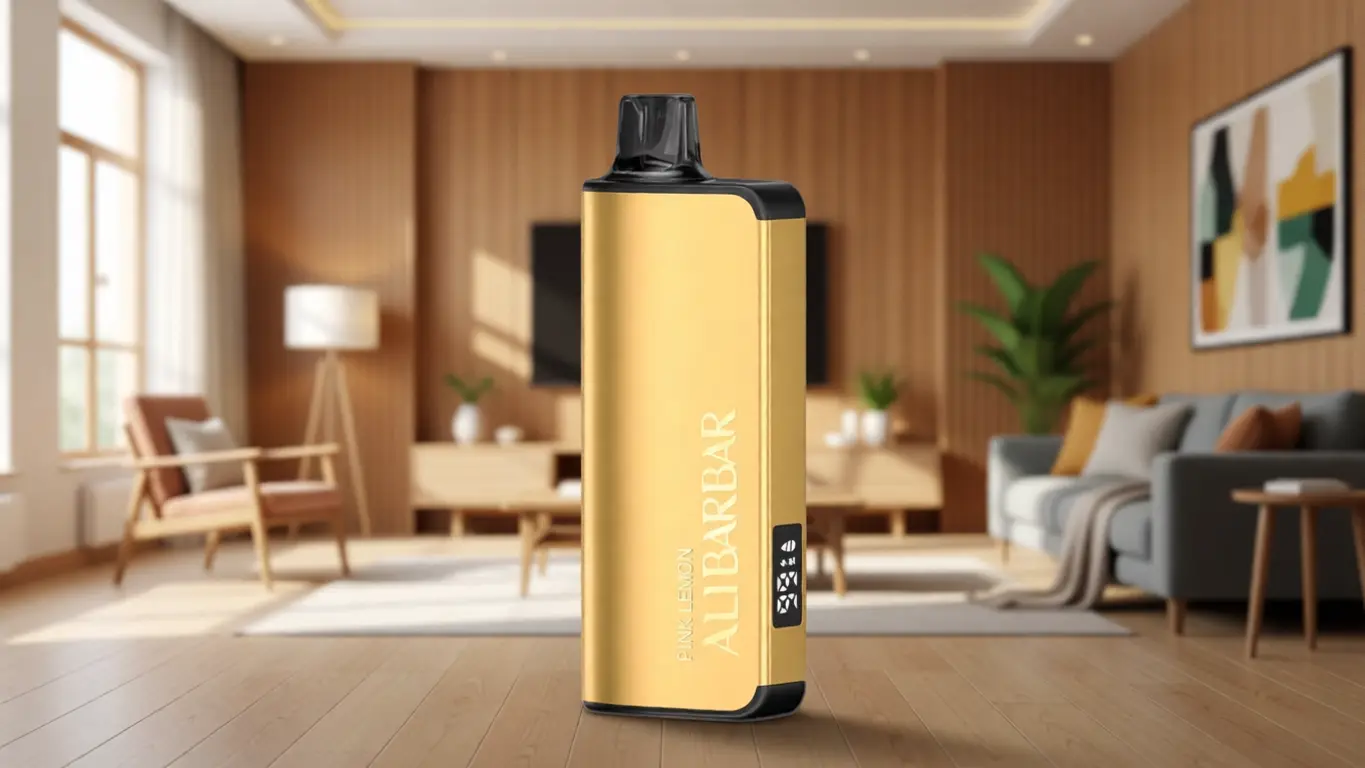
Q: Does the age restriction apply to all ALIBARBAR devices?
A: Yes. ALIBARBAR’s product range, whether the compact INGOT 9000 or the higher‑capacity Ice Adjust 12000, is intended for adult use. The brand does not design or market products for minors, and legitimate Australian retailers restrict access to verified adults only.
Q: What if I’m travelling internationally? Can I bring my device?
A: You must check the destination country’s laws. In many places, the age remains 18, but some (like the United States) require you to be 21. Additionally, carrying a nicotine vape without a prescription into Australia – even for personal use – is now illegal unless you are a traveller with a valid prescription and the vape was obtained through a pharmacy pathway.
Q: Why is the age 18 and not 21 like in the US?
A: Australia’s age threshold aligns with the age of majority and existing tobacco laws. The TGA considered public health evidence and concluded that an 18‑year‑old limit, combined with the prescription model for nicotine, balanced adult autonomy against youth protection. Raising it to 21 would cut off a significant adult population without proven preventive benefit beyond the current system.
Q: Can I be prosecuted for buying an illegal disposable vape?
A: Enforcement primarily targets suppliers and importers. However, possession of a large quantity could raise suspicions of intent to supply, leading to charges. For personal use, the practical risk is confiscation and a formal caution, though repeated offences may escalate the outcome.
The Role of Design in Supporting Legal Compliance
A device’s design can itself mirror age‑appropriate expectations. Manufacturers like ALIBARBAR incorporate features that discourage use by minors, whether intentionally or as a by‑product of engineering choices:
Mouthpiece contour and airflow are calibrated for a mature throat sensation that would be uncomfortable for a first‑time user.
Non‑toylike aesthetics – muted finishes, metal alloys, and industrial textures – avoid the candy colours that attract younger audiences.
Battery indicators and puff‑limit warnings create a feeling of an instrument rather than a toy, appealing to adults who want control over their consumption.
These qualities are not marketing fluff; they are part of a design ethos that respects the legal boundary. When you hold an ALIBARBAR device, the tactile experience communicates that this product was built for someone who reads manuals, checks regulations, and expects a tool, not a gimmick.
A Practical Framework for Staying on the Right Side of the Law
If you are an adult looking to purchase or use a vaping device, you can apply the following checklist every time you’re uncertain:
Check the current TGA website. Laws change. For instance, the pharmacy access pathway for nicotine vapes without a prescription took effect 1 October 2024; prior to that, it was prescription‑only. Always assume your knowledge may be out of date.
Verify the seller’s compliance stack. Do they have visible age‑verification process? Do they offer products that are legal to sell in Australia? If they’re selling disposable vapes with flavours and bright packaging, they’re illegal – avoid them.

Carry ID when you use or carry a device. Police can ask for identification if they have reasonable suspicion, and without it, you may be detained while they verify your age.
Never share your device with a minor. It is an offence to supply a vaping product to someone under 18. Ignorance is not a defence.
Dispose of spent devices responsibly. Improper disposal can attract environmental fines and damages the reputation of the entire user community.
Conclusion
The legal age to vape in Australia is eighteen. Clear as that sentence is, it sits inside a dense web of import bans, prescription requirements, and state‑level enforcement that can confuse even the most diligent adult. The single most important action you can take – apart from remembering the number 18 – is to source your device through a channel that takes age verification as seriously as the law demands.
A retailer like OZVAPE Shop builds its entire operational identity around that responsibility, from factory‑certified ALIBARBAR inventory to the multiple ID checks that bookend every order. This is not exceptional; it is the baseline of what legal commerce in this space looks like.
In the end, being a responsible user means more than knowing the cut‑off age. It means understanding why the barrier exists and then acting in a way that reinforces the social contract behind it. Your choices – whom you buy from, how you store your device, what you say when a curious teenager asks about it – collectively determine whether the regulatory system works. The power to uphold those standards is, fittingly, an adult responsibility.